

 Previzualizare
 Trimite
 Distribuie
 Detalii despre lucrare

 Descarcă
 Produse similare
 Radiografie
 Diapozitive automate
 Statistici
Untitled (960)

 Vezi mai mult
Giclée / Imprimare artistică
Printuri giclée sau pe canvas de calitate muzeală, cu proces de producție rapid și opțiuni flexibile de finisare. ( Comandă pictură lucrată manual Comută pe Imagine Digitală)




































Alegeți dintre dimensiunile noastre prestabilite, care respectă proporțiile originale ale operei de artă.

Puteți introduce propriile dimensiuni pentru a se potrivi unui anumit cadru sau spațiu. Dacă dimensiunea selectată nu corespunde proporțiilor imaginii originale, vom decupa lucrarea de artă sau vom extinde imaginea cu margini oglindite sau cu o culoare uniformă. Un mockup digital va fi trimis pentru aprobarea dumneavoastră înainte de începerea producției.
Vă rugăm să rețineți că previzualizarea de pe ecran nu reflectă decuparea sau extinderea reală. Doar mockup-ul va arăta cu exactitate compoziția finală.
Deși dimensiunile personalizate sunt disponibile, vă recomandăm să selectați o dimensiune din lista predefinită pentru a păstra proporțiile originale.
Livrare în întreaga lume () în 2 săptămâni, în loc de cele 4/5 săptămâni standard. (11 Septembrie)

Livrare expres gratuită la nivel mondial

Pânză de in de înaltă calitate

Asigurare completă pentru transport

Garanție de rambursare a taxelor vamale

Garanția fidelității culorilor

Politica de retur de 100 de zile (doar pentru defecte)

Garanție de rambursare 100%

Ofertă pentru comenzi multiple
 Opțiunea cu sticlă este disponibilă doar pentru dimensiuni de sub 110 cm

Untitled (960)
Giclée / Imprimare artistică
Dimensiune reproducere
-


Preț total calculat
$ 80
Untitled (960) by Isabel Bishop: A Glimpse of Intimate Urban Life
“Untitled (960)” is a captivating work by American realist painter Isabel Bishop, offering a quiet and tender portrayal of domestic intimacy within an urban setting. The painting depicts two figures – a man and a woman – seemingly asleep or resting together, creating a scene imbued with warmth and tranquility. This piece exemplifies Bishop’s signature style: capturing fleeting moments of everyday life with remarkable sensitivity and observation.
The Scene and Artistic Technique
The composition centers on the couple lying close to one another, their heads gently touching. The man is positioned on the left, while the woman rests on the right, suggesting a shared moment of peace and connection. Their relaxed postures and closed eyes convey a sense of deep comfort and trust. The background features a soft, yellowish hue that bathes the scene in a gentle light, enhancing the feeling of warmth and intimacy. Details like the man’s white shirt and the woman's blue dress add subtle visual interest without distracting from the central subject. Notably, two books are present – one near the center-left and another towards the right – hinting at shared intellectual pursuits or perhaps a moment of reading before sleep overtook them.
Isabel Bishop: The Fourteenth Street School Artist
Isabel Bishop (1902-1988) was a prominent figure in the American realist art scene, particularly associated with the Fourteenth Street School. This group of artists, active primarily in New York City during the early to mid-20th century, sought to depict urban life with honesty and objectivity. Bishop’s work stands out for its focus on capturing candid moments of everyday people—often women—in public spaces like Union Square. Her artistic training was extensive, having studied at the Art Students League under influential artists such as Guy Pène du Bois and Kenneth Hayes Miller. From Miller, she adopted techniques rooted in Baroque Flemish painting, evident in her attention to detail and use of light.
Realism and Urban Unfixity
Bishop’s artistic philosophy revolved around capturing what she termed “urban unfixity”—the fleeting, ever-changing nature of city life. She wasn't interested in grand narratives or heroic subjects; instead, she focused on the quiet moments that defined daily existence. "Untitled (960)" perfectly embodies this approach, presenting a seemingly ordinary scene—a couple resting together—and elevating it to something profound through Bishop’s keen observation and sensitive portrayal. The painting avoids sentimentality, offering a realistic depiction of intimacy without resorting to cliché.
Symbolism and Emotional Impact
While seemingly straightforward, "Untitled (960)" carries subtle symbolic weight. The books suggest intellectual companionship and shared interests, while the intimate pose speaks to trust and affection. The warm color palette contributes to a feeling of serenity and contentment. Ultimately, the painting evokes a sense of quiet joy and peaceful connection—a reminder of the beauty found in simple moments of human intimacy within the bustling backdrop of urban life.
Biografie artist
Isabel Bishop: A Life in Urban Realism
Early Life and Education
- Born: 1902, Cincinnati, Ohio.
- Isabel Bishop came from a background of intellectual privilege; her parents descended from established East Coast mercantile families. Her father was a scholar of Greek and Latin, while her mother pursued writing and early women’s suffrage activism.
- The family relocated to Detroit, where Bishop began formal art training at age 12 with life drawing classes at the John Wicker Art School.
- She initially moved to New York City at 16 to study illustration at the New York School of Applied Design for Women, but quickly transitioned to painting.
- Bishop attended the Art Students League from 1920-1924, studying with influential artists like Guy Pène du Bois and Kenneth Hayes Miller. From Miller, she adopted techniques rooted in Baroque Flemish painting.
- She also studied with Max Weber and Robert Henri, absorbing elements of early modernism. Time spent painting in Woodstock, New York during the 1920s further shaped her artistic development.
Artistic Development and Style
- Throughout the 1920s and 30s, Bishop developed a distinctive realist style focused on depicting women in their everyday lives within the bustling streets of Manhattan.
- Her work was deeply influenced by Old Masters, particularly Peter Paul Rubens and other Dutch and Flemish painters discovered during European travels. This influence is evident in her sensitive modeling of form and atmospheric density.
- Bishop’s style is characterized by a focus on capturing “unfixity”—the sense of movement, mobility, and fleeting moments within the urban landscape.
- She explored the interaction between form and ground, creating compositions that convey a dynamic energy. Her paintings often possess what has been described as "a submarine pearliness and density of atmosphere."
Themes and Subject Matter
- Urban Life: Bishop’s primary subject matter was the vibrant life of New York City, particularly around Union Square.
- Women in Modernity: She is celebrated for her sensitive and insightful portrayals of American women navigating modern urban existence. Her work often depicts their interactions and experiences within public spaces.
- Portraits & Nudes: Bishop created both individual portraits, emphasizing the subject’s expression, and solitary nude studies.
- Multiple-Figure Compositions: She pioneered compositions featuring two or more women engaged in everyday activities.
Career and Recognition
- Bishop began exhibiting frequently in the midtown galleries of New York City in 1932, establishing a consistent presence throughout her career.
- She maintained a loft studio near Union Square at 9 West Fourteenth Street from 1934 until 1984, despite residing in Riverdale with her husband, Dr. Harold G. Wolff (a neurologist), whom she married in 1934.
- Bishop was included in the first three Whitney Biennials (1932, 1934, and 1936) and participated in ten subsequent annual exhibitions at the Whitney Museum of American Art.
- She taught at the Art Students League from 1936 to 1937.
- In 1940, she was elected an associate member of the National Academy of Design and became a full member in 1941.
- Bishop created a post office mural, Great Men Came from the Hills, for New Lexington, Ohio, in 1938 through the Section of Painting and Sculpture.
Legacy and Historical Significance
- Isabel Bishop is a significant figure within the Fourteenth Street School, a loosely affiliated group of artists working around Union Square, including Reginald Marsh and the Soyer brothers.
- Her work contributes to discussions surrounding feminism and the representation of the “new woman” emerging in urban landscapes during the 20th century.
- In the mid-1940s, she illustrated a new edition of Jane Austen’s Pride and Prejudice, with her original drawings now held at the Pierpont Morgan Library.
- Bishop's paintings offer valuable insights into American social life during the 1930s-1970s, capturing the energy and complexities of a rapidly changing urban environment.
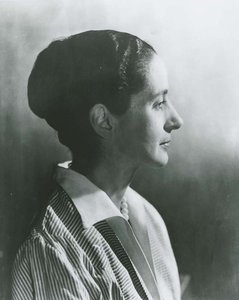
Isabel Bishop
1902 - 1988
Detalii rapide
- Birth Date: 1902
- Birth Place: Cincinnati, Ohio
- Death Date: 1988
- Influenced By: Guy Pène du Bois, Kenneth Hayes Miller, Peter Paul Rubens, Dutch and Flemish painters
- Movement: Fourteenth Street School, American Realism
- Name: Isabel Bishop
- Nationality: American
- Notable Works: Paintings of Union Square scenes, depictions of women in urban settings
Articole similare

Concrete Visions: Exploring Representations of Urban Life in Modern & Contemporary Art
Explore the evolution of cityscape painting from Realism to contemporary art. Discover key artists & invest in timeless urban visions with OriginalUniqueArt's expert guidance and museum-quality reproductions.

Concrete Visions: Exploring the Urban Landscape in Painting – From Realism to Contemporary Art
Explore the evolution of cityscape painting from Realism to contemporary art with OriginalUniqueArt. Discover key artists & invest in timeless urban visions. Expert guidance, museum-quality reproductions.

The Unvarnished Truth: A Cultural Journey Through the Soul of American Realism
Explore the profound beauty of American Realism. From the Ashcan School's urban grit to intimate portraits, discover how artists captured the authentic soul of a nation through unvarnished truth and masterful observation.
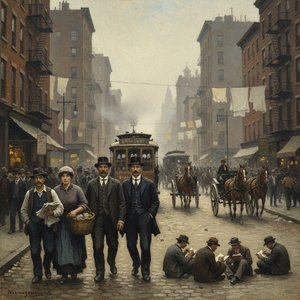
The Ashcan School: Realism, Urban Life & the Democratization of American Art
Explore the revolutionary Ashcan School! Discover how artists like Henri & Sloan challenged tradition with gritty realism, capturing urban life in early 20th-century America. Learn about their impact on American art history.

Romantic Realism's Finest: 10 Masterpieces for Your Home | OriginalUniqueArt
Explore 10 defining masterpieces of Romantic Realism! Discover Courbet, Millet & Daumier's powerful paintings—capturing emotion and social realities. Find museum-quality reproductions for your home at OriginalUniqueArt.com.