

 Previzualizare
 Trimite prin felicitare
 Distribuie
 Detalii despre lucrare
 Ghid
Ghid

 Descarcă imaginea
 Produse similare
 Radiografie
 Galerie foto
 Statistici
Haystacking
 Oil On Panel
- WallArt
- Russian Landscape painters
 1900
1900- 19th Century
 58.0 x 89.0 cm
 Galeria Tretyakova
 Vezi mai mult
Reproducere pictată manual în ulei
Pictură în ulei pe pânză, pictată manual de artiștii noștri la dimensiunea și ramele dorite de dumneavoastră, pe comandă. ( Comută pe versiunea Print Comută pe Imagine Digitală)




P118B lei10

P118H lei10

P118W lei10

P438Z lei10

P508JH lei12

P508YH lei12

P805H lei10

P805Z lei10

P919BZ lei10

P919G lei10

P919XJ lei10

P959ZH lei10

P968JZ lei12

W106C lei8

W218G lei10

W218JH lei8

W218Y lei10

W307PJ lei10

W316G lei10

W316PJ lei8

W316Y lei10

W398PJ lei8

W4111J lei10

W500HY lei15

W500JH lei15

W692G lei12

W849H lei8

W940BG lei15

W953PJ lei8




Alegeți dintre dimensiunile noastre prestabilite, care respectă proporțiile originale ale operei de artă.

Introduceți lățimea și înălțimea necesare pentru a se potrivi ramei sau peretelui dumneavoastră. Această lucrare este pictată manual, așa că, pentru o dimensiune cu o formă diferită, artistul poate picta puțin mai mult în jurul imaginii sau poate tăia puțin din margini — dumneavoastră decideți. Vă vom trimite o simulare digitală pentru aprobare înainte de a începe pictarea. Imaginea afișată pe această pagină nu reprezintă rezultatul real — doar simularea este reprezentativă.
După plasarea comenzii, echipa OriginalUniqueArt.com va contacta clientul prin e-mail pentru instrucțiuni și îi va furniza o previzualizare a machetei
Livrare în întreaga lume () în 3-4 săptămâni, în loc de cele 5 săptămâni standard. (26 Octombrie). Fără compromisuri în ceea ce privește calitatea.

Livrare expres gratuită la nivel mondial

Pânză de in de înaltă calitate

Asigurare completă pentru transport

Garanție de rambursare a taxelor vamale

Garanția fidelității culorilor

Politica de retur în 100 de zile (doar pentru defecte de fabricație)

Garanție de rambursare 100%

Ofertă pentru comenzi multiple
 Opțiunea cu sticlă este disponibilă doar pentru dimensiuni de sub 110 cm

Haystacking
Tehnică de reproducere
Dimensiune reproducere
-


Preț total calculat
lei 1389
A Symphony of Rural Tranquility
In the vast tapestry of Russian landscape painting, few works capture the ephemeral intersection of human toil and natural majesty as poignantly as Isaak Ilyich Levitan’s “Haystacking.” Painted in 1900, this oil on panel masterpiece serves as a profound meditation on the rhythms of rural existence. The scene unfolds across a sun-drenched field, where golden haystacks punctuate the landscape like silent monuments to the harvest. Yet, beneath this surface of pastoral peace, there is an unmistakable tension; a brooding, heavy sky hangs pregnant with the promise of impending rain, casting a soft, diffused light that blankets the earth. This interplay between the warmth of the sunlit grain and the cool, atmospheric weight of the clouds creates a visual dialogue that is both breathtaking and deeply moving.
As one gazes upon the canvas, the eye is drawn to the figures scattered throughout the meadow—men and women united in the collective endeavor of stacking the harvest. Their presence is not merely decorative but essential, embodying the resilience and communal spirit of the countryside. Levitan does not present them as isolated subjects, but as integral components of the landscape itself, their labor mirroring the seasonal cycles of the earth. For the collector or interior designer, this piece offers more than just a beautiful image; it provides a window into a vanished way of life, where the boundaries between human activity and the natural world were seamlessly intertwined.
Impressionistic Mastery and Emotional Resonance
Technically, “Haystacking” is a triumph of Impressionistic resonance. Levitan, a master of what is often termed the "mood landscape," eschews rigid, photographic precision in favor of capturing the fleeting essence of a moment. His brushwork is loose and expressive, allowing light to dance across the blades of grass and through the heavy atmosphere. By skillfully blending a palette dominated by vibrant yellows and somber blues, he evokes a sensory experience that transcends sight; one can almost feel the humidity in the air and the dry texture of the hay. This masterful manipulation of color is central to the painting's emotional depth, oscillating between the tranquil warmth of the sun and an underlying sense of melancholy.
This duality—the coexistence of peace and unrest—is what makes Levitan’s work so enduringly captivating. The painting does not merely depict a field; it translates a feeling. It speaks to the transient nature of beauty and the quiet strength found in persistence. For those seeking to adorn a space with art that inspires contemplation, “Haystacking” offers a sophisticated emotional anchor. Its ability to evoke both serenity and a reflective, soulful nostalgia makes it an exquisite choice for high-end interiors, providing a focal point that invites viewers to pause, breathe, and reconnect with the profound beauty of the natural world.
Întrebări și răspunsuri
Care sunt formatul și dimensiunile pentru "Haystacking"?
"Haystacking" de Isaak Ilyich Levitan are proporționate ca o lucrare de tip Landscape, având dimensiunea de 58 x 89 cm.
Pentru cine este recomandată lucrarea "Haystacking" ca cadou și pentru ce utilizare?
"Haystacking" de Isaak Ilyich Levitan este recomandată ca cadou pentru Anniversary, în special pentru Accent. O reproducere a acestei opere de artă poate fi oferită ca prezent.
Pentru ce ocazie este recomandată "Haystacking" de Isaak Ilyich Levitan ca cadou?
Ca cadou, "Haystacking" de Isaak Ilyich Levitan este recomandată pentru Anniversary. Poate fi potrivită și pentru alte ocazii.
Biografie artist
A Symphony of the Russian Soul: The Life and Art of Isaak Ilyich Levitan
Isaak Ilyich Levitan, a name synonymous with the evocative power of Russian landscape painting, was more than just a chronicler of nature; he was a poet of the land, a translator of its moods into visual form. Born in 1860 in Kibarty (present-day Lithuania) to a Jewish family who later settled in Moscow, Levitan’s life was marked by both profound hardship and an unwavering dedication to his art. The early loss of his mother and father cast a long shadow, instilling within him a sensitivity that would permeate his canvases with a melancholic beauty. This sense of longing, coupled with the restrictions imposed upon Jewish communities in Tsarist Russia, fueled a desire to find solace and expression in the natural world. He entered the Moscow School of Painting, Sculpture and Architecture in 1873, where he came under the tutelage of Alexei Savrasov, whose influence would prove pivotal in shaping Levitan’s artistic vision. It was Savrasov who nurtured his student's innate ability to capture not merely the appearance of nature, but its very essence—its atmosphere, its emotional resonance.The Early Years and Artistic Foundations
Levitan’s childhood was far from idyllic. The untimely deaths of his parents, followed by the loss of his mother when he was just fifteen years old, instilled in him a deep sense of vulnerability and melancholy – emotions that would become central themes in his work. These personal tragedies, combined with the challenges faced by Jewish communities under Tsarist rule, shaped his artistic perspective profoundly. Despite these difficulties, Levitan’s exceptional talent shone through early on. He displayed an innate ability to observe and represent the natural world with remarkable sensitivity, capturing not just its physical form but also its intangible qualities – light, shadow, atmosphere, and mood. This aptitude led him to be accepted into the prestigious Moscow School of Painting, Sculpture and Architecture in 1873, where he was fortunate enough to study under Alexei Savrasov, a leading figure in Russian landscape painting. Savrasov recognized Levitan’s potential and guided him towards developing a style characterized by lyrical beauty, emotional depth, and a profound connection with the Russian countryside. The lessons learned from Savrasov—particularly his emphasis on capturing the *feeling* of a place rather than simply its topographical details—laid the foundation for Levitan's distinctive artistic approach.The Birth of a ‘Mood Landscape’
Levitan quickly distinguished himself as an artist capable of conveying profound emotion through landscape. He wasn’t interested in topographical accuracy for its own sake; rather, he sought to imbue his paintings with a sense of *mood*, a feeling that resonated deep within the viewer's soul. This approach earned him the title of pioneer of the “mood landscape,” a genre that moved beyond simple representation to explore the spiritual connection between humanity and nature. His palette was often subdued, favoring naturalistic colors and poetic elements over vibrant displays. He masterfully employed light and shadow, creating atmospheric effects that evoked feelings of tranquility, solitude, or even quiet despair. Works like *Autumn Day. Sokolniki* (1879), painted when he was just nineteen years old, already demonstrated this remarkable ability to capture the subtle nuances of the Russian countryside. The painting’s muted tones and delicate rendering of light create a sense of wistful nostalgia, hinting at the transience of beauty and the inevitability of change. Later masterpieces such as *The Vladimirka Road* (1892) and *Eternal Rest* (1894), prominently displayed in the Tretyakov Gallery, further solidified his reputation as a master of emotional landscape painting.Influences and Artistic Kinships
While deeply indebted to Savrasov’s influence, Levitan was also receptive to other artistic currents. He collaborated with fellow artists like Konstantin Korovin, Mikhail Nesterov, and Nikolai Chekhov—the brother of the renowned playwright Anton Chekhov, who became a lifelong friend. This circle fostered an environment of creative exchange and mutual support. Though he briefly experimented with Impressionistic techniques, Levitan never fully embraced the movement, maintaining a uniquely Russian sensibility in his work. He found inspiration not only in the visual world but also in music and literature, seeking to translate their emotional power into his paintings. His designs for scenery for Savva Mamontov’s private Russian Opera demonstrate his versatility and willingness to explore different artistic mediums. The influence of these collaborations and experiences can be seen in works like *Spring Flood*, *Stormy Day*, *Vesper Chimes* and *Silent Cloister*, each a testament to his evolving style and deepening understanding of the emotional landscape.Legacy and Enduring Resonance
In 1897, Levitan was elected to the Imperial Academy of Arts, a recognition of his growing stature within the Russian art world. This honor signified not only professional success but also a validation of his artistic vision by the established institutions of the time. He subsequently became head of the landscape studio at his alma mater in 1898, dedicating himself to nurturing the next generation of Russian landscape painters. His influence extended far beyond his students, however. Levitan’s work played a crucial role in shaping the development of Russian landscape painting, elevating it from mere depiction to a powerful vehicle for emotional and spiritual expression. He instilled within his canvases a sense of national identity and an appreciation for the beauty of the Russian countryside that continues to resonate with audiences today. His untimely death in 1900 at the age of forty left a void in the art world, but his legacy endures as a master of atmospheric landscape painting and a profound interpreter of the Russian soul. In 1897, he created *Moonlit Night: Main Road*, a stunning example of his ability to capture the ethereal beauty of the Russian night, showcasing his mastery of light and shadow. His paintings remain a testament to the enduring power of art to evoke emotion, inspire contemplation, and connect us to the beauty and mystery of the natural world.
Isaak Ilyich Levitan
1860 - 1900 , Lituania
Detalii rapide
- Artistic Movement Or Style: Paisaj de stare de spirit
- Artists Or Movements Influenced By This Artist: ['Peredvizhniki']
- Artists Who Influenced This Artist:
- Savrasov
- Polenov
- Date Of Birth: 1860, August 30
- Date Of Death: 1900, July 22
- Full Name: Isaak Ilyich Levitan
- Nationality: Rusă
- Notable Artworks:
- Ziua Toamnei Sokolniki
- Drumul Vladimirka
- Odihna eternă
- Place Of Birth: Kibarty, Lituania
Articole similare

Peisaje Romantice Iconice: 10 Capodopere Artistice pentru Decorul de Lux
Descoperă 10 capodopere romantice iconice de Caspar David Friedrich, Turner și alți maeștri. Explorează istoria artei, emoțiile din peisaje și găsește tablouri canvas perfecte pentru decorul tău pe OriginalUniqueArt.com!

Impressionist Landscapes for Large-Scale Hospitality Decor: A Professional Guide to Light, Color, and Texture
A professional guide for hotel designers and procurement managers on selecting Impressionist landscapes. Learn to leverage light, color, and texture through high-quality, hand-painted oil reproductions and large-scale custom solutions for premium hospitality environments.

Top 10 Capodopere Impresioniste: Peisaje care au Schimbat Arta | OriginalUniqueArt.ro
Descoperă top 10 capodopere impresioniste care au revoluționat arta! Monet, Manet, Renoir și alți maeștri ai peisajului. Reproduceri de tablouri canvas de calitate muzeală pentru un decor inspirat. Explorează colecția completă pe OriginalUniqueArt.com!

Top 10 Capodopere Impresioniste: Peisaje care au Definit Arta Modernă | OriginalUniqueArt.ro
Descoperă top 10 capodopere impresioniste care au revoluționat arta! Monet, Manet, Renoir și alți maeștri ai peisajului. Reproduceri de tablouri de calitate muzeală pentru un decor inspirat. Explorează colecția completă pe OriginalUniqueArt.com!
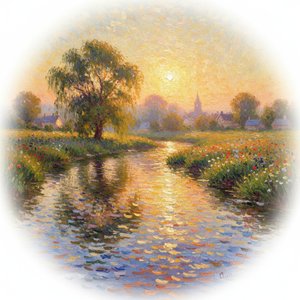
Capturing Light: A Masterclass in the Ethereal Beauty of Impressionistic Landscapes
Explore the ethereal beauty of Impressionist landscapes. Discover how masters like Monet captured fleeting light through color and texture, and learn to curate these timeless, luminous masterpieces for your home collection.
