

 Previzualizare
 Trimite
 Distribuie
 Detalii despre lucrare

 Descarcă
 Produse similare
 Radiografie
 Diapozitive automate
The Drummer


 Vezi mai mult
Giclée / Imprimare artistică
Printuri giclée sau pe canvas de calitate muzeală, cu proces de producție rapid și opțiuni flexibile de finisare. ( Comandă pictură lucrată manual Cumpără imaginea)




P118B $10

P118H $10

P118W $10

P438Z $10

P508JH $12

P508YH $12

P805H $10

P805Z $10

P919BZ $10

P919G $10

P919XJ $10

P959ZH $10

P968JZ $12

W106C $8

W218G $10

W218JH $8

W218Y $10

W307PJ $10

W316G $10

W316PJ $8

W316Y $10

W398PJ $8

W4111J $10

W500HY $15

W500JH $15

W692G $12

W849H $8

W940BG $15

W953PJ $8




Alegeți dintre dimensiunile noastre prestabilite, care respectă proporțiile originale ale operei de artă.

Puteți introduce propriile dimensiuni pentru a se potrivi unui anumit cadru sau spațiu. Dacă dimensiunea selectată nu corespunde proporțiilor imaginii originale, vom decupa lucrarea de artă sau vom extinde imaginea cu margini oglindite sau cu o culoare uniformă. Un mockup digital va fi trimis pentru aprobarea dumneavoastră înainte de începerea producției.
Vă rugăm să rețineți că previzualizarea de pe ecran nu reflectă decuparea sau extinderea reală. Doar mockup-ul va arăta cu exactitate compoziția finală.
Deși dimensiunile personalizate sunt disponibile, vă recomandăm să selectați o dimensiune din lista predefinită pentru a păstra proporțiile originale.
Livrare în întreaga lume () în 2 săptămâni, în loc de cele 4/5 săptămâni standard. (13 August)

Livrare expres gratuită la nivel mondial

Pânză de in de înaltă calitate

Asigurare completă pentru transport

Garanție de rambursare a taxelor vamale

Garanția fidelității culorilor

Politica de retur în 60 de zile (doar pentru defecte)

Garanție de rambursare 100%

Ofertă pentru comenzi multiple
 Opțiunea cu sticlă este disponibilă doar pentru dimensiuni de sub 110 cm

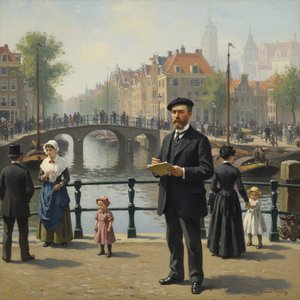
The Drummer
Giclée / Imprimare artistică
Dimensiune reproducere
-


Preț total calculat
$ 80
Descriere obiect de colecție
A Portrait of Quiet Intensity: Exploring “The Drummer”
Isaac Lazarus Israëls’s “The Drummer,” painted circa 1885, isn't merely a depiction of a woman holding a drum; it’s a carefully constructed tableau brimming with understated emotion and a subtle commentary on the rhythms of everyday life in late 19th-century Amsterdam. Israëls, a pivotal figure within the Dutch Impressionist movement, masterfully captures a moment suspended between observation and engagement, inviting the viewer to contemplate the woman's gaze and the quiet power held within her posture.
The painting immediately draws attention to its central subject – a young woman seated in a simple wooden chair. Her attire is modest, suggesting a rural or working-class background, yet her presence exudes an unexpected dignity. She cradles a drum, not with flamboyant enthusiasm, but with a deliberate and almost reverent hold. The drum itself, rendered with meticulous detail, hints at its purpose – perhaps a source of entertainment, ritual, or even labor. Her eyes are fixed on something beyond the frame, lost in thought, creating an immediate sense of intimacy and inviting speculation about her inner world.
The Amsterdam Impressionist Palette: Technique and Style
Israëls’s technique is distinctly Impressionistic, characterized by loose brushstrokes, a vibrant yet muted color palette, and a focus on capturing the fleeting effects of light. He employs broken colors – applying paint in small, distinct strokes rather than blending them seamlessly – to create an atmospheric quality that suggests both warmth and shadow. The lighting, diffused and soft, washes over the scene, highlighting the textures of the wooden chair, the woman’s clothing, and the drum's surface. Notice how he uses subtle variations in tone to define form and volume, eschewing sharp outlines in favor of a more suggestive approach.
The composition is carefully balanced, with the woman occupying the central space while two figures – a seated man and a standing one – recede into the background. These secondary elements contribute to the sense of a lived-in scene, hinting at a domestic setting or perhaps a village gathering. The inclusion of the handbag adds another layer of detail, grounding the image in the realities of everyday life.
A Window into Dutch Society and Symbolism
“The Drummer” offers a poignant glimpse into the social fabric of Amsterdam during the late 19th century. Israëls was deeply interested in portraying the lives of ordinary people, particularly those who worked with their hands – farmers, laborers, and craftspeople. The woman’s humble attire and contemplative expression speak to the realities of working-class life, while her quiet strength suggests resilience and dignity. The drum itself carries symbolic weight; it can represent rhythm, tradition, community, or even a connection to ancestral roots.
Furthermore, the painting's composition echoes elements of Dutch genre paintings popular at the time, which often depicted scenes from rural life with a focus on realism and social commentary. Israëls’s work aligns with this tradition while simultaneously injecting it with his own distinctive Impressionistic style. The woman’s gaze, directed towards an unseen point, invites us to consider her thoughts and experiences – perhaps reflecting on the past, contemplating the future, or simply finding solace in the present moment.
Rediscovering Israëls: A Legacy of Observation
Isaac Lazarus Israëls remains a significant figure in Dutch art history. His ability to capture the essence of human experience through subtle observation and masterful technique continues to resonate with viewers today. “The Drummer” stands as a testament to his artistic vision, offering a captivating portrait that transcends its simple subject matter to become a profound meditation on life, memory, and the enduring power of quiet contemplation. Reproductions of this evocative work offer a beautiful way to bring Israëls’s insightful perspective into any space.
Biografie artist
Isaac Israëls: A Pioneer of Amsterdam Impressionism
Isaac Lazarus Israëls (1865 – 1934) stands as a cornerstone of Dutch Impressionist art, embodying the spirit of innovation and artistic exploration that defined the Hague School’s successor. Born into a family steeped in artistic tradition—his father, Jozef Israëls, being one of the most celebrated painters of his time—Isaac inherited an innate predisposition for visual expression and swiftly established himself as a prodigious talent. From his formative years at the Royal Academy of Art in The Hague, where he forged a lifelong friendship with George Hendrik Breitner, Israëls embarked on a journey to capture the vibrant essence of modern life, rejecting academic conventions in favor of luminous color palettes and loose brushstrokes that mirrored the fleeting beauty of the natural world.- Early Life & Artistic Beginnings: Isaac’s childhood was marked by exposure to artistic excellence; his father's influence instilled a deep appreciation for observation and skillful rendering.
- The Hague School Connection: Israëls’ collaboration with Breitner fostered a shared commitment to portraying the immediacy of experience, propelling him toward a distinctive Impressionist style.
- Remarkable Debut: At just sixteen, he achieved early recognition by selling “Bugle Practice” to Hendrik Willem Mesdag—a testament to his burgeoning talent and entrepreneurial spirit.
Embracing the Impressionist Vision
Israëls’ artistic trajectory decisively shifted toward Impressionism in the late 1880s, aligning him with the influential Tachtigers literary movement. This intellectual fervor translated into a profound desire to represent subjects not merely as they appeared but as they felt—a core principle of Impressionist aesthetics. He meticulously studied the techniques pioneered by Monet and Renoir, mastering the art of capturing atmospheric conditions and conveying emotion through subtle tonal variations. His canvases pulsated with color, reflecting the sun-drenched landscapes of Scheveningen and the bustling streets of Amsterdam, offering viewers glimpses into a rapidly changing society.- Scheveningen Landscapes: Israëls’ summers in Scheveningen yielded iconic depictions of the seaside town—characterized by shimmering blues, vibrant greens, and masterful use of light.
- Amsterdam Cityscapes: He captured the dynamism of Amsterdam with breathtaking precision, portraying cafes, theaters, and busy thoroughfares with remarkable detail and expressive brushwork.
Travels & Artistic Expansion
Driven by an insatiable curiosity for new experiences and artistic inspiration, Israëls undertook extensive voyages throughout Europe and Asia during the First World War. His travels to Belgium and India profoundly impacted his artistic sensibilities, introducing him to exotic subjects—particularly Hindu temples and rituals—that enriched his oeuvre. These expeditions honed his observational skills and broadened his understanding of diverse cultures, informing his later paintings with nuanced perspectives and evocative imagery.- India Exploration: Israëls’ meticulous sketches and paintings from India showcased a fascination for Eastern aesthetics and traditions.
- Diverse Subjects: His artistic output encompassed portraits, landscapes, genre scenes—demonstrating versatility and adaptability to evolving artistic trends.
Legacy & Recognition
Isaac Israëls’ enduring legacy rests upon his contribution to the development of Amsterdam Impressionism and his unwavering commitment to portraying human experience with sensitivity and artistry. His paintings are now housed in prestigious museums across Europe, including the Van Gogh Museum and Mauritshuis—a testament to their artistic merit and historical significance. He achieved international acclaim, notably securing a Gold Medal at the 1928 Olympic Games for “Red Rider”—a symbol of Dutch cultural pride and artistic excellence. Israëls’ influence continues to resonate within contemporary art circles, inspiring artists to embrace spontaneity, color, and emotional depth—solidifying his place as one of the most influential figures in Dutch painting history.
Isaac Israels
1865 - 1934 , Țările Niederlandeze
Detalii rapide
- Artistic Movement Or Style: Impressionism
- Artists Or Movements Influenced By This Artist: ['Tachtigers']
- Artists Who Influenced This Artist:
- Jozef Israëls
- George Hendrik Breitner
- Date Of Birth: 3 februarie 1865
- Date Of Death: 7 octombrie 1934
- Full Name: Isaac Lazarus Israëls
- Nationality: Olandez
- Notable Artworks:
- Transport de soldați coloniali
- Sortitori de cafea
- Portretul lui Mata Hari
- Place Of Birth: Amsterdam, Olanda
Articole similare
Isaac Lazarus Israëls: A Chronicle of Dutch Life & the Evolution of Impressionistic Realism
Explore the captivating world of Isaac Lazarus Israëls (1865-1934), a leading Dutch Amsterdam Impressionist. Discover his city scenes, portraits & travels through Asia – a chronicle of Dutch life and artistic evolution.

Chiaroscuro and Character: A Definitive Guide to Light and Shadow in the Dutch Baroque Era
Explore the dramatic mastery of the Dutch Baroque era. Discover how masters like Rembrandt used chiaroscuro to transform everyday life into timeless art. An expert guide for collectors and enthusiasts seeking to understand the profound interplay of light and shadow.

Golden Light & Dutch Skies: The Timeless Magic of Dutch Golden Age Landscapes
Discover the breathtaking beauty of Dutch Golden Age landscapes. Explore the mastery of light, chiaroscuro, and 17th-century realism through an expert art history lens, celebrating the enduring legacy of the Dutch Masters for discerning collectors and art lovers.

Top 10 Capodopere Baroc Olandez: Artă, Istorie și Decorațiuni Interioare de Lux
Descoperă top 10 capodopere Baroc Olandez! Rembrandt, Vermeer și alți maeștri. Explorează istoria artei, tehnicile unice și atmosfera luxoasă a picturilor baroce. Reproduceri de artă de calitate muzeală pe OriginalUniqueArt.com.

Paul Cézanne: Cele Mai Reprezentative 25 De Capodopere – Artă, Istorie și Decorațiuni Interioare
Descoperă cele mai frumoase 25 de capodopere Paul Cézanne! Explorează istoria, tehnicile și semnificația picturilor impresioniste iconice. Reproduceri artă de calitate muzeală & inspirație decor interioară pe OriginalUniqueArt.com.

