

 Vezi în context
 Trimite
 Distribuie
 Detalii
 Ghidul

 Descarcă
 Produse similare
 Radiografie
 Diaporama
 Statistici
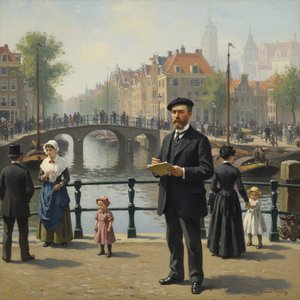
Housemaid with Pram


 Citește mai mult
Giclée / Imprimare artistică
Printuri giclée sau pe canvas de calitate muzeală, cu proces de producție rapid și opțiuni flexibile de finisare. ( Comandă pictură realizată manual Treci la imagine digitală)




P118B $10

P118H $10

P118W $10

P438Z $10

P508JH $12

P508YH $12

P805H $10

P805Z $10

P919BZ $10

P919G $10

P919XJ $10

P959ZH $10

P968JZ $12

W106C $8

W218G $10

W218JH $8

W218Y $10

W307PJ $10

W316G $10

W316PJ $8

W316Y $10

W398PJ $8

W4111J $10

W500HY $15

W500JH $15

W692G $12

W849H $8

W940BG $15

W953PJ $8




Alegeți dintre dimensiunile noastre prestabilite, care respectă proporțiile originale ale operei de artă.

Puteți introduce propriile dimensiuni pentru a se potrivi unui anumit cadru sau spațiu. Dacă dimensiunea selectată nu corespunde proporțiilor imaginii originale, vom decupa lucrarea de artă sau vom extinde imaginea cu margini oglindite sau cu o culoare uniformă. Un mockup digital va fi trimis pentru aprobarea dumneavoastră înainte de începerea producției.
Vă rugăm să rețineți că previzualizarea de pe ecran nu reflectă decuparea sau extinderea reală. Doar mockup-ul va arăta cu exactitate compoziția finală.
Deși dimensiunile personalizate sunt disponibile, vă recomandăm să selectați o dimensiune din lista predefinită pentru a păstra proporțiile originale.
Livrare în întreaga lume () în 2 săptămâni, în loc de cele 4/5 săptămâni standard. (26 Septembrie)

Livrare expres gratuită la nivel mondial

Pânză de in premium

Asigurare completă pentru transport

Garanție de rambursare a taxelor vamale

Garanția fidelității culorilor

Politica de retur în 100 de zile (doar pentru defecte)

Garanție de rambursare 100%

Reducere pentru comenzi multiple
 Opțiunea cu sticlă este disponibilă doar pentru dimensiuni de sub 110 cm

Housemaid with Pram
Giclée / Imprimare artistică
Dimensiune reproducere
-


Preț total
$ 80
A Moment Frozen in Time: Isaac Israëls’ “Housemaid with Pram”
Isaac Lazarus Israëls' "Housemaid with Pram," painted in 1875, isn’t merely a snapshot of urban life; it’s a poignant meditation on the quiet dignity and understated beauty found within the everyday. This watercolor, now housed in the Rijksmuseum in Amsterdam, captures a fleeting moment along a bustling city street – a woman pushing a baby carriage, her face etched with a subtle blend of weariness and contentment. Israëls, a key figure in the Dutch Impressionist movement, masterfully utilizes loose brushstrokes and delicate washes to evoke not just a visual representation but an atmosphere, a feeling of the scene’s transient nature.
Israëls' artistic journey was deeply intertwined with his family history. The son of Jozef Israëls, a renowned Hague School painter known for his realistic depictions of working-class life, Isaac initially followed in his father’s footsteps, exploring similar themes of labor and social realism. However, he quickly developed his own distinct style, moving away from the stark formality of his father's work towards a more impressionistic approach – prioritizing capturing light, color, and mood over precise detail. This shift is powerfully evident in “Housemaid with Pram,” where the focus isn’t on the woman’s physical appearance but rather on her presence within the urban landscape.
The Language of Light and Color
Israëls' technique is characterized by a remarkable sensitivity to light. He employs broken color, layering translucent washes of pigment to create an ethereal quality, as if the scene is bathed in a soft, diffused glow. The muted palette – predominantly blues, greens, and browns – reflects the overcast Amsterdam sky, lending the painting a melancholic yet peaceful atmosphere. Notice how he uses highlights to draw attention to the woman’s face and the details of the pram, while simultaneously blurring the background figures into an indistinct mass. This selective focus directs the viewer's eye and emphasizes the central subject.
The composition itself is carefully constructed. The woman occupies a slightly off-center position, creating a sense of dynamism and inviting the viewer to step into the scene. The placement of the clock tower in the background provides a subtle temporal reference, anchoring the image within a specific moment in time. Israëls’ use of atmospheric perspective – making distant objects appear paler and less distinct – further enhances the illusion of depth and contributes to the painting's overall sense of realism.
Symbolism and Social Commentary
Beyond its aesthetic qualities, “Housemaid with Pram” carries a subtle layer of social commentary. The woman’s posture suggests both responsibility and exhaustion—a common reality for working-class women in 19th-century Amsterdam. The pram itself symbolizes motherhood and the cycle of life, while the bustling street represents the relentless pace of urban existence. Israëls doesn't offer a judgment or moralizing statement; instead, he presents a simple, honest portrayal of a woman’s daily life, inviting viewers to contemplate her experiences and consider the social conditions that shaped them.
The inclusion of other figures in the background – a man standing on the left and another further back on the right – adds to the painting's narrative complexity. They represent the broader context of urban society, highlighting the woman’s place within it. Their presence suggests a community, albeit one largely unseen by the central figure.
A Timeless Portrait of Human Experience
“Housemaid with Pram” is more than just a painting; it's a window into the past—a poignant and evocative depiction of everyday life in 19th-century Amsterdam. Israëls’ masterful use of light, color, and composition creates an image that resonates deeply with viewers today, reminding us of the shared human experiences of labor, motherhood, and the quiet beauty found within the ordinary moments of our lives. Reproductions of this work offer a chance to bring this evocative scene into any space, fostering contemplation and appreciation for Israëls’ enduring legacy.
Biografie artist
Isaac Israëls: A Pioneer of Amsterdam Impressionism
Isaac Lazarus Israëls (1865 – 1934) stands as a cornerstone of Dutch Impressionist art, embodying the spirit of innovation and artistic exploration that defined the Hague School’s successor. Born into a family steeped in artistic tradition—his father, Jozef Israëls, being one of the most celebrated painters of his time—Isaac inherited an innate predisposition for visual expression and swiftly established himself as a prodigious talent. From his formative years at the Royal Academy of Art in The Hague, where he forged a lifelong friendship with George Hendrik Breitner, Israëls embarked on a journey to capture the vibrant essence of modern life, rejecting academic conventions in favor of luminous color palettes and loose brushstrokes that mirrored the fleeting beauty of the natural world.- Early Life & Artistic Beginnings: Isaac’s childhood was marked by exposure to artistic excellence; his father's influence instilled a deep appreciation for observation and skillful rendering.
- The Hague School Connection: Israëls’ collaboration with Breitner fostered a shared commitment to portraying the immediacy of experience, propelling him toward a distinctive Impressionist style.
- Remarkable Debut: At just sixteen, he achieved early recognition by selling “Bugle Practice” to Hendrik Willem Mesdag—a testament to his burgeoning talent and entrepreneurial spirit.
Embracing the Impressionist Vision
Israëls’ artistic trajectory decisively shifted toward Impressionism in the late 1880s, aligning him with the influential Tachtigers literary movement. This intellectual fervor translated into a profound desire to represent subjects not merely as they appeared but as they felt—a core principle of Impressionist aesthetics. He meticulously studied the techniques pioneered by Monet and Renoir, mastering the art of capturing atmospheric conditions and conveying emotion through subtle tonal variations. His canvases pulsated with color, reflecting the sun-drenched landscapes of Scheveningen and the bustling streets of Amsterdam, offering viewers glimpses into a rapidly changing society.- Scheveningen Landscapes: Israëls’ summers in Scheveningen yielded iconic depictions of the seaside town—characterized by shimmering blues, vibrant greens, and masterful use of light.
- Amsterdam Cityscapes: He captured the dynamism of Amsterdam with breathtaking precision, portraying cafes, theaters, and busy thoroughfares with remarkable detail and expressive brushwork.
Travels & Artistic Expansion
Driven by an insatiable curiosity for new experiences and artistic inspiration, Israëls undertook extensive voyages throughout Europe and Asia during the First World War. His travels to Belgium and India profoundly impacted his artistic sensibilities, introducing him to exotic subjects—particularly Hindu temples and rituals—that enriched his oeuvre. These expeditions honed his observational skills and broadened his understanding of diverse cultures, informing his later paintings with nuanced perspectives and evocative imagery.- India Exploration: Israëls’ meticulous sketches and paintings from India showcased a fascination for Eastern aesthetics and traditions.
- Diverse Subjects: His artistic output encompassed portraits, landscapes, genre scenes—demonstrating versatility and adaptability to evolving artistic trends.
Legacy & Recognition
Isaac Israëls’ enduring legacy rests upon his contribution to the development of Amsterdam Impressionism and his unwavering commitment to portraying human experience with sensitivity and artistry. His paintings are now housed in prestigious museums across Europe, including the Van Gogh Museum and Mauritshuis—a testament to their artistic merit and historical significance. He achieved international acclaim, notably securing a Gold Medal at the 1928 Olympic Games for “Red Rider”—a symbol of Dutch cultural pride and artistic excellence. Israëls’ influence continues to resonate within contemporary art circles, inspiring artists to embrace spontaneity, color, and emotional depth—solidifying his place as one of the most influential figures in Dutch painting history.
Isaac Israels
1865 - 1934 , Țările Niederlandeze
Informații rapide
- Artistic Movement Or Style: Impressionism
- Artists Or Movements Influenced By This Artist: ['Tachtigers']
- Artists Who Influenced This Artist:
- Jozef Israëls
- George Hendrik Breitner
- Date Of Birth: 3 februarie 1865
- Date Of Death: 7 octombrie 1934
- Full Name: Isaac Lazarus Israëls
- Nationality: Olandez
- Notable Artworks:
- Transport de soldați coloniali
- Sortitori de cafea
- Portretul lui Mata Hari
- Place Of Birth: Amsterdam, Olanda
Articole conexe
Isaac Lazarus Israëls: A Chronicle of Dutch Life & the Evolution of Impressionistic Realism
Explore the captivating world of Isaac Lazarus Israëls (1865-1934), a leading Dutch Amsterdam Impressionist. Discover his city scenes, portraits & travels through Asia – a chronicle of Dutch life and artistic evolution.

Ephemeral Visions: Exploring the Artistic Legacy & Nuances of Watercolor Painting
Explore the captivating world of watercolor painting! Discover its rich history, essential techniques, influential artists & collecting tips from art experts. A comprehensive guide for enthusiasts.

Top 10 Capodopere Acvarelă Legendară care au Schimbat Arta pentru Totdeauna | OriginalUniqueArt.ro
Descoperă Top 10 capodopere acuarelă legendară de la Sargent, Turner și alți maeștri! Explorează istoria artei, tehnicile unice și paletele vibrante. Reproduceri de artă de calitate muzeală pentru decorul perfect pe OriginalUniqueArt.com.

Ephemeral Visions: Exploring the History & Emotional Resonance of Watercolor Painting
Explore the captivating history of watercolor painting, from ancient techniques to modern masters like Kandinsky & Blake. Discover essential artists, collecting tips & the emotional power of this luminous medium. Expert insights for art enthusiasts.

Ephemeral Visions: Exploring the Artistic Legacy & Contemporary Practice of Watercolor Painting
Explore the captivating world of watercolor painting! Discover its rich history, essential techniques, influential artists & collecting tips. A comprehensive guide for art enthusiasts from OriginalUniqueArt.