Previzualizare
 Trimite prin felicitare
 Distribuie
 Detalii despre lucrare
 Ghid
Ghid

 Descarcă imaginea
 Produse similare
 Radiografie
 Galerie foto
 Întrebări și răspunsuri
 Statistici
Jew praying

- 80.0 x 64.0 cm


 Vezi mai mult
Giclée / Imprimare artistică
Printuri giclée sau pe canvas de calitate muzeală, cu proces de producție rapid și opțiuni flexibile de finisare. ( Comandă pictură realizată manual Comută pe Imagine Digitală)




P118B lei10

P118H lei10

P118W lei10

P438Z lei10

P508JH lei12

P508YH lei12

P805H lei10

P805Z lei10

P919BZ lei10

P919G lei10

P919XJ lei10

P959ZH lei10

P968JZ lei12

W106C lei8

W218G lei10

W218JH lei8

W218Y lei10

W307PJ lei10

W316G lei10

W316PJ lei8

W316Y lei10

W398PJ lei8

W4111J lei10

W500HY lei15

W500JH lei15

W692G lei12

W849H lei8

W940BG lei15

W953PJ lei8




Alegeți dintre dimensiunile noastre prestabilite, care respectă proporțiile originale ale operei de artă.

Introduceți lățimea și înălțimea necesare pentru a se potrivi ramei sau peretelui dumneavoastră. O printare poate fi doar tăiată, niciodată extinsă dincolo de dimensiunea imaginii originale, astfel încât o dimensiune cu o formă diferită va pierde o parte din imagine. Vă trimitem o simulare digitală pentru aprobare înainte de a imprima orice. Imaginea afișată pe această pagină nu prezintă tăierea reală — doar simularea arată acest lucru.
Livrare în întreaga lume () în 2 săptămâni, în loc de cele 4/5 săptămâni standard. (5 Noiembrie)

Livrare expres gratuită la nivel mondial

Pânză de in de înaltă calitate

Asigurare completă pentru transport

Garanție de rambursare a taxelor vamale

Garanția fidelității culorilor

Politica de retur în 100 de zile (doar pentru defecte de fabricație)

Garanție de rambursare 100%

Ofertă pentru comenzi multiple
 Opțiunea cu sticlă este disponibilă doar pentru dimensiuni de sub 110 cm

Jew praying
Giclée / Imprimare artistică
Dimensiune reproducere
-


Preț total calculat
lei 387
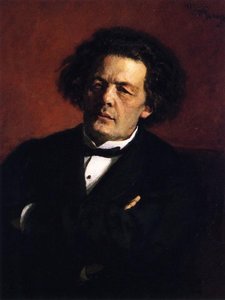
Jew Praying by Ilya Repin: A Masterpiece of Realism
Ilya Yefimovich Repin's "Jew Praying," created in 1875, stands as a poignant example of Russian realism, capturing a moment of profound introspection and spiritual devotion. This oil painting, measuring 80 x 64 cm, is renowned for its meticulous detail and the artist’s ability to convey deep emotion through subtle facial expressions and posture. Available as a high-quality reproduction, this artwork offers viewers an opportunity to appreciate Repin's skill and the historical context of his work.
Subject and Composition
The painting depicts an elderly Jewish man engaged in prayer. He is portrayed wearing traditional attire – a hat, a long coat, and a white beard and mustache—elements that immediately identify him within a specific cultural and religious framework. The composition centers entirely on the figure, with a dark, indistinct background that draws all attention to his face and upper body. His hands are clasped, holding a cup, suggesting a ritualistic act of devotion. The man's gaze is directed towards something beyond the viewer, conveying a sense of deep contemplation and connection to a higher power.
Style and Technique
Repin’s masterful use of realism is evident in every brushstroke. The visible texture of the paint contributes to the painting's aged feel, emphasizing the subject's years and wisdom. Lines are skillfully employed to define the folds of his clothing, the contours of his face, and the intricate details of his beard. The lighting plays a crucial role; strong highlights illuminate the man’s face and clothing, while deep shadows accentuate wrinkles and age lines, adding depth and dimensionality. Repin's technique demonstrates a profound understanding of light and shadow to create a sense of realism and emotional intensity.
Historical Context and Symbolism
"Jew Praying" was created during a period of significant social and political change in Russia. The painting reflects the growing interest in portraying everyday life and ordinary people, moving away from idealized depictions of historical figures or mythological scenes. The subject matter itself—a Jewish man engaged in prayer—was somewhat unconventional for Russian art at the time, potentially reflecting Repin's desire to explore themes of faith, tradition, and cultural identity within a diverse society. The traditional clothing and posture are symbolic representations of Jewish heritage and religious practice, conveying a sense of continuity and resilience.
Emotional Impact and Legacy
Beyond its technical brilliance, "Jew Praying" evokes a powerful emotional response in viewers. The man’s expression is one of profound contemplation and devotion, inviting introspection and empathy. The painting's melancholic undertones reflect the weight of experience and the enduring power of faith. Repin's work continues to resonate with audiences today, celebrated for its realism, sensitivity, and ability to capture the essence of human spirituality. Owning a reproduction allows art enthusiasts to appreciate this significant piece of Russian artistic heritage.
Întrebări și răspunsuri
Unde pot achiziționa o printă a lucrării "Jew praying" de Ilya Repin?
Pentru a achiziționa o ediție print a lucrării "Jew praying" de Ilya Repin, vă este suficient să o comandați pe pagina dedicată Print Fine Art: o printă fine art pe canvas din bumbac sau pe hârtie canvas arhivistică.
Ce atmosferă ar aduce "Jew praying" într-un spațiu?
Cu atmosfera sa Nostalgic, „Jew praying” este recomandată pentru o Living Room.
Care este nuanța dominantă în "Jew praying"?
O nuanță de Amber to Saffron traversează întregul "Jew praying" de Ilya Repin.
Biografie artist
Early Life and the Seeds of Realism
Ilya Yefimovich Repin, a name that echoes through the very heart of Russian art, was born in 1844 within the humble Ukrainian town of Chuguev. His origins were far removed from the opulent circles often associated with artistic patronage; his father, a former soldier who traded horses, and his mother, deeply rooted in local traditions, instilled in young Ilya a profound connection to the land and its people – an understanding of hardship, resilience, and the vibrant spirit of rural life that would become the cornerstone of his artistic vision. Formal education began at a local school where his mother served as teacher, but a brief period followed at a military cantonist school, an experience he later recalled with a touch of wryness. Yet, even within the constraints of military discipline, his innate talent for drawing blossomed, revealing a nascent gift that would eventually shape his destiny. At sixteen, he embarked on an apprenticeship with Ivan Bunakov, an icon painter, immersing himself in the rigorous world of religious art – a training that honed his skills in meticulous detail and compositional precision. These formative years weren’t merely technical exercises; they represented a crucial immersion into the visual language of Russian culture, laying the groundwork for his later explorations of national identity and social commentary. Through restoring ancient icons and fulfilling portrait commissions, Repin began to observe and capture the essence of human character – a skill he would master throughout his illustrious career, developing an uncanny ability to portray not just appearances but also the inner lives of his subjects.St. Petersburg and the Embrace of Social Consciousness
Driven by an unyielding ambition, Repin journeyed to St. Petersburg in 1863, seeking admission to the prestigious Imperial Academy of Arts – a move fueled by a desire to elevate his artistic standing and contribute to the burgeoning Russian art scene. Initial rejection didn’t deter him; instead, he diligently audited classes, immersing himself in the city's vibrant artistic milieu, absorbing the techniques and philosophies of established masters. It was here that he encountered Ivan Kramskoi, a leading figure within the Peredvizhniki movement – a collective of realist artists who boldly rejected the rigid conventions of academic art and sought to depict Russian life with unflinching honesty and social awareness. Kramskoi became Repin’s mentor, guiding him towards a more politically engaged approach to his work. The influence of critic Vladimir Stasov was also pivotal, encouraging Repin to focus on contemporary themes – the lives of ordinary Russians, their struggles, and their aspirations. This period marked a significant shift in Repin's artistic trajectory; he began to prioritize portraying the realities of Russian society rather than adhering to idealized or historical subjects. His talent quickly gained recognition, earning him awards and accolades, including gold medals for works like “Job and His Friends” (1869) and "The Raising of Jairus’ Daughter" (1871). These early successes signaled the arrival of a powerful new voice in Russian art – one that would challenge established norms and capture the spirit of a rapidly changing nation. A formative experience was his journey along the Volga River in 1870, sketching the arduous lives of barge haulers; this provided the inspiration for what would become his most famous painting, a work that would forever cement his reputation as a champion of the downtrodden.Masterpieces of Realism and Historical Drama
Repin’s name became inextricably linked with realism through works that unflinchingly portrayed the realities of Russian society. “Barge Haulers on the Volga” (1873), a monumental canvas depicting exhausted laborers dragging boats along the river, shocked and captivated audiences. It wasn't merely a depiction of physical hardship; it was a powerful indictment of social injustice and a testament to human endurance – a scene that resonated deeply with the growing awareness of class inequality in Russia. This painting launched Repin into national prominence and established him as a leading voice for the marginalized. He continued to explore themes of Russian life in works like *“Religious Procession in Kursk Province”* (1883), which offered a nuanced portrayal of faith, superstition, and social hierarchy, revealing the complexities of rural life. However, Repin’s artistic vision extended beyond contemporary issues; he also tackled historical subjects with dramatic flair. “Ivan the Terrible and His Son Ivan” (1885), depicting a moment of horrific violence and remorse – Tsar Ivan IV brutally slaying his own son in a fit of rage – caused a scandal upon its unveiling but remains one of his most iconic works, a chilling exploration of power, guilt, and human fallibility. Perhaps his most celebrated painting is *“Reply of the Zaporozhian Cossacks”* (1880-91), a vibrant scene capturing the defiant spirit of Ukrainian Cossacks composing a satirical letter to the Ottoman Sultan – a symbol of resistance, national pride, and the enduring strength of the Ukrainian people. These paintings were not simply historical recreations; they were imbued with psychological depth and emotional intensity, bringing the past vividly to life for viewers.Legacy and Enduring Influence
Throughout his long and prolific career, Repin continued to paint portraits of prominent figures – Leo Tolstoy, Modest Mussorgsky, Pavel Tretyakov – capturing their personalities with remarkable insight and empathy. He also taught at the Academy of Arts in St. Petersburg, influencing generations of Russian artists with his commitment to realism and social commentary. His work served as a powerful critique of Tsarist oppression and inspired reform movements within Russia. Following the February Revolution of 1917, Repin initially embraced the new order, but he was deeply disillusioned by the subsequent violence and terror unleashed by the Bolsheviks. He retreated to his estate, Penates, in Kuokkala (now Repino), Finland, where he continued to paint until his death in 1930. Despite facing political challenges and exile, Repin’s legacy endures as one of Russia's most important cultural figures – a master painter who captured the essence of his time with unparalleled skill and emotional depth. His home, Penates, is now a museum, preserving not only his artistic legacy but also offering a poignant glimpse into the life of a man deeply committed to portraying the realities of Russian society through his art. Repin’s influence extends far beyond his individual paintings; he helped define Russian realism and paved the way for Socialist Realism, inspiring countless artists to use their work as a means of social critique and artistic expression. His ability to capture the human condition with both empathy and unflinching honesty continues to resonate with audiences today, ensuring his place among the giants of 19th-century art.
Ilya Repin
1844 - 1930 , Ucraina
Detalii rapide
- Artistic Movement Or Style: Realism
- Artists Or Movements Influenced By This Artist: ['Peredvizhniki']
- Artists Who Influenced This Artist:
- Kramskoi
- Stasov
- Date Of Birth: 1844
- Date Of Death: 1930
- Full Name: Ilya Yefimovich Repin
- Nationality: Rusă
- Notable Artworks:
- Volga Barge Haulers
- Cossacii Zaporojianei
- Ivan cel Ferocel
- Place Of Birth (City And Country): Chuguev, Rusia
Articole similare
Reflections of an Era: Identity & Social Commentary in 19th-Century Portraiture
Explore the captivating world of 19th-century portraiture! Discover key artists, movements like Realism & Impressionism, and the powerful social commentary embedded within these iconic artworks. Expert insights at OriginalUniqueArt.

Romantic Realism's Finest: 10 Masterpieces for Your Home | OriginalUniqueArt
Explore 10 defining masterpieces of Romantic Realism! Discover Courbet, Millet & Daumier's powerful paintings—capturing emotion and social realities. Find museum-quality reproductions for your home at OriginalUniqueArt.com.
The Poetic Truth of Observation: Exploring 19th-Century Realism in Painting
Explore the captivating world of 19th-century Realism! Discover key artists like Courbet & Millet, masterpieces, and the powerful social commentary behind this influential art movement. Expert insights at OriginalUniqueArt.
Realism in Art: A Professional Guide to Authentic Detail and Lifelike Masterpieces for Large-Scale Interior Projects
Master the use of Realism in professional interiors. This expert guide explores 19th-century masterpieces, offering procurement managers and designers technical insights into selecting authentic, hand-painted oil reproductions for high-end hotel and corporate projects.

The Evocative Embrace of Reality: Exploring Romantic Realism in 19th-Century Painting
Explore the captivating world of Romantic Realism! Discover key artists like Courbet & Millet, masterpieces, and the social context behind this influential art movement. Expert insights for collectors at OriginalUniqueArt.