Previzualizare
 Trimite prin felicitare
 Distribuie
 Detalii despre lucrare
 Ghid
Ghid

 Descarcă imaginea
 Produse similare
 Radiografie
 Galerie foto
 Statistici
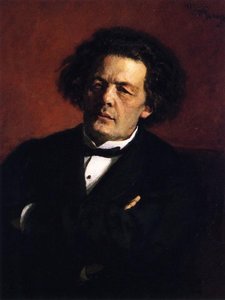
Портрет Дмитрия Менделеева
 Acuarelă
- Artă de perete
- Russian Realism
 1885
1885- Secolul al XIX-lea
 58.0 x 46.0 cm
 Galeria Tretyakova
 Vezi mai mult
Giclée / Imprimare artistică
Printuri giclée sau pe canvas de calitate muzeală, cu proces de producție rapid și opțiuni flexibile de finisare. ( Comandă pictură realizată manual Comută pe Imagine Digitală)




P118B lei10

P118H lei10

P118W lei10

P438Z lei10

P508JH lei12

P508YH lei12

P805H lei10

P805Z lei10

P919BZ lei10

P919G lei10

P919XJ lei10

P959ZH lei10

P968JZ lei12

W106C lei8

W218G lei10

W218JH lei8

W218Y lei10

W307PJ lei10

W316G lei10

W316PJ lei8

W316Y lei10

W398PJ lei8

W4111J lei10

W500HY lei15

W500JH lei15

W692G lei12

W849H lei8

W940BG lei15

W953PJ lei8




Alegeți dintre dimensiunile noastre prestabilite, care respectă proporțiile originale ale operei de artă.

Introduceți lățimea și înălțimea necesare pentru a se potrivi ramei sau peretelui dumneavoastră. O printare poate fi doar tăiată, niciodată extinsă dincolo de dimensiunea imaginii originale, astfel încât o dimensiune cu o formă diferită va pierde o parte din imagine. Vă trimitem o simulare digitală pentru aprobare înainte de a imprima orice. Imaginea afișată pe această pagină nu prezintă tăierea reală — doar simularea arată acest lucru.
Livrare în întreaga lume () în 2 săptămâni, în loc de cele 4/5 săptămâni standard. (27 Octombrie)

Livrare expres gratuită la nivel mondial

Pânză de in de înaltă calitate

Asigurare completă pentru transport

Garanție de rambursare a taxelor vamale

Garanția fidelității culorilor

Politica de retur în 100 de zile (doar pentru defecte de fabricație)

Garanție de rambursare 100%

Ofertă pentru comenzi multiple
 Opțiunea cu sticlă este disponibilă doar pentru dimensiuni de sub 110 cm

Портрет Дмитрия Менделеева
Giclée / Imprimare artistică
Dimensiune reproducere
-


Preț total calculat
lei 371
Portrait of Dmitry Mendeleev: A Window Into Scientific Genius
The watercolor painting “Portrait of Dmitry Mendeleev” by Ilya Yefimovich Repin stands as an enduring symbol of Russian intellectual heritage and artistic realism—a testament to Repin’s masterful ability to capture not just likeness, but also the very essence of his subject. Executed in 1885, this artwork resides within the prestigious Tretyakov Gallery in Moscow, attracting admirers who appreciate its profound connection to scientific advancement and artistic excellence. Measuring 58 x 46 cm, it’s more than simply a depiction; it's an invitation into Mendeleev’s world—a realm of meticulous observation and unwavering dedication to unlocking the secrets of matter.The Artist and His Subject: Repin’s Vision of Scientific Pursuit
Ilya Yefimovich Repin (1844-1930) was arguably Russia's most celebrated realist painter, driven by an uncompromising commitment to portraying life as it truly existed. Unlike many artists of his era preoccupied with idealized beauty, Repin sought to confront viewers with the complexities and hardships inherent in human experience—a philosophy that profoundly shaped his artistic output. Mendeleev himself, a towering figure in chemistry, was recognized for his groundbreaking contribution to understanding the periodic table of elements—a monumental achievement that fundamentally altered our comprehension of chemical relationships. Repin’s portrait wasn't merely aiming for accuracy; he endeavored to convey Mendeleev’s intellectual fervor and unwavering focus on unraveling nature’s mysteries.A Detailed Examination: Composition and Technique
The painting depicts Mendeleev seated at a desk laden with books and papers, bathed in soft watercolor light—a deliberate choice that underscores Repin's signature style. The artist skillfully employs watercolor to achieve remarkable luminosity and nuance, layering translucent washes of pigment to create an atmosphere of contemplative seriousness. Notice the careful rendering of Mendeleev’s face: Repin captures not just physical features but also subtle expressions conveying a deep concentration—a gaze directed outwards, hinting at his boundless curiosity about the world around him. The desk itself is cluttered with scientific texts and diagrams, symbolizing Mendeleev's tireless research efforts. Repin’s meticulous attention to detail extends beyond facial expression; he meticulously portrays the textures of clothing and paper, grounding the portrait in a palpable sense of realism.Symbolism Within the Frame: Books as Embodiments of Knowledge
Beyond its technical brilliance, “Portrait of Dmitry Mendeleev” resonates with symbolic significance. The books surrounding Mendeleev represent not merely academic pursuits but also the pursuit of enlightenment—a cornerstone of Repin’s artistic worldview. They symbolize the transformative power of knowledge and underscore Mendeleev's role as a pioneer in reshaping scientific understanding. Furthermore, the muted color palette contributes to the painting’s contemplative mood, mirroring the intellectual seriousness of its subject. The artist’s deliberate framing emphasizes Mendeleev’s solitary contemplation—a portrait that speaks volumes about the importance of focused inquiry and unwavering dedication to truth.Legacy and Emotional Impact
“Portrait of Dmitry Mendeleev” continues to captivate audiences today because it transcends mere representation; it embodies Repin's artistic philosophy and conveys a powerful emotional resonance. It serves as an inspiring reminder of the transformative potential of scientific curiosity and underscores the enduring legacy of Ilya Yefimovich Repin—one of Russia’s most influential artists. Its serene beauty combined with its intellectual depth ensures that this masterpiece will inspire generations to come.Întrebări și răspunsuri
Cine a creat "Портрет Дмитрия Менделеева"?
Artistul din spatele operei „Портрет Дмитрия Менделеева” este Ilya Repin. Lucrarea este catalogată sub numele lui Ilya Repin.
Care este culoarea dominantă în "Портрет Дмитрия Менделеева" de Ilya Repin?
Culoarea dominantă a operei "Портрет Дмитрия Менделеева" de Ilya Repin este Negru (#161113).
Pot vedea o previzualizare a "Портрет Дмитрия Менделеева" de Ilya Repin înainte de a comanda?
Pagina de Previzualizare în spațiu pentru „Портрет Дмитрия Менделеева” vă permite să vizualizați opera de artă înainte de a comanda.
Biografie artist
Early Life and the Seeds of Realism
Ilya Yefimovich Repin, a name that echoes through the very heart of Russian art, was born in 1844 within the humble Ukrainian town of Chuguev. His origins were far removed from the opulent circles often associated with artistic patronage; his father, a former soldier who traded horses, and his mother, deeply rooted in local traditions, instilled in young Ilya a profound connection to the land and its people – an understanding of hardship, resilience, and the vibrant spirit of rural life that would become the cornerstone of his artistic vision. Formal education began at a local school where his mother served as teacher, but a brief period followed at a military cantonist school, an experience he later recalled with a touch of wryness. Yet, even within the constraints of military discipline, his innate talent for drawing blossomed, revealing a nascent gift that would eventually shape his destiny. At sixteen, he embarked on an apprenticeship with Ivan Bunakov, an icon painter, immersing himself in the rigorous world of religious art – a training that honed his skills in meticulous detail and compositional precision. These formative years weren’t merely technical exercises; they represented a crucial immersion into the visual language of Russian culture, laying the groundwork for his later explorations of national identity and social commentary. Through restoring ancient icons and fulfilling portrait commissions, Repin began to observe and capture the essence of human character – a skill he would master throughout his illustrious career, developing an uncanny ability to portray not just appearances but also the inner lives of his subjects.St. Petersburg and the Embrace of Social Consciousness
Driven by an unyielding ambition, Repin journeyed to St. Petersburg in 1863, seeking admission to the prestigious Imperial Academy of Arts – a move fueled by a desire to elevate his artistic standing and contribute to the burgeoning Russian art scene. Initial rejection didn’t deter him; instead, he diligently audited classes, immersing himself in the city's vibrant artistic milieu, absorbing the techniques and philosophies of established masters. It was here that he encountered Ivan Kramskoi, a leading figure within the Peredvizhniki movement – a collective of realist artists who boldly rejected the rigid conventions of academic art and sought to depict Russian life with unflinching honesty and social awareness. Kramskoi became Repin’s mentor, guiding him towards a more politically engaged approach to his work. The influence of critic Vladimir Stasov was also pivotal, encouraging Repin to focus on contemporary themes – the lives of ordinary Russians, their struggles, and their aspirations. This period marked a significant shift in Repin's artistic trajectory; he began to prioritize portraying the realities of Russian society rather than adhering to idealized or historical subjects. His talent quickly gained recognition, earning him awards and accolades, including gold medals for works like “Job and His Friends” (1869) and "The Raising of Jairus’ Daughter" (1871). These early successes signaled the arrival of a powerful new voice in Russian art – one that would challenge established norms and capture the spirit of a rapidly changing nation. A formative experience was his journey along the Volga River in 1870, sketching the arduous lives of barge haulers; this provided the inspiration for what would become his most famous painting, a work that would forever cement his reputation as a champion of the downtrodden.Masterpieces of Realism and Historical Drama
Repin’s name became inextricably linked with realism through works that unflinchingly portrayed the realities of Russian society. “Barge Haulers on the Volga” (1873), a monumental canvas depicting exhausted laborers dragging boats along the river, shocked and captivated audiences. It wasn't merely a depiction of physical hardship; it was a powerful indictment of social injustice and a testament to human endurance – a scene that resonated deeply with the growing awareness of class inequality in Russia. This painting launched Repin into national prominence and established him as a leading voice for the marginalized. He continued to explore themes of Russian life in works like *“Religious Procession in Kursk Province”* (1883), which offered a nuanced portrayal of faith, superstition, and social hierarchy, revealing the complexities of rural life. However, Repin’s artistic vision extended beyond contemporary issues; he also tackled historical subjects with dramatic flair. “Ivan the Terrible and His Son Ivan” (1885), depicting a moment of horrific violence and remorse – Tsar Ivan IV brutally slaying his own son in a fit of rage – caused a scandal upon its unveiling but remains one of his most iconic works, a chilling exploration of power, guilt, and human fallibility. Perhaps his most celebrated painting is *“Reply of the Zaporozhian Cossacks”* (1880-91), a vibrant scene capturing the defiant spirit of Ukrainian Cossacks composing a satirical letter to the Ottoman Sultan – a symbol of resistance, national pride, and the enduring strength of the Ukrainian people. These paintings were not simply historical recreations; they were imbued with psychological depth and emotional intensity, bringing the past vividly to life for viewers.Legacy and Enduring Influence
Throughout his long and prolific career, Repin continued to paint portraits of prominent figures – Leo Tolstoy, Modest Mussorgsky, Pavel Tretyakov – capturing their personalities with remarkable insight and empathy. He also taught at the Academy of Arts in St. Petersburg, influencing generations of Russian artists with his commitment to realism and social commentary. His work served as a powerful critique of Tsarist oppression and inspired reform movements within Russia. Following the February Revolution of 1917, Repin initially embraced the new order, but he was deeply disillusioned by the subsequent violence and terror unleashed by the Bolsheviks. He retreated to his estate, Penates, in Kuokkala (now Repino), Finland, where he continued to paint until his death in 1930. Despite facing political challenges and exile, Repin’s legacy endures as one of Russia's most important cultural figures – a master painter who captured the essence of his time with unparalleled skill and emotional depth. His home, Penates, is now a museum, preserving not only his artistic legacy but also offering a poignant glimpse into the life of a man deeply committed to portraying the realities of Russian society through his art. Repin’s influence extends far beyond his individual paintings; he helped define Russian realism and paved the way for Socialist Realism, inspiring countless artists to use their work as a means of social critique and artistic expression. His ability to capture the human condition with both empathy and unflinching honesty continues to resonate with audiences today, ensuring his place among the giants of 19th-century art.
Ilya Repin
1844 - 1930 , Ucraina
Detalii rapide
- Artistic Movement Or Style: Realism
- Artists Or Movements Influenced By This Artist: ['Peredvizhniki']
- Artists Who Influenced This Artist:
- Kramskoi
- Stasov
- Date Of Birth: 1844
- Date Of Death: 1930
- Full Name: Ilya Yefimovich Repin
- Nationality: Rusă
- Notable Artworks:
- Volga Barge Haulers
- Cossacii Zaporojianei
- Ivan cel Ferocel
- Place Of Birth (City And Country): Chuguev, Rusia
Articole similare

10 Legendary Watercolor Masterpieces That Changed Art History Forever
Journey through history with 10 legendary watercolor masterpieces that redefined art. Explore the stories, techniques, and iconic movements behind these timeless works. Find museum-quality reproductions and decor inspiration at OriginalUniqueArt.com. Discover all masterpieces on OriginalUniqueArt.com

Ephemeral Visions: Exploring the Artistic Legacy & Contemporary Practice of Watercolor Painting
Explore the captivating world of watercolor painting! Discover its rich history, essential techniques, influential artists & collecting tips. A comprehensive guide for art enthusiasts from OriginalUniqueArt.

10 Legendary Watercolor Masterpieces That Changed Art Forever
Experience the magic of legendary watercolor masterpieces. Explore the stories, techniques, and iconic artists that changed art history forever. Find museum-quality reproductions and curated decor ideas to elevate your space. Discover all masterpieces on OriginalUniqueArt.com.
Ilya Repin: Realism, Revolution & the Russian Soul – A Comprehensive Exploration of Life and Legacy
Explore the life & legacy of Ilya Repin, Russia's leading realist painter. Discover his iconic works like 'Barge Haulers on the Volga,' social commentary, and profound portraits. A comprehensive guide for art enthusiasts.

Top 10 Capodopere Acvarelă Legendară care au Schimbat Arta pentru Totdeauna | OriginalUniqueArt.ro
Descoperă Top 10 capodopere acuarelă legendară de la Sargent, Turner și alți maeștri! Explorează istoria artei, tehnicile unice și paletele vibrante. Reproduceri de artă de calitate muzeală pentru decorul perfect pe OriginalUniqueArt.com.