Romanticism · 1800
Architecture with Figures (Hubert Robert, 1800)
Hubert Robert (1733–1808) a realizat Architecture with Figures. Data sa este din 1800. Face parte din mișcarea Romanticism. Este realizată în Oil On Paper. Este păstrat la Statens Museum For Kunst în Copenhaga, Danemarca. Dimensiunile sunt 86 × 106 cm.
- 1800
- Oil On Paper
- 86 × 106 cm
- Statens Museum For Kunst, Copenhaga

 Previzualizare

 Tablou în ulei pictat manual
 Trimite prin felicitare
 Distribuie
 Fișă informativă


 Descarcă imaginea
 Produse similare
 Radiografie
 Galerie foto
 Întrebări și răspunsuri

 Statistici
Architecture with Figures, pe scurt
- Titlu
- Architecture with Figures
- Artist
- Hubert Robert (1733–1808)
- Artist născut în
- Paris, Franța
- Date
- 1800
- Medium
- Oil On Paper
- Dimensiuni
- 86 × 106 cm
- Unde poate fi vizualizată
- Statens Museum For Kunst, Copenhaga, Danemarca
- Mișcare
- Romanticism
- Perioadă
- 19th Century
- Subiect
- architecture, figures, columns, ruins, sky, stone
Ce reprezintă Architecture with Figures?
Identification of Architecture with Figures
Architecture with Figures is a painting by the French artist Hubert Robert. This work dates to about 1800. The artist, who was a member of the school of Romanticism, produced this piece during a period of significant transition in French art. Robert's background in both sculpture and painting informs the structural presence of the subjects within this composition.
The artwork depicts a scene of monumental classical ruins. The subject matter focuses on three figures—a standing man, a seated woman, and an older seated figure—who interact near a stone basin or altar. These figures are positioned amidst large-scale architectural elements, including massive columns and an arched structure. The scene is set under a vast, cloudy sky, with an obelisk visible in the distance to establish depth.
The visual presentation of the work relies on a monochromatic palette. It utilizes various shades of grey, black, and white to define the forms. This approach emphasizes the interplay of light and shadow across the textures of weathered stone, smooth marble, and soft fabric. The composition uses strong vertical lines from the columns and the obelisk to contrast with the curved lines of the arches and the draped clothing of the figures.
The Composition and Visual Elements
The composition is organized around large-scale architectural elements that establish a sense of monumental scale. On the right side, massive columns rise vertically, while an arched structure on the left side of the frame creates a boundary for the central scene. These structural components frame a central group of three figures positioned near a stone basin or altar. This group consists of a standing man, a seated woman, and an older seated figure engaged in interaction. In the background, an obelisk is placed in the distance, contributing to the receding perspective and the depth of the scene.
The color palette is monochromatic, utilizing various shades of grey, black, and white. This lack of hue emphasizes the interplay of light and shadow across the various surfaces. Dramatic lighting originates from a directional source, casting deep shadows and creating bright highlights on the textures of the weathered stone, the smooth marble, and the soft fabric of the draped clothing. The arrangement of lines reinforces the structural order, using strong verticality through the columns and the obelisk, contrasted by the curved lines of the classical arches and the organic forms of the figures and scattered flowers.
Technique and Artistic Method
The medium of this work appears to be a monochrome painting, likely executed in oil or wash on paper. The artist employs fine brushwork to render the intricate details of the architectural elements and the folds of the drapery. These precise strokes define the textures of the weathered stone and the soft surfaces of the fabric worn by the figures.
Robert frequently utilized the alla prima technique in his practice. This method involves applying paint in a direct and spontaneous manner. Such an approach allows for a sense of immediacy in the execution of the composition. The application of pigment creates a clear distinction between the solid, geometric forms of the columns and the more organic, fluid shapes of the human figures and scattered flowers.
The Artistic Style of Hubert Robert
Hubert Robert is noted for his landscape paintings and his development of the capriccio. These works consist of semi-fictitious, picturesque depictions of ruins located in Italy and France. His approach to these subjects involves a specific method of blending careful observation with a heightened imagination. This combination allows for the construction of theatrical atmospheres within the landscape. He often uses atmospheric perspective to soften distant horizons, which creates a sense of depth and space.
The artist's technique is characterized by a versatility that moves between the precision of a draftsman and the fluid touch of a painter. He frequently employed the alla prima technique, applying paint in a direct and spontaneous manner. This method contributes to the immediacy of his compositions. His work often utilizes light and shadow to manipulate the perception of space, using these elements to suggest a sense of history within the architectural forms.
În ce muzeu se află Architecture with Figures?
Statens Museum For Kunst
Copenhaga, Danemarca
Istoria și Originile SMK Statens Museum For Kunst își trage rădăcinile din colecțiile de artă private, adunate de-a lungul timpului de monarhii danezi. Aceste posesiuni regale au pus temelia pentru ceea ce avea să devină cel mai mare muzeu de artă din Danemarca. Deși originile instituției sunt strâns legate de aceste colecții suverane, stabilirea sa formală este marcată de două date semnificative: muzeul a fost înființat în 1824, iar ulterior, în 1896, a căpătat identitatea sa actuală.


Imagini la înaltă rezoluție ale lui Architecture with Figures

Domeniu public: artistul a decedat în 1808.
Alte dimensiuni, cadrări și citări →Hubert Robert, Architecture with Figures (1800), Statens Museum For Kunst. Domeniu public
Întrebări despre Architecture with Figures, răspunsuri
Unde pot vedea originalul "Architecture with Figures" de Hubert Robert?
Puteți vedea originalul "Architecture with Figures" la Statens Museum For Kunst, Copenhaga, Danemarca.
În ce an a fost creată "Architecture with Figures" de Hubert Robert?
"Architecture with Figures" de Hubert Robert a fost creat(ă) în 1800.
Ce tehnică a fost utilizată pentru "Architecture with Figures" de Hubert Robert?
Tehnica utilizată pentru "Architecture with Figures" de Hubert Robert este Oil On Paper, iar reproducerile urmăresc să reducă aspectul acestei tehnici.
Ce dimensiuni are "Architecture with Figures" de Hubert Robert în realitate?
Dimensiunile înregistrate pentru "Architecture with Figures" de Hubert Robert sunt 86.0 x 106.0cm. Reproducerile pot fi comandate în alte dimensiuni, păstrând aceleași proporții.
Ce reprezintă "Architecture with Figures"?
"Architecture with Figures" de Hubert Robert surprinde: architecture, figures, columns, ruins, sky, stone, drapery.
Imaginea pentru "Architecture with Figures" de Hubert Robert poate fi reprodusă liber?
"Architecture with Figures" de Hubert Robert este în domeniul public (în domeniul public – drepturile de autor au expirat). Acest statut reglementează modul în care imaginea lucrării poate fi reprodusă.
Cine a creat "Architecture with Figures"?
„Architecture with Figures” este atribuit lui Hubert Robert.
Din ce curent artistic face parte "Architecture with Figures" de Hubert Robert?
„Architecture with Figures” este o operă de Romanticism. Acest curent indică tradiția artistică din care face parte lucrarea.
În ce etapă a evoluției lui Hubert Robert se încadrează „Architecture with Figures”?
"Architecture with Figures" reprezintă perioada Late Period a lui Hubert Robert.
Despre artistul Hubert Robert
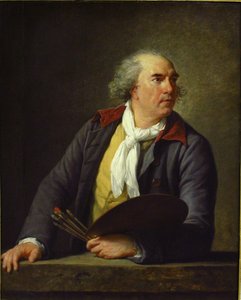
1733–1808, Franța
Hubert Robert
Tinerețea, Familia și Instruirea Artistică Născut în Paris în 1733, Hubert Robert a pășit într-o lume în care statutul social al familiei sale era strâns legat de servirea altora. Tatăl său, Nicolas Robert, deținea o funcție în gospodăria unei figuri de seamă, o conexiune care, în cele din urmă, ar fi facilitat ascensiunea tânărului prin înaltele straturi ale societății franceze. Această stabilitate timpurie i-a oferit fundamentul unei educații formale, pe care a urmat-o în cadrul structurat al Collège de Navarre. Până în 1751, își terminase studiile sub îndrumarea jesuicilor, acumulând un bagaj intelectual disciplinat înainte de a-și îndrepta atenția către arte vizuale.
Despre Hubert Robert Lucrări remarcabile ale lui Hubert Robert
Alte lucrări ale lui Hubert Robert
 The Pont du Gard1787
 The Finding of the Laocoön1773
 Le port de Ripetta
 PROJET D'AMENAGEMENT DE LA GRANDE GALERIE DU LOUVRE

Eseuri despre Architecture with Figures
 Hubert Robert: Picturing Ruins, Preserving Memory – A Study of Romantic Antiquarianism & Artistic InnovationExplore the captivating world of Hubert Robert, master of Romantic landscape painting & 'capriccio' ruins. Discover his historical context,…
 Vedute and Capriccio: Distinguishing Topographical Views from Architectural FantasyMaster the difference between veduta and capriccio through expert art history analysis. Explore the masters of Italian landscape art today.
 French artworks of the 1880sFrench Impressionist masterpieces by Claude Monet, Pierre-Auguste Renoir, and Georges Seurat. Find museum-quality reproductions on Original…