Vezi în context
 Trimite
 Distribuie
 Detalii
 Ghidul

 Descarcă
 Produse similare
 Radiografie
 Diaporama
 Statistici
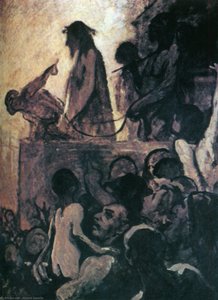
Scene from a Comedy
 Oil On Canvas
- WallArt
- Satirical Realism
 1858
1858 33.0 x 25.0 cm
 Muzeul d'Orsay
 Citește mai mult
Reproducere pictată manual în ulei
Pictură în ulei pe pânză, realizată manual de artiștii noștri la dimensiunea și ramele dorite de dumneavoastră, pe comandă. ( Comută pe versiunea Print Treci la imagine digitală)




P118B lei10

P118H lei10

P118W lei10

P438Z lei10

P508JH lei12

P508YH lei12

P805H lei10

P805Z lei10

P919BZ lei10

P919G lei10

P919XJ lei10

P959ZH lei10

P968JZ lei12

W106C lei8

W218G lei10

W218JH lei8

W218Y lei10

W307PJ lei10

W316G lei10

W316PJ lei8

W316Y lei10

W398PJ lei8

W4111J lei10

W500HY lei15

W500JH lei15

W692G lei12

W849H lei8

W940BG lei15

W953PJ lei8




Alegeți dintre dimensiunile noastre prestabilite, care respectă proporțiile originale ale operei de artă.

Introduceți lățimea și înălțimea de care aveți nevoie, pentru a se potrivi ramei sau peretelui dumneavoastră. Această lucrare este pictată manual, așa că pentru o dimensiune cu o formă diferită, artistul poate picta puțin mai mult în jurul imaginii sau poate tăia puțin din margini — dumneavoastră decideți. Vă vom trimite o simulare digitală pentru aprobare înainte de a începe pictarea. Imaginea afișată pe această pagină nu reprezintă rezultatul real — doar simularea este reprezentativă.
După plasarea comenzii, echipa OriginalUniqueArt.com va contacta clientul prin e-mail pentru instrucțiuni și îi va furniza o previzualizare a machetei
Livrare în întreaga lume () în 3-4 săptămâni, în loc de cele 5 săptămâni standard. (22 Octombrie). Fără compromisuri în ceea ce privește calitatea.

Livrare expres gratuită la nivel mondial

Pânză de in premium

Asigurare completă pentru transport

Garanție de rambursare a taxelor vamale

Garanția fidelității culorilor

Politica de retur în 100 de zile (doar pentru defecte)

Garanție de rambursare 100%

Reducere pentru comenzi multiple
 Opțiunea cu sticlă este disponibilă doar pentru dimensiuni de sub 110 cm

Scene from a Comedy
Tip de reproducere
Dimensiune reproducere
-


Preț total
lei 1379
A Moment Frozen in Satire: Honoré Daumier’s “Scene from a Comedy”
Honoré Daumier's "Scene from a Comedy," painted in 1858, isn’t merely a depiction of two figures; it’s a meticulously crafted snapshot of Parisian society and the biting social commentary that defined the artist’s career. Housed within the walls of the Musée d’Orsay, this oil on canvas offers a rare glimpse into Daumier's world – a world brimming with observation, critique, and an undeniable sense of humor laced with profound sadness. Measuring just 33 x 25 cm, its intimate scale belies the expansive social commentary it contains, inviting viewers to step closer and contemplate the subtle power dynamics at play.
The painting immediately draws the eye to the stark contrast between the two men. On the left stands an older gentleman, rendered in dark tones of coat and shirt, his face a study in sternness – a palpable embodiment of authority or perhaps simply ingrained habit. His posture is rigid, suggesting a lifetime spent upholding established norms. Juxtaposed against him is a younger figure, dressed more casually, tilted back with a relaxed amusement that hints at a different perspective, a willingness to question or even mock the older man’s demeanor. This immediate visual dichotomy establishes the core of Daumier's work: a deliberate exploration of conflicting viewpoints and the inherent tensions within social structures.
Realism and the Language of Gesture
Daumier’s mastery lies not just in capturing faces, but in conveying emotion through gesture and body language. The realism of his approach is evident in the meticulous detail with which he renders the textures of fabric, the subtle lines etched on the older man's face, and the slight tilt of the younger figure’s head. The dark background, punctuated by hints of blue and gray, serves to amplify these details, creating a sense of depth and drawing the viewer’s attention directly to the figures. This strategic use of light and shadow is characteristic of Daumier's style – a deliberate choice to highlight the emotional core of his subjects.
Furthermore, note the lack of elaborate setting or narrative context. Daumier strips away extraneous details, focusing instead on the immediate interaction between these two individuals. This minimalist approach forces the viewer to actively engage with the painting, interpreting the unspoken tensions and considering the broader social implications of their encounter. It’s a testament to Daumier's skill that such profound commentary can be conveyed through such simple means.
A Window into 19th-Century France
"Scene from a Comedy" is deeply rooted in its historical context. Created during the mid-19th century, it reflects the social and political upheavals of France at that time – a period marked by rapid industrialization, growing class divisions, and increasing calls for reform. Daumier’s work served as a powerful critique of these changes, exposing the hypocrisy and injustices inherent in the established order. His frequent use of caricature and satire allowed him to reach a wide audience, challenging conventional wisdom and sparking debate about the direction of French society.
As explored in articles like “Honoré Daumier: Social Commentary & Artistic Innovation in 19th-Century France,” Daumier’s art wasn't simply humorous; it was a direct engagement with pressing social issues. His work, alongside pieces like "Ratapoil (rear view)" and "The Defender," became a voice for the marginalized and a challenge to the status quo. He used his artistic platform to expose corruption, criticize political figures, and advocate for greater social equality – a remarkably courageous stance for an artist of his time.
Collecting a Masterpiece: Reproduction and Legacy
OriginalUniqueArt offers meticulously crafted hand-painted reproductions of “Scene from a Comedy,” allowing art lovers to experience Daumier’s genius in stunning detail. Each reproduction is created by skilled artisans who painstakingly recreate the artist's techniques, capturing the nuances of his style and ensuring an authentic representation of this iconic work. Whether displayed in a private collection or incorporated into a larger interior design scheme, a OriginalUniqueArt reproduction provides a beautiful and meaningful connection to one of art history’s most insightful social commentators.
To delve further into Daumier's life and work, we encourage you to explore the resources available on our website and through external links such as Wikipedia. Discover the rich tapestry of his artistic vision and appreciate the enduring legacy of a man who used art as a weapon against injustice – a legacy that continues to resonate with audiences today.
Întrebări și răspunsuri
Unde se situează "Scene from a Comedy" în rândul subiectelor recurente ale lui Honoré Daumier?
Temele recurente ale lui Honoré Daumier includ realism, satire, social critique, 19th-century french society, politics, caricature, commentary, observation; „Scene from a Comedy” se concentrează pe comedy, daumier, satire, social commentary, 19th century, france, human emotion.
Care este culoarea dominantă în "Scene from a Comedy" de Honoré Daumier?
Black (#120f12) este culoarea dominantă a operei "Scene from a Comedy" de Honoré Daumier.
Poate fi reprodusă în mod legal opera "Scene from a Comedy" de Honoré Daumier, aflată la Muzeul d'Orsay?
"Scene from a Comedy" de Honoré Daumier, păstrat la Muzeul d'Orsay, este în domeniul public - drepturile de autor au expirat. Acest statut determină dacă pot fi realizate reproduceri ale imaginii.
Biografie artist
A Life Etched in Satire: The World of Honoré Daumier
Honoré-Victorin Daumier, a name synonymous with biting satire and unflinching social commentary, was born in Marseille on February 26th, 1808. His early life, steeped in the artistic traditions of his family—his father a glazier and poet, his godfather a painter—laid the groundwork for a career that would forever challenge the established order of 19th-century France. The echoes of his father’s turbulent poetic aspirations, coupled with the relocation to Paris in 1814, exposed young Daumier to the vibrant, yet often chaotic, energy of the capital city. Initially destined for a legal profession, a profound inclination towards art quickly superseded all other ambitions. He began his artistic journey as an apprentice under Alexandre Lenoir, absorbing the classical techniques and dramatic chiaroscuro favored by Rubens—a style that would profoundly influence his own distinctive approach. Lenoir’s emphasis on observation and capturing the essence of form provided Daumier with a crucial foundation, but it was his independent study at the Académie Suisse, alongside a deep appreciation for the works of the Louvre's masters, that truly shaped his artistic vision. This early training wasn’t merely about technical proficiency; it was a deliberate immersion in the world of art, preparing him to translate his keen observations into powerful visual statements.The Sharpened Pen: Caricature and Social Commentary
Daumier’s career ignited with explosive force following the 1830 Revolution, an event that fundamentally reshaped France and simultaneously provided a fertile ground for his burgeoning satirical talent. He swiftly established himself as a master lithographer, initially working anonymously for various publications before gaining recognition through his work with *Le Charivari*, a fiercely independent comic journal founded by Charles Philipon. It was within the pages of *Le Charivari* that Daumier’s genius truly blossomed. His caricatures weren't mere humorous depictions; they were scathing indictments of the bourgeoisie, the legal system, and the political establishment—a deliberate provocation aimed at exposing hypocrisy and challenging authority. His unflinching portrayal of King Louis-Philippe in a particularly biting caricature led to his imprisonment for six months in 1832 – an experience that, rather than silencing him, solidified his commitment to using art as a weapon against injustice. The sheer volume of his output during this period is astonishing—thousands of lithographs documenting the social and political landscape of France with remarkable precision and satirical wit. These images weren’t simply entertainment; they were visual manifestos, capturing the spirit of dissent and offering a critical commentary on the societal ills of the time.Beyond Caricature: Painting and Sculptural Visions
While Daumier is overwhelmingly celebrated for his lithography, to reduce him solely to caricature would be a profound disservice. He was also a dedicated painter and sculptor, though recognition for these works came later in his life. His paintings, often depicting scenes of everyday Parisian life—the third-class carriage, the laundresses, the lawyers—are imbued with a remarkable sense of realism and empathy. He eschewed idealized portrayals, instead offering unflinching depictions of hardship, poverty, and the struggles of ordinary people. Daumier’s technique was characterized by loose brushwork and dramatic lighting, anticipating some of the techniques later embraced by the Impressionists – a testament to his forward-thinking approach. His sculptural work, largely created in clay (many pieces remaining unbaked during his lifetime), reveals a similar commitment to capturing the human form with honesty and emotional depth. These sculptures, rediscovered after his death, demonstrate a remarkable talent for modeling and an ability to convey psychological complexity through physical gesture – suggesting a profound understanding of the human condition.A Lasting Legacy: Influence and Historical Significance
Honoré Daumier’s impact on art history is undeniable. He bridged the gap between Romanticism and Realism, paving the way for future generations of artists who sought to depict the world as it truly was—warts and all. His unflinching social commentary profoundly influenced artists like Gustave Courbet and Édouard Manet, while his innovative use of lithography revolutionized printmaking, transforming it from a craft into a powerful medium for political expression. Daumier’s work continues to resonate today, reminding us of the enduring power of art to challenge authority, expose injustice, and bear witness to the human condition. The Musée d'Orsay in Paris houses a significant collection of his paintings and sculptures, offering visitors a unique opportunity to immerse themselves in the world he so vividly portrayed. Furthermore, his lithographs are widely accessible through collections like those found on OriginalUniqueArt, ensuring that his satirical genius continues to provoke thought and inspire dialogue across generations. Daumier wasn’t merely an artist; he was a chronicler of his time—a visual poet who used his talent to give voice to the voiceless and hold power accountable. His legacy endures as a testament to the enduring relevance of art as a force for social change, reminding us that even a single image can spark revolution.
Honoré Daumier
1808 - 1879 , Franța
Informații rapide
- Artistic Movement Or Style: Realism, Satiră
- Artists Or Movements Influenced By This Artist:
- Impressionism
- Modern art
- Artists Who Influenced This Artist:
- Alexandre Lenoir
- David
- Date Of Birth: 26 februarie 1808
- Date Of Death: 10 februarie 1879
- Full Name: Honoré-Victorin Daumier
- Nationality: Francez
- Notable Artworks:
- Rue Transnonain
- Les gens de justice
- Ecce Homo
- Place Of Birth: Marsilia, Franța
Articole conexe
The Poetic Truth of Observation: Exploring 19th-Century Realism in Painting
Explore the captivating world of 19th-century Realism! Discover key artists like Courbet & Millet, masterpieces, and the powerful social commentary behind this influential art movement. Expert insights at OriginalUniqueArt.
Reflecting Society's Shadows: Social Commentary in Art Through the Ages
Explore the powerful history of social commentary in art! Discover key artists like Hogarth & Daumier, movements from Realism to American Social Realism, and how art reflects—and challenges—society. Expert insights at OriginalUniqueArt.

Echoes of Society: Exploring Social Realism's Enduring Legacy in Art
Explore the powerful world of Social Realism art! Discover key artists, masterpieces & its profound social commentary. Expert insights into this influential movement's history and enduring legacy.
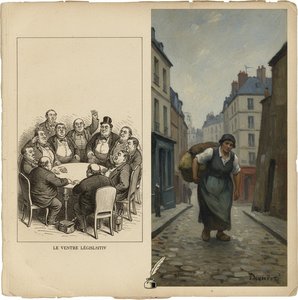
Honoré Daumier: Social Commentary & Artistic Innovation in 19th-Century France
Explore the life & work of Honoré Daumier, a master of 19th-century French realism and satire. Discover his powerful lithographs, paintings, and sculptures critiquing society – and his lasting influence on modern art.

Romantic Realism's Finest: 10 Masterpieces for Your Home | OriginalUniqueArt
Explore 10 defining masterpieces of Romantic Realism! Discover Courbet, Millet & Daumier's powerful paintings—capturing emotion and social realities. Find museum-quality reproductions for your home at OriginalUniqueArt.com.