Trimite
 Distribuie
 Detalii
 Ghidul

 Descarcă
 Produse similare
 Diaporama
 Statistici
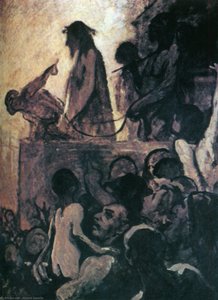
Ratapoil (front view)


 Citește mai mult
Giclée / Imprimare artistică
Printuri giclée sau pe canvas de calitate muzeală, cu proces de producție rapid și opțiuni flexibile de finisare. ( Comandă pictură realizată manual Treci la imagine digitală)




































Alegeți dintre dimensiunile noastre prestabilite, care respectă proporțiile originale ale operei de artă.

Introduceți lățimea și înălțimea de care aveți nevoie, pentru a se potrivi ramei sau peretelui dumneavoastră. O printare poate fi doar tăiată, niciodată extinsă dincolo de dimensiunea imaginii originale, astfel încât o dimensiune cu o formă diferită va pierde o parte din imagine. Vă trimitem o simulare digitală pentru aprobare înainte de a imprima orice. Imaginea afișată pe această pagină nu prezintă tăierea reală — doar simularea arată acest lucru.
Livrare în întreaga lume () în 2 săptămâni, în loc de cele 4/5 săptămâni standard. (23 Octombrie)

Livrare expres gratuită la nivel mondial

Pânză de in premium

Asigurare completă pentru transport

Garanție de rambursare a taxelor vamale

Garanția fidelității culorilor

Politica de retur în 100 de zile (doar pentru defecte)

Garanție de rambursare 100%

Reducere pentru comenzi multiple
 Opțiunea cu sticlă este disponibilă doar pentru dimensiuni de sub 110 cm

Ratapoil (front view)
Giclée / Imprimare artistică
Dimensiune reproducere
-


Preț total
lei 371
A Glimpse into Victorian Satire: Honoré Daumier’s “Ratapoil”
Honoré Daumier's "Ratapoil (front view)," created around 1850, is more than just a bronze sculpture; it’s a potent distillation of 19th-century French social commentary and political critique. This arresting figure, rendered with remarkable dynamism and a touch of unsettling realism, offers a captivating window into the turbulent world of post-Revolutionary France – a world grappling with nascent democracy, imperial ambitions, and the pervasive inequalities of its society. The sculpture’s enduring power lies not only in Daumier's masterful technical skill but also in his ability to imbue a single figure with layers of meaning and emotional resonance.
The Figure and Its Context
“Ratapoil,” derived from the word “rastapoil” (a term for a shady agent or vagrant), immediately establishes a subject ripe for satire. Daumier, a staunch Republican, used his art to challenge the established order, often targeting those he perceived as corrupt and manipulative within the political landscape. This particular sculpture represents a key figure in Louis-Napoleon Bonaparte’s propaganda machine – an “agent-provocateur,” as Daumier himself described him, tasked with stirring up public opinion through deceit and manipulation. The title itself is a deliberate jab at the man's methods, suggesting a character who thrives on exploiting vulnerabilities and sowing discord.
The sculpture’s creation coincided with a period of intense political maneuvering in France, as Louis-Napoleon sought to consolidate his power following his election as President of the Second Republic. Daumier’s work served as a direct critique of this propaganda campaign, exposing its underlying tactics and highlighting the dangers of unchecked ambition. The fact that “Ratapoil” was initially hidden during the Empire's reign underscores the sculpture’s subversive nature – a silent protest against an oppressive regime.
Craftsmanship and Technique: A Bronze Masterpiece
Daumier’s skill as a sculptor is immediately apparent in “Ratapoil.” The bronze itself, cast using the traditional technique of lost-wax casting, possesses a rich, dark patina that speaks to its age and exposure to the elements. This patination isn't merely decorative; it adds depth and texture, emphasizing the contours of the figure’s body and clothing. Notice the careful rendering of the musculature, the flowing drapery—a deliberate choice to emphasize movement—and the subtly expressive face. The use of curved lines to depict the folds of the fabric contrasts sharply with the more angular lines of the base, creating a dynamic tension within the composition.
The sculpture’s placement on a simple, rectangular pedestal serves both as a grounding element and a visual device, elevating the figure and drawing attention to its form. The overall effect is one of controlled chaos—a powerful representation of a man caught in the throes of action, embodying both strength and vulnerability.
Symbolism and Emotional Resonance
Beyond its political context, “Ratapoil” resonates with broader themes of struggle, resilience, and the human condition. The figure’s dynamic pose—one arm extended outward, the other bent at the elbow—suggests a sense of urgency and determination, perhaps even desperation. The slightly crumpled clothing and furrowed brow hint at hardship and the burdens of a difficult life. The sculpture's inherent ambiguity invites viewers to project their own interpretations onto the figure, fostering a deeper connection with its story.
Daumier’s masterful use of light and shadow further enhances the sculpture’s emotional impact. The diffused lighting creates soft shadows that accentuate the form of the figure without harsh contrasts, lending it an air of timelessness and gravitas. “Ratapoil” is not simply a caricature; it's a poignant portrait of a man caught in the currents of history, a testament to the enduring power of art to expose injustice and provoke reflection.
OriginalUniqueArt offers meticulously hand-painted reproductions of this iconic work, allowing you to bring Daumier’s powerful vision into your home or office. Each reproduction captures the essence of the original sculpture with exceptional detail and fidelity, ensuring that its message continues to resonate for generations to come.
Întrebări și răspunsuri
Ce dimensiune ar trebui să aleg pentru printarea "Ratapoil (front view)" pentru camera mea?
Combinația recomandată pentru "Ratapoil (front view)" de Honoré Daumier: o printare de dimensiunea Large, ideală pentru o Living Room.
"Ratapoil (front view)" de Honoré Daumier este o operă de artă luminoasă sau întunecată?
În ceea ce privește luminozitatea percepută, "Ratapoil (front view)" de Honoré Daumier este brilliant.
Ce paletă și ce sentiment combină "Ratapoil (front view)"?
Paleta Neutrals a operei "Ratapoil (front view)" de Honoré Daumier se armonizează cu tonul său Somber. Culoarea este una dintre modalitățile prin care o lucrare transmite emoție.
Biografie artist
A Life Etched in Satire: The World of Honoré Daumier
Honoré-Victorin Daumier, a name synonymous with biting satire and unflinching social commentary, was born in Marseille on February 26th, 1808. His early life, steeped in the artistic traditions of his family—his father a glazier and poet, his godfather a painter—laid the groundwork for a career that would forever challenge the established order of 19th-century France. The echoes of his father’s turbulent poetic aspirations, coupled with the relocation to Paris in 1814, exposed young Daumier to the vibrant, yet often chaotic, energy of the capital city. Initially destined for a legal profession, a profound inclination towards art quickly superseded all other ambitions. He began his artistic journey as an apprentice under Alexandre Lenoir, absorbing the classical techniques and dramatic chiaroscuro favored by Rubens—a style that would profoundly influence his own distinctive approach. Lenoir’s emphasis on observation and capturing the essence of form provided Daumier with a crucial foundation, but it was his independent study at the Académie Suisse, alongside a deep appreciation for the works of the Louvre's masters, that truly shaped his artistic vision. This early training wasn’t merely about technical proficiency; it was a deliberate immersion in the world of art, preparing him to translate his keen observations into powerful visual statements.The Sharpened Pen: Caricature and Social Commentary
Daumier’s career ignited with explosive force following the 1830 Revolution, an event that fundamentally reshaped France and simultaneously provided a fertile ground for his burgeoning satirical talent. He swiftly established himself as a master lithographer, initially working anonymously for various publications before gaining recognition through his work with *Le Charivari*, a fiercely independent comic journal founded by Charles Philipon. It was within the pages of *Le Charivari* that Daumier’s genius truly blossomed. His caricatures weren't mere humorous depictions; they were scathing indictments of the bourgeoisie, the legal system, and the political establishment—a deliberate provocation aimed at exposing hypocrisy and challenging authority. His unflinching portrayal of King Louis-Philippe in a particularly biting caricature led to his imprisonment for six months in 1832 – an experience that, rather than silencing him, solidified his commitment to using art as a weapon against injustice. The sheer volume of his output during this period is astonishing—thousands of lithographs documenting the social and political landscape of France with remarkable precision and satirical wit. These images weren’t simply entertainment; they were visual manifestos, capturing the spirit of dissent and offering a critical commentary on the societal ills of the time.Beyond Caricature: Painting and Sculptural Visions
While Daumier is overwhelmingly celebrated for his lithography, to reduce him solely to caricature would be a profound disservice. He was also a dedicated painter and sculptor, though recognition for these works came later in his life. His paintings, often depicting scenes of everyday Parisian life—the third-class carriage, the laundresses, the lawyers—are imbued with a remarkable sense of realism and empathy. He eschewed idealized portrayals, instead offering unflinching depictions of hardship, poverty, and the struggles of ordinary people. Daumier’s technique was characterized by loose brushwork and dramatic lighting, anticipating some of the techniques later embraced by the Impressionists – a testament to his forward-thinking approach. His sculptural work, largely created in clay (many pieces remaining unbaked during his lifetime), reveals a similar commitment to capturing the human form with honesty and emotional depth. These sculptures, rediscovered after his death, demonstrate a remarkable talent for modeling and an ability to convey psychological complexity through physical gesture – suggesting a profound understanding of the human condition.A Lasting Legacy: Influence and Historical Significance
Honoré Daumier’s impact on art history is undeniable. He bridged the gap between Romanticism and Realism, paving the way for future generations of artists who sought to depict the world as it truly was—warts and all. His unflinching social commentary profoundly influenced artists like Gustave Courbet and Édouard Manet, while his innovative use of lithography revolutionized printmaking, transforming it from a craft into a powerful medium for political expression. Daumier’s work continues to resonate today, reminding us of the enduring power of art to challenge authority, expose injustice, and bear witness to the human condition. The Musée d'Orsay in Paris houses a significant collection of his paintings and sculptures, offering visitors a unique opportunity to immerse themselves in the world he so vividly portrayed. Furthermore, his lithographs are widely accessible through collections like those found on OriginalUniqueArt, ensuring that his satirical genius continues to provoke thought and inspire dialogue across generations. Daumier wasn’t merely an artist; he was a chronicler of his time—a visual poet who used his talent to give voice to the voiceless and hold power accountable. His legacy endures as a testament to the enduring relevance of art as a force for social change, reminding us that even a single image can spark revolution.
Honoré Daumier
1808 - 1879 , Franța
Informații rapide
- Artistic Movement Or Style: Realism, Satiră
- Artists Or Movements Influenced By This Artist:
- Impressionism
- Modern art
- Artists Who Influenced This Artist:
- Alexandre Lenoir
- David
- Date Of Birth: 26 februarie 1808
- Date Of Death: 10 februarie 1879
- Full Name: Honoré-Victorin Daumier
- Nationality: Francez
- Notable Artworks:
- Rue Transnonain
- Les gens de justice
- Ecce Homo
- Place Of Birth: Marsilia, Franța
Articole conexe

Top 10 Capodopere din Bronz care au Revoluționat Arta – Inspirație pentru Decor
Descoperă Top 10 sculpturi din bronz care au schimbat istoria artei! Explorează operele lui Rodin, Michelangelo și alți maeștri, tehnicile lor unice și inspirația pentru decorul casei tale. Replici de calitate muzeală pe OriginalUniqueArt.com.
The Enduring Legacy of Bronze: A Historical & Artistic Exploration for the Collector
Explore the rich history & enduring appeal of bronze sculpture with expert insights for collectors at OriginalUniqueArt. Learn about casting techniques, iconic artists, collecting tips & contemporary interpretations.
Moștenirea Durabilă a Sculpturii în Bronz: Istorie, Tehnici și Interpretări Contemporane
Descoperiți istoria fascinantă și tehnicile complexe ale sculpturii în bronz. Ghid complet pentru colecționari, investitori și pasionați de artă. Aflați despre artiști renumiți și tendințele contemporane.

Top 10 Capodopere din Bronz care au Revoluționat Arta | OriginalUniqueArt.ro
Descoperiți Top 10 capodopere din bronz care au revoluționat arta! Rodin, Michelangelo și alții. Aflați istoria sculpturilor clasice și inspirație pentru decorul casei dvs. Reproduceri de artă de calitate muzeală pe OriginalUniqueArt.com
The Enduring Legacy of Bronze: History, Technique & Artistic Expression for the Collector
Explore the rich history & enduring appeal of bronze sculpture with expert insights for collectors at OriginalUniqueArt. Learn about casting techniques, iconic artists, and collecting tips.