
 Previzualizare
 Trimite prin felicitare
 Distribuie
 Detalii despre lucrare
 Ghid
Ghid

 Descarcă imaginea
 Produse similare
 Radiografie
 Galerie foto
 Întrebări și răspunsuri
 Statistici
Bash Bish Falls


 Vezi mai mult
Giclée / Imprimare artistică
Printuri giclée sau pe canvas de calitate muzeală, cu proces de producție rapid și opțiuni flexibile de finisare. ( Comandă pictură realizată manual Comută pe Imagine Digitală)




P118B lei10

P118H lei10

P118W lei10

P438Z lei10

P508JH lei12

P508YH lei12

P805H lei10

P805Z lei10

P919BZ lei10

P919G lei10

P919XJ lei10

P959ZH lei10

P968JZ lei12

W106C lei8

W218G lei10

W218JH lei8

W218Y lei10

W307PJ lei10

W316G lei10

W316PJ lei8

W316Y lei10

W398PJ lei8

W4111J lei10

W500HY lei15

W500JH lei15

W692G lei12

W849H lei8

W940BG lei15

W953PJ lei8




Alegeți dintre dimensiunile noastre prestabilite, care respectă proporțiile originale ale operei de artă.

Introduceți lățimea și înălțimea necesare pentru a se potrivi ramei sau peretelui dumneavoastră. O printare poate fi doar tăiată, niciodată extinsă dincolo de dimensiunea imaginii originale, astfel încât o dimensiune cu o formă diferită va pierde o parte din imagine. Vă trimitem o simulare digitală pentru aprobare înainte de a imprima orice. Imaginea afișată pe această pagină nu prezintă tăierea reală — doar simularea arată acest lucru.
Livrare în întreaga lume () în 2 săptămâni, în loc de cele 4/5 săptămâni standard. (7 Noiembrie)

Livrare expres gratuită la nivel mondial

Pânză de in de înaltă calitate

Asigurare completă pentru transport

Garanție de rambursare a taxelor vamale

Garanția fidelității culorilor

Politica de retur în 100 de zile (doar pentru defecte de fabricație)

Garanție de rambursare 100%

Ofertă pentru comenzi multiple
 Opțiunea cu sticlă este disponibilă doar pentru dimensiuni de sub 110 cm

Bash Bish Falls
Giclée / Imprimare artistică
Dimensiune reproducere
-


Preț total calculat
lei 386
A Symphony of Water and Light: The Majesty of Bash Bish Falls
In the heart of the American wilderness, where the rugged Taconic Mountains meet the sky, lies a vision captured eternally in Homer Dodge Martin’s 1859 masterpiece, Bash Bish Falls. This breathtaking oil on canvas is far more than a mere depiction of a waterfall; it is a profound meditation on the sublime power of nature. As the eye travels upward through the dense, verdant layers of the forest, it is drawn toward the central, cascading torrent that defines this legendary site. The painting serves as a window into the 19th-century American soul, capturing a moment when the untamed landscape was viewed not just as scenery, but as a sacred cathedral of light and mist.
The composition is masterfully orchestrated to evoke a sense of vertical grandeur. Martin utilizes a sophisticated atmospheric perspective, where the distant elements of the forest soften into a hazy, ethereal blue, creating an immense sense of depth that pulls the viewer into the very spray of the falls. The interplay of light and shadow is particularly captivating; the artist captures the way diffused sunlight filters through a morning mist, illuminating the white foam of the cascading water while casting deep, mysterious shadows among the ancient rocks and thick foliage. This delicate balance of luminosity creates a rhythmic movement across the canvas, mimicking the continuous, pulsing energy of the falling water itself.
The Intersection of Romanticism and Impressionist Spirit
To behold Bash Bish Falls is to witness a pivotal moment in art history. Executed during the height of the Hudson River School, Martin’s work embodies the movement's devotion to portraying the grandeur and spiritual significance of the American landscape. Yet, even in this early work, one can detect the seeds of something revolutionary. While his technique remains rooted in the meticulous detail and layered oil applications characteristic of his mentor, William Hart, there is a burgeoning freedom in Martin’s brushwork. The foliage and rugged rock formations are rendered with a textured, expressive quality that hints at the Impressionist explorations of light and color that would later define his career.
This stylistic duality makes the piece an extraordinary choice for the discerning collector or interior designer. It possesses the classical dignity required for traditional, stately environments, yet its vibrant energy and focus on atmospheric effects allow it to breathe within modern, minimalist spaces. The painting does not merely decorate a wall; it transforms a room, offering a tranquil escape into a world of natural splendor. For those seeking to infuse their surroundings with a sense of peace, strength, and historical depth, this reproduction offers an unparalleled opportunity to possess a fragment of the American Romantic spirit.
Întrebări și răspunsuri
Care este culoarea dominantă în "Bash Bish Falls"?
Culoarea dominantă a operei "Bash Bish Falls" de Homer Dodge Martin este Espresso (#493e27).
Unde pot descărca "Bash Bish Falls" de Homer Dodge Martin?
"Bash Bish Falls" de Homer Dodge Martin poate fi descărcat de pe pagina dedicată lucrării, Descărcare, sub formă de descărcare imagine digitală de înaltă rezoluție.
Ce tehnică și stil caracterizează "Bash Bish Falls" de Homer Dodge Martin?
În "Bash Bish Falls", tehnica Oil On Canvas întâlnește mișcarea Hudson River School.
Biografie artist
A Bridge Between Worlds: The Life and Art of Homer Dodge Martin
Born in Albany, New York, in 1836, Homer Dodge Martin emerged as a pivotal figure in American landscape painting – an artist who skillfully navigated the evolving artistic currents between the established traditions of the Hudson River School and the burgeoning innovations of Impressionism. His early life was deeply rooted in artistic promise; he received brief instruction from William Hart, quickly absorbing the prevailing aesthetic of his time: a reverence for detailed realism and the sublime beauty of the American wilderness. Martin’s formative years were also shaped by a vibrant community of artists in Albany, including George Boughton and Edward Gay, fostering an environment of creative exchange that proved crucial to his artistic development. These early landscapes, meticulously rendered, reflected the Hudson River School's commitment to capturing the majesty of nature, yet even then, subtle hints of a more personal and atmospheric vision began to surface – a nascent desire to convey not just what he saw, but also *how* he felt about it. He spent summers sketching in the Adirondacks, Catskills, and White Mountains, translating those plein air studies into finished works within his New York City studio—a common practice among artists seeking both inspiration from nature and the convenience of urban life. This dedication garnered him recognition; his election as an associate, and later a full academician, of the National Academy of Design solidified his standing within the art world of the late 19th century.European Awakening and Artistic Transformation
A watershed moment in Martin’s artistic journey arrived with a transformative trip to Europe in 1876. This was not merely a sightseeing excursion; it was an immersion into the heart of avant-garde art. Exposure to the Barbizon School – with its emphasis on direct observation and naturalistic depictions of rural life – and the nascent Impressionist movement profoundly altered his artistic sensibilities. The carefully constructed compositions and polished surfaces of his earlier work began to yield to a looser brushstroke, a more evocative use of color, and a heightened sensitivity to atmospheric effects. He wasn’t simply adopting these new techniques; he was internalizing them, filtering them through his own unique vision. This shift didn't happen overnight; it was a gradual evolution, a subtle but significant departure from the established norms of American landscape painting. The influence is not one of imitation, but rather of inspiration – a broadening of horizons that allowed Martin to explore new possibilities in his art. Artists like Camille Corot and the Barbizon painters served as key models, demonstrating how to capture fleeting moments of light and color with a focus on direct observation.Years in Normandy and the Essence of Place
The culmination of this artistic awakening occurred during a four-year residency in France, from 1882 to 1886, primarily in Normandy. He became part of the vibrant artist colony at Étaples, exchanging ideas with fellow painters and immersing himself in the French countryside. This period proved remarkably fruitful, yielding some of his most celebrated works. *The Harbour at Étaples*, for example, is a compelling topographical view that captures the bustling energy of shipbuilding and maritime activity – a testament to his ability to depict not just the physical landscape but also its social and economic context. *Cottage in the Forest* showcases his growing mastery of atmospheric perspective and his ability to convey mood through subtle shifts in light and color, evoking a sense of quiet solitude and rustic charm. However, it was Harp of the Winds, painted at Villerville on the Seine, that truly cemented his reputation. Now housed in the Metropolitan Museum of Art, this painting exemplifies Martin’s mature style – a harmonious blend of observation and emotion, capturing not just a scene but a feeling, an essence of place. The use of broken color and loose brushwork, reminiscent of the Impressionists, creates a shimmering effect that captures the fleeting beauty of the moment.Later Years, Legacy, and Enduring Appeal
Despite his artistic achievements, Martin faced hardship in his later years. Poverty and failing eyesight forced him to relocate to St. Paul, Minnesota, in 1893, where he lived with relatives. Remarkably, even as his vision diminished, his creative spirit remained undeterred. *Adirondack Scenery*, painted from memory while nearly blind, stands as a poignant testament to his enduring passion and artistic skill – a powerful reminder that true artistry transcends physical limitations. This painting, created during a period of significant personal struggle, demonstrates an extraordinary level of sensitivity and emotional depth. Shortly after his death in 1897, *Adirondack Scenery* sold for an impressive $5500, signaling a belated recognition of his talent. Today, Martin’s paintings are held in numerous prestigious American museums – the Metropolitan Museum of Art, the Smithsonian American Art Museum, the Addison Gallery of American Art, and many others – ensuring that his work continues to inspire and captivate audiences. Homer Dodge Martin is now rightfully recognized as a transitional figure, a bridge between the Hudson River School’s meticulous realism and the atmospheric poetry of American Impressionism. His innovative approach to landscape painting, characterized by its evocative moodiness and loose brushwork, secures his place as a significant and enduring voice in 19th-century American art.Influences and Key Characteristics
Martin's artistic development was shaped by several key influences. Initially aligned with the Hudson River School’s emphasis on detailed realism and dramatic landscapes, he gradually incorporated elements of Impressionism, particularly from the Barbizon School and French artists like Camille Corot. His work is characterized by:- Spacious Design: Martin often created expansive compositions that captured vast vistas and emphasized the scale of nature.
- Brilliant Color: He utilized a vibrant palette, employing broken color techniques to create luminous effects.
- Underlying Gravity or Gentle Melancholy: Many of his landscapes evoke a sense of quiet contemplation and subtle sadness – a reflection of the beauty and transience of nature.

Homer Dodge Martin
1836 - 1897 , Statele Unite ale Americii
Detalii rapide
- Artistic Movement Or Style: Hudson River & Imp.
- Artists Or Movements Influenced By This Artist:
- Impressionism
- Hudson School
- Artists Who Influenced This Artist:
- Hart
- Barbizon
- Corot
- Date Of Birth: 28 Oct 1836
- Date Of Death: 12 Feb 1897
- Full Name: Homer Dodge Martin
- Nationality: American
- Notable Artworks:
- Harp Winds
- Cottage
- Harbor
- Place Of Birth: Albany, USA
Articole similare

Școlile de Artă Hudson River: 10 Capodopere Iconice pentru Decorul Casei | OriginalUniqueArt.ro
Descoperă Școala Hudson River prin 10 capodopere iconice! Explorează picturile lui Thomas Cole, Frederic Church și Albert Bierstadt. Reproduceri de artă premium pentru un decor rafinat. Inspiră-te acum pe OriginalUniqueArt.com!

Thomas Hudson: A Study in 18th-Century Portraiture & British Artistic Identity
Explore the life & work of Thomas Hudson, a leading 18th-century British portraitist. Discover his mastery of the 'Grand Manner,' influential style, and lasting impact on British art. Learn about his notable portraits like Judge William Noel & Alexander Van Aken.
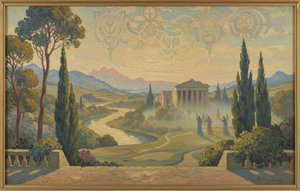
Henri Martin: A Synthesis of Impressionism & Symbolism in the French Landscape Tradition
Explore the captivating world of Henri Martin, a French Post-Impressionist bridging Impressionism & Symbolism. Discover his unique style, influential landscapes, and lasting legacy with OriginalUniqueArt.
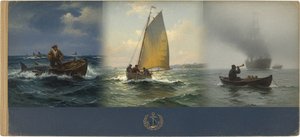
Winslow Homer: Cele Mai Iconice 25 De Opere – Artă, Istorie și Decorațiuni Excepționale
Descoperă cele mai frumoase 25 de picturi Winslow Homer! Explorează operele iconice ale artistului american, acuarele vibrante și peisaje marine impresionante. Găsește inspirație pentru decorul casei tale cu reproduceri artă de calitate muzeală pe OriginalUniqueArt.com.

Realism American: 10 Capodopere Esențiale pentru Decorul Cult și Rafinat
Descoperă 10 capodopere esențiale ale Realismului American! Explorează poveștile din spatele picturilor lui Hopper, Wyeth și Wood. Reproduceri de artă premium pentru un decor rafinat pe OriginalUniqueArt.com