

 Vezi în context
 Trimite
 Distribuie
 Detalii
 Ghidul

 Descarcă
 Produse similare
 Radiografie
 Diaporama
 Statistici
Crémieu
 Oil On Canvas
- WallArt
- Romanticism
 1847
1847 38.0 x 46.0 cm
 Muzeul Fitzwilliam din Cambridge
 Citește mai mult
Giclée / Imprimare artistică
Printuri giclée sau pe canvas de calitate muzeală, cu proces de producție rapid și opțiuni flexibile de finisare. ( Comandă pictură realizată manual Treci la imagine digitală)




P118B lei10

P118H lei10

P118W lei10

P438Z lei10

P508JH lei12

P508YH lei12

P805H lei10

P805Z lei10

P919BZ lei10

P919G lei10

P919XJ lei10

P959ZH lei10

P968JZ lei12

W106C lei8

W218G lei10

W218JH lei8

W218Y lei10

W307PJ lei10

W316G lei10

W316PJ lei8

W316Y lei10

W398PJ lei8

W4111J lei10

W500HY lei15

W500JH lei15

W692G lei12

W849H lei8

W940BG lei15

W953PJ lei8




Alegeți dintre dimensiunile noastre prestabilite, care respectă proporțiile originale ale operei de artă.

Introduceți lățimea și înălțimea de care aveți nevoie, pentru a se potrivi ramei sau peretelui dumneavoastră. O printare poate fi doar tăiată, niciodată extinsă dincolo de dimensiunea imaginii originale, astfel încât o dimensiune cu o formă diferită va pierde o parte din imagine. Vă trimitem o simulare digitală pentru aprobare înainte de a imprima orice. Imaginea afișată pe această pagină nu prezintă tăierea reală — doar simularea arată acest lucru.
Livrare în întreaga lume () în 2 săptămâni, în loc de cele 4/5 săptămâni standard. (25 Octombrie)

Livrare expres gratuită la nivel mondial

Pânză de in premium

Asigurare completă pentru transport

Garanție de rambursare a taxelor vamale

Garanția fidelității culorilor

Politica de retur în 100 de zile (doar pentru defecte)

Garanție de rambursare 100%

Reducere pentru comenzi multiple
 Opțiunea cu sticlă este disponibilă doar pentru dimensiuni de sub 110 cm

Crémieu
Giclée / Imprimare artistică
Dimensiune reproducere
-


Preț total
lei 370
A Dramatic Vista of the French Countryside
Henri-Joseph Harpignies’ “Crémieu” (1847) is more than just a landscape painting; it's an immersive experience, a carefully constructed tableau that invites contemplation on the relationship between humanity and the vastness of nature. The scene unfolds within the foothills of the French Alps, depicting a rugged, almost primordial terrain dominated by towering cliffs and a winding path that draws the eye relentlessly into the distance. The painting immediately establishes a sense of solitude and grandeur – an emotional resonance deeply rooted in the Romantic tradition, yet subtly informed by Harpignies’ meticulous observation of light and texture.

The composition is masterfully executed, utilizing a strong diagonal line created by the path to guide the viewer’s gaze and establish a dynamic flow through the scene. The foreground, rendered in earthy browns and ochres, features a dirt road and scattered rocks, gradually transitioning into the imposing cliffs that form the central focus of the painting. These cliffs aren't merely geological formations; they possess an almost sculptural quality, their weathered surfaces hinting at centuries of exposure to the elements. In the distance, a subtle atmospheric perspective – a softening of colors and details as depth increases – suggests the immense scale of the landscape and evokes a feeling of both awe and vulnerability.
The Barbizon School and Luminism
Harpignies’ work firmly places him within the context of the Barbizon School, a movement that championed direct observation of nature and a rejection of academic artifice. Unlike earlier landscape painters who relied heavily on idealized representations, the Barbizon artists sought to capture the essence of the French countryside as they experienced it – with its rough textures, subtle shifts in light, and inherent imperfections. “Crémieu” exemplifies this approach, eschewing smooth brushstrokes and carefully blended colors in favor of visible marks that convey a sense of immediacy and spontaneity. Furthermore, the painting’s emphasis on atmospheric effects aligns closely with Luminism, a style characterized by its soft, diffused lighting and focus on capturing the subtle nuances of light and shadow.
Born in Valenciennes in 1819, Harpignies initially pursued a business career before dedicating himself to art. His early training under Jean Achard instilled in him a solid foundation in draughtsmanship, while his subsequent journey to Italy exposed him to the principles of the Barbizon School and fostered a deep appreciation for the Italian landscape tradition. The painting’s muted palette – dominated by browns, greens, and grays – contributes significantly to its evocative atmosphere, creating a sense of quiet contemplation and timelessness.
Symbolism and Emotional Resonance
Beyond its technical merits, “Crémieu” carries a subtle symbolic weight. The solitary path winding through the landscape can be interpreted as a metaphor for the human journey – a quest for meaning and purpose amidst the vast uncertainties of life. The towering cliffs represent both strength and vulnerability, reminding us of our own smallness in the face of nature’s power. The painting's overall mood is one of serene solitude, inviting viewers to pause and reflect on their place within the natural world.
Interestingly, the village of Crémieu itself, depicted in the painting, holds a rich history. Situated near Lyon, it served as an important trading center throughout the Middle Ages, benefiting from its strategic location along trade routes. The presence of a medieval castle and monastic settlements further adds to the painting’s historical context.
A Masterpiece for Collectors
“Crémieu” is a testament to Harpignies' skill as a landscape painter and his ability to capture the beauty and drama of the French countryside. Reproductions of this captivating artwork are available through OriginalUniqueArt, offering an opportunity to bring its evocative atmosphere into your home or office. Its timeless appeal and rich symbolism make it a valuable addition to any art collection.
Întrebări și răspunsuri
Ce emoție transmite "Crémieu" de Henri-Joseph Harpignies?
"Crémieu" de Henri-Joseph Harpignies transmite un ton emoțional Nostalgic.
Ce dimensiune este recomandată pentru "Crémieu" într-un Living Room?
Pentru o Living Room, dimensiunea recomandată de imprimare pentru "Crémieu" de Henri-Joseph Harpignies este Medium.
Cum pot achiziționa o printă a lucrării "Crémieu" de Henri-Joseph Harpignies?
Pentru a achiziționa o ediție print a lucrării "Crémieu" de Henri-Joseph Harpignies, vă este suficient să o comandați pe pagina dedicată Print de Fine Art: o printă de fine art pe canvas din bumbac sau pe hârtie canvas arhivistică.
Biografie artist
Early Life and Artistic Aspirations
Born on June 28, 1819, in the historic city of Valenciennes, France, Henri-Joseph Harpignies’ early life was marked by a subtle conflict between familial expectations and an undeniable artistic calling. His parents, hailing from Belgian origins, envisioned a future for him within the established business world – a path of stability and financial security. However, from a young age, Henri demonstrated a profound connection to the natural world and a fervent desire to capture its beauty through art. This passion, far from being dismissed as a mere youthful fancy, proved remarkably resilient, ultimately triumphing over his family’s carefully laid plans. At the tender age of fourteen, Henri's artistic talent began to blossom, earning him numerous first-place prizes in local drawing competitions – a testament to his burgeoning skill and dedication. He found solace and inspiration in observing the landscapes surrounding Valenciennes, meticulously sketching the rolling hills, verdant forests, and meandering rivers. This early exposure to nature would profoundly shape his future artistic vision, instilling within him a deep reverence for the French countryside. Recognizing his son’s unwavering commitment to art, Henri's parents ultimately conceded, allowing him to pursue his artistic ambitions – a decision that proved pivotal in shaping the course of his life and legacy.The Barbizon School and Italian Inspiration
Following two years of rigorous training under the esteemed painter Jean Achard in Paris, Henri embarked on a transformative journey to Italy in 1848. This experience served as a catalyst for profound artistic growth, fundamentally altering his perspective and approach to landscape painting. Upon his return to France in 1850, he quickly immersed himself in the vibrant world of the Barbizon School – a movement that championed direct observation of nature and a rejection of academic conventions. Artists like Jean-Baptiste-Camille Corot, whose work resonated deeply with Henri’s sensibilities, became influential mentors and collaborators. The Barbizon painters' emphasis on capturing the essence of rural life, rendered in earthy tones and imbued with a sense of quiet contemplation, profoundly impacted Henri’s artistic development. He eagerly embraced their techniques, learning to paint *en plein air* – directly from nature – and developing his own distinctive style characterized by atmospheric perspective and subtle nuances of light. In 1860, he further enriched his artistic understanding through a collaborative trip back to Italy with Corot, absorbing the beauty of the Italian landscape and refining his observational skills. This period marked a crucial stage in his artistic evolution, solidifying his commitment to capturing the sublime qualities of nature.Artistic Style and Notable Works
Henri’s artistic style is immediately recognizable for its serene and idyllic depictions of the French countryside. He possessed an extraordinary ability to capture the subtle shifts in light and atmosphere, creating landscapes that evoke a profound sense of tranquility and harmony. His technique was characterized by meticulous observation combined with a refined understanding of composition – he carefully considered every element within his paintings, striving to create balanced and visually compelling scenes. While undeniably influenced by the Barbizon School’s realism, Henri developed a unique artistic voice, often imbuing his work with a poetic sensibility that went beyond mere representation. His paintings are not simply depictions of landscapes; they are invitations to immerse oneself in their beauty and contemplate the profound connection between humanity and nature. Among his most celebrated works are:- Soir sur les bords de la Loire (Evening on the Banks of the Loire) – 1861: This iconic painting exemplifies his mastery of atmospheric perspective, capturing the ethereal glow of twilight reflected upon the tranquil waters of the Loire River.
- Les corbeaux (The Ravens) – 1865: A hauntingly beautiful depiction of a flock of ravens soaring across a bleak landscape, conveying a sense of melancholy and solitude.
- Le soir (Evening) – 1866: A masterful portrayal of dusk settling over the French countryside, capturing the subtle shifts in color and light with remarkable precision.
- La loire (The Loire) – 1882: Another stunning depiction of the Loire River, showcasing his ability to capture the movement of water and the play of sunlight upon its surface.
- Vue de Saint-Privé (View of Saint-Privé) – 1883: A charming and picturesque scene depicting a typical French village nestled amidst rolling hills.
Legacy and Historical Significance
Henri-Joseph Harpignies’ artistic legacy extends far beyond the individual paintings that grace museum collections across France and Europe. He was not merely a painter; he was a dedicated teacher, imparting his knowledge and passion to numerous students – including Émile Appay and James Wilson Morrice – who went on to become influential artists in their own right. His influence can be seen throughout the late 19th and early 20th centuries, shaping the direction of French landscape painting and inspiring generations of artists to embrace a more direct and expressive approach to nature. Harpignies’ work is held in prestigious institutions such as the Musée des Beaux-Arts Valence, the National Gallery in London, and the Art Institute of Chicago, ensuring his enduring recognition as a master of landscape art. His paintings are not simply beautiful images; they are windows into a bygone era – glimpses of a France steeped in tradition, beauty, and a profound connection to the natural world. Henri-Joseph Harpignies’ contribution to the history of French painting is undeniable, solidifying his place as a pivotal figure in the development of landscape art.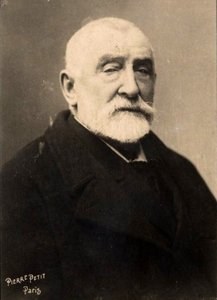
Henri-Joseph Harpignies
1819 - 1916 , Franța
Informații rapide
- Artistic Movement Or Style: Barbizon
- Artists Who Influenced This Artist:
- Jean Achard
- Jean Baptiste Camille Corot
- Date Of Birth: 28 iunie 1819
- Date Of Death: 28 august 1916
- Full Name: Henri-Joseph Harpignies
- Nationality: Belgian
- Notable Artworks:
- Soir sur les bords de la Loire
- Les Corbeaux
- Le Soir
- Le Saut-du-Loup
- La Loire
- Place Of Birth: Valenciennes, Franța
Articole conexe

Peisaje Romantice Iconice: 10 Capodopere Artistice pentru Decorul de Lux
Descoperă 10 capodopere romantice iconice de Caspar David Friedrich, Turner și alți maeștri. Explorează istoria artei, emoțiile din peisaje și găsește tablouri canvas perfecte pentru decorul tău pe OriginalUniqueArt.com!

Evoking Nature's Sublime: A Comprehensive Exploration of 19th-Century Landscape Painting
Explore the captivating world of 19th-century landscape painting! Discover renowned artists like Friedrich & Monet, key movements, and find the perfect artwork to bring nature's serenity into your home. Expert insights at OriginalUniqueArt.
Paul Huet: Capturing the Essence of French Romanticism Through Light and Landscape
Explore the captivating world of Paul Huet (1803-1869), a master of French Romantic landscape painting. Discover his influence on Barbizon & Impressionism, and browse high-quality reproductions at OriginalUniqueArt.
Evoking Emotion & Transcendence: Romantic Landscape Painting (18th-19th Century)
Explore the emotional depth of Romantic landscape painting (18th-19th century). Discover key artists like Friedrich & Cole, and the concepts of the sublime. Expert insights for art lovers & collectors.
Henri-Joseph Harpignies: Capturing the Poetic Essence of the French Landscape
Explore the serene landscapes of Henri-Joseph Harpignies, a master of the Barbizon School. Discover his atmospheric paintings, recurring themes & enduring legacy in 19th-century French art. Learn more at OriginalUniqueArt.
