

 Vezi în context
 Trimite
 Distribuie
 Detalii
 Ghidul

 Descarcă
 Produse similare
 Radiografie
 Diaporama
 Statistici
Helios
 Woodcut
- WallArt
- Northern Mannerism
 1589
1589 35.0 x 27.0 cm
 Muzeul Artele din Los Angeles
 Citește mai mult
Giclée / Imprimare artistică
Printuri giclée sau pe canvas de calitate muzeală, cu proces de producție rapid și opțiuni flexibile de finisare. ( Comandă pictură realizată manual Treci la imagine digitală)




P118B lei10

P118H lei10

P118W lei10

P438Z lei10

P508JH lei12

P508YH lei12

P805H lei10

P805Z lei10

P919BZ lei10

P919G lei10

P919XJ lei10

P959ZH lei10

P968JZ lei12

W106C lei8

W218G lei10

W218JH lei8

W218Y lei10

W307PJ lei10

W316G lei10

W316PJ lei8

W316Y lei10

W398PJ lei8

W4111J lei10

W500HY lei15

W500JH lei15

W692G lei12

W849H lei8

W940BG lei15

W953PJ lei8




Alegeți dintre dimensiunile noastre prestabilite, care respectă proporțiile originale ale operei de artă.

Introduceți lățimea și înălțimea de care aveți nevoie, pentru a se potrivi ramei sau peretelui dumneavoastră. O printare poate fi doar tăiată, niciodată extinsă dincolo de dimensiunea imaginii originale, astfel încât o dimensiune cu o formă diferită va pierde o parte din imagine. Vă trimitem o simulare digitală pentru aprobare înainte de a imprima orice. Imaginea afișată pe această pagină nu prezintă tăierea reală — doar simularea arată acest lucru.
Livrare în întreaga lume () în 2 săptămâni, în loc de cele 4/5 săptămâni standard. (23 Octombrie)

Livrare expres gratuită la nivel mondial

Pânză de in premium

Asigurare completă pentru transport

Garanție de rambursare a taxelor vamale

Garanția fidelității culorilor

Politica de retur în 100 de zile (doar pentru defecte)

Garanție de rambursare 100%

Reducere pentru comenzi multiple
 Opțiunea cu sticlă este disponibilă doar pentru dimensiuni de sub 110 cm

Helios
Giclée / Imprimare artistică
Dimensiune reproducere
-


Preț total
lei 371
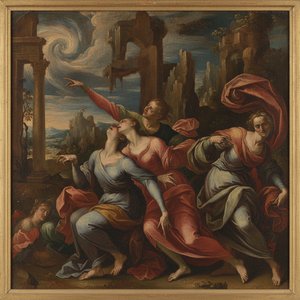
The Radiant Vision of Helios
Hendrik Goltzius’s “Helios,” painted in 1589, isn't merely a depiction of the sun god; it’s an embodiment of his power and majesty. This woodcut, rendered with meticulous detail and a masterful understanding of chiaroscuro, transports us to a moment of profound celestial drama. The image captures Helios not as a distant star, but as a dynamic force, actively commanding the heavens – a truly arresting vision for its time.

A Master of Mannerism
Goltzius, a pivotal figure in the transition from Renaissance to Baroque art, was deeply rooted in the Northern Mannerist style. This period emphasized dramatic contrasts, elongated figures, and an intense emotionality – qualities vividly realized in “Helios.” His technical skill is breathtaking; each line of the woodcut speaks volumes about his dedication to precision and control. The intricate layering of textures, achieved through careful carving and printing techniques, creates a remarkable sense of depth and realism, defying the limitations of the medium.
Born in Braunschweig (Brunswick) in 1558, Goltzius’s early life was shaped by his family's move to Duisburg. His training under Dirck Volkertszoon Coornhert, a renowned engraver and printmaker, provided him with the foundational skills that would define his career. He later worked for Philip Galle, further honing his craft before establishing himself in Haarlem, where he remained until his death in 1617. The slight imperfection of his right hand, sustained during childhood, is a subtle reminder of the human element behind this extraordinary artistic achievement.
Symbolism and Mythological Resonance
“Helios” is steeped in symbolism, drawing upon ancient Greek mythology and religious beliefs. Helios, as the personification of the sun, represents light, warmth, life-giving energy, and divine authority. The figure’s outstretched arms and raised hands evoke a sense of command and control over the cosmos. The inclusion of the cloth or flag – often interpreted as a banner – reinforces his role as a sovereign ruler of the heavens. The composition itself is carefully constructed to convey this power: the solitary figure dominates the landscape, dwarfing the clouds beneath him, emphasizing his supreme position.
Furthermore, the image resonates with themes of fate and destiny. Helios’s journey across the sky mirrors humanity's own passage through life, highlighting the cyclical nature of time and the inevitability of change. The dramatic lighting – a hallmark of chiaroscuro – adds to this sense of drama and underscores the god’s radiant presence.
A Legacy in Print
“Helios” stands as a testament to Goltzius's artistic genius and his mastery of woodcut technique. It is not simply a beautiful image; it’s a window into a world of ancient mythology, religious belief, and artistic innovation. Reproductions of this work offer an opportunity to bring this powerful vision into any space, adding a touch of timeless elegance and spiritual depth. The enduring appeal of “Helios” lies in its ability to capture the essence of divine power – a radiant reminder of the sun’s eternal journey across the sky.
Întrebări și răspunsuri
Care sunt tehnica și data creației pentru "Helios" de Hendrik Goltzius?
"Helios" a fost realizată în 1589, în Woodcut.
„Helios” este disponibil(ă) sub formă de print de fine art?
Pentru a achiziționa o ediție print a lucrării "Helios" de Hendrik Goltzius, vă este suficient să o comandați pe pagina dedicată Print de Fine Art: o printă de fine art pe canvas din bumbac sau pe hârtie canvas arhivistică.
Cât de intense sunt culorile în "Helios" de Hendrik Goltzius?
Intensitatea culorilor din "Helios" este Balanced. Intensitatea descrie cât de puternic par a fi culorile.
Biografie artist
Early Life and Artistic Foundations
Hendrik Goltzius, a name synonymous with the vibrant dynamism of Northern Mannerism in Dutch art, emerged from humble beginnings in the Rhineland region of Germany. Born around 1558 in Mulebrecht, near Viersen – a town steeped in artistic tradition due to his family’s lineage as stained-glass painters – Goltzius's early life was shaped by exposure to both visual arts and craftsmanship. His father, Jan Goltz II, continued the family legacy, establishing a workshop dedicated to creating intricate glass designs. This formative environment instilled within him an appreciation for detail, precision, and the transformative power of artistic skill. However, fate intervened dramatically when he was just three years old; a devastating fire ravaged their home in Duisburg, leaving him with a permanently deformed right hand – a physical characteristic that would ironically become his greatest asset as an engraver. This injury, rather than hindering his potential, fostered a unique and powerful control over the burin, allowing him to develop a distinctive “swelling line” technique, where he manipulated the tool’s pressure to create varying thicknesses of lines, adding depth and nuance to his prints in a way few others could achieve. His early training was further solidified by studying under Dirck Volckertszoon Coornhert, a renowned polymath and engraver in Cleves, who introduced him to the technical intricacies of copperplate engraving – a crucial step towards mastering his craft.A Career Forged in Haarlem
The pivotal moment in Goltzius’s artistic journey arrived in 1577 when he relocated with Coornhert to Haarlem, a thriving center for printmaking and trade within the burgeoning Dutch Republic. This move marked not just a geographical shift but also the beginning of a prolific and influential career. Haarlem offered him a vibrant artistic community, access to wealthy patrons eager to acquire exquisite prints, and a stimulating environment conducive to experimentation and innovation. He quickly established himself as a respected engraver, securing commissions from prominent figures like Philip Galle, who employed him to produce a series of engravings depicting the history of Lucretia – a project that showcased his burgeoning talent for dramatic composition and meticulous detail. Goltzius’s workshop flourished, employing numerous assistants and producing an astonishing volume of work, ranging from faithful reproductions of master prints to original designs reflecting his own artistic vision. His ambition extended beyond mere replication; he sought to elevate the status of engraving within the art world, challenging established conventions and pushing the boundaries of technique.Technique and Artistic Innovation
Goltzius’s genius lay not only in his technical mastery but also in his innovative approach to engraving. He was a pioneer of the “dot and lozenge” technique – a sophisticated method of creating tonal shading by strategically placing dots within lozenge-shaped spaces, meticulously crafted through cross-hatching. This technique allowed him to achieve an unprecedented level of realism and atmospheric depth in his prints, rivaling the effects of oil painting. His command of the burin was legendary; many art historians consider it to be comparable to that of Albrecht Dürer, the undisputed master of German engraving. He didn’t merely copy existing works; he transformed them, imbuing them with a sense of movement, drama, and psychological insight. Furthermore, Goltzius's engravings were frequently used as models for other artists, notably Bartholomeäus Spranger, whose Mannerist style was profoundly influenced by Goltzius’s innovative techniques. His willingness to experiment extended beyond engraving; he also ventured into painting, producing a series of works that demonstrated his versatility and artistic range – including chiaroscuro woodcuts that showcased his ability to manipulate light and shadow with remarkable skill.Legacy and Recognition
Hendrik Goltzius’s impact on the history of art is undeniable. During his lifetime, he enjoyed widespread recognition throughout Europe, attracting the patronage of royalty and nobility alike. His journey to Italy in 1590 solidified his reputation as a leading figure in the international art scene, where he sought inspiration from classical sculpture and Renaissance painting. His legacy continues to resonate today, with his engravings and paintings held in prestigious collections around the world – including the Rijksmuseum in Amsterdam, the Metropolitan Museum of Art in New York, and the British Museum in London. Goltzius’s work exemplifies the dynamism and sophistication of Northern Mannerism, bridging the gap between Renaissance tradition and Baroque innovation. He remains a pivotal figure in the development of printmaking, his techniques and artistic vision continuing to inspire artists and scholars centuries after his death in 1617. His unique approach to engraving—combining technical precision with expressive flair—established him as one of the most important and influential engravers of his time, securing his place within the pantheon of great masters.
Hendrik Goltzius
1558 - 1617 , Germania
Informații rapide
- Artistic Movement Or Style: Mannerism & gravură baroca
- Artists Or Movements Influenced By This Artist: ['Jacques Bellange']
- Artists Who Influenced This Artist: ['Dirck Volckertszoon Coornhert']
- Date Of Birth: Ianuarie/Februarie 1558
- Date Of Death: 1 ianuarie 1617
- Full Name: Hendrik Goltzius
- Nationality: Olandez
- Notable Artworks:
- Jupiter
- Minerva
- Prophetul Baruch
- Place Of Birth: Braunschweig, Italia
Articole conexe

Drama Barocă: Cum să Aduceți Splendoare și Emoție în Interioarele Contemporane
Descoperiți cum să integrați splendoarea stilului baroc în locuința dumneavoastră! Ghid complet cu elemente de design, culori și inspirație pentru interioare luxoase și pline de emoție.
Drama & Distortion: A Journey Through the Captivating World of Baroque Mannerism
Explore the dramatic tension of Mannerism and the opulent grandeur of Baroque art. Discover how masters used light, shadow, and distortion to redefine European history through a captivating journey of emotional intensity and spiritual fervor.

Drama and Distortion: A Definitive Guide to the Mastery of Mannerism and Baroque Art
Explore the dramatic evolution from Mannerist distortion to Baroque grandeur. Discover how light, shadow, and emotion redefined art history through a masterclass in technical mastery and religious fervor.

Drama & Distortion: The High-Voltage Energy of Baroque Mannerism
Dive into the high-voltage world of Baroque Mannerism. Explore how artists traded Renaissance harmony for dramatic distortion, intense light, and pure visual energy. Discover the masters of tension and learn to bring this bold, cinematic aesthetic into your modern space.

Hendrick Goltzius: Master Engraver & the Flourishing of Dutch Mannerism
Explore the life & art of Hendrick Goltzius, a master engraver of Dutch Mannerism. Discover his innovative techniques, iconic engravings like 'Jahel', and lasting influence on Baroque art. Learn about collecting Goltzius today.

