

 Vezi în context
 Trimite
 Distribuie
 Detalii
 Ghidul

 Descarcă
 Produse similare
 Radiografie
 Diaporama
 Statistici
Lady Reading


 Citește mai mult
Giclée / Imprimare artistică
Printuri giclée sau pe canvas de calitate muzeală, cu proces de producție rapid și opțiuni flexibile de finisare. ( Comandă pictură realizată manual Treci la imagine digitală)




P118B lei10

P118H lei10

P118W lei10

P438Z lei10

P508JH lei12

P508YH lei12

P805H lei10

P805Z lei10

P919BZ lei10

P919G lei10

P919XJ lei10

P959ZH lei10

P968JZ lei12

W106C lei8

W218G lei10

W218JH lei8

W218Y lei10

W307PJ lei10

W316G lei10

W316PJ lei8

W316Y lei10

W398PJ lei8

W4111J lei10

W500HY lei15

W500JH lei15

W692G lei12

W849H lei8

W940BG lei15

W953PJ lei8




Alegeți dintre dimensiunile noastre prestabilite, care respectă proporțiile originale ale operei de artă.

Introduceți lățimea și înălțimea de care aveți nevoie, pentru a se potrivi ramei sau peretelui dumneavoastră. O printare poate fi doar tăiată, niciodată extinsă dincolo de dimensiunea imaginii originale, astfel încât o dimensiune cu o formă diferită va pierde o parte din imagine. Vă trimitem o simulare digitală pentru aprobare înainte de a imprima orice. Imaginea afișată pe această pagină nu prezintă tăierea reală — doar simularea arată acest lucru.
Livrare în întreaga lume () în 2 săptămâni, în loc de cele 4/5 săptămâni standard. (21 Octombrie)

Livrare expres gratuită la nivel mondial

Pânză de in premium

Asigurare completă pentru transport

Garanție de rambursare a taxelor vamale

Garanția fidelității culorilor

Politica de retur în 100 de zile (doar pentru defecte)

Garanție de rambursare 100%

Reducere pentru comenzi multiple
 Opțiunea cu sticlă este disponibilă doar pentru dimensiuni de sub 110 cm

Lady Reading
Giclée / Imprimare artistică
Dimensiune reproducere
-


Preț total
lei 368
Biografie artist
A Pioneer of Nordic Light: The Life and Art of Harriet Backer
Harriet Backer, born in the tranquil Norwegian village of Høm in 1845, emerged as a pivotal figure in late 19th and early 20th-century art. Her journey from a young girl sketching alongside her family to becoming Norway’s most celebrated female painter is a testament to her unwavering dedication and artistic vision. Backer's life unfolded during a period of significant social change, particularly concerning the role of women in society, and she navigated this evolving landscape with both grace and determination. The daughter of a shipping merchant and a woman from a prosperous family, Backer received an upbringing that fostered intellectual curiosity alongside traditional values. A move to Christiania (present-day Oslo) in 1856 provided access to educational opportunities, including attendance at the Wilhemine Autentrieth Girls' School and Hartvig Nissen School. However, it was her early artistic inclinations, nurtured by drawing lessons with Joachim Calmeyer beginning at age twelve, that would ultimately define her path. This initial spark ignited a lifelong pursuit of capturing the world around her through paint and canvas.Formative Years and Artistic Development
Backer’s formal artistic education was extensive and international in scope. She studied under Johan Fredrik Eckersberg, Alphons Holländer in Berlin, Christen Brun, and Knud Bergslien, each contributing to the development of her technical skills and aesthetic sensibilities. Her time with Eilif Peterssen in Munich (1874-1878) proved particularly influential, exposing her to the naturalistic style prevalent at the time—an emphasis on detailed observation and realistic representation. However, it was her subsequent sojourn in Paris (1878-1880), studying with Léon Bonnat and Jean-Léon Gérôme, that marked a turning point in her artistic evolution. Here, she encountered Impressionism, a movement that would profoundly impact her approach to light, color, and composition. Yet, Backer didn’t simply adopt the tenets of Impressionism wholesale; instead, she synthesized them with her own unique vision. She developed what she termed *en plein air indoors*, meticulously recreating the effects of natural light within interior spaces—a distinctive technique that set her apart from traditional Impressionists who favored outdoor painting. This fascination with interiority was also inspired by the Dutch Masters of the 17th century, whose masterful use of light and shadow resonated deeply with Backer’s artistic sensibilities. Her travels throughout Europe alongside her sister, the renowned concert pianist Agathe Backer Grøndahl (1847–1907), further broadened her horizons, providing both inspiration and opportunities for continued study. The influence of her family's shipping business also subtly informed her work, often depicting scenes of domestic life connected to trade and travel.A Palette of Domesticity: Themes and Major Works
Backer’s oeuvre is characterized by a profound sensitivity to domestic life and an exceptional ability to capture the subtle nuances of light and atmosphere. Her paintings often depict intimate scenes—women engaged in everyday activities, children at play, or quiet moments of contemplation. *På Blekevollen* (1886-87), depicting women bleaching linen, exemplifies her skill in portraying rural life with both realism and poetic grace. The scene is bathed in the soft light of a summer afternoon, capturing not just the physical act of bleaching but also the sense of community and tradition associated with it. Similarly, *Bygdeskomakere* (1887) offers a glimpse into the world of village shoemakers, capturing their labor and dignity. The figures are rendered with remarkable detail, highlighting the textures of their clothing and tools. *Chez Moi* (1887), perhaps her most famous work, is a particularly striking example of her “indoor plein air” technique, showcasing a room bathed in soft, diffused light. The painting’s composition—a simple wooden table, a half-finished embroidery project, and a flickering candle—creates a sense of warmth and intimacy, inviting the viewer to step into the scene and share in the quiet moments of domestic life. *Kone som syr* (1890), *Barnedåp i Tanum kirke* (1892), and *Ved Lampelys* (1890) further demonstrate her mastery of capturing the interplay between light and shadow, creating a sense of warmth and intimacy. Backer’s subject matter wasn't merely about depicting scenes; it was about conveying emotions, moods, and the quiet beauty found in everyday moments. She also produced notable portraits and still lifes, always imbued with her signature luminous quality. Her prolific output—around 180 works—testifies to her unwavering commitment to her craft.Recognition, Legacy, and a Lasting Impact
Throughout her career, Harriet Backer received considerable recognition for her artistic achievements. She debuted in Paris in 1880 with *Solitude* and exhibited *Blått Interiør* at the Autumn Exhibition in Oslo in 1883. She garnered awards including the Schæffers legat in 1878, 1879, and 1880, and earned a silver medal at the Exposition Universelle in 1889. In 1908, she was honored with the King’s Medal of Merit in gold. Beyond her individual success, Backer played a crucial role in shaping the Norwegian art landscape. From 1889 to 1912, she operated an influential art school in Sandvika, mentoring numerous younger artists, including Marie Hauge, Lars Jorde, and Henrik Lund. Her patronage extended beyond formal instruction; from 1907 until his death in 1925, she received a private grant from Olaf Fredrik Schou, a wealthy industrialist who recognized her talent and supported her work. Backer’s historical significance lies not only in her artistic contributions but also in her role as a pioneer for women artists. In a male-dominated field, she broke barriers and paved the way for future generations of female painters. Her work was even exhibited at the Palace of Fine Arts during the 1893 World's Columbian Exposition in Chicago, bringing her art to an international audience. A bronze statue erected in her hometown of Holmestrand in 1982, alongside one of her sister Agathe, stands as a lasting tribute to their shared legacy. Today, her paintings are prominently displayed in major Norwegian museums, including the National Museum in Oslo and the Bergen Kunstmuseum, ensuring that her luminous vision continues to inspire and captivate audiences for years to come.
Harriet Backer
1845 - 1932 , Norvegia
Informații rapide
- Artistic Movement Or Style: Impressionism, Realism
- Artists Or Movements Influenced By This Artist:
- Hauge
- Jorde
- Lund
- Artists Who Influenced This Artist:
- Eckersberg
- Holländer
- Peterssen
- Date Of Birth: 21 ianuarie 1845
- Date Of Death: 25 martie 1932
- Full Name: Harriet Backer
- Nationality: Norvegiană
- Notable Artworks:
- På Blekevollen
- Solitude
- Blått Interiør
- Place Of Birth: Høm, Norvegia
Articole conexe
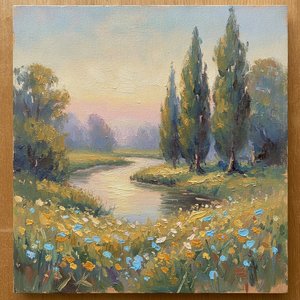
The Timeless Charm of Oil on Board: Reimagining Texture and Light through the Impressionist Lens
Discover the profound intimacy of oil on panel. Explore how Impressionist masters used rigid supports to capture light, texture, and impasto depth through exquisite, handmade oil reproductions for discerning collectors.

Moștenirea Durabilă a Picturii în Ulei: Tehnică, Istorie și Practică Contemporană
Descoperă istoria fascinantă și tehnicile esențiale ale picturii în ulei. Ghid complet pentru artiști, de la materiale până la creații contemporane. Îmbunătățește-ți abilitățile artistice!

The Enduring Legacy of Oil on Canvas: Technique, History & Aesthetic Impact
Explore the rich history & techniques of oil painting – from Renaissance masters to Impressionism. Discover pigments, layering methods, and why this timeless medium endures. Expert insights for artists & art enthusiasts.

The Enduring Power of Painting: A Historical & Contemporary Exploration of Form and Emotion
Explore the rich history & enduring techniques of oil painting with OriginalUniqueArt. Discover masterpieces, learn about art collecting, and find authentic handmade reproductions crafted by skilled artists.

Oil on Canvas: A Historical & Technical Exploration of a Timeless Artistic Medium
Explore the rich history & enduring techniques of oil painting on canvas. Discover the science behind its longevity, conservation practices, and contemporary relevance. Expert insights for art enthusiasts.