
 Previzualizare
 Trimite prin felicitare
 Distribuie
 Detalii despre lucrare
 Ghid
Ghid

 Descarcă imaginea
 Produse similare
 Radiografie
 Galerie foto
 Întrebări și răspunsuri
 Statistici
Emperor Ferdinand I

- 14.0 x 11.0 cm


 Vezi mai mult
Giclée / Imprimare artistică
Printuri giclée sau pe canvas de calitate muzeală, cu proces de producție rapid și opțiuni flexibile de finisare. ( Comandă pictură realizată manual Comută pe Imagine Digitală)




P118B lei10

P118H lei10

P118W lei10

P438Z lei10

P508JH lei12

P508YH lei12

P805H lei10

P805Z lei10

P919BZ lei10

P919G lei10

P919XJ lei10

P959ZH lei10

P968JZ lei12

W106C lei8

W218G lei10

W218JH lei8

W218Y lei10

W307PJ lei10

W316G lei10

W316PJ lei8

W316Y lei10

W398PJ lei8

W4111J lei10

W500HY lei15

W500JH lei15

W692G lei12

W849H lei8

W940BG lei15

W953PJ lei8




Alegeți dintre dimensiunile noastre prestabilite, care respectă proporțiile originale ale operei de artă.

Introduceți lățimea și înălțimea necesare pentru a se potrivi ramei sau peretelui dumneavoastră. O printare poate fi doar tăiată, niciodată extinsă dincolo de dimensiunea imaginii originale, astfel încât o dimensiune cu o formă diferită va pierde o parte din imagine. Vă trimitem o simulare digitală pentru aprobare înainte de a imprima orice. Imaginea afișată pe această pagină nu prezintă tăierea reală — doar simularea arată acest lucru.
Livrare în întreaga lume () în 2 săptămâni, în loc de cele 4/5 săptămâni standard. (9 Noiembrie)

Livrare expres gratuită la nivel mondial

Pânză de in de înaltă calitate

Asigurare completă pentru transport

Garanție de rambursare a taxelor vamale

Garanția fidelității culorilor

Politica de retur în 100 de zile (doar pentru defecte de fabricație)

Garanție de rambursare 100%

Ofertă pentru comenzi multiple
 Opțiunea cu sticlă este disponibilă doar pentru dimensiuni de sub 110 cm

Emperor Ferdinand I
Giclée / Imprimare artistică
Dimensiune reproducere
-


Preț total calculat
lei 386
Emperor Ferdinand I – A Salzburg Renaissance Masterpiece
Hans the Elder Bocksberger’s “Emperor Ferdinand I” stands as a testament to Salzburg’s artistic flourishing during the High Renaissance and early Mannerism, capturing not merely an image of Habsburg majesty but also the humanist ideals that defined the era. Executed around 1550-55 in oil on paper mounted on wood—a technique favored for its luminosity and ability to reproduce intricate detail—this portrait transcends mere representation; it embodies a profound engagement with artistic tradition and intellectual curiosity. The artwork resides within the Kunsthistorisches Museum, Vienna, offering visitors an unparalleled opportunity to contemplate this iconic piece of Austrian art history.A Portrait Steeped in Renaissance Tradition
The painting’s stylistic lineage traces back to Ulrich Bocksberger's influence, establishing a foundation for Hans’s artistic development amidst Salzburg’s Protestant Reformation. Like his celebrated brother, Hans Holbein the Younger—a figure who achieved international acclaim—Hans Bocksberger skillfully blended humanist principles with meticulous observation of naturalism. The composition prioritizes Ferdinand I’s presence against a dark background, maximizing visual impact and highlighting the emperor's skin tone as the focal point. This deliberate contrast underscores the artist’s mastery of chiaroscuro – the dramatic interplay between light and shadow—a hallmark of Renaissance painting that elevates the portrait beyond simple likeness.Detailed Observation and Symbolism
The depiction itself is remarkably precise, capturing every nuance of Ferdinand I's facial features: the furrowed brow conveying seriousness, the gaze directed outwards reflecting contemplation, and the subtle expression hinting at inner thoughts. The artist’s attention to detail extends to the clothing—a dark shirt overlaid with a fur-lined robe—symbolizing imperial wealth and authority. Prominently displayed medals adorning Ferdinand I's chest signify military achievements and royal honors, reinforcing his status as a leader revered throughout Europe. Furthermore, the feathered hat on the left side serves as a visual emblem of nobility and aristocratic distinction.Signature and Artistic Legacy
Signed “Hans The Elder Bocksberger” at the bottom right corner, this attribution confirms Hans’s professional standing within Salzburg's artistic milieu—a reputation solidified by commissions that graced noble residences and churches across Bavaria and Austria. While scholarly debate continues regarding distinguishing between Hans Bocksberger the Elder and Melchior Bocksberger, the younger brother’s work undeniably reflects the artistic currents shaping Bavaria during his lifetime. His contribution to monumental projects like Neuburg Castle and Landshut Residenz cemented his place as a cornerstone of Salzburg's Renaissance heritage—a legacy characterized by humanist ideals expressed through masterful technique and profound visual impact.- Artist: Hans the Elder Bocksberger
- Date: 1550-55
- Medium: Oil on paper mounted on wood
- Location: Kunsthistorisches Museum, Vienna
Întrebări și răspunsuri
Cum se încadrează stilul operei „Emperor Ferdinand I” în contextul epocii creatorului său?
„Emperor Ferdinand I” aparține mișcării High Renaissance, iar creatorul său a activat în epoca Renaissance.
Unde pot găsi statistici despre "Emperor Ferdinand I" de Hans The Elder Bocksberger?
Există o pagină de Statistici pentru "Emperor Ferdinand I". Aceasta prezintă graficul vizitelor lunare pentru această operă și pentru celelalte lucrări ale artistului, cu detalii pe țări și limbi vorbite.
Din ce țară provine lucrarea de High Renaissance „Emperor Ferdinand I”?
Lucrarea de High Renaissance „Emperor Ferdinand I” a fost creată de un artist născut în Austria.
Biografie artist
The Salzburg Renaissance Visionary
In the heart of sixteenth-century Salzburg, amidst a landscape of profound cultural transition, lived an artist whose brush captured the very essence of the High Renaissance and the burgeoning Mannerist style. Hans the Elder Bocksberger, born around 1510, emerged from a lineage of significant artistic talent, inheriting both technical rigor and a deep-seated creative spirit from his father, Ulrich Bocksberger. While history occasionally casts a long shadow over his work through the international fame of his younger brother, Hans Holbein the Younger, the elder Bocksberger carved out a legacy that was uniquely his own, deeply rooted in the aristocratic and ecclesiastical landscapes of Bavaria and Austria.A Master of Detail and Humanist Expression
Bocksberger’s artistry was defined by an exquisite attention to detail and a seamless integration of humanist ideals into his compositions. His work often bridged the gap between the structured elegance of the High Renaissance and the more expressive, fluid grace of early Mannerism. This mastery is perhaps most strikingly evident in his portrait of Emperor Ferdinand I, executed circa 1550-55. In this piece, Bocksberger utilized oil on paper mounted on wood to achieve a breathtaking interplay of light and shadow. The meticulous rendering of the Emperor’s features—the furrowed brow and the piercing gaze—demonstrates a sophisticated grasp of psychological realism, while the opulent textures of fur-lined robes and feathered headwear speak to the grandeur and authority of his subject.Architectural Grandeur and Lasting Influence
Beyond individual portraits, Bocksberger was a master of decorative painting, possessing a rare ability to transform architectural interiors into immersive spiritual and worldly experiences. He excelled in creating spaces of grandeur, where his hand could be seen transforming cold stone into vibrant narratives. His most significant contributions include:- The Schlosskapelle Neuburg, where his frescoes captured the essence of humanist ideals through idealized figures and harmonious compositions;
- The Great Hall at Goldegg Castle near Radstatt, a space where his vision brought forth a breathtaking panorama of color and texture;
- The Residenz in Landshut, where he collaborated with contemporaries like Ludwig Refinger and Hermann Posthumus to create an impressive architectural ensemble.

Hans The Elder Bocksberger
1510 - 1569 , Austria
Detalii rapide
- Full Name: Hans the Elder Bocksberger
- Nationality: Austrian
- Date Of Birth: 1510
- Date Of Death: 1569
- Place Of Birth: Salzburg, Austria
- Notable Artworks: ['Emperor Ferdinand I']
- Artistic Movement Or Style: Renaissance
- Artists Who Influenced This Artist: ['Hans Holbein the Younger']
- Artists Or Movements Influenced By This Artist: ['European Portraiture']
Articole similare

Hans Holbein the Younger: A Renaissance Portraitist's Mastery of Realism & Psychological Insight
Explore the life & art of Hans Holbein the Younger, a Renaissance master renowned for his strikingly realistic portraits and psychological insight. Discover iconic works like 'The Ambassadors' and delve into his lasting legacy.
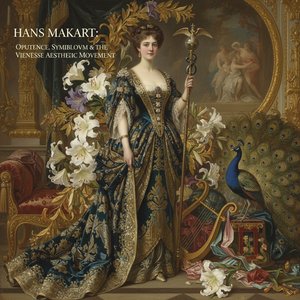
Hans Makart: Opulence, Symbolism & the Viennese Aesthetic Movement
Explore the opulent world of Hans Makart, a pivotal figure in Austrian art history. Discover his influence on Klimt & the Vienna Secession, signature style, and investment potential. Expert insights for collectors.
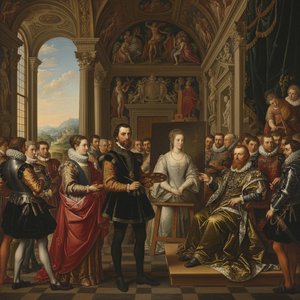
Hans von Aachen: Mannerism's Courtly Visionary & Imperial Portraiture
Explore the captivating world of Hans von Aachen, a leading Mannerist painter renowned for his exquisite imperial portraits & mythological scenes. Discover his legacy and influence on 16th-century European art.

Ferdinand Hodler: Symbolism, Parallelism & the Quest for Universal Harmony
Explore the captivating world of Ferdinand Hodler, Swiss Symbolist painter renowned for his evocative landscapes & pioneering 'parallelism'. Discover his life, key works, and lasting influence on art history. Own a hand-painted reproduction today!

Capodopere la Viena: Top 25 de opere de artă din Kunsthistorisches Museum | OriginalUniqueArt.ro
Descoperă top 25 de opere de artă din Kunsthistorisches Museum Viena! Explorează poveștile lui Raphael, Rembrandt și Vermeer. Reproduceri de calitate superioară pentru decorul casei tale pe OriginalUniqueArt.ro. Inspiră-te acum!
