

 Vezi în context
 Trimite
 Distribuie
 Detalii
 Ghidul

 Descarcă
 Produse similare
 Radiografie
 Diaporama
 Statistici
The Birth of Christ
 Acrylic On Canvas
- WallArt
- German Early Renaissance
 1437
1437 148.0 x 140.0 cm
 Muzeele Statale din Berlin
 Citește mai mult
Giclée / Imprimare artistică
Printuri giclée sau pe canvas de calitate muzeală, cu proces de producție rapid și opțiuni flexibile de finisare. ( Comandă pictură realizată manual Treci la imagine digitală)




P118B $10

P118H $10

P118W $10

P438Z $10

P508JH $12

P508YH $12

P805H $10

P805Z $10

P919BZ $10

P919G $10

P919XJ $10

P959ZH $10

P968JZ $12

W106C $8

W218G $10

W218JH $8

W218Y $10

W307PJ $10

W316G $10

W316PJ $8

W316Y $10

W398PJ $8

W4111J $10

W500HY $15

W500JH $15

W692G $12

W849H $8

W940BG $15

W953PJ $8




Alegeți dintre dimensiunile noastre prestabilite, care respectă proporțiile originale ale operei de artă.

Puteți introduce propriile dimensiuni pentru a se potrivi unui anumit cadru sau spațiu. Dacă dimensiunea selectată nu corespunde proporțiilor imaginii originale, vom decupa lucrarea de artă sau vom extinde imaginea cu margini oglindite sau cu o culoare uniformă. Un mockup digital va fi trimis pentru aprobarea dumneavoastră înainte de începerea producției.
Vă rugăm să rețineți că previzualizarea de pe ecran nu reflectă decuparea sau extinderea reală. Doar mockup-ul va arăta cu exactitate compoziția finală.
Deși dimensiunile personalizate sunt disponibile, vă recomandăm să selectați o dimensiune din lista predefinită pentru a păstra proporțiile originale.
Livrare în întreaga lume () în 2 săptămâni, în loc de cele 4/5 săptămâni standard. (26 Septembrie)

Livrare expres gratuită la nivel mondial

Pânză de in premium

Asigurare completă pentru transport

Garanție de rambursare a taxelor vamale

Garanția fidelității culorilor

Politica de retur în 100 de zile (doar pentru defecte)

Garanție de rambursare 100%

Reducere pentru comenzi multiple
 Opțiunea cu sticlă este disponibilă doar pentru dimensiuni de sub 110 cm

The Birth of Christ
Giclée / Imprimare artistică
Dimensiune reproducere
-


Preț total
$ 80
A Pioneer of German Realism: The Life and Art of Hans Multscher
Hans Multscher stands as an extraordinary testament to artistic evolution—a conduit between the solemn grandeur of late Gothic tradition and the burgeoning optimism of the Renaissance in Germany. While biographical details concerning his formative years remain elusive, scholarly consensus suggests a restless intellect driven by an unwavering fascination with artistic advancement. Unlike artists merely mirroring prevailing styles, Multscher actively pursued novel influences, undertaking expeditions that irrevocably molded his distinctive aesthetic sensibility.
These journeys undoubtedly encompassed visits to the artistic capitals of northern France and the Netherlands—locations where he encountered the groundbreaking realism and painstaking precision emblematic of Early Netherlandish painting. This stylistic encounter would become indelibly imprinted upon Multscher’s oeuvre, establishing it as a cornerstone of his artistic identity.
In 1427, Multscher secured his freedom as a citizen of Ulm—a vibrant commercial center nestled along the Danube River—marking a pivotal moment in his professional trajectory. This decision afforded him considerable autonomy and propelled him toward fostering an environment conducive to artistic experimentation.
Subject Matter and Composition
“The Birth of Christ,” executed in 1437, transcends mere depiction; it embodies a profound meditation on faith and divine grace. The painting’s central focus rests upon Mary—a figure rendered with unwavering reverence as she kneels before the infant Jesus—who cradles him tenderly within her arms.
Surrounding Mary are several individuals—standing and seated—representing a microcosm of humanity united in adoration. Angels populate the scene, their ethereal forms conveying celestial majesty, while ordinary people express humility and devotion. The composition is carefully orchestrated to guide the viewer’s gaze toward the luminous infant Jesus at its core.
Style and Technique: Embracing Early Netherlandish Realism
Multscher's artistic approach decisively aligns with the precepts of Early Netherlandish realism—a style characterized by unparalleled attention to detail, meticulous observation of natural phenomena, and a masterful manipulation of light and shadow. Unlike the stylized conventions of Gothic art, Multscher prioritized accuracy and verisimilitude, striving to capture the essence of human experience with breathtaking fidelity.
He employed oil paint—a relatively new medium at the time—allowing for nuanced tonal gradations and a luminous quality unattainable through tempera. The artist’s brushstrokes are subtly textured, conveying a palpable sense of physicality and immediacy. Furthermore, Multscher skillfully utilized atmospheric perspective—creating depth and realism by simulating the effects of distant haze—enhancing the painting's immersive visual impact.
Historical Context and Symbolism
"The Birth of Christ" emerged during a period of significant intellectual ferment—the Renaissance—fueled by rediscovered classical texts and burgeoning humanist ideals. This era witnessed a renewed appreciation for human reason and artistic excellence, prompting artists to challenge established conventions and explore new expressive possibilities.
Symbolically laden, the painting speaks volumes about Christian theology. The doves represent purity and divine peace, while the manger symbolizes humility and incarnation—the embodiment of God in human form. Mary’s posture conveys unwavering faith and maternal compassion, embodying the virtues revered throughout Christendom.
Emotional Impact: A Vision of Spiritual Transcendence
Ultimately, “The Birth of Christ” transcends its formal elements to evoke a powerful emotional response within the viewer—a glimpse into the sublime realm of spiritual transcendence. The painting’s serene atmosphere and luminous palette instill feelings of tranquility and reverence, inviting contemplation on themes of divine love and redemption.
It serves as an enduring reminder of humanity's capacity for compassion and faith—a testament to the transformative power of art to illuminate the deepest recesses of human consciousness. Reproductions of Multscher’s masterpiece continue to inspire collectors and interior designers alike, capturing the essence of a timeless artistic vision.
Biografie artist
A Pioneer of German Realism: The Life and Art of Hans Multscher
Born around 1400 in the small Bavarian town of Reichenhofen, now part of Leutkirch im Allgäu, Hans Multscher emerged as a pivotal figure bridging the stylistic transition from the late Gothic period to the burgeoning Renaissance in Germany. While precise details surrounding his early life remain somewhat elusive – historical records are often fragmented for this era – it’s clear that Multscher possessed an inquisitive spirit and a keen eye for artistic innovation, qualities that would define his career. He wasn't merely content to passively absorb prevailing trends; he actively sought out new influences, embarking on journeys that profoundly shaped his unique aesthetic vision. These travels likely took him to the artistic centers of northern France and the Netherlands, exposing him to the burgeoning realism and meticulous detail characteristic of Early Netherlandish painting – a style that would become a defining feature of his own work. The influence of artists like Jan van Eyck and Rogier van der Weyden is undeniably present in his later works, particularly in their use of light, texture, and psychological depth.The Workshop and Artistic Development
The Multscher workshop wasn’t simply a place of production; it was a vibrant crucible of artistic experimentation. Hans oversaw a substantial team – records indicate as many as sixteen assistants at times – fostering an environment where traditional Gothic forms were gradually infused with the naturalism he had absorbed during his travels. This blending is particularly evident in his sculptural work, which moved away from the elongated figures and stylized drapery typical of the late Gothic period towards more anatomically accurate representations and a greater sense of emotional depth. His hands demonstrated a remarkable understanding of human anatomy, capturing not just the outward form but also the subtle nuances of expression and gesture. Simultaneously, his paintings began to reflect this shift, moving away from the flattened perspective and symbolic imagery of earlier devotional art toward a more three-dimensional space and a focus on realistic detail. The *Wurzacher Altar*, begun in 1437, stands as a monumental testament to this evolving style – a complex and ambitious project that showcases Multscher’s mastery of oil painting, a relatively new medium at the time, and his ability to render textures, light, and shadow with remarkable precision. The altar's panels depict scenes from the life of Christ and the Virgin Mary, each imbued with a palpable sense of humanity and emotional resonance. It’s important to note that Multscher wasn’t solely focused on religious subjects; his commissions also included secular works, such as the group of emperors adorning the eastern window of Ulm's city hall, demonstrating his versatility and appeal to a broad clientele. This willingness to engage with diverse subject matter reflects a broader shift in artistic patronage during this period, moving away from purely ecclesiastical commissions towards more civic and commercial endeavors.Key Works and Lasting Legacy
Beyond the *Wurzacher Altar*, several other works cemented Multscher’s reputation as one of Germany's most important artists. The sculpture of *Holy Mary Magdalen*, now housed in Frankfurt's Liebieghaus, is a particularly poignant example of his ability to convey profound emotion through sculpted form. Her sorrowful expression and the delicate rendering of her hair and clothing reveal a deep understanding of human psychology – a hallmark of Multscher’s artistic approach. Another notable work is the *Man of Sorrows* – copies of which can be found at Ulm Minster – a powerful depiction of Christ’s suffering that reflects the devotional fervor of the era. The figures are not idealized or heroic; they are rendered with a raw, almost brutal honesty that invites viewers to contemplate the profound tragedy of Christ's sacrifice. These pieces, along with his contributions to the Ulm city hall, demonstrate Multscher’s skill in both sculpture and painting, as well as his ability to adapt his style to different contexts and patrons. His influence extended far beyond his own lifetime; the workshop he established continued to thrive after his death in 1467, disseminating his artistic principles throughout Swabia and beyond.A Bridge Between Eras
Hans Multscher’s significance lies not only in the beauty and technical skill of his art but also in his role as a catalyst for change. He was among the first German artists to fully embrace the realism and naturalism that were transforming art in northern Europe, paving the way for subsequent generations of Renaissance masters. His work represents a crucial moment in the development of German art, marking a departure from the stylized conventions of the Gothic period towards a more humanistic and observational approach. While he didn’t entirely abandon traditional forms – elements of Gothic ornamentation can still be detected in his work – he skillfully integrated them with new techniques and aesthetic sensibilities, creating a unique artistic language that resonated deeply with his contemporaries and continues to captivate audiences today. He wasn't simply imitating Italian models; he was synthesizing influences from various sources—Northern European realism, Gothic tradition, and the burgeoning Renaissance—to create a distinctly German style.Exploring Multscher’s World Today
Fortunately, numerous examples of Hans Multscher’s artistry survive, allowing us to appreciate his genius firsthand. The Gemäldegalerie Alte Meister in Dresden houses an impressive collection of European paintings from the 15th to 18th centuries, offering a broader context for understanding Multscher’s place within art history.- The Liebieghaus Museum in Frankfurt holds several key sculptures by Multscher.
- Ulm Minster features his *Man of Sorrows* and other significant works.
- Reproductions of the Wurzach Altar can be found in various museums throughout Germany.
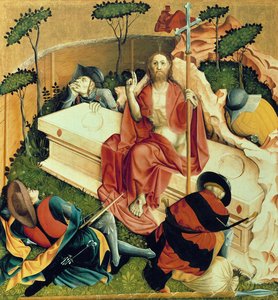
Hans Multscher
1400 - 1467 , Germania
Informații rapide
- Artistic Movement Or Style: Gotic/Renaissance
- Artists Or Movements Influenced By This Artist: ['Ulm School']
- Artists Who Influenced This Artist:
- Stiluri Franceze
- Stile Olandeze
- Date Of Birth: c. 1400
- Date Of Death: 1467
- Full Name: Hans Multscher
- Nationality: German
- Notable Artworks:
- Altar Wurzach
- Maria Magdalena
- Omul Suferirii
- Place Of Birth: Reichenbach, Germania
Articole conexe

Illuminating Faith: Biblical Narrative & Artistic Expression Through the Ages
Explore the rich history of biblical art from Giotto to the Renaissance masters with OriginalUniqueArt. Discover symbolism, techniques & enduring legacies. Museum-quality reproductions & expert insights.

Romantic Realism's Finest: 10 Masterpieces for Your Home | OriginalUniqueArt
Explore 10 defining masterpieces of Romantic Realism! Discover Courbet, Millet & Daumier's powerful paintings—capturing emotion and social realities. Find museum-quality reproductions for your home at OriginalUniqueArt.com.
Fritz von Uhde: Bridging Realism & Symbolism in Late 19th-Century German Painting
Explore the captivating world of Fritz von Uhde, a pivotal German painter bridging Realism & Symbolism. Discover his plein-air techniques, religious themes, and influence on modern art. Learn about this fascinating artist at OriginalUniqueArt.
Sacred Narratives Embodied: A Comprehensive Exploration of Religious Iconography in Art History
Explore the rich history of religious iconography in art! Discover symbolism, movements & masterpieces from Byzantine to Renaissance periods. Expert insights for collectors and enthusiasts at OriginalUniqueArt.
Jacob Henricus Maris: A Master of Dutch Atmospheric Realism & the Intimate Landscape
Explore the captivating world of Jacob Henricus Maris, a leading figure of the Dutch Hague School. Discover his atmospheric landscapes, signature brushstrokes & lasting influence on 19th-century art. Learn more at OriginalUniqueArt.
