Previzualizare
 Trimite prin felicitare
 Distribuie
 Detalii despre lucrare
 Ghid
Ghid

 Descarcă imaginea
 Produse similare
 Radiografie
 Galerie foto
 Statistici
The Wave


 Vezi mai mult
Reproducere pictată manual în ulei
Pictură în ulei pe pânză, pictată manual de artiștii noștri la dimensiunea și ramele dorite de dumneavoastră, pe comandă. ( Comută pe versiunea Print Comută pe Imagine Digitală)




P118B lei10

P118H lei10

P118W lei10

P438Z lei10

P508JH lei12

P508YH lei12

P805H lei10

P805Z lei10

P919BZ lei10

P919G lei10

P919XJ lei10

P959ZH lei10

P968JZ lei12

W106C lei8

W218G lei10

W218JH lei8

W218Y lei10

W307PJ lei10

W316G lei10

W316PJ lei8

W316Y lei10

W398PJ lei8

W4111J lei10

W500HY lei15

W500JH lei15

W692G lei12

W849H lei8

W940BG lei15

W953PJ lei8




Alegeți dintre dimensiunile noastre prestabilite, care respectă proporțiile originale ale operei de artă.

Introduceți lățimea și înălțimea necesare pentru a se potrivi ramei sau peretelui dumneavoastră. Această lucrare este pictată manual, așa că, pentru o dimensiune cu o formă diferită, artistul poate picta puțin mai mult în jurul imaginii sau poate tăia puțin din margini — dumneavoastră decideți. Vă vom trimite o simulare digitală pentru aprobare înainte de a începe pictarea. Imaginea afișată pe această pagină nu reprezintă rezultatul real — doar simularea este reprezentativă.
După plasarea comenzii, echipa OriginalUniqueArt.com va contacta clientul prin e-mail pentru instrucțiuni și îi va furniza o previzualizare a machetei
Livrare în întreaga lume () în 3-4 săptămâni, în loc de cele 5 săptămâni standard. (25 Octombrie). Fără compromisuri în ceea ce privește calitatea.

Livrare expres gratuită la nivel mondial

Pânză de in de înaltă calitate

Asigurare completă pentru transport

Garanție de rambursare a taxelor vamale

Garanția fidelității culorilor

Politica de retur în 100 de zile (doar pentru defecte de fabricație)

Garanție de rambursare 100%

Ofertă pentru comenzi multiple
 Opțiunea cu sticlă este disponibilă doar pentru dimensiuni de sub 110 cm

The Wave
Tehnică de reproducere
Dimensiune reproducere
-


Preț total calculat
lei 1389
The Visceral Majesty of the Untamed Sea
In the heart of Gustave Courbet’s The Wave, one does not merely observe a seascape; one experiences a collision of elemental forces. Completed in 1869, this masterpiece captures the precise moment when the ocean’s immense weight meets the unyielding resistance of jagged stone. The water, rendered in deep, brooding shades of indigo and emerald, surges forward with a terrifying beauty that commands immediate attention. There is no attempt to soften the blow or romanticize the spray; instead, Courbet presents an unflinching gaze at the sea's raw, kinetic energy. For the discerning collector, this painting offers more than just a visual subject—it provides a window into the sublime, evoking a profound sense of awe and a visceral respect for the untamable power of the natural world.A Manifesto of Realism and Texture
Beyond its dramatic subject, The Wave serves as a bold declaration of artistic independence. During an era when the Parisian art establishment favored polished, idealized landscapes, Courbet chose a path of radical honesty. His technique is far from the smooth, invisible brushwork of the Academy; rather, it is characterized by a thick, expressive application of paint that mirrors the very turbulence he depicts. By utilizing a palette dominated by dark, saturated tones and heavy textures, he captures the salt-sprayed atmosphere and the churning foam with remarkable tactile depth. This commitment to Realism—the refusal to embellish or sentimentalize—allows the viewer to feel the weight of the tide. It is this very authenticity that makes a high-quality reproduction a transformative element in any interior, bringing a sense of grounded, historical gravity to a modern space.The Eternal Dance of Resilience and Change
The symbolism embedded within this tempestuous scene resonates far beyond the shoreline. The crashing wave acts as a potent metaphor for the relentless flux of life and the overwhelming forces of nature that dwarf human endeavor. Yet, amidst the chaos of the surging tide, the dark, anchored rocks provide a striking counterpoint of permanence and resilience. This tension between the ephemeral and the enduring creates a narrative depth that continues to captivate art lovers and designers alike. To hang such a work is to invite a conversation about strength, endurance, and the beautiful chaos of existence into one's home. It is a piece that does not merely decorate a wall; it anchors a room with its historical significance and its enduring emotional resonance.Întrebări și răspunsuri
„The Wave” are o previzualizare în realitate augmentată?
Poți vizualiza "The Wave" de Gustave Courbet pe propriul tău perete folosind pagina Previzualizare în AR a operei de artă, prin intermediul realității augmentate pe un dispozitiv compatibil.
Unde pot vedea o previzualizare pentru „The Wave”?
Pentru o previzualizare a unei reproduceri a operei "The Wave" de Gustave Courbet, accesați pagina de Previzualizare în spațiu a lucrării.
Ce emoție transmite opera de Contemporary Realism „The Wave”?
În cadrul mișcării Contemporary Realism, „The Wave” este marcată de un ton Powerful.
Biografie artist
A Rebel’s Brush: The Life and Legacy of Gustave Courbet
Jean Désiré Gustave Courbet, born July 31, 1819, in Ornans, France, stands as a monumental figure in the history of art – a defiant iconoclast who irrevocably altered the trajectory of painting during the mid-nineteenth century. More than simply capturing visual impressions; his oeuvre embodies a profound philosophical commitment to portraying reality without embellishment, establishing him as the undisputed progenitor of Realism and profoundly influencing subsequent artistic movements like Impressionism and Post-Impressionism. His story unfolds not merely through brushstrokes but through a courageous confrontation with societal expectations and an unwavering dedication to artistic integrity.Early Life and Artistic Training
Courbet’s upbringing in Ornans, a modest village nestled in Burgundy, instilled within him a grounding in rural life – a formative experience that would permeate his artistic vision. His parents, bourgeois landowners, recognized and nurtured his burgeoning talent for drawing from an early age, providing him with invaluable encouragement that propelled him toward formal artistic training at the École des Beaux-Arts in Paris in 1839. However, unlike many of his contemporaries who sought to emulate the grandeur and idealism championed by Romantic painters like Eugène Delacroix and Théodore Géricault, Courbet swiftly rejected these conventions. He perceived them as artificial constructs that distanced art from genuine observation and experience—a stance that would define his artistic crusade. While acknowledging influences from masters such as Caravaggio for their masterful use of chiaroscuro and dramatic realism, Courbet deliberately forged his own path, prioritizing directness and materiality over stylistic imitation.The Birth of Realism: Challenging Artistic Conventions
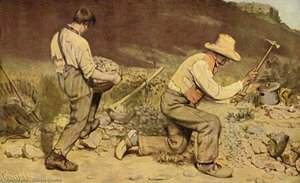
Courbet’s artistic breakthrough arrived with a deliberate repudiation of the prevailing aesthetic standards of his time. He eschewed mythological narratives and heroic allegories; instead, he turned his gaze toward the everyday lives of ordinary people—particularly those engaged in labor and rural existence. This unwavering devotion to depicting reality as he perceived it – what would soon become known as Realism – initially encountered vehement opposition from critics accustomed to idealized representations steeped in romantic sentimentality. Early canvases explored landscapes and portraits, yet swiftly transitioned towards scenes of working-class life rendered on a scale traditionally reserved for monumental historical paintings. This conscious decision wasn’t merely stylistic; it was an assertion of the inherent dignity and significance of subjects often marginalized by artistic discourse. Consider The Stone Breakers (1849), tragically destroyed during World War II—a painting that encapsulates Courbet's revolutionary approach: two laborers, rendered with unflinching detail and muted colors, embody the harsh realities of rural toil without resorting to sentimental embellishment. This work served as a powerful rebuke to academic art’s preoccupation with noble subjects and idealized beauty.Major Works and Artistic Philosophy
Courbet’s artistic philosophy extended beyond subject matter to encompass technique—a cornerstone of his distinctive style. He championed *impasto*, applying paint thickly onto the canvas, prioritizing texture and materiality over smooth surfaces. This method allowed him to capture the physicality of the world around him with unprecedented accuracy, mirroring the tactile experience of observing nature or engaging in manual labor. His monumental canvases like A Burial at Ornans (1850-51) – a depiction of a provincial funeral—further solidified his reputation as a provocateur and champion of artistic freedom. The sheer scale of the painting, coupled with its uncompromising realism and rejection of emotional sentimentality, shocked audiences accustomed to grand historical narratives imbued with moral didacticism. Courbet’s refusal to conform to academic expectations resonated deeply with artists who sought to express their own perspectives on contemporary society—a legacy that continues to inspire artistic experimentation today. He also produced evocative landscapes like View in the Forest of Fontainebleau (1855), capturing the beauty of the natural world without romanticizing it, demonstrating his commitment to truthful representation.Legacy and Historical Significance
Gustave Courbet’s influence on subsequent art movements is undeniable—a testament to his transformative vision of artistic practice. While he drew inspiration from earlier masters like Caravaggio for their dramatic realism and masterful use of light and shadow, his impact transcended mere stylistic imitation. He liberated Impressionists and Post-Impressionists from the constraints of traditional representation, encouraging them to explore new ways of perceiving and portraying the world—a legacy that persists in contemporary art. His unwavering advocacy for artistic freedom cemented his place as a pivotal figure in the history of modernism—a rebel who dared to challenge convention and champion truthfulness above all else. Courbet died April 29, 1877, leaving behind an oeuvre that continues to provoke contemplation and inspire artists worldwide. He remains a symbol of artistic integrity and a beacon for those striving to express their own vision of reality.
Gustave Courbet
1819 - 1877 , Franța
Detalii rapide
- Artistic Movement Or Style: Realism
- Artists Or Movements Influenced By This Artist:
- Impressionism
- Post-Impressionism
- Artists Who Influenced This Artist:
- Eugène Delacroix
- Théodore Géricault
- Caravaggio
- Date Of Birth: 31 iulie 1819
- Date Of Death: 29 aprilie 1877
- Full Name: Gustave Courbet
- Nationality: Franțuzesc
- Notable Artworks:
- Un demolitor
- Un funerariu la Ornans
- Atelierul pictorului
- Place Of Birth: Orléans, Franța
Articole similare

Katsushika Hokusai: Cele Mai Iubite 25 de Opere de Artă – Inspirație pentru Decorul Casei Tale
Descoperă cele mai frumoase 25 de opere de artă semnate de Katsushika Hokusai, maestru ukiyo-e. Explorează istoria valului Kanagawa și a picturilor japoneze iconice. Reproduceri de calitate muzeală pentru decorul casei tale pe OriginalUniqueArt.com!

The Allure of Azure: Exploring the Symbolic & Aesthetic Depths of Blue in Art History
Explore the rich history of blue in art! Discover its symbolism, from ancient pigments to modern masterpieces by Kandinsky & Seurat. Uncover the psychological impact and cultural meanings behind this captivating hue.
The Allure of the Horizon: A Comprehensive Exploration of Seascape Art Through History & Emotion
Explore the captivating world of seascape art! Discover its history, key artists & movements – from Dutch Masters to Impressionism. Expert insights for collectors and enthusiasts at OriginalUniqueArt.

Serene Blue Backgrounds: Discover Soulful Art to Transform Your Space with Timeless Elegance
Transform your home with soulful blue art. From serene Monet impressions to modern textured sculptures, discover curated masterpieces designed to inspire calm. Explore expert art consultations and bespoke hand-painted reproductions to create your personal sanctuary.

Top 10 Capodopere Albastre: Picturi Celebre și Inspirație pentru Decor
Descoperă top 10 picturi celebre dominate de nuanțe subtile de albastru! Explorează poveștile din spatele capodoperelor Monet, Renoir și Van Gogh. Inspirație decor interior & reproducere tablouri pe OriginalUniqueArt.com