Comută pe versiunea Print
 Vezi mai mult







































 Pentru opere de artă sau reproduceri care depășesc 105 cm (aproximativ 41 de inch) pe oricare dintre laturi, cadrul va fi livrat demontat, sub formă de kit. Această metodă asigură o livrare sigură și previne deteriorarea în timpul transportului.


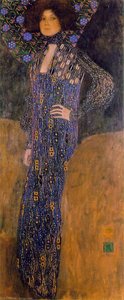
A Moment of Quiet Contemplation: Gustav Klimt’s Reclining Woman (Study for Judith I)
Gustav Klimt's "Reclining Woman (Study for Judith I)" stands as a testament to the artist’s mastery of decorative art and his profound exploration of femininity within the context of Symbolist aesthetics. Completed in 1904, this preparatory sketch offers a glimpse into Klimt’s creative process—a crucial element in understanding the grandeur and complexity of his iconic masterpiece, Judith I. The painting itself is an opulent tapestry woven with gold leaf, mirroring Klimt's fascination for precious metals and elevating it beyond mere ornamentation to become a vehicle for conveying spiritual significance.- Subject Matter: The drawing depicts a woman lying supine on her bed, embodying vulnerability and repose. This pose is deliberately chosen by Klimt, reflecting the Symbolist preoccupation with idealized female figures—representations of purity and serenity intended to inspire contemplation.
- Style & Technique: Klimt’s style aligns perfectly with the Symbolist movement, characterized by flattened perspectives, stylized forms, and a deliberate rejection of naturalistic representation. The meticulous application of gold leaf is paramount; it isn't simply gilded but painstakingly burnished to achieve an iridescent sheen that captures light and imbues the image with ethereal beauty. The artist employs a combination of watercolor and gouache pigments—watercolor providing luminosity while gouache lends opacity and textural richness.
Historical Context: Symbolism’s Embrace of Myth and Emotion
The Symbolist movement arose in France at the turn of the century as a reaction against Impressionism's focus on fleeting sensory experience. Artists sought to express inner emotions and psychological states through symbolic imagery—drawing inspiration from mythology, folklore, and esoteric traditions. Klimt’s Judith I, conceived during this period, delves into themes of sacrifice, desire, and spiritual transformation—reflecting the broader intellectual currents shaping European art at the time. The sketch itself serves as a crucial step in realizing these ambitious ideas, demonstrating Klimt's careful consideration of composition and color.- Symbolism: Recurring motifs within “Reclining Woman” – notably the floral patterns adorning the woman’s body—are laden with symbolic meaning. Flowers represent fertility, rebirth, and divine grace, aligning with Symbolist beliefs about the interconnectedness of nature and spirituality.
- Emotional Impact: Klimt's intention was to evoke a feeling of profound stillness and contemplation. The subdued palette – dominated by earthy tones accented by shimmering gold – contributes to this atmosphere, inviting viewers to immerse themselves in the image’s serene beauty and contemplate its deeper psychological resonances.
Beyond Decoration: Klimt's Artistic Legacy
“Reclining Woman (Study for Judith I)” isn’t merely a decorative artwork; it represents Klimt’s pioneering approach to artistic expression. He prioritized conveying emotion and spiritual ideas over mere visual realism—a radical departure from academic conventions of his time. This sketch foreshadows the monumental scale and opulent materiality of Judith I, cementing Klimt's reputation as one of Austria’s most celebrated artists. Its enduring appeal lies in its ability to capture a moment of exquisite vulnerability and beauty, reminding us that art can transcend the everyday and illuminate the depths of human experience.Întrebări și răspunsuri
Din ce perioadă istorică face parte "Reclining Woman (Study for" de Gustav Klimt?
"Reclining Woman (Study for" datează din perioada Modern.
Ce intensitate de culoare are "Reclining Woman (Study for" de Gustav Klimt?
Culorile din "Reclining Woman (Study for" de Gustav Klimt au o intensitate Vivid.
Există un ghid pentru "Reclining Woman (Study for" de Gustav Klimt?
O pagină de Fișă informativă este disponibilă pentru "Reclining Woman (Study for" de Gustav Klimt: o fișă informativă imprimabilă despre operă, concepută pentru elevi și utilizare în mediul școlar.
Mai multe detalii despre această pictură
 Previzualizare
 Trimite prin felicitare
 Distribuie
 Detalii despre lucrare
 Ghid
Ghid

 Descarcă imaginea
 Produse similare
 Radiografie
 Galerie foto
 Întrebări și răspunsuri
 Statistici