

 Trimite
 Distribuie
 Detalii

 Descarcă
 Produse similare
 Diaporama
 Statistici
shirt panel (mola)


 Citește mai mult
Reproducere pictată manual în ulei
Pictură în ulei pe pânză, realizată manual de artiștii noștri la dimensiunea și ramele dorite de dumneavoastră, pe comandă. ( Comută pe versiunea Print Treci la imagine digitală)




































Alegeți dintre dimensiunile noastre prestabilite, care respectă proporțiile originale ale operei de artă.

Puteți introduce propriile dimensiuni pentru a se potrivi unui anumit cadru sau spațiu. Dacă dimensiunea selectată nu corespunde proporțiilor imaginii originale, vom decupa opera de artă sau vom extinde pictura cu elemente suplimentare pictate manual. O simulare digitală vă va fi trimisă pentru aprobare înainte de începerea producției.
Vă rugăm să rețineți că previzualizarea de pe ecran nu reflectă decuparea sau extinderea reală. Doar macheta va arăta cu exactitate compoziția finală.
Deși sunt disponibile dimensiuni personalizate, vă recomandăm să selectați o dimensiune din lista predefinită pentru a păstra proporțiile originale.
După plasarea comenzii, echipa OriginalUniqueArt.com va contacta clientul prin e-mail pentru instrucțiuni și îi va furniza o previzualizare a machetei
Livrare în întreaga lume () în 3-4 săptămâni, în loc de cele 5 săptămâni standard. (16 Septembrie). Fără compromisuri în ceea ce privește calitatea.

Livrare expres gratuită la nivel mondial

Pânză de in premium

Asigurare completă pentru transport

Garanție de rambursare a taxelor vamale

Garanția fidelității culorilor

Politica de retur în 100 de zile (doar pentru defecte)

Garanție de rambursare 100%

Reducere pentru comenzi multiple
 Opțiunea cu sticlă este disponibilă doar pentru dimensiuni de sub 110 cm

shirt panel (mola)
Tip de reproducere
Dimensiune reproducere
-


Preț total
$ 300
A Tapestry of Tradition: The Soul of the Mola
In the vibrant heart of the San Blas Islands, where the Caribbean Sea meets the shores of Panama, lies a textile tradition that breathes life into fabric. The shirt panel (mola) is not merely a piece of cloth; it is a profound visual language spoken by the Guna people. This exquisite work, dating from approximately 1950, serves as a window into a world where every stitch carries the weight of ancestral memory. To behold this piece is to witness a rhythmic dance of color and geometry, a meticulous arrangement of red, blue, yellow, and orange that captures the very essence of indigenous Panamanian identity.
The artistry of the Guna women is defined by the complex technique of appliqué, a process of layering fabric scraps to create depth and dimension. In this particular panel, the eye is immediately drawn to the hypnotic repetition of circular motifs. These shapes, filled with contrasting hues, create a kaleidoscopic effect that feels both ancient and strikingly modern. The presence of delicate white dots scattered throughout the design adds a layer of celestial mystery, perhaps suggesting a starlit sky or the shimmering spray of the ocean, grounding the abstract patterns in the natural world that the Guna people inhabit so intimately.
Symbolism and the Weaver's Narrative
Every mola is a narrative vessel, often weaving together elements of mythology, cosmology, and the rhythms of daily life. While the geometric precision of this 1950 panel offers an abstract beauty, its structural complexity speaks to the resilience and adaptability of the Guna culture. The use of bold, primary colors—deep reds and striking blues—reflects a vibrant vitality, while the intricate layering suggests the multifaceted nature of their history. For the collector or art enthusiast, this piece represents more than decoration; it is an invitation to contemplate a way of life that honors the interconnectedness of all living things.
The emotional impact of such a work lies in its tactile warmth and visual energy. There is a palpable sense of human touch in every edge and every color transition, reminding the viewer of the countless hours of focused devotion required to master this craft. For interior designers seeking to infuse a space with cultural depth and organic warmth, a reproduction of this mola offers a sophisticated focal point. It brings an element of "living art" into a room—a piece that does not just sit upon a wall but actively engages the spirit through its storied textures and exuberant palette.
A Timeless Legacy for the Modern Collector
As we look back on the mid-20th century, this mola stands as a testament to the enduring strength of indigenous artistry. It bridges the gap between traditional folk art and contemporary abstract expressionism, making it a versatile treasure for any high-end collection. Whether displayed in a minimalist modern gallery or nestled within a richly textured living space, the shirt panel radiates an aura of authenticity and historical significance.
Owning a piece inspired by the Guna people is an act of celebrating human ingenuity. It allows the beauty of the Comarcas to transcend geographical boundaries, bringing the warmth of Panama's Caribbean coast into the homes of those who appreciate the profound intersection of history, technique, and soul.
Biografie artist
The Living Tapestry: The Soul of Guna Artistry
In the heart of the San Blas Islands, where the turquoise Caribbean Sea meets the lush, emerald coastlines of Panama, there exists a visual language written not in ink, but in thread and color. This is the world of the Guna people, an indigenous community whose artistic heritage is most vibrantly expressed through the mola—intricate, layered textile panels that serve as much more than mere decoration. To encounter a mola is to witness a profound testament to an enduring spirit; it is a rhythmic dance of geometry and myth that captures the very essence of Panaman and Colombian indigenous life. These textiles are the pulse of a culture, acting as repositories of ancestral memory where every stitch carries the weight of a thousand stories.
The origins of this artistry are deeply intertwined with the history of the Guna people themselves. Descended from ancient lineages that may have connected to Mesoamerican civilizations, the Guna developed a nomadic lifestyle that fostered a deep, spiritual connection to the natural world. This ecological awareness is etched into every fabric panel. The technique used to create these masterpieces is known as reverse appliqué, an extraordinary feat of patience and precision. Unlike traditional embroidery that rests upon a surface, Guna women create these patterns by layering multiple sheets of carefully chosen colored cloth—often remnants of textiles introduced through centuries of trade—and then meticulously cutting away the top layers to reveal the vibrant hues hidden beneath. This process creates a structural depth and a sculptural quality, transforming simple fabric into a complex, multi-dimensional mosaic.
Symbolism, Narrative, and the Natural World
Beyond their striking visual appeal, molas function as a sophisticated system of communication, representing a visual language that transcends spoken words. Each piece is a narrative vessel, often depicting scenes from Guna mythology, cosmology, or significant historical events. The motifs found within these textiles are rarely arbitrary; they are deeply symbolic reflections of the environment and spiritual beliefs. One might observe:
- Geometric Patterns: Intricate shapes that represent fundamental concepts such as duality, balance, and the interconnectedness of all living things.
- Fauna and Flora: Stylized depictions of animals and plants, such as the scales of a serpent or the movement of waves, which symbolize ecological awareness and spiritual protection.
- Cosmic Narratives: Designs that recount the creation of the universe and the roles of ancestral deities within the Guna worldview.
The artistry is characterized by an intense, rhythmic contrast. A single panel might feature a breathtaking interplay between deep, shadowy blacks and fiery oranges, evoking both the warmth of a tropical sunrise and the mysteries of the ancient jungle. This mastery of color and line reflects a disciplined hand, where the artist’s skill is measured by the sharpness of every cut and the seamless integration of contrasting tones.
Evolution and Contemporary Significance
The history of Guna art is also a history of resilience and adaptation. The arrival of European explorers and traders brought new materials, such as cotton, which fundamentally altered the textures available to artisans. However, rather than losing their identity to these external influences, the Guna people demonstrated a remarkable ability to integrate new elements while preserving the core values of their tradition. They adapted their techniques to utilize new fabrics without ever compromising the sacred geometric structures that define their cultural aesthetic.
Today, the legacy of Guna artistry continues to thrive within the autonomous comarcas of Panama and Colombia. While the molas have gained international recognition as significant works of textile art, they remain deeply rooted in the daily lives of the Guna women who create them. They are not merely artifacts for a gallery; they are living expressions of identity, worn with pride as part of traditional dress. As the world changes, the mola remains a steadfast anchor—a vibrant, kaleidoscopic window into a culture that continues to weave its past, present, and future into a single, magnificent tapestry.

guna people
Panama
Informații rapide
- Artistic Movement Or Style: Mola Art
- Full Name: Guna people
- Nationality: Indigenous
- Notable Artworks:
- Shirt Panel (mola)
- Shirt Panel (mola)
- Place Of Birth: Panama
Articole conexe
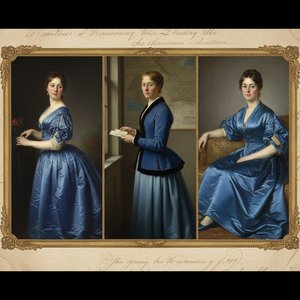
Azure Visions: Exploring Representations of the Blue Dress in Western Art History
Explore the rich history of the blue dress in Western art! Discover its symbolism, from Renaissance masterpieces to modern interpretations by artists like Martin & Schiele. Uncover cultural meanings and artistic techniques.

Cele mai importante 10 capodopere ale abstracției geometrice | Artă & Decor de lux pe OriginalUniqueArt.com
Descoperă cele mai importante 10 capodopere ale abstracției geometrice! Explorează istoria, artiștii (Mondrian, Kandinsky) și culorile vibrante care au definit arta modernă. Reproduceri de tablouri de lux pe OriginalUniqueArt.com pentru un decor interior rafinat. Explorează colecția online!

Crimson Threads of Narrative: Exploring Symbolism & Representation in Artworks Featuring the Red Dress
Explore the rich symbolism of the red dress in art history! From ancient power displays to iconic portraits like Cézanne’s 'Madame Cezanne', discover the cultural and artistic significance behind this captivating color. Expert analysis & insights.

The Allure of Azure: Exploring the Symbolic & Aesthetic Depths of Blue in Art History
Explore the rich history of blue in art! Discover its symbolism, from ancient pigments to modern masterpieces by Kandinsky & Seurat. Uncover the psychological impact and cultural meanings behind this captivating hue.

Top 10 Capodopere Albastre: Picturi Celebre și Inspirație pentru Decor
Descoperă top 10 picturi celebre dominate de nuanțe subtile de albastru! Explorează poveștile din spatele capodoperelor Monet, Renoir și Van Gogh. Inspirație decor interior & reproducere tablouri pe OriginalUniqueArt.com