
 Vezi în context
 Trimite
 Distribuie
 Detalii
 Ghidul

 Descarcă
 Produse similare
 Radiografie
 Diaporama
 Statistici
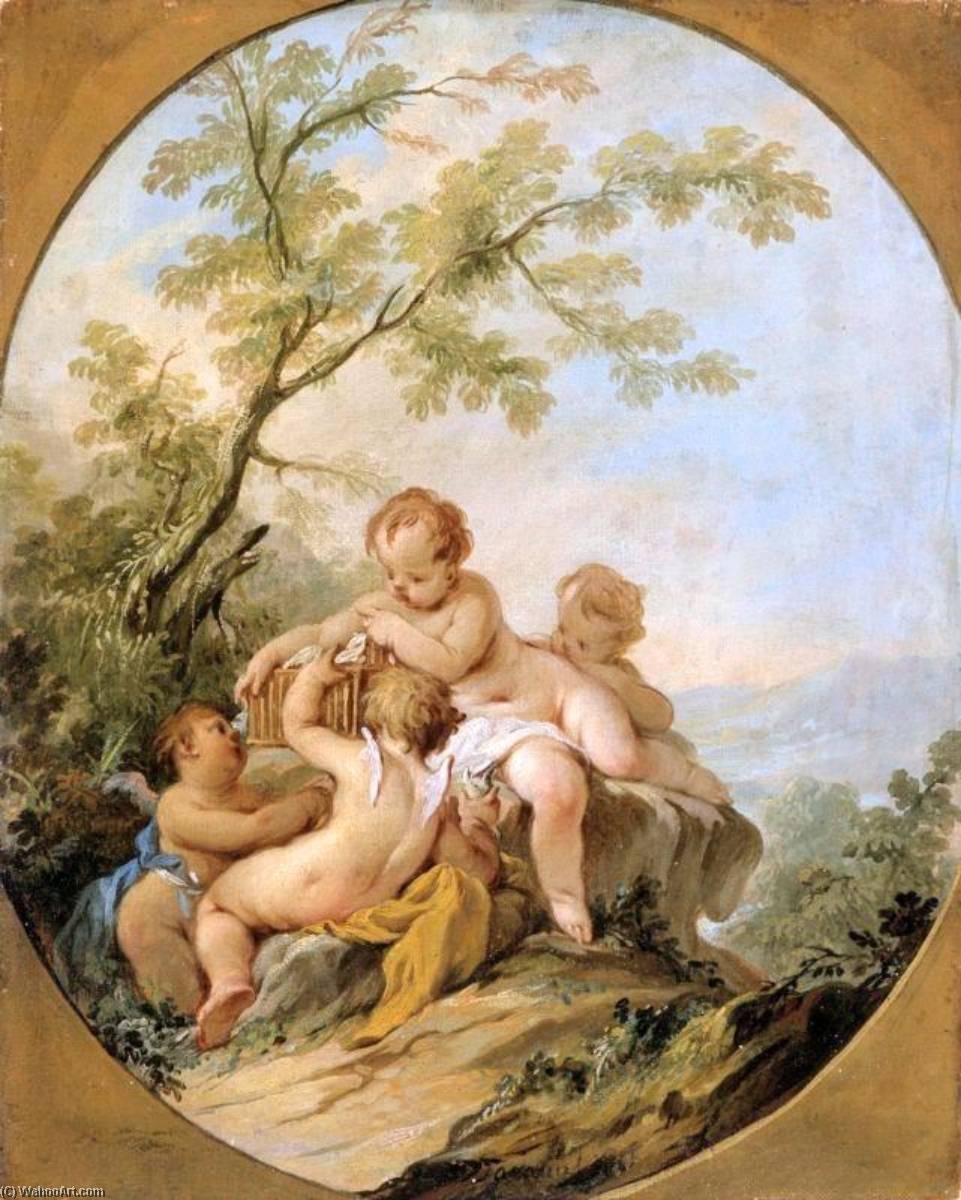
Four Putti Playing with a Birdcage

 Citește mai mult
Giclée / Imprimare artistică
Printuri giclée sau pe canvas de calitate muzeală, cu proces de producție rapid și opțiuni flexibile de finisare. ( Comandă pictură realizată manual Treci la imagine digitală)




































Alegeți dintre dimensiunile noastre prestabilite, care respectă proporțiile originale ale operei de artă.

Puteți introduce propriile dimensiuni pentru a se potrivi unui anumit cadru sau spațiu. Dacă dimensiunea selectată nu corespunde proporțiilor imaginii originale, vom decupa lucrarea de artă sau vom extinde imaginea cu margini oglindite sau cu o culoare uniformă. Un mockup digital va fi trimis pentru aprobarea dumneavoastră înainte de începerea producției.
Vă rugăm să rețineți că previzualizarea de pe ecran nu reflectă decuparea sau extinderea reală. Doar mockup-ul va arăta cu exactitate compoziția finală.
Deși dimensiunile personalizate sunt disponibile, vă recomandăm să selectați o dimensiune din lista predefinită pentru a păstra proporțiile originale.
Livrare în întreaga lume () în 2 săptămâni, în loc de cele 4/5 săptămâni standard. (26 Septembrie)

Livrare expres gratuită la nivel mondial

Pânză de in premium

Asigurare completă pentru transport

Garanție de rambursare a taxelor vamale

Garanția fidelității culorilor

Politica de retur în 100 de zile (doar pentru defecte)

Garanție de rambursare 100%

Reducere pentru comenzi multiple
 Opțiunea cu sticlă este disponibilă doar pentru dimensiuni de sub 110 cm

Four Putti Playing with a Birdcage
Giclée / Imprimare artistică
Dimensiune reproducere
-


Preț total
$ 80
Biografie artist
A Visionary of the Rococo: The Life and Legacy of Guillaume Thomas Taraval
In the grand, gilded corridors of eighteenth-century Europe, few artists possessed the transformative vision of Guillaume Thomas Taraval. Born in Paris in 1701 into a lineage steeped in the fine arts, Taraval’s early years were shaped by both profound loss and exceptional mentorship. Orphaned at a young age, he was raised by his foster-father, Henry Guillemard, who provided him with his first delicate lessons in the nuances of light and line. This foundational training, later refined under the tutelage of the esteemed Claude Audran, prepared Taraval for a career that would eventually bridge the cultural landscapes of France and Sweden, forever altering the aesthetic trajectory of the North.
Taraval’s arrival in Stockholm in 1732 marked the beginning of a profound artistic revolution. At a time when Swedish art was largely tethered to the heavy, somber traditions of the Baroque, Taraval introduced the airy, luminous, and playful spirit of the French Rococo. His presence in the capital was not merely that of a visiting painter but of a cultural pioneer. Within the opulent halls of the Stockholm Palace, he breathed new life into the ceilings and walls, replacing rigid structures with asymmetrical compositions, delicate pastel palettes, and an effortless sense of movement that seemed to defy the very architecture he adorned.
Mastery of Form and the Rococo Spirit
The brilliance of Taraval’s technique lay in his ability to marry monumental scale with intimate grace. He was a master of the ceiling painting, creating vast, ethereal vistas that invited the viewer to look upward into worlds of mythological splendor and pastoral tranquility. His work often featured:
- Mythological Allegories: Reimagining classical legends through a lens of idealized beauty and harmony.
- Pastoral Serenity: Capturing the gentle, romanticized essence of nature and landscape.
- Ornate Ornamentation: Utilizing the intricate, swirling motifs characteristic of the Rococo movement to enhance decorative surfaces.
Beyond these grand architectural commissions, Taraval demonstrated a remarkable versatility that allowed him to navigate various genres with equal finesse. His portraits captured the dignity and elegance of the Swedish nobility, while his still lifes showcased an exquisite, almost scientific devotion to botanical detail. Even in his more religious works, such as his altarpieces, one can sense the influence of his French training—a lightness of touch that brought a sense of divine grace through soft light and fluid forms.
Architect of an Artistic Institution
Taraval’s significance extends far beyond the aesthetic beauty of his canvases; he was a foundational architect of Swedish art education. In 1735, he was appointed as the inaugural director of the Royal Swedish Academy of Arts, a position he held until his death in 1750. This was a watershed moment for the region, as it established a formal sanctuary for scholarship, experimentation, and the cultivation of new talent. Through this institution, Taraval ensured that the principles of excellence and humanist ideals would be passed down to future generations of Scandinavian artists.
Even as he sought to modernize Swedish taste, Taraval remained deeply connected to the pulse of Parisian innovation. His journey back to Paris in 1739 allowed him to study the latest developments in French art, a period of intellectual renewal that he brought back to Stockholm upon his return in 1740. This continuous dialogue between the established traditions of France and the emerging needs of Sweden defined his career. When he passed away in Stockholm, he left behind more than just a collection of beautiful paintings; he left a legacy of cultural sophistication and an institutional framework that would sustain the Swedish art world for centuries to come.

guillaume thomas taraval
1701 - 1750
Informații rapide
- Artistic Movement Or Style: Rococo
- Artists Or Movements Influenced By This Artist: ['Swedish Rococo']
- Artists Who Influenced This Artist: ['Jean Oudry']
- Date Of Birth: 1701
- Date Of Death: 1750
- Full Name: Guillaume Thomas Taraval
- Nationality: French
- Notable Artworks:
- Group of Angels
- Female Figures with Putti in a Landscape
- Four Putti Playing with a Birdcage
- Place Of Birth: Paris, France