

 Previzualizare
 Trimite
 Distribuie
 Detalii despre lucrare

 Descarcă
 Produse similare
 Radiografie
 Diapozitive automate
 Statistici
Lamentation


 Vezi mai mult
Reproducere pictată manual în ulei
Pictură în ulei pe pânză, realizată manual de artiștii noștri la dimensiunea și ramele dorite de dumneavoastră, pe comandă. ( Comută pe Print Comută pe Imagine Digitală)




































Alegeți dintre dimensiunile noastre prestabilite, care respectă proporțiile originale ale operei de artă.

Puteți introduce propriile dimensiuni pentru a se potrivi unui anumit cadru sau spațiu. Dacă dimensiunea selectată nu corespunde proporțiilor imaginii originale, vom decupa opera de artă sau vom extinde pictura cu elemente suplimentare pictate manual. O simulare digitală vă va fi trimisă pentru aprobare înainte de începerea producției.
Vă rugăm să rețineți că previzualizarea de pe ecran nu reflectă decuparea sau extinderea reală. Doar macheta va arăta cu exactitate compoziția finală.
Deși sunt disponibile dimensiuni personalizate, vă recomandăm să selectați o dimensiune din lista predefinită pentru a păstra proporțiile originale.
După plasarea comenzii, echipa OriginalUniqueArt.com va contacta clientul prin e-mail pentru instrucțiuni și îi va furniza o previzualizare a machetei
Livrare în întreaga lume () în 3-4 săptămâni, în loc de cele 5 săptămâni standard. (12 Septembrie). Fără compromisuri în ceea ce privește calitatea.

Livrare expres gratuită la nivel mondial

Pânză de in de înaltă calitate

Asigurare completă pentru transport

Garanție de rambursare a taxelor vamale

Garanția fidelității culorilor

Politica de retur de 100 de zile (doar pentru defecte)

Garanție de rambursare 100%

Ofertă pentru comenzi multiple
 Opțiunea cu sticlă este disponibilă doar pentru dimensiuni de sub 110 cm

Lamentation
Tehnică de reproducere
Dimensiune reproducere
-


Preț total calculat
$ 300
Biografie artist
The Sculptor of Emotion: The Life and Legacy of Guido Mazzoni
Guido Mazzoni, known to his contemporaries by the affectionate moniker Il Modanino, stands as one of the most evocative figures of the Italian Renaissance. Born around 1450 in Modena, Italy, Mazzoni was an artist who bridged the gap between the theatricality of courtly spectacle and the profound, somber depths of religious devotion. His career was not merely defined by the static permanence of stone, but by a dynamic movement that flowed from the workshops of Italy to the royal courts of France. Early in his development, Mazzoni found himself within the influential patronage circle of the Este family, where he studied under the master Francesco Cossa. This early exposure to the vibrant, narrative-driven style of the Ferrarese school provided him with a foundation in visual storytelling that would later define his sculptural masterpieces.
Before he became a master of the monumental, Mazzoni’s artistry was rooted in the ephemeral and the spectacular. His initial renown was built upon the creation of theatrical masks and elaborate props designed for the grand wedding celebrations of Federico II Gonzaga in Ferrara. This period of his life is crucial to understanding his later sculptural achievements; the skill required to craft lifelike, expressive faces for the stage translated seamlessly into his work with clay. He possessed a unique ability to capture fleeting moments of human expression, a talent that allowed him to infuse even the most rigid materials with a sense of breathing, pulsing life. This mastery of ephemera—the art of the temporary—gave his later religious works an unparalleled psychological immediacy.
The Mastery of Terracotta and the Lamentation Series
Mazzoni’s most enduring contribution to the history of Western art lies in his breathtaking series of polychromed terracotta Lamentations. Unlike the more common marble sculptures of his era, which often sought a cool, idealized perfection, Mazzoni embraced the warmth and malleability of terracotta. This medium allowed him to achieve an ultra-realistic texture that could mimic the folds of heavy fabric, the tear-streaked skin of mourners, and the visceral reality of grief. His most celebrated works, such as those found in the Church of Gesù in Ferrara and the Sant'Anna dei Lombardi Basilica in Naples, represent a pinnacle of Renaissance realism.
These sculptural groups are far more than mere religious icons; they are immersive, theatrical experiences. In these Compianto scenes, Mazzoni meticulously modeled figures gathered around the corpse of Christ, imbuing each face with a distinct, individualized sorrow. A remarkable feature of these works is his integration of portraiture; he often included the likenesses of his patrons, such as Federico II Gonzaga and his family members, directly into the mourning crowd. This technique blurred the line between the sacred and the secular, inviting the viewer to participate in the divine tragedy. The use of polychromy—the application of color to the clay—further enhanced this realism, creating a lifelike presence that seemed to command the very space around it.
A Transnational Legacy
The trajectory of Mazzoni’s life reflects the broader movement of Renaissance talent across European borders. His journey took him through the cultural hubs of Bologna and Naples, eventually leading him to the French court. This international presence allowed his style to influence a wider audience, blending Italian emotional intensity with the burgeoning interest in naturalism found in Northern Europe. His ability to adapt his skills—from the delicate creation of courtly props to the monumental execution of religious drama—ensured his relevance across different artistic landscapes.
Ultimately, Guido Mazzoni’s significance lies in his profound understanding of human empathy. While many of his contemporaries focused on the mathematical proportions and structural harmony of the High Renaissance, Mazzoni prioritized the psychological depth of his subjects. He captured the raw, unvarnished essence of mourning, making the divine accessible through the lens of human suffering. His work remains a testament to the power of art to act as a mirror for the soul, leaving behind a legacy of terracotta figures that continue to move and haunt the hearts of all who behold them.
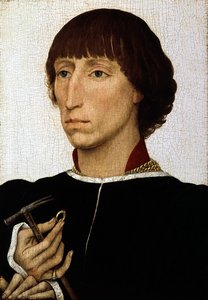
Guido Mazzoni
1450 - 1518 , Italy
Detalii rapide
- Artistic Movement Or Style: Renaissance Sculpture
- Artists Or Movements Influenced By This Artist: ["Niccolò dell'Arca"]
- Artists Who Influenced This Artist:
- Francesco Cossa
- Luca Della Robbia
- Date Of Birth: ca. 1450
- Date Of Death: 1518
- Full Name: Guido Mazzoni
- Nationality: Italian
- Notable Artworks:
- Lamentation
- Adoration Of The Child
- Place Of Birth: Modena, Italy