- Acasă

- Imagine digitală
- Gregorio Vardanega
- Electrical Architecture
 Previzualizare
 Trimite
 Distribuie
 Detalii despre lucrare

 Descarcă
 Similare
 Radiografie
 Diaporama
Electrical Architecture
 Acrylic On Canvas
- WallArt
- Op Art
 1965
1965- Modern
 100.0 x 100.0 cm
 Muzeul de Artă Modernă din Buenos Aires
 Vezi mai mult
Achiziționați o imagine digitală îmbunătățită și de înaltă rezoluție, mult superioară previzualizării online.
Fiecare fișier este pregătit cu meticulozitate de specialiștii noștri interni, utilizând instrumente avansate și retușare manuală expertă. Ne asigurăm că fiecare imagine beneficiază de o claritate excepțională, o acuratețe precisă a culorilor și detalii fine.
Fișierul final este livrat prin e-mail în termen de 72 de ore, optimizat pentru utilizare imediată în medii profesionale, editoriale și de imprimare. Aceasta este aceeași calitate în care au încredere studiouri de design, edituri și galerii de top.
Imagine Digitală
Descărcați un fișier la rezoluție înaltă pentru afișare personală, imprimare și proiecte creative. ( Comandă versiunea tipărită Comandă pictură realizată manual)
Inclus în fiecare comandă de imagini digitale
Livrare digitală de expertiză, garantată
Când alegeți OriginalUniqueArt.com, nu primiți doar o simplă imagine – primiți o operă de artă digitală îmbunătățită profesional, creată cu precizie și susținută de o garanție de satisfacție. Iată tot ceea ce primești odată cu comanda ta, în mod automat:

Livrare rapidă prin e-mail
Fișierul imaginii digitale la rezoluție înaltă vă va fi trimis prin e-mail în termen de 72 de ore de la finalizarea comenzii – gata pentru utilizare imediată.

Fișier digital optimizat prin IA
Opera ta de artă este optimizată profesional prin intermediul unor instrumente AI avansate și al editării manuale, asigurând un nivel maxim de detalii, claritate și acuratețe a culorilor.

Retransmitere gratuită pe viață
Ai șters sau ai pierdut din greșeală fișierul? Nu îți face griji – ți-l vom retrimite oricând, gratuit.

Fără taxe de import – Întotdeauna
Bucură-te instant de opera ta de artă, fără taxe vamale, taxe de import sau costuri de livrare – descărcările digitale sunt întotdeauna fără taxe.

Garanția acurateței culorilor
Asigurăm că imaginea ta digitală reflectă culorile originale cât mai fidel posibil, utilizând instrumente profesionale și procese de gestionare a culorii.

Garanție de satisfacție de 60 de zile
Dacă nu sunteți mulțumit de imaginea digitală achiziționată, o vom revizui sau vă vom returna 100% în termen de 60 de zile – fără nicio explicație necesară.

Garanție de returnare 100% a banilor
Nu ești mulțumit? Obține o rambursare completă în termen de 60 de zile de la primirea fișierului tău digital – fără întrebări.

Reduceri pentru comenzi multiple
Cumpără 3 imagini, economisește 10% - Cumpără 5, economisește 15% - Cumpără 10+, economisește 20%. Ideal pentru proiecte creative, galerii și agenții.
Descrierea obiectului de colecție
Gregorio Vardanega’s “Electrical Architecture”: A Pioneering Exploration of Spatial Illusion
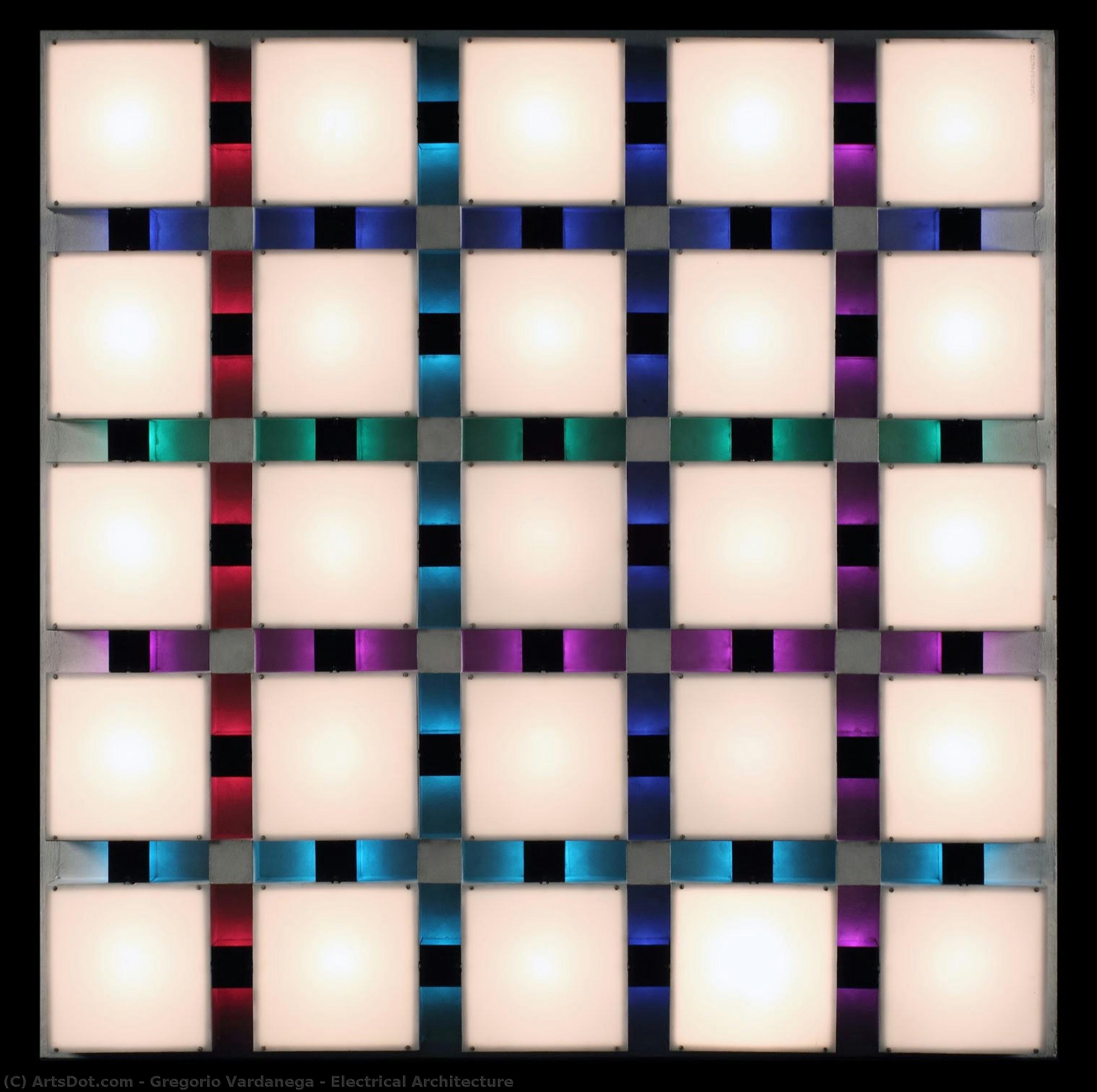
“Electrical Architecture” by Gregorio Vardanega stands as a testament to the audacious spirit of Chromocinetism, an artistic movement that sought to redefine perception itself. Created in 1965, this striking black and white painting embodies the core principles of Op Art – Optical Art – pushing boundaries between visual representation and illusionary experience. It’s more than just a decorative piece; it's a conceptual statement about how our eyes interpret color and movement, reflecting Vardanega’s profound fascination with manipulating sensory input.The Chromocinetism Movement: Challenging Conventional Vision
Gregorio Vardanega, alongside Martha Boto, is credited with establishing Chromocinetism, a revolutionary approach to art that prioritized stimulating the viewer's subconscious mind through visual deception. Rejecting traditional realism, Chromocinetists aimed to create artworks that actively engaged the spectator’s senses—specifically their perception of color and movement—without relying on literal depiction. This philosophy stemmed from advancements in psychology during the mid-20th century, which explored how optical illusions could influence emotional responses and cognitive processes. Vardanega's work exemplifies this ambition perfectly, inviting contemplation about the nature of visual experience.A Geometric Dance of Color
The painting’s aesthetic is characterized by a meticulously crafted checkerboard pattern filled with vibrant hues – red, blue, green, purple, yellow, and orange. These colors aren’t merely applied randomly; they are strategically positioned to generate an illusion of shimmering movement. The artist skillfully utilizes contrasting shades and gradients to create the impression that squares pulsate and shift subtly across the canvas. This technique relies on Gestalt principles – specifically retinal distortion – where our eyes perceive patterns as moving even when they remain static. It’s a masterful demonstration of how artistic composition can transcend mere visual appearance, tapping into deeper psychological mechanisms.Historical Context: The Rise of Op Art and Spatial Perception
“Electrical Architecture” emerged during the height of Op Art's popularity in the 1960s, coinciding with a broader cultural fascination with scientific discoveries concerning perception and illusion. Artists like Bridget Riley and Victor Vasarely were similarly exploring ways to manipulate visual stimuli, capitalizing on research into retinal ganglion cells and their role in processing color information. The painting reflects this intellectual climate—a desire to investigate the limits of human sensory experience and to challenge established artistic conventions. It represents a pivotal moment in art history, signaling a shift towards conceptual art that prioritized stimulating the viewer’s mind over simply presenting an image.Symbolism Beyond Decoration: Exploring Depth Perception
Beyond its technical brilliance, “Electrical Architecture” carries symbolic weight. The checkerboard pattern itself can be interpreted as representing duality – order versus chaos, stability versus dynamism—mirroring the movement and color interplay within the artwork. Furthermore, the painting encourages viewers to consider how our brains actively construct reality based on incomplete sensory data. It prompts us to question what we perceive as “real” and invites a meditative engagement with visual information. Ultimately, Vardanega’s masterpiece serves as an enduring reminder that art can provoke profound introspection and expand our understanding of human consciousness.Biografie Artist
Gregorio Vardanega: Pioneer of Chromocinetism and Spatial Illusion
Gregorio Vardanega (1923 – 2007) was born in Udine, Italy, a city nestled in the Veneto region known for its rich artistic heritage. His formative years were spent primarily in Argentina, where he immersed himself in the burgeoning avant-garde scene and honed his distinctive artistic vision alongside Martha Boto.
Early Life and Artistic Formation
- He attended Escuela Nacional de Bellas Artes in Buenos Aires from 1939 to 1946, absorbing influences from Surrealism and Constructivism.
- His initial explorations focused on capturing the essence of space through geometric abstraction, a stylistic choice that would become central to his oeuvre.
- Vardanega’s fascination with light—particularly its interaction with color—would propel him toward groundbreaking experimentation in kinetic art and spatial illusion.
The Chromocinetism Movement
Together with Martha Boto, Vardanega coined the term “chromocinetism,” a revolutionary artistic concept that sought to transcend traditional visual representation. This movement aimed to synthesize color, sound, space, and time into immersive experiences—a radical departure from prevailing artistic conventions.
Stylistic Influences and Techniques
- Vardanega drew inspiration from Spatialism and Tenebrism, embracing dramatic chiaroscuro contrasts reminiscent of Baroque painting.
- He skillfully utilized geometric patterns and vibrant hues, mirroring the aesthetic sensibilities of artists like Amadeo Clemente Modigliani.
- A hallmark of his technique was the incorporation of electric lights and transparent materials—particularly Plexiglas spheres—to generate dynamic visual effects through diffraction and light transmission.
Notable Works: Electrical Architecture
Perhaps Vardanega’s most iconic piece is “Electrical Architecture,” housed in the Buenos Aires Museum of Modern Art. This monumental sculpture exemplifies his commitment to exploring spatial dimensions and manipulating light—a testament to his artistic ingenuity and conceptual depth.
Legacy and Recognition
Gregorio Vardanega’s contribution to art history extends beyond individual artworks; he fundamentally reshaped the dialogue between visual perception and technological innovation. His pioneering approach to chromocinetism continues to inspire artists today, securing his place as a pivotal figure in the evolution of kinetic and spatialist art.
His works are displayed in museums across Latin America and Europe, including the Museo Nacional Centro de Arte Reina Sofía in Madrid and Kettle’s Yard in Cambridge, ensuring that his visionary aesthetic endures for generations to come.

Gregorio Vardanega
1923 - 2007 , Italy
Detalii rapide
- Artistic Movement Or Style: Chromocinetism
- Artists Or Movements Influenced By This Artist: ['Spatialism']
- Artists Who Influenced This Artist: ['Amedeo Clemente Modigliani']
- Date Of Birth: 1923
- Date Of Death: 2007
- Full Name: Gregorio Vardanega
- Nationality: Italian
- Notable Artworks: ['Electrical Architecture']
- Place Of Birth: Udine, Italy

