
 Previzualizare
 Trimite prin felicitare
 Distribuie
 Detalii despre lucrare
 Ghid
Ghid

 Descarcă imaginea
 Produse similare
 Radiografie
 Galerie foto
 Întrebări și răspunsuri
 Statistici
Virgin with the Child

- 105.0 x 77.0 cm


 Vezi mai mult
Giclée / Imprimare artistică
Printuri giclée sau pe canvas de calitate muzeală, cu proces de producție rapid și opțiuni flexibile de finisare. ( Comandă pictură realizată manual Comută pe Imagine Digitală)




P118B lei10

P118H lei10

P118W lei10

P438Z lei10

P508JH lei12

P508YH lei12

P805H lei10

P805Z lei10

P919BZ lei10

P919G lei10

P919XJ lei10

P959ZH lei10

P968JZ lei12

W106C lei8

W218G lei10

W218JH lei8

W218Y lei10

W307PJ lei10

W316G lei10

W316PJ lei8

W316Y lei10

W398PJ lei8

W4111J lei10

W500HY lei15

W500JH lei15

W692G lei12

W849H lei8

W940BG lei15

W953PJ lei8




Alegeți dintre dimensiunile noastre prestabilite, care respectă proporțiile originale ale operei de artă.

Introduceți lățimea și înălțimea necesare pentru a se potrivi ramei sau peretelui dumneavoastră. O printare poate fi doar tăiată, niciodată extinsă dincolo de dimensiunea imaginii originale, astfel încât o dimensiune cu o formă diferită va pierde o parte din imagine. Vă trimitem o simulare digitală pentru aprobare înainte de a imprima orice. Imaginea afișată pe această pagină nu prezintă tăierea reală — doar simularea arată acest lucru.
Livrare în întreaga lume () în 2 săptămâni, în loc de cele 4/5 săptămâni standard. (5 Noiembrie)

Livrare expres gratuită la nivel mondial

Pânză de in de înaltă calitate

Asigurare completă pentru transport

Garanție de rambursare a taxelor vamale

Garanția fidelității culorilor

Politica de retur în 100 de zile (doar pentru defecte de fabricație)

Garanție de rambursare 100%

Ofertă pentru comenzi multiple
 Opțiunea cu sticlă este disponibilă doar pentru dimensiuni de sub 110 cm

Virgin with the Child
Giclée / Imprimare artistică
Dimensiune reproducere
-


Preț total calculat
lei 387
A Divine Encounter: Giulio Romano’s ‘Virgin with the Child’
Giulio Romano's “Virgin with the Child,” painted in Rome around 1520, is more than just a depiction of Mary and infant Jesus; it’s a profound exploration of faith, power, and the nascent complexities of Mannerism. Emerging from the shadow of Raphael’s High Renaissance legacy, Romano boldly pushed beyond idealized beauty, embracing a style characterized by dramatic contrasts, unsettling perspectives, and an intense psychological depth – hallmarks that would define the era of Mannerism. This particular work, housed within a 105 x 77 cm canvas, offers a captivating glimpse into this pivotal moment in art history, showcasing Romano’s evolving artistic voice and his masterful command of color, form, and narrative.
The painting immediately draws the eye to the central figures. Mary, rendered with a subtle yet commanding presence, is not presented as a serene Madonna but rather as a woman imbued with authority and a quiet strength. Her blue dress, rich in texture and subtly shimmering, contrasts dramatically with the gold of her crown – a visual declaration of her divine status while simultaneously hinting at worldly power. The infant Jesus, equally captivating, wears his own miniature crown, mirroring his mother’s adornment and suggesting an immediate equality within their sacred bond. The composition is carefully orchestrated; the figures are not simply placed within a space but actively engaged in a dynamic interaction, creating a sense of movement and narrative tension.
Mannerist Innovation: Style and Technique
Romano’s style in “Virgin with the Child” is distinctly Mannerist. He departs from the balanced compositions and harmonious colors of Raphael, favoring instead elongated figures, distorted perspectives, and an almost theatrical use of light and shadow. Notice how the background recedes sharply, creating a sense of spatial ambiguity – a technique known as *sprezzatura*, intended to evoke a feeling of surprise and disorientation. The artist employs a sophisticated layering of pigments, utilizing glazes and scumbles to build up texture and create a luminous quality that is both ethereal and intensely realistic. The use of gold leaf, particularly in the crown and details of the clothing, adds to the painting’s opulence and reinforces its symbolic weight.
Technically, Romano demonstrates a remarkable understanding of anatomy and drapery – skills honed during his apprenticeship with Raphael. However, he deliberately manipulates these elements to achieve a desired expressive effect. The folds of Mary's dress are not simply decorative; they seem to flow and ripple with an inner energy, mirroring the emotional intensity of the scene. Similarly, the infant Jesus’s pose is subtly unsettling, hinting at a vulnerability beneath his angelic appearance.
Historical Context: Rome in Transition
The creation of “Virgin with the Child” coincides with a period of immense upheaval and transformation in Rome. The Sack of 1527 had shattered the city's artistic and political stability, scattering its artists and patrons. Raphael’s untimely death further compounded this crisis, leaving a void that Romano was uniquely positioned to fill. He inherited not only the responsibility for completing unfinished commissions but also the daunting task of redefining the visual language of High Renaissance art. This painting can be viewed as a deliberate assertion of Romano's artistic independence – a bold departure from his master’s style while retaining a deep respect for his legacy.
The presence of the two secondary figures in the background adds another layer of complexity to the scene. Their identities remain ambiguous, perhaps representing the theological or political forces that shaped Mary’s life and role within the Christian narrative. The small object on the ground – resembling a book or scroll – could symbolize divine revelation or the transmission of sacred knowledge. These subtle details invite viewers to engage in a deeper interpretation of the work, moving beyond a simple representation of a religious subject.
Symbolism and Emotional Resonance
Beyond its technical brilliance, “Virgin with the Child” is rich in symbolic meaning. The crown worn by both Mary and Jesus represents their divine authority and connection to God. The blue color associated with Mary often symbolizes purity, loyalty, and truth – qualities essential to her role as the Mother of God. The painting’s overall effect is one of profound emotional resonance. It evokes a sense of reverence, mystery, and perhaps even a touch of melancholy—a recognition of both the beauty and the challenges inherent in faith. This reproduction captures that same evocative power, offering a stunning addition to any art collection or interior space.
Întrebări și răspunsuri
Ce reprezintă "Virgin with the Child" de Giulio Romano și ce atmosferă transmite?
"Virgin with the Child" de Giulio Romano îmbină virgin mary, child jesus, renaissance, halo, crown, religious, composition, romano cu o atmosferă Elegant.
Cât de intense sunt culorile din "Virgin with the Child"?
Culorile din "Virgin with the Child" de Giulio Romano prezintă o saturație de Muted cu o intensitate de Monochromatic.
În ce etapă a carierei lui Giulio Romano se încadrează "Virgin with the Child", având în vedere data sa de execuție?
Având în vedere data de 1520, „Virgin with the Child” aparține perioadei Mature Period a lui Giulio Romano.
Biografie artist
A Roman Beginning and Apprenticeship Under a Master
Giulio Romano, born Giulio Pippi around 1499 in Rome, emerged during a period of intense artistic transformation. Details surrounding his early life remain somewhat shrouded in mystery, yet it’s known he quickly entered the orbit of Raphael, arguably the most celebrated painter of the High Renaissance. This apprenticeship proved profoundly formative, not only shaping his technical skills but also laying the foundation for his future stylistic explorations. He wasn't merely a studio assistant; Giulio rapidly evolved into an indispensable collaborator, contributing significantly to projects of immense scale and importance, including the lavish decoration of the Vatican Stanze – those magnificent rooms commissioned by Popes Julius II and Leo X. His hand is readily identifiable in *The Fire in the Borgo*, where he assisted Raphael in depicting a dramatic scene of miraculous intervention—a testament to his burgeoning talent and understanding of narrative composition. This fresco, brimming with dynamic movement and intense emotion, showcases Giulio’s early ability to capture the spirit of a story through visual means. Following Raphael's untimely death in 1520, Giulio inherited responsibility for completing numerous unfinished commissions, including the ambitious decoration of Villa Madama for Cardinal Giuliano de’ Medici—a project that would define much of his career and showcase his evolving artistic vision. This early exposure to large-scale projects and the demands of aristocratic patronage instilled within him a remarkable confidence and ambition, qualities that would become hallmarks of his later work.The Birth of Mannerism: A Departure from Classical Harmony
While firmly rooted in the Renaissance tradition, Giulio Romano’s artistic trajectory soon diverged significantly from the prevailing emphasis on classical balance and harmony—the hallmark of the High Renaissance. He became a pivotal figure in the development of Mannerism – a style characterized by its deliberate artificiality, heightened elegance, and often unsettling distortions of form. He was deeply influenced by Michelangelo's powerfully expressive figures and dynamic compositions, absorbing their sense of dramatic tension and emotional intensity. Furthermore, Giulio’s artistic journey was shaped by a broader climate of experimentation within the art world—a willingness to push boundaries and challenge established conventions. This wasn’t a rejection of Renaissance ideals so much as a deliberate exploration of their limits, an attempt to surpass the constraints of *natura* and create works that were more subjective, emotionally charged, and intellectually stimulating. Giulio began to embrace asymmetry, tension, and a heightened sense of drama in his paintings—elements that would become defining characteristics of Mannerist art. His drawings, particularly, reveal this shift, exhibiting a remarkable freedom of line, an unconventional use of perspective, and a fascination with elongated figures and complex spatial arrangements.Mantua’s Master: Palazzo Te and Architectural Innovation
In 1524, Giulio Romano accepted the invitation of Federico Gonzaga, Duke of Mantua, to become court painter and architect—a move that fundamentally altered the course of his career. This relocation provided him with unprecedented creative freedom and access to considerable resources, effectively transforming him into the artistic director of the entire duchy. He undertook a vast array of projects, overseeing not only paintings and frescoes but also ambitious architectural designs, intricate garden layouts, and even theatrical productions—demonstrating a truly holistic approach to art and design. His most celebrated achievement during this period is undoubtedly Palazzo Te, an extraordinary suburban villa that stands as a testament to his innovative genius and mastery of illusionistic techniques. The palace’s interiors are adorned with breathtaking frescoes depicting mythological scenes, allegorical narratives, and fantastical creatures—a dazzling display of color, texture, and spatial complexity. *The Sala dei Giganti* (Hall of the Giants), for example, is a particularly striking example of Giulio's artistic prowess, depicting a chaotic battle between gods and giants within an architectural framework that seems to dissolve into a swirling vortex of figures and fragmented spaces. This masterful manipulation of perspective and illusion creates an immersive experience—a captivating blend of reality and fantasy. Beyond Palazzo Te, Giulio also undertook significant renovations to Mantua’s ducal palace and cathedral, leaving an enduring legacy on the city's urban landscape and solidifying his reputation as a visionary artist and architect.Legacy and Lasting Influence
Giulio Romano died in Mantua in 1546, leaving behind a legacy that extended far beyond Italy’s borders. His drawings were highly prized by collectors throughout Europe, and engravings based on his work—particularly those created by Marcantonio Raimondi—played a crucial role in disseminating Italian artistic styles to a wider audience. He was so renowned after his death that he is the only “modern” artist mentioned by William Shakespeare in *Pericles*, a testament to his widespread fame and influence. Giulio’s impact can be seen in the works of numerous subsequent artists, who adopted his dynamic compositions, elongated figures, and expressive use of color—demonstrating the enduring power of his artistic innovations. While Mannerism eventually gave way to other stylistic movements, Giulio Romano's contributions remain essential to understanding the evolution of Western art. He represents a pivotal moment—a transition from the harmonious ideals of the High Renaissance to the more complex and emotionally charged aesthetic of the late 16th century. His work continues to captivate and challenge viewers today, reminding us of the profound ability of art to both reflect and shape our understanding of the world.Key Influences
- Raphael: Giulio’s apprenticeship under Raphael provided him with a solid foundation in classical technique and composition, which he later transformed through his embrace of Mannerism.
- Michelangelo: The powerful figures and dynamic compositions of Michelangelo profoundly influenced Giulio's approach to depicting human form and creating dramatic scenes.
- The Renaissance Spirit of Experimentation: A broader climate of artistic innovation within the Renaissance fostered Giulio’s willingness to challenge conventions and explore new aesthetic possibilities.

Giulio Romano
1499 - 1546 , Italia
Detalii rapide
- Artistic Movement Or Style: Mannerismo
- Artists Or Movements Influenced By This Artist: ['Manneristi']
- Artists Who Influenced This Artist:
- Raffaello
- Michelangelo
- Date Of Birth: c. 1499
- Date Of Death: 1546
- Full Name: Giulio Romano
- Nationality: Italian
- Notable Artworks:
- Fire in Borgo
- Palazzo Te
- Villa Madama
- Place Of Birth: Roma, Italia
Articole similare

Divine Grace: An Art Historian's Journey Through Iconic Masterpieces of the Virgin Mary
Explore the profound beauty of Marian iconography through an art historian's lens. Discover iconic masterpieces by Raphael and Renaissance masters, celebrating the divine grace and timeless elegance of the Virgin Mary in classical fine art.

Italian Renaissance Art: A Procurement Guide to Timeless Masterpieces for High-End Hotel Interiors
A professional procurement guide for hotel designers seeking Italian Renaissance masterpieces. Discover how to utilize chiaroscuro, custom oil reproductions, and large-scale murals to elevate hospitality interiors with timeless, high-impact classical art.

Fra Angelico: Cele Mai Frumoase Capodopere – Artă Sacră pentru Decorul Casei Tale
Descoperă cele mai frumoase 25 de picturi Fra Angelico, capodopere ale artei renascentiste. Fresce religioase pline de culoare și emoție, perfecte pentru decorul casei tale. Reproduceri de artă de calitate muzeală pe OriginalUniqueArt.com! Explorează colecția online.
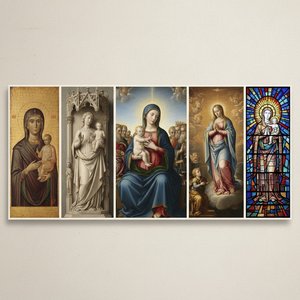
Divine Grace: A Journey Through the Most Iconic Depictions of the Virgin Mary in Art History
Embark on a profound journey through art history with our exploration of the most iconic depictions of the Virgin Mary. Discover the divine grace, symbolism, and masterful techniques found in Renaissance masterpieces and sacred iconography.
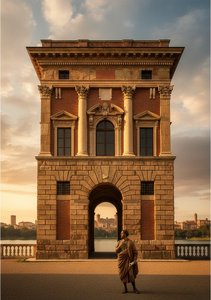
Giulio Romano: A Master of Mannerism & the Palazzo Te Legacy
Explore the revolutionary art of Giulio Romano, master of Mannerism & architect of Palazzo Te. Discover his influence, investment potential, and stunning frescoes – a guide for discerning collectors.
