

 Vezi în context
 Trimite
 Distribuie
 Detalii
 Ghidul

 Descarcă
 Produse similare
 Radiografie
 Diaporama
 Statistici
The Lovers
 Oil On Canvas
- WallArt
- High Renaissance
 1525
1525 163.0 x 337.0 cm
 Muzeul Hermitaj
 Citește mai mult
Reproducere pictată manual în ulei
Pictură în ulei pe pânză, realizată manual de artiștii noștri la dimensiunea și ramele dorite de dumneavoastră, pe comandă. ( Comută pe versiunea Print Treci la imagine digitală)




P118B $10

P118H $10

P118W $10

P438Z $10

P508JH $12

P508YH $12

P805H $10

P805Z $10

P919BZ $10

P919G $10

P919XJ $10

P959ZH $10

P968JZ $12

W106C $8

W218G $10

W218JH $8

W218Y $10

W307PJ $10

W316G $10

W316PJ $8

W316Y $10

W398PJ $8

W4111J $10

W500HY $15

W500JH $15

W692G $12

W849H $8

W940BG $15

W953PJ $8




Alegeți dintre dimensiunile noastre prestabilite, care respectă proporțiile originale ale operei de artă.

Puteți introduce propriile dimensiuni pentru a se potrivi unui anumit cadru sau spațiu. Dacă dimensiunea selectată nu corespunde proporțiilor imaginii originale, vom decupa opera de artă sau vom extinde pictura cu elemente suplimentare pictate manual. O simulare digitală vă va fi trimisă pentru aprobare înainte de începerea producției.
Vă rugăm să rețineți că previzualizarea de pe ecran nu reflectă decuparea sau extinderea reală. Doar macheta va arăta cu exactitate compoziția finală.
Deși sunt disponibile dimensiuni personalizate, vă recomandăm să selectați o dimensiune din lista predefinită pentru a păstra proporțiile originale.
După plasarea comenzii, echipa OriginalUniqueArt.com va contacta clientul prin e-mail pentru instrucțiuni și îi va furniza o previzualizare a machetei
Livrare în întreaga lume () în 3-4 săptămâni, în loc de cele 5 săptămâni standard. (26 Septembrie). Fără compromisuri în ceea ce privește calitatea.

Livrare expres gratuită la nivel mondial

Pânză de in premium

Asigurare completă pentru transport

Garanție de rambursare a taxelor vamale

Garanția fidelității culorilor

Politica de retur în 100 de zile (doar pentru defecte)

Garanție de rambursare 100%

Reducere pentru comenzi multiple
 Opțiunea cu sticlă este disponibilă doar pentru dimensiuni de sub 110 cm

The Lovers
Tip de reproducere
Dimensiune reproducere
-


Preț total
$ 300
The Lovers – A Renaissance Embrace
Giulio Romano’s “The Lovers,” painted around 1525, isn't merely a depiction of intimacy; it’s a meticulously crafted tableau brimming with symbolism and echoing the complex currents of the High Renaissance. Born Giulio Pippi in Rome around 1499, Romano swiftly ascended through the ranks of Raphael’s studio, absorbing the master’s classical ideals while simultaneously forging his own distinctive Mannerist style – a style characterized by heightened emotion, distorted forms, and an exploration of psychological depth. This particular painting, now housed within the hallowed halls of the Hermitage Museum in St. Petersburg, offers a rare glimpse into Romano's artistic vision and his profound understanding of human desire and its attendant anxieties.
The scene unfolds within a lavishly appointed chamber, bathed in an opulent yet subtly shadowed light. At the heart of the composition lie two figures entwined in a passionate embrace – a couple lost in a moment of intense connection. However, Romano deliberately subverts traditional representations of love, imbuing the image with layers of ambiguity and intrigue. The figures themselves are rendered with a cool detachment, almost sculptural in their stillness, reflecting the influence of ancient Greek sculpture. Their skin possesses an unnerving pallor, hinting at a sense of timelessness and perhaps even a touch of melancholy – a departure from the vibrant flesh tones favored by earlier Renaissance masters.
A Dance of Symbolism
The painting’s power resides not just in its sensual depiction but also in the intricate web of symbols woven throughout. Observe, for instance, the carefully positioned slippers resting on the floor – a deliberate disruption of the scene's harmony. They represent a marital bond, yet their placement suggests an absence, a separation that underscores the precariousness of love and the potential for betrayal. The cat curled at the feet of the lady in waiting is a potent symbol of illicit desire, while the loyal dog beside her speaks to the constraints of societal expectations and the enduring nature of fidelity. The keys held by the woman signify children – a responsibility that further complicates the lovers’ situation.
Beyond these immediate details, Romano draws heavily from classical mythology. The arrangement of objects—the bed, the drapery, the architectural elements—echoes the forms found in Roman sarcophagi and tomb decorations. This deliberate allusion to antiquity elevates the scene beyond a simple portrayal of love; it transforms it into an allegory of eternal themes – desire, loss, and the passage of time. The archangel Raphael, positioned above the couple, serves as a silent witness, embodying divine judgment and perhaps hinting at the consequences of their actions.
Technique and Context
Executed in oil on panel, “The Lovers” showcases Romano’s mastery of illusionistic painting – a hallmark of Mannerism. He employs techniques such as *trompe-l'oeil* to create the impression of depth and realism, blurring the boundaries between painted surface and perceived reality. The meticulous detail evident in the rendering of fabrics, textures, and architectural elements speaks to Romano’s exceptional technical skill. It is believed that this painting was commissioned for Federico II Gonzaga, Duke of Mantua, a discerning patron who appreciated both beauty and intellectual complexity.
Interestingly, “The Lovers” emerged during a period of immense upheaval in Italy – the Sack of Rome in 1527 marked a turning point in the Renaissance, disrupting artistic patronage and scattering artists across Europe. Romano’s relocation to Mantua provided him with a new creative environment and allowed him to develop his unique style largely free from the constraints of papal influence. The painting stands as a testament to his resilience and adaptability, showcasing a profound shift away from the idealized beauty of the High Renaissance towards a more emotionally charged and psychologically nuanced aesthetic.
A Timeless Masterpiece
“The Lovers” is more than just a beautiful painting; it’s a complex meditation on love, desire, and the human condition. Its enduring appeal lies in its ability to evoke a wide range of emotions – from passionate longing to quiet melancholy. Reproductions of this iconic work offer an opportunity to bring this captivating scene into any space, inviting contemplation and sparking conversation about the timeless themes it explores. It remains a powerful reminder of Romano’s genius and his lasting contribution to the history of art.
Biografie artist
A Roman Beginning and Apprenticeship Under a Master
Giulio Romano, born Giulio Pippi around 1499 in Rome, emerged during a period of intense artistic transformation. Details surrounding his early life remain somewhat shrouded in mystery, yet it’s known he quickly entered the orbit of Raphael, arguably the most celebrated painter of the High Renaissance. This apprenticeship proved profoundly formative, not only shaping his technical skills but also laying the foundation for his future stylistic explorations. He wasn't merely a studio assistant; Giulio rapidly evolved into an indispensable collaborator, contributing significantly to projects of immense scale and importance, including the lavish decoration of the Vatican Stanze – those magnificent rooms commissioned by Popes Julius II and Leo X. His hand is readily identifiable in *The Fire in the Borgo*, where he assisted Raphael in depicting a dramatic scene of miraculous intervention—a testament to his burgeoning talent and understanding of narrative composition. This fresco, brimming with dynamic movement and intense emotion, showcases Giulio’s early ability to capture the spirit of a story through visual means. Following Raphael's untimely death in 1520, Giulio inherited responsibility for completing numerous unfinished commissions, including the ambitious decoration of Villa Madama for Cardinal Giuliano de’ Medici—a project that would define much of his career and showcase his evolving artistic vision. This early exposure to large-scale projects and the demands of aristocratic patronage instilled within him a remarkable confidence and ambition, qualities that would become hallmarks of his later work.The Birth of Mannerism: A Departure from Classical Harmony
While firmly rooted in the Renaissance tradition, Giulio Romano’s artistic trajectory soon diverged significantly from the prevailing emphasis on classical balance and harmony—the hallmark of the High Renaissance. He became a pivotal figure in the development of Mannerism – a style characterized by its deliberate artificiality, heightened elegance, and often unsettling distortions of form. He was deeply influenced by Michelangelo's powerfully expressive figures and dynamic compositions, absorbing their sense of dramatic tension and emotional intensity. Furthermore, Giulio’s artistic journey was shaped by a broader climate of experimentation within the art world—a willingness to push boundaries and challenge established conventions. This wasn’t a rejection of Renaissance ideals so much as a deliberate exploration of their limits, an attempt to surpass the constraints of *natura* and create works that were more subjective, emotionally charged, and intellectually stimulating. Giulio began to embrace asymmetry, tension, and a heightened sense of drama in his paintings—elements that would become defining characteristics of Mannerist art. His drawings, particularly, reveal this shift, exhibiting a remarkable freedom of line, an unconventional use of perspective, and a fascination with elongated figures and complex spatial arrangements.Mantua’s Master: Palazzo Te and Architectural Innovation
In 1524, Giulio Romano accepted the invitation of Federico Gonzaga, Duke of Mantua, to become court painter and architect—a move that fundamentally altered the course of his career. This relocation provided him with unprecedented creative freedom and access to considerable resources, effectively transforming him into the artistic director of the entire duchy. He undertook a vast array of projects, overseeing not only paintings and frescoes but also ambitious architectural designs, intricate garden layouts, and even theatrical productions—demonstrating a truly holistic approach to art and design. His most celebrated achievement during this period is undoubtedly Palazzo Te, an extraordinary suburban villa that stands as a testament to his innovative genius and mastery of illusionistic techniques. The palace’s interiors are adorned with breathtaking frescoes depicting mythological scenes, allegorical narratives, and fantastical creatures—a dazzling display of color, texture, and spatial complexity. *The Sala dei Giganti* (Hall of the Giants), for example, is a particularly striking example of Giulio's artistic prowess, depicting a chaotic battle between gods and giants within an architectural framework that seems to dissolve into a swirling vortex of figures and fragmented spaces. This masterful manipulation of perspective and illusion creates an immersive experience—a captivating blend of reality and fantasy. Beyond Palazzo Te, Giulio also undertook significant renovations to Mantua’s ducal palace and cathedral, leaving an enduring legacy on the city's urban landscape and solidifying his reputation as a visionary artist and architect.Legacy and Lasting Influence
Giulio Romano died in Mantua in 1546, leaving behind a legacy that extended far beyond Italy’s borders. His drawings were highly prized by collectors throughout Europe, and engravings based on his work—particularly those created by Marcantonio Raimondi—played a crucial role in disseminating Italian artistic styles to a wider audience. He was so renowned after his death that he is the only “modern” artist mentioned by William Shakespeare in *Pericles*, a testament to his widespread fame and influence. Giulio’s impact can be seen in the works of numerous subsequent artists, who adopted his dynamic compositions, elongated figures, and expressive use of color—demonstrating the enduring power of his artistic innovations. While Mannerism eventually gave way to other stylistic movements, Giulio Romano's contributions remain essential to understanding the evolution of Western art. He represents a pivotal moment—a transition from the harmonious ideals of the High Renaissance to the more complex and emotionally charged aesthetic of the late 16th century. His work continues to captivate and challenge viewers today, reminding us of the profound ability of art to both reflect and shape our understanding of the world.Key Influences
- Raphael: Giulio’s apprenticeship under Raphael provided him with a solid foundation in classical technique and composition, which he later transformed through his embrace of Mannerism.
- Michelangelo: The powerful figures and dynamic compositions of Michelangelo profoundly influenced Giulio's approach to depicting human form and creating dramatic scenes.
- The Renaissance Spirit of Experimentation: A broader climate of artistic innovation within the Renaissance fostered Giulio’s willingness to challenge conventions and explore new aesthetic possibilities.

Giulio Romano
1499 - 1546 , Italia
Informații rapide
- Artistic Movement Or Style: Mannerismo
- Artists Or Movements Influenced By This Artist: ['Manneristi']
- Artists Who Influenced This Artist:
- Raffaello
- Michelangelo
- Date Of Birth: c. 1499
- Date Of Death: 1546
- Full Name: Giulio Romano
- Nationality: Italian
- Notable Artworks:
- Fire in Borgo
- Palazzo Te
- Villa Madama
- Place Of Birth: Roma, Italia
Articole conexe
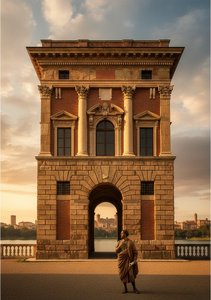
Giulio Romano: A Master of Mannerism & the Palazzo Te Legacy
Explore the revolutionary art of Giulio Romano, master of Mannerism & architect of Palazzo Te. Discover his influence, investment potential, and stunning frescoes – a guide for discerning collectors.

Carlo Carrà: Futurist Visions & Metaphysical Transformations in Early 20th-Century Italian Painting
Explore the artistic journey of Carlo Carrà, a pivotal figure in Italian Futurism & Metaphysical painting. Discover his dynamic compositions, collaborations with de Chirico, and lasting influence on modern art history.
Civic Virtue and Artistic Rivalry: Patronage and Innovation in the Italian Renaissance Republics, 1400–1600
Explore the Italian Renaissance! Discover how competitive patronage & humanist ideals fueled artistic innovation in republics like Florence & Venice. Expert insights for art lovers and collectors.

Giovanni Fattori: Realism, Identity & the Tuscan Landscape – A Macchiaioli Master
Explore the life & art of Giovanni Fattori, a leading figure of the Macchiaioli movement. Discover his revolutionary realism, captivating Tuscan landscapes, and lasting impact on Italian painting. Learn more at OriginalUniqueArt.
Mario Sironi: A Poetic of Modern Italian Identity Through Symbolism & Social Commentary
Explore the profound works of Mario Sironi, a key figure in Italian Modernism. Discover his evolution from Futurism to Metaphysical painting and his powerful social commentary. Learn about his legacy at OriginalUniqueArt.
