
 Previzualizare
 Trimite
 Distribuie
 Detalii despre lucrare

 Descarcă
 Produse similare
 Radiografie
 Diapozitive automate
Libecciata


 Vezi mai mult
Reproducere pictată manual în ulei
Pictură în ulei pe pânză, realizată manual de artiștii noștri la dimensiunea și ramele dorite de dumneavoastră, pe comandă. ( Comandă printul Cumpără imaginea)




P118B $10

P118H $10

P118W $10

P438Z $10

P508JH $12

P508YH $12

P805H $10

P805Z $10

P919BZ $10

P919G $10

P919XJ $10

P959ZH $10

P968JZ $12

W106C $8

W218G $10

W218JH $8

W218Y $10

W307PJ $10

W316G $10

W316PJ $8

W316Y $10

W398PJ $8

W4111J $10

W500HY $15

W500JH $15

W692G $12

W849H $8

W940BG $15

W953PJ $8




Alegeți dintre dimensiunile noastre prestabilite, care respectă proporțiile originale ale operei de artă.

Puteți introduce propriile dimensiuni pentru a se potrivi unui anumit cadru sau spațiu. Dacă dimensiunea selectată nu corespunde proporțiilor imaginii originale, vom decupa opera de artă sau vom extinde pictura cu elemente suplimentare pictate manual. O simulare digitală vă va fi trimisă pentru aprobare înainte de începerea producției.
Vă rugăm să rețineți că previzualizarea de pe ecran nu reflectă decuparea sau extinderea reală. Doar macheta va arăta cu exactitate compoziția finală.
Deși sunt disponibile dimensiuni personalizate, vă recomandăm să selectați o dimensiune din lista predefinită pentru a păstra proporțiile originale.
După plasarea comenzii, echipa OriginalUniqueArt.com va contacta clientul prin e-mail pentru instrucțiuni și îi va furniza o previzualizare a machetei
Livrare în întreaga lume () în 3-4 săptămâni, în loc de cele 5 săptămâni standard. (14 August). Fără compromisuri în ceea ce privește calitatea.

Livrare expres gratuită la nivel mondial

Pânză de in de înaltă calitate

Asigurare completă pentru transport

Garanție de rambursare a taxelor vamale

Garanția fidelității culorilor

Politica de retur în 60 de zile (doar pentru defecte)

Garanție de rambursare 100%

Ofertă pentru comenzi multiple
 Opțiunea cu sticlă este disponibilă doar pentru dimensiuni de sub 110 cm

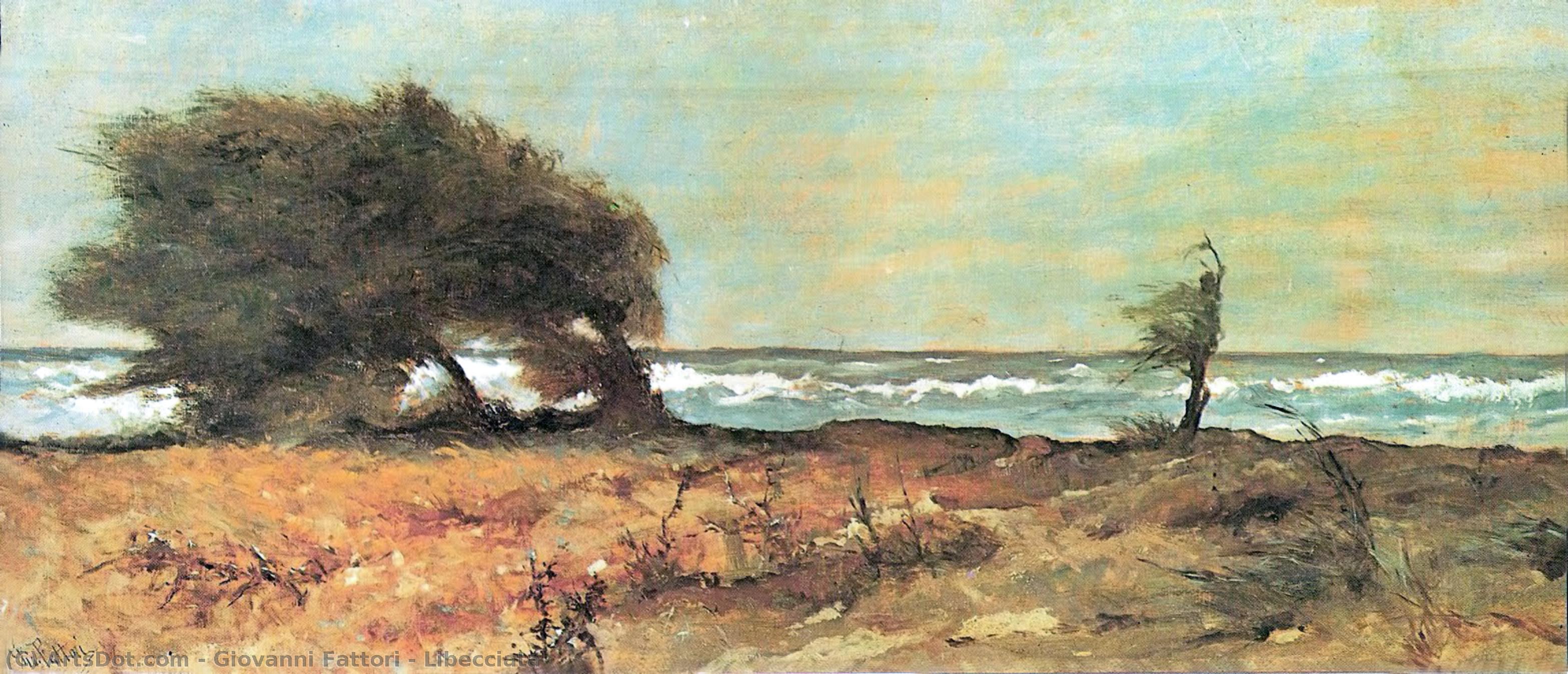
Libecciata
Tehnică de reproducere
Dimensiune reproducere
-


Preț total calculat
$ 300
Descriere operă de artă
Giovanni Fattori: Capturing Tuscan Tranquility – A Window into the Macchiaioli Movement
Giovanni Fattori stands as a cornerstone of the Macchiaioli movement, an Italian artistic revolution that fundamentally altered perceptions of landscape painting in the late 19th century. Born in Livorno in 1825, Fattori’s journey from aspiring commerce student to internationally recognized painter embodies the transformative power of artistic passion—a passion he relentlessly pursued throughout his life.
Initially guided by familial expectations towards a more conventional profession, Fattori's innate talent for drawing quickly superseded these influences. An apprenticeship with Giuseppe Baldini in 1845 ignited his formal artistic education, propelling him to Florence and the Academy of Fine Arts where he briefly interrupted his studies during the tumultuous period of Italy’s unification—experiences that instilled within him a profound appreciation for patriotic fervor and shaped his subsequent artistic vision.
“Libecciata”: A Symphony of Color and Motion
"Libecciata," painted in 1880, exemplifies Fattori's mastery of the Macchiaioli aesthetic. This monumental canvas—measuring approximately 28.4 x 68 cm—depicts a dramatic seascape near Antignano, Livorno, powerfully conveying the raw energy of the Tuscan coast under gale-force winds.
Fattori’s technique is characterized by “macchiaiolo,” or “splashed” painting – a revolutionary approach that prioritized bold brushstrokes and vibrant color patches over meticulous detail. Rather than blending colors smoothly, Fattori applied pigment directly onto the canvas, creating textured surfaces that pulsed with luminosity. This method brilliantly captures the dynamism of the wind-swept dunes and sea spray, mirroring the turbulent spirit of the era.
Historical Context: The Birth of Impressionism
The Macchiaioli movement emerged as a reaction against academic painting’s rigid conventions and idealized representations. Influenced by Barbizon painters like Théodore Rousseau and Frédéric Bazille, Fattori sought to depict nature with uncompromising honesty—to capture its essence without resorting to illusionistic techniques.
This artistic rebellion coincided with the burgeoning influence of Impressionism in France, spearheaded by Claude Monet and Pierre-Auguste Renoir. Fattori’s work foreshadowed many Impressionist principles, demonstrating a shared commitment to portraying fleeting moments of light and atmosphere—a stylistic hallmark that cemented his place as a precursor to this groundbreaking movement.
Symbolic Resonance: Tranquility Amidst Turbulence
Despite the dramatic depiction of wind and sea spray, “Libecciata” possesses an underlying sense of serenity. Fattori’s careful composition focuses on two prominent trees—a substantial trunked specimen dominating the foreground and a smaller companion tree harmoniously positioned alongside it—representing resilience and steadfastness against adversity.
The scattered birds traversing the scene serve as emblems of freedom and vitality, punctuating the canvas with splashes of color. Furthermore, Fattori’s inclusion of figures enjoying the coastal landscape underscores the importance of human connection to nature—a theme that resonates powerfully across artistic traditions.
Location & Legacy: A Florentine Treasure
"Libecciata" resides within the Museo Civico Giovanni Fattori in Livorno, Italy—a testament to Fattori’s enduring legacy as a champion of Tuscan landscape painting. Its presence in this esteemed institution underscores its significance as a cornerstone of Italian art history and continues to inspire artists and collectors alike.
Biografie artist
A Life Immersed in Light and Landscape
Giovanni Fattori, a name inextricably linked to the Macchiaioli movement and a significant precursor to Impressionism, emerged from the vibrant artistic landscape of 19th-century Italy. Born in Livorno in 1825, his journey – transforming from an aspiring commerce student into a celebrated painter – is a compelling testament to the profound power of an artist’s calling. Initially guided by familial expectations towards a more practical profession, Fattori's innate talent for drawing swiftly asserted itself, leading him to an apprenticeship with Giuseppe Baldini in 1845. This marked not merely the beginning of his formal artistic education but also the nascent unfolding of a destiny far removed from the expected path. His early years were shaped by a deep appreciation for art and a burgeoning desire to capture the world around him through visual means, setting the stage for the revolutionary approach he would later champion.The Birth of the Macchiaioli
The 1850s proved to be a watershed moment in Fattori’s artistic development. Florence became a crucible of innovation, a vibrant hub where artists dared to challenge established academic conventions and experiment with entirely new forms of expression. It was within this dynamic environment that Fattori connected with Telemaco Signorini and a constellation of like-minded creatives, forging the core of what would become known as the Macchiaioli – a term derived from the Italian word “macchia,” meaning ‘spot’ or ‘patch.’ This wasn't simply a stylistic label; it represented a fundamental shift in artistic philosophy. Inspired by the Barbizon School painters, particularly Giovanni Costa, Fattori embraced *plein-air* painting—working directly outdoors, capturing the fleeting effects of light and shadow with an immediacy previously unseen in Italian art. He sought to represent not just what was seen but also how it felt – the atmosphere, the mood, the transient beauty of a moment. This approach, prioritizing visual impressions over meticulous detail, was revolutionary. His groundbreaking work, *Dopo la Battaglia di Magenta* (After the Battle of Magenta), completed between 1860 and 1861, stands as a landmark achievement—a pioneering depiction of contemporary history that broke from traditional heroic representations of warfare and offered a starkly realistic portrayal of its aftermath. The painting’s raw emotional power and unconventional composition signaled a new direction for Italian art, moving away from idealized narratives towards a more honest and immediate engagement with the world.Maturity and Tuscan Visions
Fattori's mature style was characterized by a masterful synthesis of *plein-air* observation and carefully considered studio composition. He didn’t abandon structure in favor of pure impressionism; instead, he skillfully blended the immediacy of outdoor painting with the deliberate arrangement of forms learned through academic training. Recurring themes emerged throughout his career: landscapes imbued with the golden light of Tuscany, poignant portraits – notably those of his sister-in-law Argia– and evocative scenes of military life that reflected his earlier experiences during the Risorgimento. After 1880, Fattori found himself increasingly drawn to the Maremma region, a wild and untamed landscape south of Florence. This area became a source of endless inspiration, profoundly influencing his later works with its unique atmosphere, rugged beauty, and the lives of those who inhabited it. He often depicted solitary figures dwarfed by the immensity of the landscape, conveying a sense of both vulnerability and resilience in the face of nature’s power. His etchings from this period further explored these themes, demonstrating his versatility as an artist and his ability to capture the essence of the Maremma through different mediums. The Maremma, with its vast plains and dramatic skies, provided Fattori with a canvas upon which he could explore the relationship between humanity and nature—a theme that resonated deeply throughout his oeuvre.A Pivotal Role in Italian Identity
Giovanni Fattori’s significance extends far beyond his technical innovations. As a leading figure of the Macchiaioli movement, he played a crucial role in establishing a distinctly Italian approach to modern painting – one that diverged from prevailing academic traditions and embraced a more direct engagement with the natural world. His emphasis on *plein-air* painting and capturing fleeting moments of light foreshadowed the developments of Impressionism, demonstrating his forward-thinking artistic sensibility. Furthermore, Fattori’s depictions of Italian life—particularly during the Risorgimento – helped to forge a sense of national identity through art. He captured not just the landscapes of Italy but also the spirit and struggles of its people, creating images that resonated deeply with a nation striving for unity and self-determination. His paintings became visual embodiments of Italian patriotism, celebrating the resilience and dignity of ordinary citizens. He was more than simply an artist; he was a chronicler of his time, capturing the essence of Italy’s transformation and its people's aspirations.Key Influences & Legacy
Giovanni Fattori’s artistic journey was shaped by a confluence of influences. The Barbizon School painters, with their emphasis on *plein-air* painting and naturalistic observation, provided a foundational model for his approach. Giovanni Costa, another key figure in the Macchiaioli movement, instilled in Fattori a deep appreciation for capturing the essence of Italian landscapes. Giuseppe Bezzuoli, his early mentor at the Florence Academy, introduced him to the techniques of historical painting, which he later adapted to depict contemporary subjects. His legacy endures today, not only through the preservation of his paintings in prestigious museums like the Museo Civico Giovanni Fattori in Livorno and the Galleria d'Arte Moderna del Civico Museo Revoltella in Trieste but also through his influence on subsequent generations of Italian artists. He remains a pivotal figure in Italian art history—a master of light, landscape, and the human spirit.- Key Influences: Barbizon School painters, Giovanni Costa, Giuseppe Bezzuoli.
- Major Themes: Tuscan landscapes, military life, portraits, scenes of contemporary Italy.
- Artistic Style: Macchiaioli, *plein-air* painting, bold brushstrokes, emphasis on light and shadow.

Giovanni Fattori
1825 - 1908 , Italia
Detalii rapide
- Artistic Movement Or Style: Macchiaioli, plein air
- Artists Or Movements Influenced By This Artist: ['Impressionism']
- Artists Who Influenced This Artist:
- Costa Giovanni
- Barbizon School
- Date Of Birth: 6 septembrie 1825
- Date Of Death: 30 august 1908
- Full Name: Giovanni Fattori
- Nationality: Italian
- Notable Artworks:
- Dopo battaglia Magenta
- Carro rosso
- Vagoni romani
- Place Of Birth: Livorno, Italia
Articole similare

Giovanni Fattori: Realism, Identity & the Tuscan Landscape – A Macchiaioli Master
Explore the life & art of Giovanni Fattori, a leading figure of the Macchiaioli movement. Discover his revolutionary realism, captivating Tuscan landscapes, and lasting impact on Italian painting. Learn more at OriginalUniqueArt.
Top 10 Capodopere Artistice cu Peisaje: Inspirație și Frumusețe pentru Decorul Casei
Descoperă top 10 capodopere artistice cu peisaje, de la Monet și Van Gogh la picturi impresioniste. Află poveștile din spatele fiecărei opere și găsește inspirație pentru decorul casei tale! Reproduceri tablouri de calitate superioară pe OriginalUniqueArt.com.

Peisaje Romantice Iconice: 10 Capodopere Artistice pentru Decorul de Lux
Descoperă 10 capodopere romantice iconice de Caspar David Friedrich, Turner și alți maeștri. Explorează istoria artei, emoțiile din peisaje și găsește tablouri canvas perfecte pentru decorul tău pe OriginalUniqueArt.com!

Evocations of Place: A Historical Journey Through Landscape Art
Explore the rich history of landscape art with OriginalUniqueArt. Discover renowned artists, movements like Impressionism & Romanticism, and expert guidance for collecting timeless pieces. Find your perfect serene escape today!

John Constable: Cele Mai Frumoase 25 de Capodopere – Artă Clasică pentru Decorul Casei Tale
Descoperă cele mai frumoase 25 de picturi ale lui John Constable, maestru al peisajului englezesc! Explorează stilul romantic, Dedham Vale și capodopere precum The Hay Wain. Reproduceri artă clasică pentru decorul casei tale – OriginalUniqueArt.com.

