

 Vezi în context
 Trimite
 Distribuie
 Detalii
 Ghidul

 Descarcă
 Produse similare
 Radiografie
 Diaporama
 Statistici
Camera obscura
 Acrylic
- WallArt
- Impressionism
 1700
1700 22.0 x 38.0 cm
 Museo Correr
 Citește mai mult
Giclée / Imprimare artistică
Printuri giclée sau pe canvas de calitate muzeală, cu proces de producție rapid și opțiuni flexibile de finisare. ( Comandă pictură realizată manual Treci la imagine digitală)




P118B lei10

P118H lei10

P118W lei10

P438Z lei10

P508JH lei12

P508YH lei12

P805H lei10

P805Z lei10

P919BZ lei10

P919G lei10

P919XJ lei10

P959ZH lei10

P968JZ lei12

W106C lei8

W218G lei10

W218JH lei8

W218Y lei10

W307PJ lei10

W316G lei10

W316PJ lei8

W316Y lei10

W398PJ lei8

W4111J lei10

W500HY lei15

W500JH lei15

W692G lei12

W849H lei8

W940BG lei15

W953PJ lei8




Alegeți dintre dimensiunile noastre prestabilite, care respectă proporțiile originale ale operei de artă.

Introduceți lățimea și înălțimea de care aveți nevoie, pentru a se potrivi ramei sau peretelui dumneavoastră. O printare poate fi doar tăiată, niciodată extinsă dincolo de dimensiunea imaginii originale, astfel încât o dimensiune cu o formă diferită va pierde o parte din imagine. Vă trimitem o simulare digitală pentru aprobare înainte de a imprima orice. Imaginea afișată pe această pagină nu prezintă tăierea reală — doar simularea arată acest lucru.
Livrare în întreaga lume () în 2 săptămâni, în loc de cele 4/5 săptămâni standard. (25 Octombrie)

Livrare expres gratuită la nivel mondial

Pânză de in premium

Asigurare completă pentru transport

Garanție de rambursare a taxelor vamale

Garanția fidelității culorilor

Politica de retur în 100 de zile (doar pentru defecte)

Garanție de rambursare 100%

Reducere pentru comenzi multiple
 Opțiunea cu sticlă este disponibilă doar pentru dimensiuni de sub 110 cm

Camera obscura
Giclée / Imprimare artistică
Dimensiune reproducere
-


Preț total
lei 370
Canaletto’s Camera Obscura: A Window Into Venetian Vision
The artist Giovanni Antonio Canaletto, commonly known as Canaletto (1697 – 1768), stands as one of the most celebrated figures in eighteenth-century Venetian painting. His meticulous depictions of Venice—the canals shimmering under sunlight, the palaces adorned with opulent decoration—captivate viewers even today. But beyond their aesthetic beauty lies a fascinating secret: Canaletto’s unparalleled accuracy stems from a technique that predates photography – the camera obscura. This ingenious device, essentially a darkened room equipped with a pinhole aperture and a mirror, allowed him to capture the essence of his surroundings with remarkable precision, shaping not only his artistic output but also influencing the broader understanding of perspective and visual representation.- The Device Itself: Canaletto’s camera obscura wasn't merely a tool; it was a conceptual breakthrough. Constructed from wood and glass, it functioned by projecting an inverted image of the outside world onto a surface within—typically tracing paper or canvas—positioned opposite to the pinhole. This method ensured that the artist could faithfully reproduce architectural details and atmospheric effects without resorting to laborious sketching techniques.
- A Reflection of Scientific Curiosity: Canaletto’s embrace of the camera obscura reflects the burgeoning scientific interest in optics during his lifetime. Astronomers and mathematicians alike were experimenting with similar instruments, attempting to unravel the mysteries of light and vision. Canaletto's use of this technique wasn't simply artistic expediency; it represented a conscious engagement with contemporary intellectual debates about how we perceive reality.
- Venetian Landscape Painting: The camera obscura profoundly impacted Canaletto’s style. By allowing him to observe the scene from multiple viewpoints simultaneously, he achieved a level of realism previously unattainable. His paintings—particularly those capturing the grandeur of St Mark's Square and the Doge’s Palace—are characterized by subtle gradations of color, masterful shading, and an astonishingly accurate depiction of architectural proportions.
- Symbolism Beyond Technique: Canaletto’s camera obscura technique wasn’t just about achieving visual accuracy; it also conveyed a deeper symbolic message. The darkened room represented introspection and contemplation—a deliberate distancing from the immediate sensory experience to gain access to a more profound understanding of the world around him. This approach mirrored the philosophical currents of the Enlightenment, emphasizing reason and observation as pathways to knowledge.
- Legacy in Photography: Canaletto’s pioneering use of the camera obscura foreshadowed the invention of photography centuries later. By demonstrating that it was possible to capture an image without direct contact with the subject matter—a feat previously considered impossible—he fundamentally altered our conception of artistic representation and paved the way for a new era of visual art.
Notable Works Featuring Camera Obscura Technique
Canaletto’s mastery of perspective is evident in several iconic paintings, including “The Stonemason’s Yard” (c. 1725), where he meticulously rendered the textures and colors of the building materials with astonishing detail. Similarly, his depiction of St Mark's Square—particularly the Doge’s Palace—captures the shimmering light reflecting off the facades and windows, achieved through careful observation and skillful blending of pigments. These paintings stand as testament to Canaletto’s unwavering commitment to capturing the beauty and complexity of Venice with unparalleled accuracy – a feat made possible by his ingenious use of the camera obscura.Exploring Canaletto's Influence on Later Artists
Canaletto’s innovative approach to landscape painting resonated deeply with artists who followed him, notably Francesco Guardi and Michele Marieschi. These painters adopted similar techniques—primarily employing atmospheric perspective and meticulous detail—to convey the grandeur of Venetian vistas. Canaletto’s legacy extends beyond his own artistic achievements; he established a precedent for realistic representation that continues to inspire artists today, demonstrating that observation and careful technique can unlock profound insights into capturing the essence of visual experience.Reproductions & Inspiration
High-quality reproductions of Canaletto's paintings offer an exceptional opportunity to appreciate his artistic genius and immerse oneself in the atmosphere of eighteenth-century Venice. Consider framing a print alongside a photograph taken from one of Canaletto’s original viewpoints—a powerful gesture that honors both the artist’s pioneering technique and the enduring beauty of Venetian landscapes. Let Canaletto's Camera Obscura serve as a reminder that true artistic vision requires not only skill but also an unwavering dedication to observing and interpreting the world around us.Întrebări și răspunsuri
Pentru ce cameră este recomandată lucrarea "Camera obscura" de Canaletto?
Spațiul recomandat pentru "Camera obscura" de Canaletto este o Living Room. Sugestia poate fi, desigur, adaptată interiorului dumneavoastră.
Cât de puternic este contrastul în "Camera obscura" de Canaletto?
"Camera obscura" de Canaletto prezintă un contrast Statement între zonele luminoase și cele întunecate.
Cât de saturată este paleta culorilor din "Camera obscura"?
"Camera obscura" de Canaletto este înregistrată cu o saturație de Muted.
Biografie artist
Early Life and Artistic Foundations
Giovanni Antonio Canal, more commonly known as Canaletto, was born on October 18, 1697, in the heart of Venice – a city that would indelibly shape his artistic vision and become the enduring subject of countless paintings. His origins were humble; he was the son of Bernardo Canal, a skilled painter specializing in theatrical scene settings, and Artemisia Barbieri. From an early age, young Giovanni was immersed in the world of art, learning the fundamentals directly from his father’s workshop. This foundational training instilled within him a meticulous attention to detail and a deep understanding of composition – qualities that would later define his distinctive style. The bustling atmosphere of Venice, with its intricate canals, vibrant markets, and grand palaces, provided an endless source of inspiration for a young artist eager to capture the essence of his surroundings.The Roman Years: Seeds of Innovation
In 1718, Canaletto embarked on a transformative journey to Rome. This period proved pivotal in shaping his artistic development. He immersed himself in the vibrant art scene of the Eternal City, studying the works of masters like Caravaggio and learning new techniques. Crucially, he encountered Giovanni Paolo Pannini, a renowned vedutista – a painter specializing in cityscapes – whose meticulous observation and precise rendering profoundly influenced Canaletto’s own approach to topographical painting. Pannini's emphasis on capturing the details of urban life, combined with his innovative use of perspective, ignited within Canaletto a desire to document Venice with unprecedented accuracy and beauty.The Rise of the Veduta: A Venetian Master Emerges
Upon returning to Venice in 1720, Canaletto quickly established himself as a respected artist. He began by producing scenic backdrops for theatrical productions, honing his skills in composition and color. However, it was his growing fascination with capturing the city’s visual reality that truly set him apart. He developed a signature style known as “veduta,” meaning “view” or “vista.” This involved painstaking preparatory drawings – often dozens of them – meticulously documenting every angle, perspective, and detail of the cityscape. These detailed studies served as the basis for his finished paintings, allowing him to create remarkably realistic and immersive depictions of Venice. Notable early works like "The Stonemason's Yard" (circa 1725) showcased his burgeoning talent and established a reputation for capturing the everyday life of Venetian citizens.Collaborations and International Recognition
Canaletto’s success attracted commissions from prominent patrons, including the Palazzo Ducale, the French embassy, and even the British royal family. He collaborated extensively with his nephew, Bernardo Bellotto, who became an accomplished artist in his own right, often adopting “Canaletto” as a professional name to enhance his career, particularly in countries where his uncle was not actively working. His work gained international recognition, notably when he produced a series of paintings for the English nobleman, Prince George of Great Britain. These works, depicting scenes from London’s social and political life, cemented Canaletto's reputation as a skilled observer of human behavior and a master of capturing the atmosphere of different cities.Artistic Techniques and Legacy
Canaletto’s artistic prowess was not simply about replicating reality; it was about transforming observation into art. While some scholars have speculated that he may have employed a camera obscura – a device used to project an image of the outside world onto a surface – for enhanced accuracy, his primary focus remained on masterful composition and skillful use of light and shadow. His paintings are characterized by their remarkable clarity, precision, and a subtle sense of atmosphere. Canaletto’s legacy extends far beyond his own lifetime. He profoundly influenced generations of artists, particularly in the development of the “veduta” genre, and his works continue to be admired for their beauty, detail, and enduring appeal. His paintings are now housed in prestigious museums around the world, including the National Gallery in London, a testament to his lasting contribution to the history of art.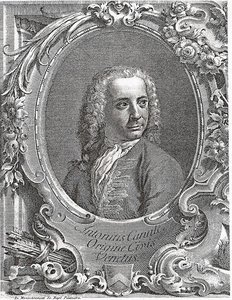
Canaletto
1697 - 1768 , Italia
Informații rapide
- Artistic Movement Or Style: Vedute Veneția
- Artists Or Movements Influenced By This Artist: ['Bernardo Bellotto']
- Artists Who Influenced This Artist: ['Giovanni Paolo Pannini']
- Date Of Birth: 18 oct. 1697
- Date Of Death: 19 apr. 1768
- Full Name: Giovanni Antonio Canal
- Nationality: Italian
- Notable Artworks:
- Stonemar. Yard
- Regatta Canal Grande
- Eton College
- Place Of Birth: Veneția, Italia
Articole conexe

The Enduring Legacy of Oil on Canvas: Technique, History & Aesthetic Impact
Explore the rich history & techniques of oil painting – from Renaissance masters to Impressionism. Discover pigments, layering methods, and why this timeless medium endures. Expert insights for artists & art enthusiasts.

Giovanni Antonio Canal (Canaletto): A Venetian Master of Light, Space & Societal Observation
Explore the life & art of Giovanni Antonio Canal (Canaletto), a Venetian master renowned for his breathtaking cityscapes. Discover his techniques, legacy, and captivating depictions of 18th-century Venice & London.

The Dramatic Flourish: Exploring the Baroque Movement's Enduring Legacy in Art History
Explore the dramatic world of Baroque art! Discover iconic artists like Caravaggio & Rubens, defining techniques, and its lasting impact on art history. Expert insights for collectors & enthusiasts at OriginalUniqueArt.

The Enduring Power of Painting: A Historical & Contemporary Exploration of Form and Emotion
Explore the rich history & enduring techniques of oil painting with OriginalUniqueArt. Discover masterpieces, learn about art collecting, and find authentic handmade reproductions crafted by skilled artists.

Drama Barocă: Cum să Aduceți Splendoare și Emoție în Interioarele Contemporane
Descoperiți cum să integrați splendoarea stilului baroc în locuința dumneavoastră! Ghid complet cu elemente de design, culori și inspirație pentru interioare luxoase și pline de emoție.


