

 Trimite
 Distribuie
 Detalii
 Ghidul

 Descarcă
 Produse similare
 Diaporama
 Statistici
Summer


 Citește mai mult
Reproducere pictată manual în ulei
Pictură în ulei pe pânză, realizată manual de artiștii noștri la dimensiunea și ramele dorite de dumneavoastră, pe comandă. ( Comută pe versiunea Print Treci la imagine digitală)




































Alegeți dintre dimensiunile noastre prestabilite, care respectă proporțiile originale ale operei de artă.

Introduceți lățimea și înălțimea de care aveți nevoie, pentru a se potrivi ramei sau peretelui dumneavoastră. Această lucrare este pictată manual, așa că pentru o dimensiune cu o formă diferită, artistul poate picta puțin mai mult în jurul imaginii sau poate tăia puțin din margini — dumneavoastră decideți. Vă vom trimite o simulare digitală pentru aprobare înainte de a începe pictarea. Imaginea afișată pe această pagină nu reprezintă rezultatul real — doar simularea este reprezentativă.
După plasarea comenzii, echipa OriginalUniqueArt.com va contacta clientul prin e-mail pentru instrucțiuni și îi va furniza o previzualizare a machetei
Livrare în întreaga lume () în 3-4 săptămâni, în loc de cele 5 săptămâni standard. (21 Octombrie). Fără compromisuri în ceea ce privește calitatea.

Livrare expres gratuită la nivel mondial

Pânză de in premium

Asigurare completă pentru transport

Garanție de rambursare a taxelor vamale

Garanția fidelității culorilor

Politica de retur în 100 de zile (doar pentru defecte)

Garanție de rambursare 100%

Reducere pentru comenzi multiple
 Opțiunea cu sticlă este disponibilă doar pentru dimensiuni de sub 110 cm

Summer
Tip de reproducere
Dimensiune reproducere
-


Preț total
lei 1379
A Serene Tableau of Renaissance Devotion
In the heart of Florence, within the hallowed walls of Casa Vasari, lies a fresco that captures the very essence of High Renaissance tranquility. “Summer”, a collaborative masterpiece by Giorgio Vasari and his skilled contemporaries, is far more than a mere seasonal depiction; it is a profound meditation on peace and maternal tenderness. The scene unfolds with a breathtaking intimacy, presenting a woman reclining gracefully on her side, her form cradling a small child in a moment of quiet repose. As the viewer gaz and upon this tableau, one feels transported to an era where art sought to harmonize the human experience with the divine, creating a window into an idealized world of domestic grace.
The composition is masterfully structured to evoke a sense of grandeur and architectural permanence. An arched ceiling looms above the figures, its classical lines echoing the Greco-Roman aesthetics that Vasari so fervently sought to revive. This architectural framework does not merely enclose the scene but elevates it, lending a monumental quality to the private moment shared between mother and child. The inclusion of subtle decorative elements, such as a delicately placed vase, adds a layer of Florentine elegance, suggesting an environment of refined taste and opulent beauty that would have graced the palatial settings of the sixteenth century.
Technical Brilliance and the Mastery of Light
To behold “Summer” is to witness the technical virtuosity of the Mannerist tradition. Vasari employs sfumato—the delicate, smoky blurring of edges famously pioneered by Leonardo da Vinci—to soften the contours of the figures. This technique allows the woman and child to emerge from the background not as sharp, isolated shapes, but as organic presences integrated into a hazy, sun-drenched atmosphere. The light seems to filter through the very air of the fresco, imbuing the scene with a warm, ethereal glow.
The artist’s palette is a sophisticated study in earth tones and luminous highlights. By masterfully blending hues of ochre, umber, and ivory black, Vasari achieves a remarkable sense of depth and three-dimensionality. These rich, grounded colors provide a sturdy foundation for the lighter, more delicate passages of skin and fabric, creating a visual rhythm that guides the eye across the fresco. For the discerning collector or interior designer, this interplay of light and shadow offers a timeless sophistication, making it an ideal centerpiece for spaces that demand both warmth and intellectual depth.
Symbolism and the Eternal Human Spirit
Beyond its aesthetic splendor, “Summer” is steeped in the humanist ideals of the Renaissance. The woman’s posture, characterized by a sense of vulnerability and repose, serves as a powerful symbol of motherhood and the nurturing spirit. In the context of the era, such imagery was intended to reflect the moral virtues of constancy and devotion. The child, nestled securely in her arms, represents the purity of innocence and the promise of the future—a poignant reminder of the cyclical nature of life and the enduring strength of familial bonds.
This artwork resonates deeply with anyone moved by the celebration of human dignity. It captures a fleeting moment of stillness that feels both historically specific and eternally relevant. Whether displayed in a contemporary gallery or as a hand-painted reproduction in a curated home, “Summer” brings with it an aura of spiritual contemplation and classical harmony. It is an invitation to slow down, to appreciate the beauty in simplicity, and to surround oneself with the enduring legacy of one of Italy's greatest artistic visionaries.
Întrebări și răspunsuri
Pot vedea o previzualizare a "Summer" de Giorgio Vasari înainte de a comanda?
Pagina Previzualizare pentru „Summer” vă permite să vizualizați opera de artă înainte de a comanda.
Este "Summer" o idee bună de cadou?
Ca cadou, "Summer" de Giorgio Vasari este recomandată pentru Mother's Day. Poate fi potrivită și pentru alte ocazii.
Din ce curent artistic face parte "Summer" de Giorgio Vasari?
Mișcarea asociată cu "Summer" de Giorgio Vasari este High Renaissance. Această clasificare plasează lucrarea printre artiști și opere de artă conexe.
Biografie artist
A Life Woven into the Renaissance Fabric
Giorgio Vasari, born in Arezzo, Tuscany, on July 30, 1511, was more than simply a painter; he was a quintessential embodiment of the Italian Renaissance spirit. His life unfolded as a vibrant tapestry woven with threads of artistic creation, architectural innovation, insightful historical writing, and an unwavering dedication to celebrating the masters who came before him. From his earliest training under Guglielmo da Marsiglia, a skilled artisan in stained glass, young Giorgio’s path was steered towards visual artistry. However, it was his move to Florence at sixteen that truly ignited his potential. Immersing himself within the dynamic circle of Andrea del Sarto and absorbing the influences of Rosso Fiorentino and Jacopo Pontormo, Vasari began a journey that would see him become one of the most influential figures of his era. His formative years were also deeply marked by the patronage and friendship of the powerful Medici family, a relationship that would shape both his career and his perspective on art’s role in society.The Artist's Hand and Eye
Vasari’s artistic style is often categorized as Mannerist, reflecting the prevailing aesthetic trends of the mid-16th century. His paintings are characterized by elongated figures, dynamic compositions, and a sophisticated use of color—qualities highly admired during his lifetime. While perhaps not achieving the same level of enduring fame as some of the artists he chronicled, Vasari’s skill was undeniable. Notable works such as *The Studio of the Painter*, a fresco housed in Casa Vasari in Arezzo, offer a fascinating glimpse into the artistic practices of the time. The sheer scale and ambition of his frescoes for the Palazzo Vecchio in Florence, undertaken between 1555 and 1572, demonstrate his mastery of large-scale decorative schemes. His final monumental undertaking, *The Last Judgement*, adorning the cupola of Florence Cathedral—completed after his death by Federico Zuccari—stands as a testament to his unwavering commitment to grand artistic visions. Beyond painting, Vasari’s architectural contributions were equally significant. He designed the elegant loggia of the Palazzo degli Uffizi, transforming it into a public piazza and creating a vital link within Florence's urban landscape. Perhaps most famously, he conceived and oversaw the construction of the Vasari Corridor, a secret passageway connecting the Uffizi Gallery with the Palazzo Pitti—a feat of engineering and architectural ingenuity that continues to captivate visitors today.A Historian Forging a Legacy
However, it is arguably as an art historian that Giorgio Vasari secured his most lasting legacy. His monumental work, *Lives of the Most Excellent Painters, Sculptors, and Architects*, published in 1550 (with a revised edition in 1568), revolutionized the way art was understood and appreciated. This groundbreaking text wasn’t merely a collection of biographies; it established a narrative framework for the development of Italian Renaissance art, tracing its evolution from the early masters like Cimabue and Giotto to his contemporaries Michelangelo and Raphael. Vasari's work introduced the very concept of the “Renaissance” – a rebirth of classical ideals—and laid the foundation for modern art history as a discipline. While acknowledging that Vasari’s accounts are not without their biases and inaccuracies, particularly concerning artists predating his own time, the impact of *Lives* remains profound. It provided a crucial historical context for artistic creation, elevating the status of artists from skilled craftsmen to intellectual figures worthy of scholarly attention.Influences and Enduring Significance
Vasari’s artistic development was profoundly shaped by his exposure to the works of Renaissance masters. His visit to Rome in 1529, where he studied the art of Raphael and other High Renaissance artists, proved pivotal. He absorbed their principles of composition, anatomical accuracy, and idealized beauty, incorporating them into his own style. Michelangelo, whom Vasari greatly admired, exerted a particularly strong influence on both his painting and architecture. The grandeur and dynamism characteristic of Michelangelo’s work are evident in many of Vasari’s projects. Beyond specific artists, the broader intellectual currents of the Renaissance—humanism, classical learning, and a renewed interest in empirical observation—also informed Vasari's approach to art and history. Giorgio Vasari died on June 27, 1574, in Florence, leaving behind a multifaceted legacy that continues to resonate today. He was not only a talented artist and architect but also a pioneering historian whose writings shaped our understanding of one of the most transformative periods in Western art history. His work remains essential for anyone seeking to explore the rich cultural heritage of the Italian Renaissance.Major Works
- The Studio of the Painter (1563): A monumental fresco located in Casa Vasari, Arezzo, offering a detailed depiction of an artist’s studio and serving as a visual treatise on artistic techniques.
- Lives of the Most Excellent Painters, Sculptors, and Architects (1550 & 1568): Vasari's magnum opus, a biographical survey of Italian artists from the early Renaissance to his own time, establishing a framework for art historical study.
- Frescoes in Palazzo Vecchio (1555-1572): A series of large-scale decorative frescoes adorning the Salone dei Cinquecento, showcasing Vasari’s mastery of monumental painting and narrative composition.
- The Last Judgement (1573): A grand fresco on the cupola of Florence Cathedral, completed after Vasari's death by Federico Zuccari, representing a culmination of his artistic ambitions.
- Vasari Corridor (1564-1569): An architectural marvel connecting the Uffizi Gallery with the Palazzo Pitti, demonstrating Vasari’s innovative design skills and strategic thinking.
Legacy
Vasari's legacy extends far beyond his individual artistic achievements. He is widely considered the “father of art history,” having pioneered a systematic approach to studying and documenting the lives and works of artists. His *Lives* provided an invaluable source of information for subsequent generations of art historians, shaping our understanding of the Renaissance and influencing the development of the discipline. Furthermore, Vasari’s architectural designs—particularly the Palazzo degli Uffizi and the Vasari Corridor—continue to be admired for their elegance, functionality, and historical significance. His work stands as a testament to his versatility, intellectual curiosity, and enduring contribution to Italian culture.
Giorgio Vasari
1511 - 1574 , Italia
Informații rapide
- Artistic Movement Or Style: Mannerism
- Artists Or Movements Influenced By This Artist: ['Renaissance art history']
- Artists Who Influenced This Artist:
- Michelangelo
- Andrea del Sarto
- Date Of Birth: 30 iulie 1511
- Date Of Death: 27 iunie 1574
- Full Name: Giorgio Vasari
- Nationality: Italian
- Notable Artworks:
- Studio Pict.
- Ultima Judecată
- Place Of Birth: Arezzo, Italia
Articole conexe

Arta care prinde viață: Puterea emoțională a unei fresce interioare personalizate
Descoperă puterea emoțională a unei fresce interioare personalizate! Experți în arta frescei oferim design unic, execuție impecabilă și consultanță gratuită. Transformă-ți spațiul!

The Enduring Legacy of Fresco: Technique, History & Artistic Expression Across Cultures
Explore the rich history & enduring legacy of fresco painting! Discover ancient techniques, Giotto's masterpieces, and modern applications. Expert insights for art lovers & professionals.
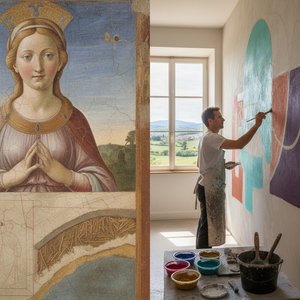
The Enduring Legacy of Fresco Painting: Techniques, History & Contemporary Relevance
Explore the rich history & enduring artistry of fresco painting – from Giotto to Michelangelo! Discover techniques, conservation efforts, & modern applications. Learn how OriginalUniqueArt brings this timeless art form to your home.

The Enduring Legacy of Fresco: Technique, History & Artistic Expression
Explore the rich history & enduring artistry of fresco painting. Discover techniques from Giotto to Michelangelo, conservation efforts, & modern applications. Learn how OriginalUniqueArt brings this timeless art form to your home.

Moștenirea Frescei: Pictând Istoria Familiei pe Pereți
Transformă istoria familiei tale într-o frescă unică! Artiști profesioniști, tehnici moderne și consultanță gratuită. Creează o moștenire vizuală de neuitat cu .


