 Previzualizare
 Trimite prin felicitare
 Distribuie
 Detalii despre lucrare
 Ghid
Ghid

 Descarcă imaginea
 Produse similare
 Radiografie
 Galerie foto
 Întrebări și răspunsuri
 Statistici
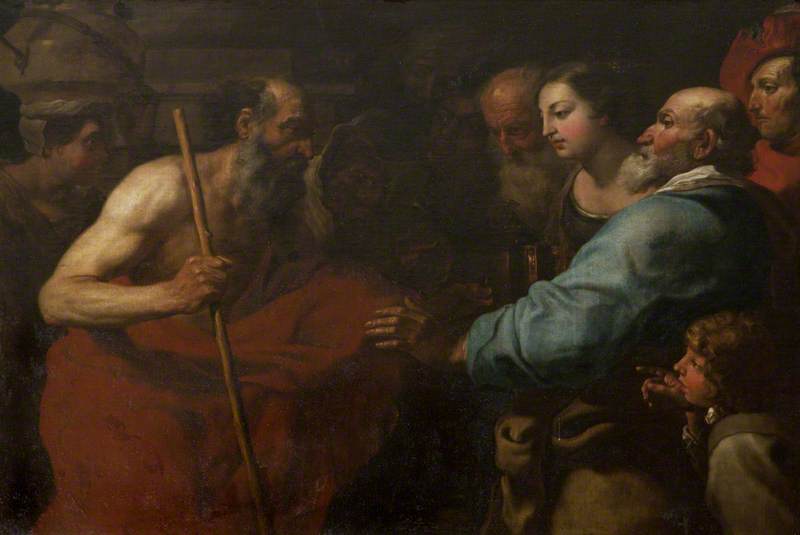
Diogenes with His Lantern

- 115.0 x 163.0 cm

 Vezi mai mult
Obțineți un fișier gata de imprimare care depășește cu mult calitatea previzualizării web. Fiecare imagine digitală pe care o vindem provine dintr-un master de înaltă rezoluție din baza noastră de date — având, de regulă, o lățime între 5.000 și 15.000 de pixeli — astfel încât să puteți printa în format mare, să decupați strâns sau să reproduceți detalii fine cu încredere.
Niciun fișier nu părăsește studioul nostru fără să fie tratat. Un expert digital verifică nuanțele de culoare în raport cu pictura originală și le corectează acolo unde este necesar, apoi îmbunătățește claritatea și detaliile folosind instrumente profesionale de retușare — rămânând întotdeauna fidel gestului pictural și stilului artistului. Rezultatul este o imagine care seamănă cu tabloul propriu-zis, nu cu o scanare filtrată.
Aprobați înainte de finalizare: expertul nostru vă va trimite imaginea prin e-mail în termen de 72 de ore pentru revizuire. Nu sunteți mulțumit? Solicitați îmbunătățiri sau corecturi, ori cereți o restituire a plății dacă calitatea nu este pe măsura așteptărilor.
Aceasta este calitatea pe care se bazează editorii, studiourile de design, galeriile și tipăriturile.
Imagine Digitală
Descărcați un fișier la rezoluție înaltă pentru afișare personală, imprimare și proiecte creative. ( Comută pe versiunea Print Comandă pictură realizată manual)
Inclus în fiecare comandă de imagini digitale
Livrare digitală de expertiză, garantată
Când alegeți OriginalUniqueArt.com, nu primiți doar o simplă imagine – primiți o operă de artă digitală îmbunătățită profesional, creată cu precizie și susținută de o garanție de satisfacție. Iată tot ceea ce primești odată cu comanda ta, în mod automat:

Livrare rapidă prin e-mail
Fișierul imaginii digitale la rezoluție înaltă vă va fi trimis prin e-mail în termen de 72 de ore de la finalizarea comenzii – gata pentru utilizare imediată.

Fișier digital optimizat prin IA
Opera ta de artă este optimizată profesional prin intermediul unor instrumente AI avansate și al editării manuale, asigurând un nivel maxim de detalii, claritate și acuratețe a culorilor.

Retransmitere gratuită pe viață
Ai șters sau ai pierdut din greșeală fișierul? Nu îți face griji – ți-l vom retrimite oricând, gratuit.

Fără taxe de import – Întotdeauna
Bucură-te instant de noua ta operă de artă, fără taxe vamale, taxe de import sau costuri de livrare – descărcările digitale sunt întotdeauna fără taxe.

Garanția acurateții culorilor
Asigurăm o reflectare cât mai fidelă a culorilor originale în imaginea ta digitală, prin utilizarea unor instrumente profesionale și a proceselor de gestionare a culorii.

Garanție de satisfacție de 100 de zile
Dacă nu sunteți mulțumit de imaginea digitală achiziționată, o vom revizui sau vă vom returna 100% în termen de 100 de zile – fără nicio întrebare.

Garanție de returnare 100% a banilor
Nu ești mulțumit? Primești rambursarea integrală în termen de 100 de zile de la primirea fișierului digital – fără nicio întrebare.

Reduceri pentru comenzi în volum
Cumpără 3 imagini, economisește 10% - Cumpără 5, economisește 15% - Cumpără 10+, economisește 20%. Ideal pentru proiecte creative, galerii și agenții.
Biografie artist
Early Life and Apprenticeship in Genoa
Gioacchino Assereto, born in Genoa around 1600, emerged as a pivotal figure in the city’s artistic landscape during the early Baroque period. His journey began at the tender age of twelve when he entered the workshop of Luciano Borzone, a respected painter known for his religious works and dynamic compositions. This initial apprenticeship laid the foundation for Assereto's technical skills, but it was his subsequent training with Giovanni Andrea Ansaldo, beginning around 1614, that truly shaped his artistic direction. Ansaldo’s studio provided a more rigorous environment, fostering a deeper understanding of anatomy, perspective, and the nuances of oil painting. Crucially, Assereto also benefited from attending the *Accademia del Nudo*, an institution established by Giancarlo Doria dedicated to the study of the human form through life drawing – a practice essential for mastering the realistic depiction of figures that would become a hallmark of his style. Genoa in this era was a bustling port city, a crossroads of cultures and ideas, and Assereto’s early exposure to diverse influences undoubtedly contributed to his evolving artistic sensibility. He quickly established himself as a promising talent within the Genoese art scene, absorbing the prevailing trends while simultaneously forging his own unique path.The Roman Sojourn and Embracing Caravaggism
By 1639, Assereto’s reputation had grown sufficiently to warrant a journey to Rome – a pilgrimage undertaken by many aspiring artists of the time seeking inspiration from the masters and exposure to new artistic currents. This trip proved transformative for the Genoese painter. He immersed himself in the studios of various Roman artists, encountering works that broadened his horizons and challenged his existing aesthetic principles. Notably, he connected with fellow Genoese painters already working in Rome, including Luca Saltarello, Giovanni Maria Bottalla, Giovanni Benedetto Castiglione, and Giovanni Andrea Podestà, forming a network of artistic exchange. However, the most profound impact came from his engagement with the burgeoning realism of Caravaggio’s followers. The dramatic use of *chiaroscuro* – the stark contrast between light and shadow – and the intensely naturalistic portrayal of figures captivated Assereto. He began to incorporate these elements into his own work, moving away from the more idealized forms of earlier Baroque painting towards a grittier, more emotionally resonant style. This embrace of Caravaggism wasn’t merely stylistic; it reflected a broader shift in artistic priorities, emphasizing direct observation and psychological depth over elaborate ornamentation.Mature Style and Genoese Commissions
Returning to Genoa, Assereto embarked on a period of prolific activity, securing numerous commissions that cemented his position as the city’s leading history painter. The 1640s saw him particularly engaged in fresco work, adorning churches and palazzi with large-scale compositions depicting religious narratives and historical events. His paintings from this decade demonstrate a masterful command of both *chiaroscuro* and *sfumato*, creating a sense of drama and atmosphere that drew viewers into the scene. He wasn’t simply replicating Caravaggio's techniques, however; Assereto infused his work with a distinctly Genoese sensibility – a heightened attention to detail in costumes and settings, reflecting the city’s mercantile culture and its appreciation for material wealth. His success was such that he established a busy studio, producing numerous copies of his works, often under the guidance of his son, Giuseppe Assereto. This proliferation of copies speaks not only to the demand for his paintings but also to their inherent appeal – they resonated with contemporary audiences who valued both technical skill and emotional impact.Legacy and Historical Significance
Raffaele Soprani, a prominent Genoese biographer writing during Assereto’s lifetime, lauded him as “incomparable,” a testament to the artist's widespread recognition and influence. While perhaps an exaggeration, Soprani’s praise reflects the genuine esteem in which Assereto was held by his peers and patrons. His paintings stand as compelling examples of Baroque art in Genoa, bridging the gap between earlier traditions and the more radical innovations of Caravaggism. He excelled at depicting both religious and historical subjects, but it was his portraits that often revealed a keen psychological insight into his sitters. Assereto’s contribution lies not only in his technical virtuosity – his ability to render textures, light, and shadow with remarkable precision – but also in his capacity to imbue his paintings with emotion and narrative power. He left behind a substantial body of work that continues to captivate viewers today, offering a glimpse into the artistic and cultural life of 17th-century Genoa. His influence can be seen in the works of subsequent Genoese painters, who continued to explore the dramatic possibilities of *chiaroscuro* and realism. Assereto’s paintings remain vital for understanding the development of Baroque art in Italy, showcasing a unique blend of local traditions and international influences.
Gioacchino Assereto
1600 - 1649
Detalii rapide
- Artistic Movement Or Style: Baroque, Caravaggism
- Artists Or Movements Influenced By This Artist: ['Giuseppe Assereto']
- Artists Who Influenced This Artist:
- Luciano Borzone
- Giovanni Andrea Ansaldo
- Date Of Birth: 1600
- Date Of Death: 1649
- Full Name: Gioacchino Assereto
- Nationality: Italian
- Notable Artworks: ['The Lamentation']
- Place Of Birth: Genoa, Italy