Northern Renaissance · 1598
Forest Landscape (Gillis Van Coninxloo, 1598)
Gillis Van Coninxloo (1544–1607) a realizat Forest Landscape. Data sa este din 1598. Face parte din mișcarea Northern Renaissance. Este realizată în Oil On Panel. Este păstrat la Liechtenstein Museum în Viena, Austria. Dimensiunile sunt 42 × 61 cm.
- 1598
- Oil On Panel
- 42 × 61 cm
- Liechtenstein Museum, Viena

 Previzualizare

 Tablou în ulei pictat manual
 Trimite prin felicitare
 Distribuie
 Fișă informativă


 Descarcă imaginea
 Produse similare
 Radiografie
 Galerie foto
 Întrebări și răspunsuri

 Statistici
Forest Landscape, pe scurt
- Titlu
- Forest Landscape
- Artist
- Gillis Van Coninxloo (1544–1607)
- Artist născut în
- Anvers, Belgia
- Date
- 1598
- Medium
- Oil On Panel
- Dimensiuni
- 42 × 61 cm
- Unde poate fi vizualizată
- Liechtenstein Museum, Viena, Austria
- Mișcare
- Northern Renaissance
- Perioadă
- Early Modern
- Subiect
- forest landscape, dark woods, path, village view, atmospheric, tranquility
Ce reprezintă Forest Landscape?
Identification of the Forest Landscape Artwork
The artwork titled Forest Landscape is a painting by the Flemish artist Gillis Van Coninxloo. Executed in 1598, this work is an oil on panel. The physical dimensions of the piece are 42 x 61 cm. It is currently held within the Liechtenstein Museum in Vienna, Austria.
This specific composition depicts a dense woodland environment. The scene features a winding path that leads into a thicket of trees. The foliage consists of various shades of green, while the trunks and branches create a heavy canopy overhead. In the background, a small village is visible through the gaps in the trees, providing a sense of distance within the forest setting.
The subject matter focuses on the natural world, specifically the textures of bark, leaves, and moss. A single, small human figure is positioned beneath a tree within the landscape. The composition utilizes a dark palette of browns, greens, and ochres to define the wooded area. Light filters through the upper branches, creating a contrast between the shadowed recesses of the undergrowth and the illuminated patches of the clearing.
Composition and Visual Elements
The composition is largely symmetrical, organized around a winding path that leads the eye toward the center of the image. This path cuts through a dense woodland, where the trunks and branches of trees intertwine to form a thick canopy overhead. Only a few small patches of sky are visible through the gaps in the foliage. Within this enclosed space, a single tiny human figure reclines beneath a tree, positioned near the center of the scene. The scale of the trees and the surrounding undergrowth dwarfs the figure, emphasizing the vastness of the natural environment.
Color is concentrated in the various hues of green found in the leaves and the mossy textures of the forest floor. These greens contrast with the dark browns and ochres of the tree trunks and the earth. In the background, a small village is visible through the trees, providing a sense of distance and depth. The lighting creates a chiaroscuro effect, with strong contrasts between the deep shadows of the thickets and the light that filters through the canopy onto the path and the reclining figure.
Technique and Artistic Style
The artist utilized oil on panel to establish a sense of depth and a tangible texture across the surface. The application of paint likely involves multiple layers and glazing, a method used to achieve a specific luminosity within the darker sections of the composition. This technique allows light to appear as though it is filtering through the canopy, creating a chiaroscuro effect through the deliberate placement of light and shadow. The resulting atmosphere is defined by a palette of dark colors and a high degree of intricate detail.
The composition is built upon a dense arrangement of ancient oaks and thick undergrowth. There is a clear priority placed on the textural richness of the natural elements, specifically the bark of the trees, the individual leaves, and the presence of moss. These organic forms are rendered with meticulous care, contributing to the overall density of the woodland scene. The interplay of light and shadow defines the verticality of the trunks and the irregular shapes of the foliage, emphasizing the physical presence of the forest environment.
Artistic Influence and Legacy
Gillis Van Coninxloo occupied a central position in the evolution of Northern landscape art. His technical approach functioned as a bridge between the intricate traditions of Mannerism and the atmospheric depth characteristic of the early Baroque. Through his development of the forest landscape, he moved away from panoramic vistas toward intimate, enclosed woodland scenes. This shift prioritized the textural details of bark, leaves, and moss, often submerging small human figures within an expansive, detailed natural environment.
The influence of his method extended to several prominent painters of the period. Jan Brueghel the Elder and Pieter Schoubroeck were among those affected by his stylistic developments. His approach to dense, immersive woodland compositions also impacted the work of Roeland Savery and various other Flemish and Dutch landscape painters. This specific work, created about 1598, represents his technical skill and craftsmanship in rendering the natural world.
În ce muzeu se află Forest Landscape?
Liechtenstein Museum
Viena, Austria
O Bijuterie a Splendoarei Baroce Vieneze Situat în inima istorică a Ringstraße din Viena, Muzeul Liechtenstein se regăsește într-un cadru care este, în sine, o capodoperă la fel de prețioasă ca și comorile pe care le protejează. Adăpostit în magnificul Palais Liechtenstein, muzeul oferă o călătorie imersivă în sufletul eleganței aristocratice și în moștenirea profundă a Casei de Liechtenstein. Pe măsură ce vizitatorii se apropie de structura palatelui, sunt întâmpinați de măreția arhitecturală a unei epoci trecute, unde fiecare cornijă aurită și fiecare scară impunătoare șoptesc povești despre prestigiu imperial.


Imagini la înaltă rezoluție ale lui Forest Landscape

Domeniu public: artistul a decedat în 1607.
Alte dimensiuni, cadrări și citări →Gillis Van Coninxloo, Forest Landscape (1598), Liechtenstein Museum. Domeniu public
Întrebări despre Forest Landscape, răspunsuri
Unde poate fi vizualizată astăzi opera "Forest Landscape" de Gillis Van Coninxloo?
"Forest Landscape" de Gillis Van Coninxloo este expusă la Liechtenstein Museum, Viena, Austria. Mențiunea muzeului se referă la lucrarea originală, nu la reproduceri.
În ce an a fost creat "Forest Landscape" de Gillis Van Coninxloo?
"Forest Landscape" de Gillis Van Coninxloo a fost creat(ă) în 1598.
Ce tehnică a fost utilizată pentru "Forest Landscape" de Gillis Van Coninxloo?
Gillis Van Coninxloo a utilizat tehnica Oil On Panel pentru "Forest Landscape". Tehnica definește natura materială a lucrării originale.
Ce dimensiuni are "Forest Landscape" de Gillis Van Coninxloo în realitate?
„Forest Landscape” măsoară 42 x 61 cm în formatul său original. Dimensiunile originale reprezintă o referință utilă atunci când alegeți dimensiunea unei reproduceri.
Ce reprezintă "Forest Landscape"?
Subiectele din "Forest Landscape" sunt forest landscape, dark woods, path, village view, atmospheric, tranquility, nature scene, 16th century.
Este "Forest Landscape" în domeniul public?
În ceea ce privește drepturile de autor, "Forest Landscape" este în domeniul public – drepturile de autor au expirat.
Cine a creat "Forest Landscape"?
„Forest Landscape” a fost creat de Gillis Van Coninxloo. Informațiile de pe această pagină descriu opera originală a lui Gillis Van Coninxloo.
Din ce stil face parte "Forest Landscape"?
„Forest Landscape” este o operă de Northern Renaissance. Acest curent indică tradiția artistică din care face parte lucrarea.
În ce etapă a evoluției lui Gillis Van Coninxloo se încadrează „Forest Landscape”?
În cariera lui Gillis Van Coninxloo, „Forest Landscape” aparține perioadei Late 16th Century. Această etapă facilitează compararea sa cu celelalte opere ale artistului.
Despre artistul Gillis Van Coninxloo
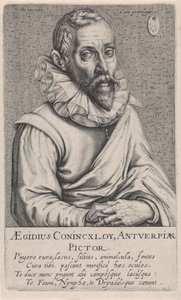
1544–1607, Belgia
Gillis Van Coninxloo
A Master of the Verdant Realm Gillis van Coninxloo stands as a pivotal figure in the evolution of Northern landscape art, serving as a vital bridge between the intricate Mannerist traditions and the burgeoning atmospheric depth of the early Baroque. Born in Antwerp, Belgium, his life was deeply intertwined with the rich artistic lineage of the Low Countries. The son of a painter, he was immersed in a world where craftsmanship and natural observation were paramount. His early training under masters such as Pieter Coecke van Aelst the Younger and Lenaert Kroes provided him with a rigorous foundation, but it was his time working in the workshop of Gillis Mostaert that truly allowed his talent to flourish, permitting him to contribute to professional works while honing his unique vision.
Despre Gillis Van Coninxloo Lucrări remarcabile ale lui Gillis Van Coninxloo
Alte lucrări ale lui Gillis Van Coninxloo
 Jonah Preaching to the Ninevites1583
 Woodland with Saint Jerome1583
 Landscape with the judgment of Midas1598
 Landscape with the Judgement of Paris1610
Eseuri despre Forest Landscape
 French Barbizon paintersMasterpieces by Théodore Rousseau and Daubigny define the Barbizon School. Explore the full collection online at OriginalUniqueArt.com.
 Enchanted Woodlands: 10 Masterpieces That Capture the Magic of the ForestExplore iconic forest art by Shishkin, Klimt, and Van Gogh. Discover museum-quality masterpieces on OriginalUniqueArt.com.
 Mastering the Horizon: An Art Historian’s Guide to the World's Most Iconic Landscape PaintingsExplore the profound history of landscape painting with our expert guide. From Impressionist light to Chinese traditions, discover the tech…