

 Previzualizare
 Trimite prin felicitare
 Distribuie
 Detalii despre lucrare
 Ghid
Ghid

 Descarcă imaginea
 Produse similare
 Radiografie
 Galerie foto
 Q&A
Q&A Statistici
The Extraction of Tooth
 Oil On Canvas
- WallArt
- Baroque realism
 1630
1630- Early Modern
 32.0 x 26.0 cm
 Muzeul Luvru
 Vezi mai mult
Giclée / Imprimare artistică
Printuri giclée sau pe canvas de calitate muzeală, cu proces de producție rapid și opțiuni flexibile de finisare. ( Comandă pictură realizată manual Comută pe Imagine Digitală)




P118B lei10

P118H lei10

P118W lei10

P438Z lei10

P508JH lei12

P508YH lei12

P805H lei10

P805Z lei10

P919BZ lei10

P919G lei10

P919XJ lei10

P959ZH lei10

P968JZ lei12

W106C lei8

W218G lei10

W218JH lei8

W218Y lei10

W307PJ lei10

W316G lei10

W316PJ lei8

W316Y lei10

W398PJ lei8

W4111J lei10

W500HY lei15

W500JH lei15

W692G lei12

W849H lei8

W940BG lei15

W953PJ lei8




Alegeți dintre dimensiunile noastre prestabilite, care respectă proporțiile originale ale operei de artă.

Introduceți lățimea și înălțimea necesare pentru a se potrivi ramei sau peretelui dumneavoastră. O printare poate fi doar tăiată, niciodată extinsă dincolo de dimensiunea imaginii originale, astfel încât o dimensiune cu o formă diferită va pierde o parte din imagine. Vă trimitem o simulare digitală pentru aprobare înainte de a imprima orice. Imaginea afișată pe această pagină nu prezintă tăierea reală — doar simularea arată acest lucru.
Livrare în întreaga lume () în 2 săptămâni, în loc de cele 4/5 săptămâni standard. (29 Octombrie)

Livrare expres gratuită la nivel mondial

Pânză de in de înaltă calitate

Asigurare completă pentru transport

Garanție de rambursare a taxelor vamale

Garanția fidelității culorilor

Politica de retur în 100 de zile (doar pentru defecte de fabricație)

Garanție de rambursare 100%

Ofertă pentru comenzi multiple
 Opțiunea cu sticlă este disponibilă doar pentru dimensiuni de sub 110 cm

The Extraction of Tooth
Giclée / Imprimare artistică
Dimensiune reproducere
-


Preț total calculat
lei 372
A Masterpiece of Meticulous Realism
In the quiet, shadowed corners of the Dutch Golden Age, few artists captured the visceral intimacy of human experience quite like Gerrit Dou. His work, “The Extraction of Tooth,” painted circa 1630, serves as a profound window into a bygone era, where the boundaries between science, art, and daily struggle were inextricably linked. This captivating genre scene does not merely depict a medical procedure; it invites the viewer into a heavy, atmospheric moment of tension and vulnerability. As we gaze upon the scene, we find ourselves transported to a dimly lit workshop or apothecary, where the air feels thick with the scent of medicinal herbs and the palpable anxiety of the patient. It is a work that demands attention, not through grand scale, but through an almost supernatural level of detail that rewards the most discerning eye.
The composition is a masterclass in chiaroscuro, the dramatic interplay of light and shadow that defines the Baroque spirit. Dou utilizes a singular, flickering light source—perhaps a nearby candle—to sculpt the figures out of the darkness. This technique does more than provide visibility; it creates an illusionistic depth that pulls the observer into the immediate proximity of the surgeon’s instruments. One can almost feel the coldness of the forceps and the weight of the apothecary jars scattered across the surfaces. The light dances across glass vials and metallic tools, catching on the edges of a skull that rests ominously in the background, serving as both an anatomical reference and a memento mori—a poignant reminder of our shared mortality.
The Art of the Fijnschilder
To understand the allure of this piece for a modern collector or interior designer, one must appreciate the technical virtuosity of the Leiden fijnschilders, or "fine painters," of which Dou was a leading luminary. His approach was one of extreme patience and precision, involving the painstaking layering of translucent glazes to build up textures that feel almost tactile. In “The Extraction of Tooth,” this technique is evident in the way Dou renders the various surfaces: the smooth, reflective sheen of glass bottles, the rugged texture of the wooden furniture, and the soft, weathered skin of the man in the chair. For those seeking to adorn a space with art, such a reproduction offers more than mere decoration; it provides a focal point of immense complexity and intellectual depth.
Beyond the technical brilliance, the painting resonates emotionally through its storytelling. There is a profound sense of drama in the stillness—the way the patient’s mouth is held open, the focused intensity of the practitioner, and the cluttered environment that suggests a life lived amidst the tools of a trade. It captures a moment of transition, both physical and psychological. For an interior designer, this artwork acts as a sophisticated anchor, bringing a sense of historical gravity and narrative richness to a room. Whether placed in a study filled with books or a contemporary gallery-style living space, Dou’s mastery of light and shadow provides an enduring elegance that transcends the centuries, making it a timeless acquisition for any serious connoisseur of the Dutch Baroque.
Întrebări și răspunsuri
Ce fel de operă este "The Extraction of Tooth"?
"The Extraction of Tooth" este o piesă de tip WallArt.
„The Extraction of Tooth” este mai degrabă o lucrare luminoasă sau întunecată în ansamblu?
Valorile înregistrate pentru "The Extraction of Tooth" de Gerrit Dou sunt: luminozitate de deep_shadow, luminanță de Dark.
Cum se îmbină stilul și epoca în "The Extraction of Tooth" de Gerrit Dou?
"The Extraction of Tooth" de Gerrit Dou face parte din mișcarea Baroque realism, reprezentativă pentru epoca Epoca modernă timpurie a creatorului său.
Biografie artist
Gerrit Dou: A Master of Subtle Light and Intricate Detail
Gerrit Dou, a name synonymous with the Dutch Golden Age, was more than just a painter; he was a meticulous craftsman, a subtle magician who coaxed extraordinary realism from seemingly simple scenes. Born in Leiden on April 7th, 1613, into a family involved in glassmaking, his early life instilled within him an appreciation for detail and precision – qualities that would profoundly shape his artistic vision. Dou’s legacy rests not upon grand gestures or dramatic narratives, but rather on the quiet beauty of everyday moments rendered with astonishing skill and sensitivity. He passed away peacefully on February 9th, 1675, leaving behind a body of work that continues to fascinate and delight art lovers worldwide.The Leiden Fijnschilder School and Artistic Influences
Dou’s artistic journey began under the tutelage of Bartholomeus Dolendo, an engraver, before he transitioned to the workshop of Pieter Couwenhorn, a master glass painter. This early training provided him with invaluable experience in rendering textures, capturing light, and working with intricate details – skills that would become hallmarks of his distinctive style. Crucially, Dou’s time spent studying under Rembrandt van Rijn proved transformative. While he never formally became Rembrandt's pupil, the influence is undeniable; Dou absorbed Rembrandt’s mastery of chiaroscuro—the dramatic interplay of light and shadow—and his ability to imbue scenes with a sense of psychological depth. However, unlike Rembrandt’s often turbulent and emotionally charged compositions, Dou favored a more restrained and polished approach, developing what became known as the *fijnschilder* style – “fine painting” – characterized by its meticulous detail, subtle color gradations, and an almost photographic realism. He was part of the Leiden Fijnschilders, a group of artists who shared a commitment to technical excellence and a focus on capturing the nuances of everyday life.A Distinctive Style: Niche Paintings and Candlelit Scenes
Dou’s artistic signature lies in his innovative use of “niche” paintings – small, self-contained scenes often framed as if they were part of an architectural feature, such as a recessed alcove or a window frame. These niches created a sense of intimacy and immediacy, drawing the viewer into the depicted world. He was particularly renowned for his candlelit night-scenes, where he masterfully captured the flickering light reflecting off surfaces, creating a mesmerizing effect of depth and atmosphere. His technique involved using a concave lens combined with a convex mirror to achieve an accurate representation of the scene, ensuring that every detail – from the texture of fabric to the glint in a person’s eye – was rendered with astonishing precision. His paintings weren't merely representations; they were carefully constructed illusions designed to engage the viewer's senses and invite contemplation.Notable Works and Lasting Legacy
Among Dou’s most celebrated works is *The Astronomer by Candlelight*, a painting that exemplifies his mastery of light and shadow, capturing the intense glow of candlelight illuminating a man engrossed in his observations. His *Portrait of an Old Woman* showcases his ability to convey character and emotion through subtle details – the wrinkles on her face, the expression in her eyes. The Leiden Collection in New York holds a significant number of Dou’s paintings, offering visitors a chance to experience the breadth and depth of his artistic talent. Furthermore, his influence extended beyond his own lifetime; artists such as Frans van Mieris the Elder and Gabriel Metsu were inspired by his meticulous technique and refined style. Gerrit Dou's legacy continues to resonate today, reminding us of the power of observation, precision, and a deep appreciation for the beauty of the everyday world.Further Exploration
For more information about Gerrit Dou’s life and work, consider visiting these resources:
Gerrit Dou
1613 - 1675 , Olanda
Detalii rapide
- Artistic Movement Or Style: Fijnschilder (Fine Painting)
- Artists Or Movements Influenced By This Artist: ['Leiden Fijnschilders']
- Artists Who Influenced This Artist: ['Rembrandt van Rijn']
- Date Of Birth: April 7, 1613
- Date Of Death: February 9, 1675
- Full Name: Gerrit Dou
- Nationality: Dutch
- Notable Artworks:
- The Astronomer by Candlelight
- Portrait of an Old Woman
- Place Of Birth: Leiden, Netherlands
Articole similare
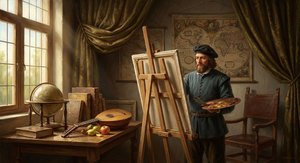
Illuminating Realism: Exploring the Dutch Golden Age of Painting (1600-1700)
Explore the Dutch Golden Age of painting (1600-1700) with OriginalUniqueArt. Discover Rembrandt, Vermeer & other masters. Learn about techniques, history & find museum-quality reproductions.

Golden Age Reflections: Dutch Baroque Painting & Cultural Innovation
Explore the Dutch Golden Age of painting! Discover key artists like Vermeer & ter Borch, their innovative techniques, and the rich cultural context behind these Baroque masterpieces. Learn about collecting & appreciating this iconic art period.

Epoca de Aur Olandeză: 10 Capodopere Care Au Definit Arta și Decorațiunea Interioară
Descoperiți Epoca de Aur Olandeză prin 10 capodopere Rembrandt, Vermeer și alți pictori olandezi. Aflați poveștile din spatele acestor tablouri baroce iconice și inspirați-vă pentru decorațiuni interioare unice. Explorează colecția completă pe OriginalUniqueArt.com!
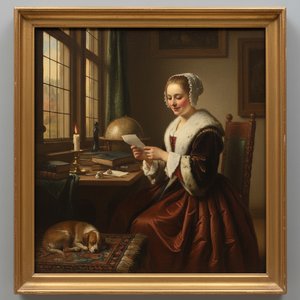
Gerrit Dou: Intimacy & Light in the Dutch Golden Age
Explore the exquisite world of Gerrit Dou, a master of Dutch Golden Age painting. Discover his intimate genre scenes, signature use of light, and lasting legacy. Learn about collecting Dou's works & their value.

Golden Light & Dutch Skies: The Timeless Magic of Dutch Golden Age Landscapes
Discover the breathtaking beauty of Dutch Golden Age landscapes. Explore the mastery of light, chiaroscuro, and 17th-century realism through an expert art history lens, celebrating the enduring legacy of the Dutch Masters for discerning collectors and art lovers.


