

 Previzualizare
 Trimite
 Distribuie
 Detalii despre lucrare

 Descarcă
 Produse similare
 Radiografie
 Diapozitive automate
 Statistici
Betty
 Oil On Canvas
- WallArt
- Contemporary Realism
 1977
1977- Modern
 30.0 x 40.0 cm
 Vezi mai mult
Giclée / Imprimare artistică
Printuri giclée sau pe canvas de calitate muzeală, cu proces de producție rapid și opțiuni flexibile de finisare. ( Comandă pictură lucrată manual Comută pe Imagine Digitală)




P118B $10

P118H $10

P118W $10

P438Z $10

P508JH $12

P508YH $12

P805H $10

P805Z $10

P919BZ $10

P919G $10

P919XJ $10

P959ZH $10

P968JZ $12

W106C $8

W218G $10

W218JH $8

W218Y $10

W307PJ $10

W316G $10

W316PJ $8

W316Y $10

W398PJ $8

W4111J $10

W500HY $15

W500JH $15

W692G $12

W849H $8

W940BG $15

W953PJ $8




Alegeți dintre dimensiunile noastre prestabilite, care respectă proporțiile originale ale operei de artă.

Puteți introduce propriile dimensiuni pentru a se potrivi unui anumit cadru sau spațiu. Dacă dimensiunea selectată nu corespunde proporțiilor imaginii originale, vom decupa lucrarea de artă sau vom extinde imaginea cu margini oglindite sau cu o culoare uniformă. Un mockup digital va fi trimis pentru aprobarea dumneavoastră înainte de începerea producției.
Vă rugăm să rețineți că previzualizarea de pe ecran nu reflectă decuparea sau extinderea reală. Doar mockup-ul va arăta cu exactitate compoziția finală.
Deși dimensiunile personalizate sunt disponibile, vă recomandăm să selectați o dimensiune din lista predefinită pentru a păstra proporțiile originale.
Livrare în întreaga lume () în 2 săptămâni, în loc de cele 4/5 săptămâni standard. (12 Septembrie)

Livrare expres gratuită la nivel mondial

Pânză de in de înaltă calitate

Asigurare completă pentru transport

Garanție de rambursare a taxelor vamale

Garanția fidelității culorilor

Politica de retur de 100 de zile (doar pentru defecte)

Garanție de rambursare 100%

Ofertă pentru comenzi multiple
 Opțiunea cu sticlă este disponibilă doar pentru dimensiuni de sub 110 cm

Betty
Giclée / Imprimare artistică
Dimensiune reproducere
-


Preț total calculat
$ 80
Captivating Subject and Intimate Expression
This exquisite portrait captures the serene presence of a young woman, lying in a relaxed pose with her head slightly tilted, inviting viewers into a moment of quiet introspection. Her vivid blue eyes serve as a focal point, conveying depth and emotional vulnerability, while her gentle expression evokes a sense of calm and inner reflection. The composition emphasizes her facial features with meticulous detail, allowing viewers to connect on a personal level with the subject’s inner world. The subtle play of light across her face enhances her natural beauty, making this piece a compelling exploration of human emotion and vulnerability.Masterful Style and Technique
Executed in a hyper-realistic style, this artwork demonstrates exceptional technical skill and attention to detail. The artist employs fine brushwork to render the textures of skin, hair, and fabric with astonishing precision, creating a lifelike appearance that blurs the line between painting and photography. The use of soft, natural tones combined with delicate shading accentuates the three-dimensionality of her features, while the diffused lighting adds a gentle glow that enhances the realism. The background, a muted warm hue, subtly complements the subject without distracting from her presence, allowing her to stand out as the central focus.Historical Context and Artistic Significance
Created in 1977, this portrait reflects the era’s fascination with realism and humanist themes. During this period, many artists sought to explore personal identity, vulnerability, and emotional depth through highly detailed and realistic portrayals. The work echoes the broader artistic movement of photorealism, emphasizing technical mastery and emotional authenticity. As a product of its time, it also aligns with the rise of contemporary portraiture that seeks to elevate everyday subjects into fine art, making it a significant piece for collectors interested in the evolution of modern realism.Symbolism and Emotional Impact
Beyond its technical brilliance, the artwork invites viewers to contemplate themes of innocence, beauty, and inner reflection. The woman’s calm demeanor and direct gaze create an intimate dialogue, encouraging viewers to consider her inner life and emotional state. The subtle color palette and soft lighting evoke a sense of tranquility, while the subject’s vulnerability fosters a connection rooted in empathy. This piece serves as a reminder of the quiet strength found in moments of introspection, making it a powerful addition to any collection or interior space seeking emotional depth and artistic excellence.A Perfect Choice for Art Lovers and Interior Spaces
Whether displayed in a private collection, a gallery, or an elegant interior, this high-quality reproduction offers a timeless aesthetic that complements a variety of decor styles. Its detailed craftsmanship and emotional resonance make it an inspiring focal point in living rooms, offices, or art spaces. Art lovers and collectors will appreciate its artistic mastery and the profound human story it conveys, while interior designers will find it an elegant piece that elevates any environment with sophistication and emotional warmth. This portrait is not just a painting; it is an invitation to experience the beauty of human vulnerability through the lens of masterful realism.Biografie artist
A Life Shaped by Division: The Early Years and Artistic Formation of Gerhard Richter
Gerhard Richter’s story is inextricably linked to the fractured history of 20th-century Germany. Born in Dresden in 1932, his childhood unfolded under the shadow of a rising National Socialist regime. This formative period, marked by displacement – his family moved several times during the war years – instilled within him a profound sense of uncertainty and a questioning spirit that would permeate his artistic practice for decades to come. The idyllic landscapes of his early upbringing in Reichenau and Waltersdorf were soon disrupted by conflict, leaving an indelible mark on his psyche. His father, though not a fervent supporter of the Nazi party, navigated the complexities of life under authoritarian rule as a schoolteacher, while his mother fostered a love for literature and music within the family. This duality – a pragmatic acceptance of circumstance alongside a yearning for cultural expression – became a defining characteristic of Richter’s own artistic approach. He began formal training at the Dresden Academy of Fine Arts in 1951, initially immersed in the tradition of socialist realism demanded by the East German state. However, even within this constrained environment, a desire for artistic freedom simmered beneath the surface, fueled by a growing dissatisfaction with ideological constraints and a longing to explore more expansive creative possibilities.Escaping Constraints: Düsseldorf and the Exploration of Style
The year 1961 proved pivotal. Richter, along with his wife Marianne Eufinger, made the daring decision to flee East Germany, seeking refuge in the burgeoning art scene of Düsseldorf. This move marked a radical shift in his artistic trajectory. The West German landscape offered a liberating environment where experimentation and innovation were not only permitted but actively encouraged. In Düsseldorf, he encountered a vibrant community of artists grappling with questions of identity, representation, and the legacy of history. He quickly began to dismantle the rigid stylistic conventions of socialist realism, embarking on a period of intense exploration that would define his early mature work. This era saw him oscillate between seemingly disparate approaches – from photorealism, meticulously recreating photographic images with astonishing precision, to abstract compositions characterized by bold colors and dynamic brushstrokes. His collaboration with Sigmar Polke led to the coining of the term ‘Capitalist Realism,’ a deliberately ambiguous label that reflected their shared skepticism towards established artistic norms and their appropriation of imagery from advertising and mass media. This period wasn’t about finding *a* style, but rather questioning the very notion of stylistic coherence, embracing contradiction as a fundamental principle.Blurring Boundaries: Photorealism, Abstraction, and the Power of Chance
Richter's artistic vocabulary expanded throughout the 1960s and beyond, encompassing a remarkable range of techniques and themes. His photorealistic paintings, often based on family photographs or newspaper images, are not merely copies of reality but rather investigations into the nature of perception and representation. By meticulously rendering these images with an almost clinical detachment, he forces viewers to confront the inherent ambiguity of photographic truth. Simultaneously, Richter delved deeper into abstraction, creating canvases layered with vibrant colors and gestural marks. These abstract works are often created using a unique technique involving squeegees – tools typically used for cleaning windows – which he drags across the surface of the canvas, manipulating the paint in unpredictable ways. This embrace of chance and spontaneity is central to his artistic philosophy, allowing him to relinquish control and invite unexpected outcomes. His ‘Color Charts,’ systematic arrangements of colored squares, further challenge traditional notions of artistic expression, questioning the very definition of painting itself. These works are not about individual aesthetic preferences but rather about exploring the inherent properties of color and its organizational possibilities.A Legacy of Questioning: Influence and Critical Reception
Gerhard Richter’s work has consistently provoked debate and critical analysis since his emergence onto the international art scene. Initially, his photorealistic paintings were met with skepticism by some critics who questioned their artistic merit, arguing that they were merely technical exercises devoid of genuine emotional depth. However, as Richter continued to develop his practice, exploring abstraction and pushing the boundaries of representation, he gained widespread recognition for his intellectual rigor and his profound engagement with contemporary issues. His ‘Capitalist Realism’ paintings, in particular, became a focal point of discussion, prompting reflection on the relationship between art, commerce, and society. Richter's influence extends far beyond his own artistic output, shaping the work of countless artists who have followed in his footsteps. He is revered for his willingness to challenge conventions, his relentless experimentation with technique, and his unwavering commitment to artistic exploration. His legacy lies not just in the creation of visually arresting artworks but also in his ability to provoke critical thought and inspire dialogue about the nature of art itself.Key Works & Historical Context
- Early Photorealist Paintings (1960s-70s): These works, often based on family photographs or news clippings, demonstrate Richter’s meticulous attention to detail and his exploration of the complexities of memory and representation. Examples include “Gilbert” and “S. with Child.”
- Capitalist Realism (1972-1980): This series of paintings, created in collaboration with Sigmar Polke, reflects their shared critique of consumer culture and the commodification of art. The works are characterized by a deliberate blurring of boundaries between representation and abstraction.
- Color Charts (1967-present): These systematic arrangements of colored squares challenge traditional notions of artistic expression and explore the inherent properties of color.
- Birkenau (2014): A powerful cycle of abstract paintings created in response to the Holocaust, reflecting on themes of memory, trauma, and the impossibility of fully representing such profound historical events.

Gerhard Richter
1932 - , Germania
Detalii rapide
- Artistic Movement Or Style:
- Fotorealism
- Abstract
- Realism
- Artists Or Movements Influenced By This Artist: ['Polke']
- Artists Who Influenced This Artist:
- Picasso
- Arp
- Date Of Birth: 9 Februarie 1932
- Full Name: Gerhard Richter
- Nationality: German
- Notable Artworks:
- Birkenau
- Gilbert
- S. with Child
- Place Of Birth: Dresda, Germania
Articole similare
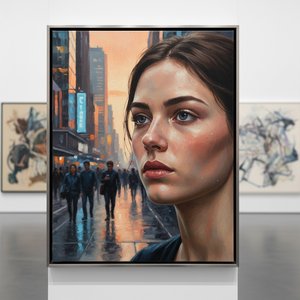
Contemporary Realism: Capturing the Soul of Modern Life Through Hyper-Realistic Art
Explore the profound depth of Contemporary Realism. Discover how hyper-realistic art captures modern emotion through technical mastery, offering collectors a sophisticated way to preserve the soul of human experience through exquisite, museum-quality oil paintings and fine art.
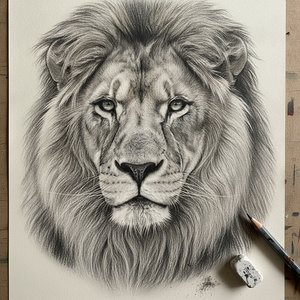
Mastering Graphite Pencil: The Ultimate Expert Guide to Achieving Depth, Texture, and Hyper-Realistic Detail
Elevate your artistry with our expert guide to mastering graphite pencil. Learn professional techniques for achieving profound depth, intricate textures, and hyper-realistic details through advanced shading, layering, and precision tool mastery designed for serious art students.
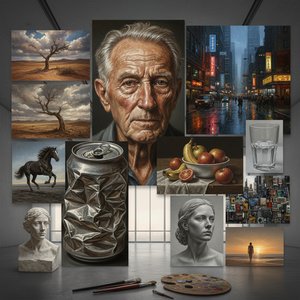
Realism Contemporan: 10 Capodopere Esențiale pentru Decorul de Lux | OriginalUniqueArt.ro
Descoperă 10 capodopere esențiale ale realismului contemporan! Explorează poveștile artiștilor, tehnicile inovatoare și impactul cultural al picturilor celebre. Găsește reproducerea perfectă pentru decorul tău pe OriginalUniqueArt.com.

Gerhard Richter: A Retrospective on Abstraction, Memory & the Photographic Source
Explore the profound world of Gerhard Richter's abstract paintings. Discover his techniques, influences, and lasting impact on contemporary art – a guide for discerning collectors.
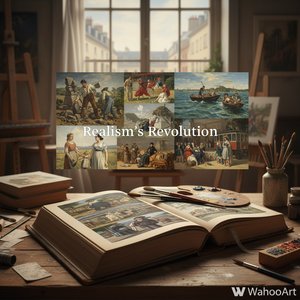
Realismul în Artă: 10 Capodopere Esențiale pentru Decorul Tău
Descoperă 10 capodopere ale realismului! Explorează poveștile din spatele picturilor Courbet, Manet și Millet. Reproduceri de artă de calitate muzeală pentru un decor interior inspirat. Vezi colecția completă pe OriginalUniqueArt.com


