

 Vezi în context
 Trimite
 Distribuie
 Detalii
 Guide
Guide

 Descarcă
 Produse similare
 Radiografie
 Diaporama
 Statistici
Sfântul Cinci Sfere
 Ulei pe pânză
- Artă de perete
- Baroque Painting
 1664
1664 100.0 x 142.0 cm
 Rijksmuseum
 Citește mai mult
Giclée / Imprimare artistică
Printuri giclée sau pe canvas de calitate muzeală, cu proces de producție rapid și opțiuni flexibile de finisare. ( Comandă pictură realizată manual Treci la imagine digitală)




P118B $10

P118H $10

P118W $10

P438Z $10

P508JH $12

P508YH $12

P805H $10

P805Z $10

P919BZ $10

P919G $10

P919XJ $10

P959ZH $10

P968JZ $12

W106C $8

W218G $10

W218JH $8

W218Y $10

W307PJ $10

W316G $10

W316PJ $8

W316Y $10

W398PJ $8

W4111J $10

W500HY $15

W500JH $15

W692G $12

W849H $8

W940BG $15

W953PJ $8




Alegeți dintre dimensiunile noastre prestabilite, care respectă proporțiile originale ale operei de artă.

Puteți introduce propriile dimensiuni pentru a se potrivi unui anumit cadru sau spațiu. Dacă dimensiunea selectată nu corespunde proporțiilor imaginii originale, vom decupa lucrarea de artă sau vom extinde imaginea cu margini oglindite sau cu o culoare uniformă. Un mockup digital va fi trimis pentru aprobarea dumneavoastră înainte de începerea producției.
Vă rugăm să rețineți că previzualizarea de pe ecran nu reflectă decuparea sau extinderea reală. Doar mockup-ul va arăta cu exactitate compoziția finală.
Deși dimensiunile personalizate sunt disponibile, vă recomandăm să selectați o dimensiune din lista predefinită pentru a păstra proporțiile originale.
Livrare în întreaga lume () în 2 săptămâni, în loc de cele 4/5 săptămâni standard. (21 Septembrie)

Livrare expres gratuită la nivel mondial

Pânză de in premium

Asigurare completă pentru transport

Garanție de rambursare a taxelor vamale

Garanția fidelității culorilor

Politica de retur în 100 de zile (doar pentru defecte)

Garanție de rambursare 100%

Reducere pentru comenzi multiple
 Opțiunea cu sticlă este disponibilă doar pentru dimensiuni de sub 110 cm

Sfântul Cinci Sfere
Giclée / Imprimare artistică
Dimensiune reproducere
-


Preț total
$ 80
Gerbrand van den Eeckhout: Rembrandt’s Shadow and the Soul of Dutch Baroque
Gerbrand van den Eeckhout (1621 – 1674) occupies a fascinating position within the annals of Dutch art history—a luminary who shone brightly alongside Rembrandt Harmenszoon van Rijn, yet ultimately carved out his own distinctive artistic identity. While frequently overshadowed by his mentor’s monumental achievements, Eeckhout achieved remarkable success as a painter, producing exquisitely detailed portraits and genre scenes that captured the subtle nuances of everyday life with unparalleled sensitivity—a testament to Rembrandt's profound influence on his technique and vision. His legacy resides not merely in imitation but in an ability to distill Rembrandt’s core principles into a uniquely expressive style.- Early Training & Rembrandt’s Influence: Eeckhout’s formative years were spent under Rembrandt’s tutelage, fostering within him a meticulous approach to observation and rendering light—a cornerstone of Rembrandt’s groundbreaking chiaroscuro method. This dedication to realism and dramatic illumination would become the defining characteristic of his oeuvre, shaping his artistic sensibilities for decades to come.
- A Distinctive Style: Unlike Rembrandt's bold contrasts, Eeckhout favored softer gradations of tone, prioritizing atmospheric perspective and capturing the delicate interplay of light and shadow. This subtle artistry allowed him to convey emotion with remarkable subtlety—a stylistic divergence that nonetheless honored Rembrandt’s foundational principles.
- Genre Scenes & Psychological Depth: Eeckhout excelled in depicting scenes from daily life – interiors, landscapes, and portraits of ordinary people – but what truly distinguished his work was its psychological depth. He possessed an uncanny ability to portray human emotions with nuanced realism, capturing the inner lives of his subjects with sensitivity and insight.
- Notable Works: Among Eeckhout’s celebrated paintings are “A Trip to Jerusalem,” a dramatic depiction of biblical narrative imbued with symbolic richness, and “Abraham Lambertz van den Tempel,” an allegorical masterpiece showcasing Rembrandt's influence on composition and color palette. These works exemplify his mastery of technique and his commitment to conveying profound emotional truths.
The Last Supper: Composition & Symbolism
“The Last Supper” by Gerbrand van den Eeckhout, completed in 1664, stands as a cornerstone of Baroque art—a visual meditation on faith, betrayal, and divine grace. Executed in oil on canvas measuring 100 x 142 cm and currently housed at the Rijksmuseum in Amsterdam, Netherlands, the painting’s composition is meticulously crafted to draw the viewer into the heart of the biblical narrative. At its center stands Jesus Christ, bathed in a radiant light that symbolizes divine illumination—a deliberate departure from Rembrandt's darker palette.Artistic Style & Influences
Eeckhout’s style is undeniably rooted in the Baroque period—characterized by its commitment to realism, theatricality, and emotional expression. However, he tempered Rembrandt's dramatic intensity with a softer touch, prioritizing tonal subtlety and capturing the nuances of human psychology. His palette leans towards earthy hues—browns, ochres, and siennas—creating a warm and dignified atmosphere that aligns perfectly with the solemn subject matter. The artist’s meticulous attention to detail—from the folds of drapery to the textures of skin—demonstrates an unwavering dedication to capturing the essence of his subjects with breathtaking accuracy.A Legacy Enduring Inspiration
“The Last Supper” remains a testament to Gerbrand van den Eeckhout's artistic genius and Rembrandt’s enduring influence on Dutch Baroque painting. Its masterful composition, evocative lighting, and profound psychological insight continue to captivate audiences today—inspiring artists and collectors alike. To experience this iconic masterpiece firsthand, visit the Rijksmuseum in Amsterdam or explore high-quality reproductions at https://OriginalUniqueArt.com – a window into the soul of an artistic era.Further Exploration
For more information on Gerbrand van den Eeckhout and his remarkable oeuvre, consult scholarly resources such as: The Last Supper by EECKHOUT, Gerbrand van den and A Trip to Jerusalem: Viewer Participation in Gerbrand van den Eeckhout’s Last Supper of 1664. Also delve into the collections of other prominent museums like Museum Mayer van den Bergh – housing masterpieces of Northern Renaissance art including Brueghel’s ‘Mad Meg’ and the stunning Mayer van den Bergh Breviary.Biografie artist
The Legacy of a Master's Protégé
In the vibrant, bustling heart of seventeenth-century Amsterdam, a period defined by unparalleled cultural and economic prosperity, the name Gerbrand van den Eeckhout emerged as a significant voice within the Dutch Golden Age. While history often casts him in the long, dramatic shadow of his mentor, the legendary Rembrandt van Rijn, to view Eeckhout merely as a student is to overlook the profound sensitivity and technical refinement he brought to the canvas. Born in 1621, Eeckhout was shaped by the very atmosphere of the Dutch Baroque, an era where light, texture, and human emotion were captured with a devotion that bordered on the divine. His journey was one of deep connection to the masters of his time, yet it was marked by a persistent effort to find a visual language that was uniquely his own.
The foundation of Eeckhout’s artistry was laid within the walls of Rembrandt’s studio. As an apprentice, he did not simply learn the mechanics of paint application; he absorbed a philosophy of observation. From Rembrandt, he inherited a reverence for the interplay of light and shadow, yet as his career matured, Eeckhout began to diverge from the heavy, dramatic chiaroscuro that defined his teacher's most famous works. Instead, he developed a preference for softer gradations of tone and a more delicate atmospheric perspective. This subtle shift allowed him to create scenes that felt less like theatrical confrontations and more like intimate, quiet moments captured in time, imbuing his subjects with a psychological depth that resonated with the burgeoning middle class of the Netherlands.
Mastery of Portraiture and Genre
Eeckhout’s oeuvre is a testament to his versatility, ranging from the solemnity of formal portraiture to the narrative charm of genre scenes. His portraits are celebrated for their remarkable realism, particularly in the way he rendered the tactile qualities of fabric, lace, and skin. He possessed an uncanny ability to translate the social standing and inner character of his sitters through understated visual cues. In works such as A Young Woman Reading, one can witness his mastery of mood; the light does not merely illuminate the subject but seems to wrap around her, creating a sense of contemplative solitude that draws the viewer into her private world.
Beyond the individual portrait, Eeckhout excelled in capturing the pulse of everyday life. His genre paintings often depicted biblical or historical narratives, yet he grounded these grand themes in the domestic reality of his era. This technique bridged the gap between the epic and the intimate, making the divine feel accessible and human. His ability to compose complex scenes with a sense of naturalistic flow remains one of his most significant achievements. Even when depicting larger groups, there is a rhythmic balance to his compositions that prevents chaos, guiding the eye through a carefully orchestrated landscape of light and shadow.
Historical Significance and Artistic Spirit
The historical importance of Gerbrand van den Eeckhout lies in his role as a bridge between the intense emotionalism of the early Baroque and the more refined, observational style that would characterize later Dutch art. He was an artist who understood the power of nuance. While he could evoke the grandeur of the past, his true strength lay in the subtle: the glint of light on a silver goblet, the soft fold of a linen sleeve, or the fleeting expression of a thought passing through a subject's mind.
Though his life ended in 1674, leaving behind a legacy that continues to fascinate historians and art lovers alike, Eeckhout remains a vital figure for understanding the evolution of Dutch painting. His work serves as a reminder that greatness is not always found in the loudest shadows, but often in the most delicate light. To study his paintings is to experience the soul of the Dutch Golden Age—a period where the boundaries between the mundane and the magnificent were beautifully blurred by the brush of a master.

gerbrand van den eeckhout
1621 - 1674 , Netherlands
Informații rapide
- Artistic Movement Or Style: Dutch Baroque
- Artists Or Movements Influenced By This Artist: ['Dutch Portraiture']
- Artists Who Influenced This Artist: ['Rembrandt']
- Date Of Birth: 1621
- Full Name: Gerbrand van den Eeckhout
- Nationality: Dutch
- Notable Artworks:
- The Astronomer
- Portrait of a Young Man
- Place Of Birth: Amsterdam, Netherlands
Articole conexe

Golden Age Reflections: Dutch Baroque Painting & Cultural Innovation
Explore the Dutch Golden Age of painting! Discover key artists like Vermeer & ter Borch, their innovative techniques, and the rich cultural context behind these Baroque masterpieces. Learn about collecting & appreciating this iconic art period.
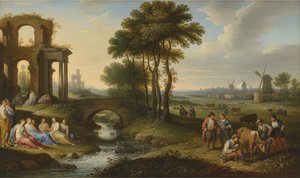
Cornelis van Poelenburch: Bridging Mannerism & the Dutch Baroque Landscape
Discover Cornelis van Poelenburch, a pivotal Dutch Baroque landscape painter bridging Mannerism & Italianate styles. Explore his life, key works, and lasting influence on 17th-century art with OriginalUniqueArt.
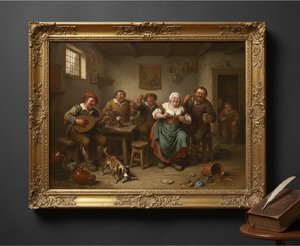
Adriaen van Ostade: A Master of Dutch Genre Painting & Social Commentary
Explore the life & work of Adriaen van Ostade, a leading Dutch Golden Age painter. Discover his realistic genre scenes, social commentary, and lasting influence on art history. Learn more at OriginalUniqueArt.

Top 10 Capodopere Baroc Olandez: Artă, Istorie și Decorațiuni Interioare de Lux
Descoperă top 10 capodopere Baroc Olandez! Rembrandt, Vermeer și alți maeștri. Explorează istoria artei, tehnicile unice și atmosfera luxoasă a picturilor baroce. Reproduceri de artă de calitate muzeală pe OriginalUniqueArt.com.

Rembrandt van Rijn: Cele Mai Frumoase 25 de Capodopere – Artă, Istorie și Decorațiuni Interioare
Descoperă cele mai frumoase 25 de picturi ale lui Rembrandt van Rijn! Explorează capodopere baroce, portrete emoționante și peisaje iconice. Reproduceri de artă de calitate muzeală pentru un design interior rafinat. Descoperă toate operele pe OriginalUniqueArt.com!
