Meniu
Text size

() ·

A painting made for you, by hand

The Prodigal Son

Reproducere pictată manual în ulei

Pictură în ulei pe pânză, pictată manual de artiștii noștri la dimensiunea și ramele dorite de dumneavoastră, pe comandă. ( Comută pe versiunea Print Comută pe Imagine Digitală)

Descriere obiect de colecție

Experience the dramatic light and emotion of Gerard van Honthorst's "The Prodigal Son." A Baroque masterpiece depicting a biblical parable, showcasing rich detail & intense storytelling.

Biografie artist

Gerard van Honthorst, maestru al luminii și umbrei în pictura barocă olandeză, este renumit pentru scene dramatice, influențate de Caravaggio, și portrete captivante. Descoperă operele sale iconice!

from ·

Chapter 1

How large should it be?

Slide to change the size; the picture on the left shows the frame at its real width. The proportions of the original are kept.

Standard
personalizat
CM
INCH

Alegeți dintre dimensiunile noastre prestabilite, care respectă proporțiile originale ale operei de artă.

lățime
înălțime

Introduceți lățimea și înălțimea necesare pentru a se potrivi ramei sau peretelui dumneavoastră. Această lucrare este pictată manual, așa că, pentru o dimensiune cu o formă diferită, artistul poate picta puțin mai mult în jurul imaginii sau poate tăia puțin din margini — dumneavoastră decideți. Vă vom trimite o simulare digitală pentru aprobare înainte de a începe pictarea. Imaginea afișată pe această pagină nu reprezintă rezultatul real — doar simularea este reprezentativă.

Chapter 2

How should it arrive?

Choose the edges of the stretched canvas

Choose your frame

Corner sample of the WhiteWrap canvas edge finish, stretched on lemn masiv bars
White lei1
Corner sample of the BlurSideWrap canvas edge finish, stretched on lemn masiv bars
Blurside lei1
Corner sample of the ExtendedWrap canvas edge finish, stretched on lemn masiv bars
Extended lei1
Corner sample of the P118B picture frame: polistiren turnat, 5 cm wide and 3 cm thick
P118B lei10
Corner sample of the P118H picture frame: polistiren turnat, 5 cm wide and 3 cm thick
P118H lei10
Corner sample of the P118W picture frame: polistiren turnat, 5 cm wide and 3 cm thick
P118W lei10
Corner sample of the P438Z picture frame: polistiren turnat, 5.5 cm wide and 3.5 cm thick
P438Z lei10
Corner sample of the P508JH picture frame: polistiren turnat, 7 cm wide and 3.5 cm thick
P508JH lei12
Corner sample of the P508YH picture frame: polistiren turnat, 7 cm wide and 3.5 cm thick
P508YH lei12
Corner sample of the P805H picture frame: polistiren turnat, 5 cm wide and 3.5 cm thick
P805H lei10
Corner sample of the P805Z picture frame: polistiren turnat, 5 cm wide and 3.5 cm thick
P805Z lei10
Corner sample of the P919BZ picture frame: polistiren turnat, 7 cm wide and 3.5 cm thick
P919BZ lei10
Corner sample of the P919G picture frame: polistiren turnat, 7 cm wide and 3.5 cm thick
P919G lei10
Corner sample of the P919XJ picture frame: polistiren turnat, 7 cm wide and 3.5 cm thick
P919XJ lei10
Corner sample of the P959ZH picture frame: polistiren turnat, 5 cm wide and 3 cm thick
P959ZH lei10
Corner sample of the P968JZ picture frame: polistiren turnat, 6 cm wide and 4 cm thick
P968JZ lei12
Corner sample of the W106C picture frame: lemn masiv, 5 cm wide and 3 cm thick
W106C lei8
Corner sample of the W218G picture frame: lemn masiv, 5 cm wide and 3 cm thick
W218G lei10
Corner sample of the W218JH picture frame: lemn masiv, 5 cm wide and 3 cm thick
W218JH lei8
Corner sample of the W218Y picture frame: lemn masiv, 5 cm wide and 3 cm thick
W218Y lei10
Corner sample of the W307PJ picture frame: lemn masiv, 6 cm wide and 3 cm thick
W307PJ lei10
Corner sample of the W316G picture frame: lemn masiv, 6 cm wide and 3 cm thick
W316G lei10
Corner sample of the W316PJ picture frame: lemn masiv, 6 cm wide and 3 cm thick
W316PJ lei8
Corner sample of the W316Y picture frame: lemn masiv, 6 cm wide and 3 cm thick
W316Y lei10
Corner sample of the W398PJ picture frame: lemn masiv, 5 cm wide and 3 cm thick
W398PJ lei8
Corner sample of the W4111J picture frame: lemn masiv, 6.5 cm wide and 3.5 cm thick
W4111J lei10
Corner sample of the W500HY picture frame: lemn masiv, 7 cm wide and 5 cm thick
W500HY lei15
Corner sample of the W500JH picture frame: lemn masiv, 7 cm wide and 5 cm thick
W500JH lei15
Corner sample of the W692G picture frame: lemn masiv, 8 cm wide and 4 cm thick
W692G lei12
Corner sample of the W849H picture frame: lemn masiv, 5 cm wide and 3 cm thick
W849H lei8
Corner sample of the W940BG picture frame: lemn masiv, 7.5 cm wide and 4.5 cm thick
W940BG lei15
Corner sample of the W953PJ picture frame: lemn masiv, 6 cm wide and 3.5 cm thick
W953PJ lei8
Corner sample of the H24-GOLD picture frame: lemn sculptat cu gesso, 10 cm wide and 6 cm thick
H24-GOLD lei30
Corner sample of the H24-SILVER picture frame: lemn sculptat cu gesso, 10 cm wide and 6 cm thick
H24-SILVER lei30
Corner sample of the H36-GOLD picture frame: lemn sculptat cu gesso, 15 cm wide and 6.5 cm thick
H36-GOLD lei45
Corner sample of the H36-SILVER picture frame: lemn sculptat cu gesso, 15 cm wide and 6.5 cm thick
H36-SILVER lei45

Moulding: . Overall size with the frame: .

Chapter 3

Who paints it, and should anything change?

Examples of what can be changed: Replace face with customer photo; Add pet (e.g., replace cat with dog); Include hidden message in background; Change background landscape or elements.
After order, OriginalUniqueArt.com team will email client for instructions and provide a mockup preview

Livrare în întreaga lume () în 3-4 săptămâni, în loc de cele 5 săptămâni standard. (29 Octombrie). Fără compromisuri în ceea ce privește calitatea.

Chapter 4

The finishing touches

A nameplate, as in a museum?

Detalii plăcuță din bronz gravat

This elegant plaque features the artist's name and the title of the artwork, finely engraved for a timeless presentation.

It is made from bronze with a refined, elegant finish. The text is precisely laser-engraved for a sharp and permanent result. Measuring 9x2 cm, the plaque is compact yet easy to read. It's built to be durable and scratch-resistant, offering a professional, museum-quality look. Mounting is simple thanks to the included adhesive backing.

Detalii plăcuță din acril transparent

The plaque includes essential engraved details such as the artist's name, the title of the artwork, the date it was created, the type of media used-like oil on canvas or watercolor-a brief description of the piece, and a QR code that links to the complete artwork information.

It is crafted from clear acrylic, offering a sleek, modern appearance. The text is UV-engraved in black to ensure strong visual contrast. With a size of 10x15 cm, it ensures optimal readability. It comes equipped with two metal hooks for secure wall mounting. The plaque is designed to be weather-resistant, making it suitable for various environments, and it includes interactive features that work seamlessly with smartphone scanning.

Detalii placă din acril negru

This elegant plaque includes engraved information such as the artist's name, the title of the artwork, the date it was created, the type of media used (like oil on canvas or watercolor), a short description of the artwork, and a QR code for quick access to more information.

The plaque itself is made from refined black acrylic with a premium finish. The text is laser-engraved in white for high contrast and readability. Its size is 10x15 cm, designed to be easy to read. It comes with two metal hooks for professional mounting. The design is sleek and fits any interior style. It is also weather-resistant and durable, with built-in digital integration for mobile compatibility.

A protective varnish?

When do you need it?

Chapter 5

Your painting, as you ordered it

The Prodigal Son

Tehnică de reproducere

Dimensiune reproducere

-

Selecție de artiști de elită

Mai multe detalii, rafinament și timp suplimentar de execuție

-

Ramă pentru reproducere artistică

-

-

Pentru opere de artă sau reproduceri care depășesc 105 cm (aproximativ 41 de inch) pe oricare dintre laturi, cadrul va fi livrat demontat, sub formă de kit. Această metodă asigură o livrare sigură și previne deteriorarea în timpul transportului.

Este necesară asamblarea profesională – acest produs nu este de tip DIY (de făcut singur).
Kitul trebuie asamblat, iar pânza întinsă, de către un legător de cadre experimentat, utilizând adeziv pentru lemn (neinclus în colet), o cheie pentru întinderea pânzei și cleme pentru a menține barele la unghi drept în timp ce adezivul se usucă. Asamblarea incorectă sau tensiunea neuniformă a pânzei pot deteriora permanent opera de artă și nu sunt acoperite de garanția noastră.

  • Toate barele din lemn masiv sunt incluse, tăiate cu precizie la dimensiunea necesară.

  • Asamblat cu șuruburile incluse, plus adeziv pentru lemn pentru îmbinările de colț, care nu este furnizat și trebuie achiziționat de către tâmplarul dumneavoastră.

  • Sunt necesare unelte profesionale care nu sunt incluse: o șipte de întindere a pânzei (tensionator) și cleme pentru a menține barele la unghi drept în timp ce adezivul se usucă.

Important:
Îmbinările de colț necesită adeziv pentru lemn, barele trebuie fixate cu clești de strângere până când adezivul este complet uscat, iar întinderea pânzei pe cadrul asamblat necesită un clește pentru întins pânza. Niciunul dintre aceste elemente nu este inclus în kit. Vă rugăm să consultați un încadrator profesionist cu experiență înainte de a comanda această dimensiune.

Etichetă de prezentare

-

-

Lac de protecție

Lac lucios (intensifică nuanțele și oferă protecție împotriva luminii și a umidității)

-

Personalizează opera mea de artă

Exemple de elemente ce pot fi personalizate: Înlocuirea feței cu fotografia clientului; Adăugarea unui animal de companie (de exemplu, înlocuirea unei pisici cu un câine); Includerea unui mesaj ascuns în fundal; Modificarea peisajului sau a elementelor din fundal.

-

Livrare rapidă

Livrare la nivel mondial () în 3-4 săptămâni, în loc de cele 5 săptămâni standard. (29 Octombrie). Fără compromisuri când vine vorba de calitate.

-

Livrare rapidă

Livrare la nivel mondial () în 5 săptămâni. (5 Noiembrie).

Inclus

Preț total calculat

lei 1395

Preț total lei 1395

Opțiunea cu sticlă este disponibilă doar pentru dimensiuni de sub 110 cm

Included with every order

  • Livrare expres gratuită la nivel mondial
  • Pânză de in de înaltă calitate
  • Asigurare completă pentru transport
  • Garanție de rambursare a taxelor vamale
  • Garanția fidelității culorilor
  • Politica de retur în 100 de zile (doar pentru defecte de fabricație)
  • Garanție de rambursare 100%
  • Ofertă pentru comenzi multiple

A Dramatic Narrative of Redemption

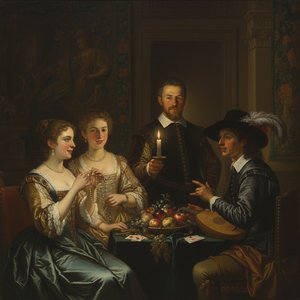
Gerard van Honthorst’s “The Prodigal Son,” painted in 1622, isn't merely a depiction of biblical scripture; it’s a visceral exploration of familial love, repentance, and the transformative power of forgiveness. Captured with his signature mastery of light and shadow – earning him the evocative moniker "Gherardo delle Notti" (Gerard of the Nights) – Honthorst transports us to a scene brimming with emotional intensity. The painting immediately commands attention through its dramatic composition: a young man, clearly the prodigal son, stands in stark contrast to the somber, almost claustrophobic interior, his posture conveying both shame and burgeoning hope. The figures surrounding him—a comforting woman, a watchful old matchmaker, and the distant, yet undeniably loving, father – each contribute to a complex tapestry of relationships and unspoken emotions.

The Prodigal Son by Gerard van Honthorst

Baroque Drama and the Art of Chiaroscuro

Executed in the heart of the Baroque period, “The Prodigal Son” exemplifies the movement’s penchant for theatricality and emotional depth. Honthorst was deeply influenced by Caravaggio's revolutionary use of *tenebrism*, a technique that employs stark contrasts between light and dark to heighten drama and focus attention on key elements within the scene. Notice how the central figure is bathed in a warm, almost ethereal glow, while the background remains shrouded in shadow – this deliberate manipulation of light not only creates a sense of volume and depth but also symbolizes the son’s journey from darkness into enlightenment. The meticulous rendering of textures—the rough fabric of the man's clothing, the polished surface of the table, the folds of the woman’s garments—further enhances the painting’s realism and immersive quality.

  • Technique: Oil on canvas – a medium favored for its rich colors and ability to capture subtle nuances of light.
  • Style: Baroque – characterized by dramatic lighting, dynamic compositions, and emotional intensity.
  • Composition: A carefully orchestrated arrangement of figures designed to evoke empathy and contemplation.

A Symbolism Rich in Meaning

Beyond its narrative power, “The Prodigal Son” is laden with symbolic meaning. The dark room itself represents the son’s past life of indulgence and despair, while the table laden with fruit and dishes symbolizes abundance—a stark contrast to his current poverty. The old matchmaker, a figure often associated with temptation and moral decay, observes the scene with a knowing gaze, perhaps representing the societal judgment faced by the returning prodigal. The woman offering comfort embodies compassion and forgiveness, highlighting the father’s unwavering love despite his son's transgressions. The gesture of the father embracing his son is profoundly moving—a visual representation of unconditional acceptance and the restoration of familial bonds.

A Legacy of Artistic Influence

“The Prodigal Son” stands as a testament to Gerard van Honthorst’s artistic genius and his profound understanding of human emotion. His masterful use of light, shadow, and composition continues to resonate with viewers today, reminding us of the enduring themes of repentance, forgiveness, and the transformative power of love. Reproductions of this iconic work are available through OriginalUniqueArt.com, offering art enthusiasts a unique opportunity to own a piece of history and experience the emotional depth of this Baroque masterpiece firsthand. For further insights into Honthorst’s life and work, we encourage you to explore resources like Wikipedia and the Gerard Van Honthorst website.

Întrebări și răspunsuri

Unde pot descărca "The Prodigal Son" de Gerard van Honthorst?

Imaginea pentru "The Prodigal Son" de Gerard van Honthorst poate fi descărcată de pe pagina dedicată lucrării, Descărcare: descărcare imagine digitală de înaltă rezoluție.

"The Prodigal Son" de Gerard van Honthorst face parte din domeniul public?

În ceea ce privește drepturile de autor, "The Prodigal Son" este în domeniul public – drepturile de autor au expirat.

Ce subiect și ce atmosferă surprinde "The Prodigal Son" de Gerard van Honthorst?

„The Prodigal Son” surprinde prodigal son, religious, family, drama, light shadow, caravaggio, temptation, forgiveness, având o atmosferă Dramatic.

More about this painting

Previzualizare Previzualizare AR Comută pe versiunea Print Comută pe Imagine Digitală Trimite prin felicitare
Detalii despre lucrare Ghid Adaugă la favorite Descarcă imaginea Produse similare Radiografie Galerie foto Q&A Statistici

In numbers

  • 1622the year it was painted
  • 29frames to choose from
  • standard sizes, in its own proportions
  • 5weeks to paint and deliver it
Gerard van Honthorst

Gerard van Honthorst

1590 - 1656, Olanda

Quick facts about Gerard van Honthorst

  • Artistic Movement Or Style: Baroc, Caravagism
  • Artists Or Movements Influenced By This Artist: ['Utrecht Caravaggisti']
  • Artists Who Influenced This Artist: ['Caravaggio']
  • Date Of Birth: 1592
  • Date Of Death: 1656
  • Full Name: Gerard van Honthorst
  • Nationality: Olandez
  • Notable Artworks:
    • Christ Înaintea Preotului
    • Prăznuirea Cinasului
  • Place Of Birth: Utrecht, Olanda

Biografie artist

A Master of Light and Shadow: The Life and Art of Gerard van Honthorst

Gerard van Honthorst emerged from Utrecht in 1592, a pivotal figure poised to illuminate the Dutch Golden Age with his dramatic artistry. Initially guided by his father, a decorative painter, young Gerard’s talent blossomed under the tutelage of Abraham Bloemaert, establishing a solid foundation in draftsmanship and composition. However, it was a transformative journey to Rome that irrevocably altered the course of his artistic development. There, amidst the fervent energy of the Italian Baroque, he encountered the groundbreaking work of Caravaggio – an encounter that would define his signature style and earn him the evocative nickname “Gherardo delle Notti,” or Gerard of the Nights. The dramatic use of tenebrism, a technique employing stark contrasts between light and dark, became Honthorst’s hallmark, imbuing his canvases with a palpable sense of drama and emotional intensity. He wasn't merely imitating Caravaggio; he was translating the Italian master’s innovations into a distinctly Dutch sensibility, focusing on intimate scenes illuminated by artificial light sources – candles, lamps, and fires – creating an atmosphere both realistic and deeply theatrical. This mastery over light wasn’t simply technical skill; it was a means of revealing character, of drawing the viewer into the emotional core of each scene.

From Roman Acclaim to Dutch Mastery

Honthorst's time in Rome was marked by considerable success and patronage. He found favor amongst the city’s elite, including Vincenzo Giustiniani, for whom he created the powerful “Christ Before the High Priest,” a work that exemplifies his masterful command of light and shadow. This painting, now residing in London’s National Gallery, showcases not only his technical skill but also his ability to convey profound psychological depth within his figures. The scene depicts Christ calmly awaiting judgment before the high priest, bathed in a dramatic spotlight while the surrounding figures are plunged into darkness – a masterful use of light that emphasizes Christ's divinity and vulnerability. He further solidified his reputation by working for Cosimo II de’ Medici, Grand Duke of Tuscany, demonstrating an adaptability and versatility that would serve him well throughout his career. Honthorst’s ability to capture not just physical likeness but also the character and social standing of his sitters made him highly sought after by wealthy merchants, nobles, and even royalty. He became president of the Guild of St. Luke in Utrecht in 1623, a testament to his growing influence within the artistic community. This period saw a flourishing of commissions, allowing Honthorst to refine his style and establish a distinctive voice within Dutch painting.

The Utrecht Caravaggisti: A Distinctly Dutch Interpretation

Honthorst was a key figure in the *Utrecht Caravaggisti* movement – a group of Dutch painters who embraced Caravaggio’s dramatic realism and tenebrism. Alongside artists like Hendrick ter Brugghen and Dirck van Baburen, he helped to establish a distinctly Dutch interpretation of Italian Baroque style. The Utrecht Caravaggisti didn't simply copy Caravaggio; they adapted his techniques to suit the Dutch aesthetic, often emphasizing genre scenes – everyday life, bustling marketplaces, and lively tavern gatherings – illuminated by candlelight or fireplace light. This created a unique atmosphere, blending the intensity of Italian drama with the pragmatic realism of the Netherlands. Their work reflected a fascination with human emotion, moral dilemmas, and the complexities of social interaction. Honthorst’s emphasis on these themes, combined with his masterful use of light and shadow, cemented his place as one of the most important artists of the movement.

A Courtly Artist: Commissions and Collaborations

The reach of Honthorst’s talent extended beyond the Netherlands. His work attracted the attention of Sir Dudley Carleton, who enthusiastically recommended him to prominent English aristocrats like the Earl of Arundel and Lord Dorchester. This led to commissions from Queen Elizabeth of Bohemia, sister of Charles I, who employed him as both a painter and drawing master for her children. These royal connections culminated in significant works such as the allegorical depiction of Charles and Henrietta Maria as Diana and Apollo, a grand composition that showcased Honthorst’s ability to create complex narratives and dramatic scenes. He also worked on portraits of members of the English court, capturing their personalities with remarkable skill and insight. Furthermore, Honthorst's willingness to collaborate with other artists – notably Peter Paul Rubens during a visit to Utrecht – speaks to his open-mindedness and artistic generosity. These collaborations weren’t simply about sharing workload; they were intellectual exchanges that enriched the artistic landscape.

Legacy and the Enduring Power of Light

Gerard van Honthorst’s influence resonated far beyond his lifetime. He was a pivotal figure in Dutch art history, bridging the gap between Italian Baroque innovation and the developing national style. His paintings continue to captivate audiences today, not only for their technical brilliance but also for their emotional depth and dramatic power. His ability to seamlessly blend Italian influences with Dutch sensibilities ensured his lasting legacy, inspiring generations of artists who followed. He died in Utrecht in 1656, leaving behind a body of work that continues to illuminate the artistic landscape and remind us of the profound beauty and evocative potential of light and shadow. His works are a testament to his skill as a painter and a keen observer of human nature – a true master of his craft.

Informații rapide

  • Title: The Prodigal Son
  • Location: Alte Pinakothek, Munich
  • Dimensions: 130 x 196 cm
  • Subject or theme: Biblical parable
  • Year: 1622
  • Influences: Caravaggio

Test de cunoștințe despre artă

Fiecare întrebare are un singur răspuns corect.

Întrebare 1:
What artistic style is most prominently displayed in "The Prodigal Son"?
Întrebare 2:
According to the description, what is a key technique used in the painting's composition?
Întrebare 3:
In what year was "The Prodigal Son" painted?
Întrebare 4:
Who is the artist who created "The Prodigal Son"?
Întrebare 5:
What does the dark room in the painting symbolize?
Explorați opere de artă organizate pe teme, stiluri și caracteristici.