

 Vezi în context
 Trimite
 Distribuie
 Detalii
 Ghidul

 Descarcă
 Produse similare
 Radiografie
 Diaporama
 Statistici
Fecioara și Pruncul
 Acrilic pe pânză
- Artă murală
- Pictură flamandă timpurie
 1523
1523 16.0 x 11.0 cm
 Muzeul Metropolitan de Artă
 Citește mai mult
Giclée / Imprimare artistică
Printuri giclée sau pe canvas de calitate muzeală, cu proces de producție rapid și opțiuni flexibile de finisare. ( Comandă pictură realizată manual Treci la imagine digitală)




P118B lei10

P118H lei10

P118W lei10

P438Z lei10

P508JH lei12

P508YH lei12

P805H lei10

P805Z lei10

P919BZ lei10

P919G lei10

P919XJ lei10

P959ZH lei10

P968JZ lei12

W106C lei8

W218G lei10

W218JH lei8

W218Y lei10

W307PJ lei10

W316G lei10

W316PJ lei8

W316Y lei10

W398PJ lei8

W4111J lei10

W500HY lei15

W500JH lei15

W692G lei12

W849H lei8

W940BG lei15

W953PJ lei8




Alegeți dintre dimensiunile noastre prestabilite, care respectă proporțiile originale ale operei de artă.

Introduceți lățimea și înălțimea de care aveți nevoie, pentru a se potrivi ramei sau peretelui dumneavoastră. O printare poate fi doar tăiată, niciodată extinsă dincolo de dimensiunea imaginii originale, astfel încât o dimensiune cu o formă diferită va pierde o parte din imagine. Vă trimitem o simulare digitală pentru aprobare înainte de a imprima orice. Imaginea afișată pe această pagină nu prezintă tăierea reală — doar simularea arată acest lucru.
Livrare în întreaga lume () în 2 săptămâni, în loc de cele 4/5 săptămâni standard. (21 Octombrie)

Livrare expres gratuită la nivel mondial

Pânză de in premium

Asigurare completă pentru transport

Garanție de rambursare a taxelor vamale

Garanția fidelității culorilor

Politica de retur în 100 de zile (doar pentru defecte)

Garanție de rambursare 100%

Reducere pentru comenzi multiple
 Opțiunea cu sticlă este disponibilă doar pentru dimensiuni de sub 110 cm

Fecioara și Pruncul
Giclée / Imprimare artistică
Dimensiune reproducere
-


Preț total
lei 368
A Divine Intimacy: The Soul of Gerard David’s Virgin and Child
In the quiet corners of art history, few works capture the profound tenderness of the human spirit quite like Gerard David’s Virgin and Child. Created in 1523, this exquisite panel painting serves as a luminous window into the heart of Early Netherlandish devotion. At first glance, the viewer is drawn into an incredibly intimate encounter; the composition is tightly framed, stripping away the distractions of the outside world to focus entirely on the sacred bond between Mary and her infant son. There is a palpable sense of stillness, a moment frozen in time where the divine meets the deeply human. The dark, indistinct blue background acts as a velvet void, pushing the figures forward and creating an atmosphere of deep, meditative solitude that invites the observer to linger in silent contemplation.
The mastery of David’s technique is nothing short of breathtaking, showcasing the pinnacle of Flemish oil painting. Through the meticulous layering of pigments on a wooden panel, the artist achieves a texture that feels almost tactile. One can trace the soft, velvety folds of Mary’s robes and the delicate, lifelike musculature of the Christ child with remarkable clarity. David was a virtuoso of light; he employed a diffused, unseen light source that bathes the faces of the holy figures in a gentle, ethereal glow. This subtle illumination does more than just define form—it breathes life into the skin tones and highlights the intricate, sculpted detail of Mary’s hair, lending the piece a sense of three-dimensional presence that remains captivating centuries later.
Symbolism and the Legacy of Flemish Devotion
Beyond its technical brilliance, the painting is a rich tapestry of symbolic meaning, designed to evoke piety and emotional resonance. Every gesture carries weight; the way the Virgin holds the child is not merely an act of maternal care, but a representation of the protection of the sacred. The organic, flowing curves of the figures suggest a natural, divine harmony, while the precision of the lines reflects the disciplined faith of the era. For the contemporary collector or interior designer, this piece offers more than just aesthetic beauty; it provides a focal point of serenity and grace. It embodies the transition from the rigid structures of the late Middle Ages to the burgeoning humanism of the Renaissance, where religious subjects were rendered with an unprecedented level of emotional accessibility.
To possess a reproduction of such a masterpiece is to bring a piece of Bruges’ golden age into the modern home. Whether placed in a curated gallery setting or used as a soulful accent in a sophisticated living space, the Virgin and Child radiates an aura of timelessness. It serves as a reminder of the enduring power of art to bridge the gap between the earthly and the divine, offering a sanctuary of peace and beauty in an ever-changing world.
Întrebări și răspunsuri
Care este atmosfera generală a operei "Fecioara și Pruncul" de Gerard David?
Ambianta generală a operei "Fecioara și Pruncul" de Gerard David este Serenă. Această stare descrie atmosfera generală a lucrării.
Este "Fecioara și Pruncul" una dintre cele mai populare opere ale lui Gerard David?
"Fecioara și Pruncul" de Gerard David are un nivel de popularitate Iconic. Această clasificare reflectă cât de larg este recunoscută lucrarea.
Unde se situează "Fecioara și Pruncul" în rândul subiectelor recurente ale lui Gerard David?
"Fecioara și Pruncul" înfățișează fecioara maria, pruncul iisus, dragoste familială, artă religioasă, pictură medievală, artist din bruges, scenă intimă, panou devoțional, în timp ce temele recurente ale lui Gerard David sunt realismul lui van eyck, devotament și credință medievală, cultura negustorilor din bruges, artă de panou devoțional, măiestria culorii lui david, stilul primului renascent, tema iconică mamă-copil, serie de producție de atelier. Compararea celor două relevă modul în care această lucrare se raportează la subiectele obișnuite ale artistului.
Biografie artist
A Master of Flemish Light: The Enigmatic World of Gerard David
Gerard David, a name that resonates with the brilliance of early Netherlandish painting, remains an artist shrouded in intriguing mystery. Born around 1460 in Oudewater, Netherlands, his life story is pieced together from fragmented archival records and the eloquent testimony of his art. Unlike some contemporaries whose lives are richly documented, David’s personal narrative is sparse, allowing his paintings to speak volumes where biographical details fall silent. What is known suggests a remarkably successful career, likely managing workshops in both Antwerp and Bruges – centers of artistic innovation during the Renaissance. His reputation experienced an ebb in the 17th century, only to be gloriously resurrected by 19th-century art historians who recognized his unique contributions to the Northern Renaissance. He was inducted as a free master into the Corporation of Imagemakers and Saddlers in Bruges in 1484, marking a pivotal moment in his ascent. His later involvement with the Antwerp guild in 1515 further solidifies his standing within the artistic community.Formative Influences and Artistic Development
David’s artistic journey began under influences that shaped the very foundation of his style. Early works reveal a clear debt to painters like Jacob Janszoon, Dieric Bouts, and Geertgen tot Sint Jans – masters who instilled in him a meticulous attention to detail and a sensitivity to religious narrative. It is believed he spent time in Haarlem absorbing these lessons before relocating to Bruges, a vibrant hub of artistic exchange attracting talent from across Europe. Here, David encountered the masterpieces of Jan van Eyck, Rogier van der Weyden, and Hans Memling, absorbing their techniques while forging his own distinct path. He didn’t merely imitate; he synthesized these influences into something uniquely his own – a style characterized by luminous color, serene compositions, and an increasingly sophisticated understanding of landscape. His early paintings demonstrate this evolution, moving from the doll-like figures reminiscent of Haarlem traditions towards more sculptural forms grounded in their environment. This transition is visible in works like *Christ Nailed to the Cross*, where the influence of Bouts’ spatial construction blends with David’s emerging coloristic sensibility. The meticulous detail and realistic portrayal of textures, a hallmark of Van Eyck's work, are subtly incorporated into David’s compositions, while the emotional intensity found in Rogier van der Weyden’s religious scenes finds an echo in his own depictions of biblical narratives.Innovation in Landscape and Religious Narrative
Gerard David’s artistic signature lies in his innovative approach to both landscape and religious subject matter. He wasn't simply depicting backgrounds; he was creating immersive environments that enhanced the emotional resonance of his scenes. His landscapes are not merely decorative, but integral components of the narrative, often imbued with symbolic meaning. This fascination with natural settings – dense forests, rolling hills, expansive skies – set him apart from many of his contemporaries and foreshadowed the development of landscape painting as an independent genre. Consider *View in a Forest*, outer wing of a triptych; it’s not simply a backdrop but a world unto itself, rendered with meticulous detail and atmospheric perspective. Within his religious works, David demonstrated a remarkable ability to convey both profound spirituality and human emotion. Paintings like *The Marriage of St. Catherine* exemplify this skill. The scene is rendered with exquisite detail, yet it's the subtle expressions on the figures’ faces – their piety, contemplation, or gentle joy – that truly captivate the viewer. He possessed a gift for imbuing his sacred subjects with a sense of quiet dignity and relatable humanity. The *Triptych of the Madonna Enthroned and Saints* in Genoa showcases this mastery, presenting a harmonious composition filled with vibrant color and delicate detail. His *Virgin Among the Virgins*, donated to the Carmelite nuns of Sion at Bruges, is another testament to his skill, featuring a self-portrait within the painting itself – a rare and intimate gesture from an artist of his time. This blending of realism with symbolic representation—a hallmark of Northern Renaissance art—is what truly distinguishes David’s work.Major Achievements and Notable Works
David's career spanned several decades, during which he produced a remarkably diverse body of work. His most celebrated achievements include the *Judgment of Cambyses*, a monumental altarpiece showcasing his mastery of color and composition; the *Triptych of the Madonna Enthroned*, a complex and richly detailed depiction of the Virgin Mary; and the *Annunciation*, a serene and elegant portrayal of the angel Gabriel announcing to Mary that she will conceive Jesus. These works, along with numerous smaller panels and devotional images, demonstrate his versatility as an artist and his ability to adapt to the diverse needs of his patrons. The *Virgin Among Virgins* is particularly noteworthy for its innovative use of perspective and its intimate depiction of the Virgin Mary surrounded by her attendants. His later works often exhibit a greater sense of serenity and introspection, reflecting perhaps a shift in his artistic focus as he approached the end of his life. The *Lamentation over the Body of Christ*, a powerful and emotionally charged scene depicting the mourning of Jesus’s death, is considered one of his most moving achievements.Legacy and Enduring Influence
Though his fame waned for a period after his death in 1523, Gerard David’s influence on subsequent generations of artists is undeniable. His innovative use of color, his masterful handling of light and shadow, and his pioneering approach to landscape all left an indelible mark on the development of Flemish painting. He paved the way for artists who would further explore the expressive potential of natural settings, such as Jacob Patinir and Jacob van Ruisdael.- A Bridge Between Traditions: David successfully bridged the gap between the late medieval tradition and the emerging Renaissance style.
- Influence on Landscape Painting: His detailed and atmospheric landscapes foreshadowed the development of landscape as a distinct genre.
- Masterful Colorist: He was renowned for his vibrant palette and skillful use of color to create emotional impact.
Exploring Further
- OriginalUniqueArt.com: Discover an extensive collection of Gerard David’s paintings, including *The Adoration of the Magi*.
- View in a Forest: Explore this stunning Northern Renaissance landscape painting.
- The Early Netherlandish Art Movement: Delve deeper into the artistic context of David’s work.

Gerard David
1450 - 1523 , Olanda
Informații rapide
- Artistic Movement Or Style: Pictura flamandă timpurie
- Artists Or Movements Influenced By This Artist:
- Jan van Eyck
- Rogier van der Weyden
- Artists Who Influenced This Artist:
- Jacob Janszoon
- Dieric Bouts
- Date Of Birth: c. 1460
- Date Of Death: 1523
- Full Name: Gerard David
- Nationality: Netherlandez
- Notable Artworks:
- Nunta la Cana
- Madonna cu îngerii
- Place Of Birth: Oudewater, Olanda
Articole conexe

Oil on Canvas: A Historical & Technical Exploration of a Timeless Artistic Medium
Explore the rich history & enduring techniques of oil painting on canvas. Discover the science behind its longevity, conservation practices, and contemporary relevance. Expert insights for art enthusiasts.

The Enduring Power of Painting: A Historical & Contemporary Exploration of Form and Emotion
Explore the rich history & enduring techniques of oil painting with OriginalUniqueArt. Discover masterpieces, learn about art collecting, and find authentic handmade reproductions crafted by skilled artists.
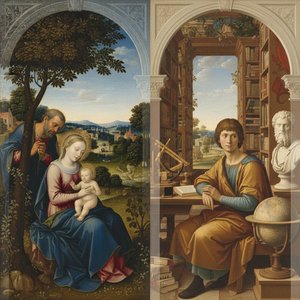
Gerard David: Bridging Late Medieval Tradition with Early Renaissance Humanism
Explore the captivating world of Gerard David, a pivotal figure bridging late medieval artistry with the Early Renaissance. Discover his innovative techniques, religious masterpieces, and enduring legacy – a must-read for discerning art collectors.

Moștenirea Durabilă a Picturii în Ulei: Tehnică, Istorie și Practică Contemporană
Descoperă istoria fascinantă și tehnicile esențiale ale picturii în ulei. Ghid complet pentru artiști, de la materiale până la creații contemporane. Îmbunătățește-ți abilitățile artistice!

The Enduring Legacy of Oil on Canvas: Technique, History & Aesthetic Impact
Explore the rich history & techniques of oil painting – from Renaissance masters to Impressionism. Discover pigments, layering methods, and why this timeless medium endures. Expert insights for artists & art enthusiasts.


