
 Vezi în context
 Trimite prin felicitare
 Distribuie
 Detalii

 Descarcă imaginea
 Produse similare
 Radiografie
 Galerie foto
The Dance
 Oil On Canvas
- WallArt
- Impressionism
 1910
1910 50.0 x 35.0 cm
 Muzeul de Artă Americană Smithsonian
 Citește mai mult
Reproducere manuală în ulei
Pictură în ulei pe pânză, pictată manual, la dimensiunea și ramele dorite de dumneavoastră, realizată la comandă de artiștii noștri. ( Comandă versiunea tipărită Comută la imagine)




P118B $10

P118H $10

P118W $10

P438Z $10

P508JH $12

P508YH $12

P805H $10

P805Z $10

P919BZ $10

P919G $10

P919XJ $10

P959ZH $10

P968JZ $12

W106C $8

W218G $10

W218JH $8

W218Y $10

W307PJ $10

W316G $10

W316PJ $8

W316Y $10

W398PJ $8

W4111J $10

W500HY $15

W500JH $15

W692G $12

W849H $8

W940BG $15

W953PJ $8




Alegeți dintre dimensiunile noastre prestabilite, care respectă proporțiile originale ale operei de artă.

Puteți introduce propriile dimensiuni pentru a se potrivi unui anumit cadru sau spațiu. Dacă dimensiunea selectată nu corespunde proporțiilor imaginii originale, vom decupa opera de artă sau vom extinde pictura cu elemente suplimentare pictate manual. O simulare digitală vă va fi trimisă pentru aprobare înainte de începerea producției.
Vă rugăm să rețineți că previzualizarea de pe ecran nu reflectă decuparea sau extinderea reală. Doar macheta va arăta cu exactitate compoziția finală.
Deși sunt disponibile dimensiuni personalizate, vă recomandăm să selectați o dimensiune din lista predefinită pentru a păstra proporțiile originale.
După plasarea comenzii, echipa OriginalUniqueArt.com va contacta clientul prin e-mail pentru instrucțiuni și îi va furniza o previzualizare a machetei
Livrare în întreaga lume () în 3-4 săptămâni, în loc de cele 5 săptămâni standard. (6 August). Fără compromisuri în ceea ce privește calitatea.

Livrare expres gratuită la nivel mondial

Pânză de in premium

Asigurare completă pentru transport

Garanție de rambursare a taxelor vamale

Garanția fidelității culorilor

Politica de retur în 60 de zile (doar pentru defecte)

Garanție de rambursare 100%

Reducere pentru comenzi multiple
 Opțiunea cu sticlă este disponibilă doar pentru dimensiuni sub 110 cm

The Dance
Tip de reproducere
Dimensiuni reproducere
-


Preț total
$ 300
Descriere operă
A Life Forged in Stone: The World of George Grey Barnard
George Grey Barnard, born in Bellefonte, Pennsylvania, in 1863, was an American sculptor whose career unfolded against a backdrop of shifting artistic tides and burgeoning national identity. His life story is one of relentless pursuit – a journey from the rural landscapes of his youth to the hallowed halls of Parisian art academies, and ultimately, to establishing himself as a pivotal figure in American sculpture. The son of a Presbyterian minister, Barnard’s early years were marked by frequent relocation across Illinois, yet it was within this itinerant existence that an artistic sensibility began to blossom. He initially honed his skills at the Art Institute of Chicago under Leonard Volk, demonstrating an innate talent for modeling and form – a foundation upon which he would build a remarkable career. This initial spark propelled him towards Paris in 1883, where he immersed himself in the rigorous training of the École Nationale Supérieure des Beaux-Arts, absorbing the influences of Impressionism and forging his own distinctive artistic voice.The Artwork: “The Dance”
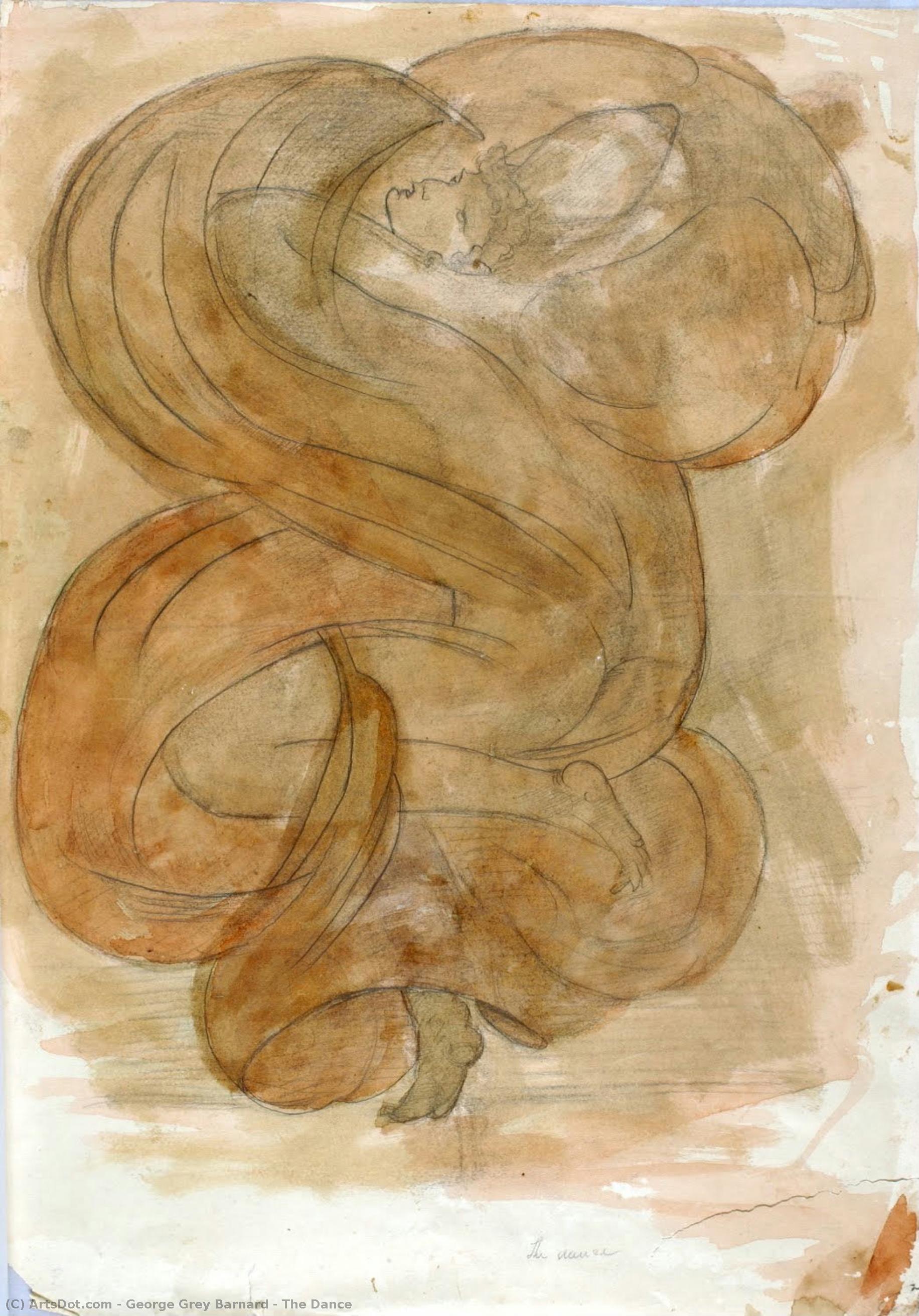
“The Dance,” created between 1898 and 1910, exemplifies Barnard’s masterful command of watercolor and oil wash on paper. Measuring 50 x 35 cm, the painting depicts a woman engaged in movement—a captivating portrayal of grace and dynamism. The artist skillfully captures the essence of dance through careful observation and expressive brushwork. Note the fluid lines delineating the dancer's form, conveying a sense of effortless motion against a softly blurred background. Barnard’s technique prioritizes capturing fleeting moments of emotion and atmosphere, aligning him with the tenets of Impressionism.Style and Technique: Impressionistic Influences
Barnard’s artistic approach is undeniably rooted in Impressionist principles. Like Monet and Renoir, he eschewed meticulous detail in favor of conveying light and color—a deliberate decision to prioritize perceptual experience over photographic realism. The warm hues dominating the palette – ochre yellows, crimson reds, and earthy browns – contribute to an overall feeling of warmth and vibrancy. Barnard’s layering technique—applying thin washes of watercolor followed by thicker oil glazes—creates a textured surface that enhances the illusion of depth and luminosity. This meticulous process underscores his dedication to capturing the subtleties of light and shadow.Historical Context: American Sculpture Emerges
“The Dance” reflects the broader artistic landscape of late 19th-century America, where sculpture was undergoing significant transformation. Prior to Barnard’s arrival in Paris, American sculpture largely adhered to academic conventions—characterized by idealized figures and polished surfaces. However, Barnard's exposure to European avant-garde movements spurred him to experiment with new forms and techniques, signaling a decisive break from tradition. His work aligns with the burgeoning interest in capturing human emotion and movement—a trend that would ultimately propel American sculpture into the 20th century.Symbolism and Emotional Impact
The image itself speaks volumes about themes of freedom, joy, and feminine beauty. The dancer’s posture embodies a spirit of liberation—a rejection of constraints and an embrace of spontaneity. Barnard's masterful use of color and brushwork evokes feelings of energy and passion, inviting the viewer to contemplate the transformative power of art. “The Dance” transcends mere representation; it aspires to communicate an inner state of being—a testament to Barnard’s profound understanding of human psychology and his ability to translate emotion onto canvas.Conclusion: A Legacy of Artistic Innovation
George Grey Barnard's contribution to American sculpture is undeniable. "The Dance," alongside numerous other works, solidified his reputation as a visionary artist who championed Impressionistic ideals while forging an enduring connection with the spirit of his time. It remains a compelling example of artistic innovation—a celebration of movement and emotion that continues to inspire admiration and contemplation decades after its creation.Biografie artist
A Life Sculpted by Contradiction: George Grey Barnard and the Language of Symbols
George Grey Barnard, born in Bellefonte, Pennsylvania, in 1863, wasn’t merely a sculptor; he was an architect of emotion, a translator of inner conflict onto stone. His life unfolded as a fascinating journey – from the quiet landscapes of his youth to the bustling ateliers of Paris and finally, to establishing himself as one of America's most distinctive voices in sculpture. The son of a Presbyterian minister, Barnard’s early years were marked by constant relocation across Illinois, yet it was within this transient existence that an innate artistic sensibility began to take root. He initially honed his skills at the Art Institute of Chicago under Leonard Volk, demonstrating a remarkable aptitude for modeling and form – a foundational understanding he would later build upon with profound depth. This initial spark ignited a fervent desire to capture not just appearances, but the very essence of human experience.The Parisian Apprenticeship: Rodin’s Shadow and the Birth of a Style
Barnard's artistic development was inextricably linked to his time in Paris, beginning in 1883. He immersed himself completely within the rigorous training of the École Nationale Supérieure des Beaux-Arts, working under the tutelage of Pierre-Jules Cavelier. However, it was his exposure to Auguste Rodin that truly shaped his artistic trajectory. Rodin’s influence is palpable throughout Barnard's early work – a shared fascination with capturing raw emotion and the complexities of the human form. Yet, Barnard didn’t simply imitate; he quickly distinguished himself by developing a unique symbolic language, one deeply rooted in duality and internal struggle. This wasn’t about depicting idealized beauty or heroic grandeur; it was about confronting the contradictions inherent within us all – the tension between light and darkness, strength and vulnerability, love and loss. His early works, such as *The Struggle of the Two Natures in Man* (1894), immediately demonstrated this distinctive approach, presenting two male figures locked in an eternal, silent battle. This piece, now housed at the Metropolitan Museum of Art, became a cornerstone of his reputation, showcasing his ability to convey profound psychological depth through sculpted form.Monumental Visions: The Pennsylvania State Capitol and Beyond
The turn of the century brought with it a commission that would cement Barnard’s place in American art history: the creation of over sixty sculptures for the Pennsylvania State Capitol in Harrisburg between 1902 and 1910. This ambitious undertaking demanded immense technical skill, unwavering dedication, and significant financial resources – challenges he navigated with remarkable tenacity. The project wasn't simply about creating individual statues; it was about weaving a narrative of human history through sculpted figures. Barnard masterfully translated grand historical events into tangible form, capturing the spirit of each era with meticulous detail and evocative symbolism. His ability to balance scale, composition, and emotional resonance resulted in a series of sculptures that are not only visually stunning but also profoundly thought-provoking. Notable among these works are *Love and Labor: The Unbroken Law* and *The Burden of Life: The Broken Law*, two monumental groupings flanking the steps of the Capitol – powerful allegories of justice, duty, and the weight of responsibility. Later in 1917, he undertook another ambitious project - a larger-than-life statue of Abraham Lincoln. This portrayal sparked debate due to its unconventional approach, diverging from traditional heroic representations; nevertheless, it remains a potent symbol of the president's character and has been cast in multiple locations including Cincinnati, Manchester (England), and Louisville (Kentucky).A Collector’s Legacy: The Cloisters and the Preservation of Medieval Art
Beyond his prolific sculptural output, George Grey Barnard possessed an extraordinary passion for medieval art. He amassed a vast collection of architectural fragments – weathered stones, crumbling arches, and intricately carved panels – traveling extensively through French villages before World War I to acquire these precious remnants of the past. This wasn’t merely a hobby; it was a deeply held conviction that these fragments represented a vital link to Europe's artistic heritage. In 1925, his extensive collection was purchased by John D. Rockefeller Jr., forming the core of what would become The Cloisters in New York City – a branch of the Metropolitan Museum of Art dedicated entirely to medieval art and architecture. This act stands as a testament not only to Barnard’s discerning eye but also to his unwavering belief in the importance of preserving and sharing this often-overlooked artistic legacy. His collection, once scattered across Europe, now resides within The Cloisters, offering visitors a unique opportunity to connect with the beauty and ingenuity of the medieval world.A Lasting Impact: Symbolism, Influence, and Enduring Relevance
George Grey Barnard’s contribution to American sculpture is profound and multifaceted. He challenged conventional artistic norms by prioritizing psychological depth over mere representation, embracing symbolism as a means of exploring complex human themes. His influence can be seen in the work of subsequent generations of sculptors who sought to capture not just appearances but also the inner lives of their subjects. Barnard’s legacy extends far beyond his individual works; it resides in the enduring power of his symbolic language and its continued relevance today. He remains a vital figure in American art history, a testament to the transformative potential of artistic vision and the importance of preserving cultural heritage for future generations.
George Grey Barnard
1863 - 1938 , Statele Unite ale Americii
Informații rapide
- Artistic Movement Or Style: Simbolism
- Artists Or Movements Influenced By This Artist: ['Rodin']
- Artists Who Influenced This Artist: ['Rodin']
- Date Of Birth: 24 mai 1863
- Date Of Death: 24 apr 1938
- Full Name: George Grey Barnard
- Nationality: American
- Notable Artworks:
- Două Natures
- Hewer
- Pan
- Rose Maiden
- Place Of Birth: Bellefonte, USA
Articole conexe

Georges Braque: Cele Mai Iconice 25 De Opere – Artă Modernă pentru Decorul Tău
Descoperă cele mai importante 25 de opere ale lui Georges Braque, pionier al cubismului! Explorează istoria, tehnicile și semnificația fiecărei picturi. Reproduceri artă de calitate muzeală pentru decorul tău pe OriginalUniqueArt.com.

Georges Seurat: Cele Mai Remarcabile 25 de Opere – Artă, Decorațiuni și Inspirație
Descoperă cele mai frumoase 25 de picturi ale lui Georges Seurat! Explorează arta Pointillismului, culorile vibrante și stilul unic al acestui maestru impresionist. Reproduceri de calitate superioară pentru decor interior rafinat pe OriginalUniqueArt.com.
Metropolitan Museum of Art: Top 25 de capodopere pentru o casă inspirată
Descoperă top 25 de capodopere din Metropolitan Museum of Art, New York! Explorează poveștile lui Monet, Van Gogh și Rembrandt. Găsește inspirație pentru decorul casei tale cu reproduceri artă de calitate muzeală pe OriginalUniqueArt.com.

Top 25 de Capodopere James Abbott McNeill Whistler: Artă, Istorie și Decor Excepțional
Descoperă top 25 de picturi James Abbott McNeill Whistler, maeștri ai impresionismului și esteticismului. Explorează nocturnele, portretele și capodoperele sale pline de atmosferă pe OriginalUniqueArt.com! Reproduceri artă de calitate superioară pentru decorul perfect.

Detroit Institute of Arts: Top 25 de Capodopere pentru Decorul Casei Tale | OriginalUniqueArt.ro
Descoperă top 25 de capodopere din Detroit Institute of Arts! Explorează poveștile lui Van Gogh, Monet și Rembrandt. Reproduceri tablouri de calitate muzeală pentru un decor artistic unic. Inspiră-te și găsește arta perfectă pe OriginalUniqueArt.com!

