

 Previzualizare
 Trimite prin felicitare
 Distribuie
 Detalii despre lucrare
 Ghid
Ghid

 Descarcă imaginea
 Produse similare
 Radiografie
 Galerie foto
 Statistici
The Squatters


 Vezi mai mult
Giclée / Imprimare artistică
Printuri giclée sau pe canvas de calitate muzeală, cu proces de producție rapid și opțiuni flexibile de finisare. ( Comandă pictură realizată manual Comută pe Imagine Digitală)




P118B lei10

P118H lei10

P118W lei10

P438Z lei10

P508JH lei12

P508YH lei12

P805H lei10

P805Z lei10

P919BZ lei10

P919G lei10

P919XJ lei10

P959ZH lei10

P968JZ lei12

W106C lei8

W218G lei10

W218JH lei8

W218Y lei10

W307PJ lei10

W316G lei10

W316PJ lei8

W316Y lei10

W398PJ lei8

W4111J lei10

W500HY lei15

W500JH lei15

W692G lei12

W849H lei8

W940BG lei15

W953PJ lei8




Alegeți dintre dimensiunile noastre prestabilite, care respectă proporțiile originale ale operei de artă.

Introduceți lățimea și înălțimea necesare pentru a se potrivi ramei sau peretelui dumneavoastră. O printare poate fi doar tăiată, niciodată extinsă dincolo de dimensiunea imaginii originale, astfel încât o dimensiune cu o formă diferită va pierde o parte din imagine. Vă trimitem o simulare digitală pentru aprobare înainte de a imprima orice. Imaginea afișată pe această pagină nu prezintă tăierea reală — doar simularea arată acest lucru.
Livrare în întreaga lume () în 2 săptămâni, în loc de cele 4/5 săptămâni standard. (27 Octombrie)

Livrare expres gratuită la nivel mondial

Pânză de in de înaltă calitate

Asigurare completă pentru transport

Garanție de rambursare a taxelor vamale

Garanția fidelității culorilor

Politica de retur în 100 de zile (doar pentru defecte de fabricație)

Garanție de rambursare 100%

Ofertă pentru comenzi multiple
 Opțiunea cu sticlă este disponibilă doar pentru dimensiuni de sub 110 cm

The Squatters
Giclée / Imprimare artistică
Dimensiune reproducere
-


Preț total calculat
lei 371
The Enduring Spirit of the Frontier
To gaze upon "The Squatters" is to be transported across time, standing at the threshold of a bygone American era. This painting captures more than just a scene; it encapsulates an entire ethos—the raw, tenacious spirit of early settlement in the vast American West during the mid-nineteenth century. The composition centers on two figures and their loyal dog, positioned before a humble, roughly constructed log cabin. It is a tableau vivant of resilience, where the grandeur of nature meets the grit of human endeavor. The artist masterfully grounds the viewer within this moment, allowing us to feel the cool evening air and smell the woodsmoke mingling with the scent of wild earth.
A Symphony in Earth Tones: Technique and Palette
Technically, the work speaks volumes through its handling of light and color. The palette is dominated by rich, warm earth tones—deep browns, burnt oranges, and mellow yellows—that speak directly to the materials at hand: wood, soil, and setting sun. The sky itself is a breathtaking spectacle, bleeding hues of soft orange, delicate pink, and deep purple, hallmarks of a dramatic sunset that bathes the entire scene in a golden, diffused glow. While the overall effect is one of smooth, almost hazy blending, suggesting the layered application of oil paint on canvas, this softness belies the implied roughness of the terrain and the cabin's logs. The artist achieves depth not through rigid perspective lines alone, but by allowing the light to soften and diminish as the landscape recedes into the distance, creating a palpable sense of space.
Symbolism of Survival and Mastery
Every element within "The Squatters" seems imbued with symbolic weight. The cabin itself is more than mere shelter; it represents the fragile establishment of civilization against the immensity of the wilderness. Above the doorway, the presence of deer antlers serves as a potent visual marker—a trophy that speaks to successful survival, mastery over the wild, and the necessary connection between man and the hunt. This painting whispers tales of self-reliance. It is a meditation on what it means to build a life from nothing but grit and determination, suggesting that true wealth lies not in possessions, but in endurance.
Emotional Resonance for the Modern Collector
For the contemporary admirer, this piece offers an unparalleled emotional anchor. The prevailing mood is one of quiet contemplation mixed with profound resilience. It invites us to pause our modern rush and consider the foundational struggles that built the world we inhabit. Owning a reproduction of "The Squatters" is not merely decorating a wall; it is curating a narrative—a tribute to pioneering spirit, enduring partnership between man and nature, and the quiet dignity found in simple existence. It brings an air of romantic, historical gravitas into any space, making it a captivating focal point for those who appreciate art steeped in American history and profound human character.
Întrebări și răspunsuri
Care este orientarea lucrării "The Squatters" de George Caleb Bingham?
"The Squatters" de George Caleb Bingham are un format Landscape. Formatul descrie proporțiile compoziției.
Ce culoare domină compoziția lucrării "The Squatters" de George Caleb Bingham?
Culoarea dominantă a operei "The Squatters" de George Caleb Bingham este Putty (#d8d3c6).
Ce culori domină în "The Squatters" de George Caleb Bingham?
„The Squatters” este definit de o paletă Neutrals, dominată de culoarea Putty (#d8d3c6).
Biografie artist
A Life Painted on the American Frontier
George Caleb Bingham, born in 1811 amidst the rolling landscapes of Virginia, wasn’t destined for a life steeped in artistic convention. His early years were marked by movement and adaptation, a family relocation to the burgeoning Missouri frontier shaping his perspective in profound ways. This shift from the established East to the raw energy of the West became the very bedrock of his artistic vision. The hardships faced by his family instilled within him an acute awareness of the struggles and triumphs inherent in the American experience – themes that would dominate his canvases for decades to come. A pivotal encounter at age nine with Chester Harding, a traveling portraitist passing through Franklin, Missouri, ignited a spark. This brief exposure wasn’t merely an introduction to technique; it was a revelation of art's power to capture not just likeness but the very essence of human character. Though largely self-taught initially, Bingham honed his skills through apprenticeships with cabinet makers, learning meticulous draftsmanship and an eye for detail – qualities that would become hallmarks of his mature style. By nineteen, he was already earning a living as a portrait painter, demonstrating an innate talent that quickly established him within the local community. This early success propelled him towards St. Louis, a vibrant hub where he sought to refine his skills and immerse himself in a growing artistic milieu.The Luminist Touch and American Realism
Bingham’s artistic journey wasn't confined by formal training; it was deeply interwoven with the world around him – the majestic Mississippi and Missouri Rivers, the bustling river towns teeming with life, and the diverse individuals who navigated this dynamic landscape. He became a keen observer of American society, particularly along these vital waterways that served as arteries of commerce and migration. His style gradually evolved, embracing elements of Luminism, an artistic movement characterized by its emphasis on atmospheric effects and the subtle interplay of light. This is strikingly evident in works like Order at the Border (1850), where the golden hues of the setting sun illuminate a tense negotiation between settlers and Native Americans, imbuing the scene with both beauty and underlying tension. However, Bingham wasn’t simply a Luminist painter; he infused his work with a powerful dose of realism, striving to depict American life with unflinching honesty and authenticity. Family Life on the Frontier (1845) exemplifies this approach, offering a tender yet realistic portrayal of domesticity amidst the challenges of pioneer existence. His ability to capture the essence of American culture is also powerfully displayed in St. Louis Jockey, on the Battlefield (1862), a poignant reflection on the Civil War’s impact on everyday life, revealing the subtle scars left upon the nation's psyche. The influence of artists like Thomas Cole and Asher B. Durand, pioneers of Luminism, is subtly present in his atmospheric landscapes, but Bingham’s work transcends mere imitation; he uses these techniques to amplify the emotional resonance of his narratives.Themes of Frontier Life and Social Commentary
Throughout his career, Bingham consistently returned to themes central to the American experience: westward expansion, political participation, the rhythms of river life, and the complexities of human interaction. He wasn’t afraid to tackle difficult subjects, often embedding subtle social commentary within seemingly straightforward depictions of everyday scenes. His paintings weren't simply aesthetically pleasing; they were narratives, offering glimpses into the moral and ethical dilemmas facing a young nation grappling with its identity. Consider Raftsmen Playing Cards, or The Checker Players, both capturing moments of leisure but also hinting at the hardships and uncertainties faced by those who worked the rivers. These works demonstrate Bingham’s skill in imbuing seemingly mundane activities with a sense of depth and significance. He wasn't interested in idealizing the frontier; he sought to portray it as it was – a place of opportunity, hardship, and constant change. His paintings offer a valuable historical record, providing insights into the social customs, political attitudes, and daily lives of Americans during a pivotal period in their history. The County Election (1844) stands out as a particularly astute commentary on democratic processes and the role of public opinion in shaping events. His work frequently depicted scenes of voting, rallies, and political debates, reflecting his own Whig sympathies and offering a nuanced portrayal of American politics.Technique and Style
Bingham’s artistic style is characterized by its meticulous detail, vibrant color palette, and masterful use of light and shadow. He was a skilled draftsman, evident in the precise rendering of figures and landscapes alike. His portraits are particularly notable for their psychological depth, capturing not just physical likeness but also the character and personality of his subjects. He employed a technique he called “the square and compass,” meticulously measuring and sketching his compositions before applying paint to the canvas. This approach ensured accuracy and balance in his paintings, contributing to their overall sense of realism. Bingham’s use of color was particularly striking; he favored warm, earthy tones that evoked the atmosphere of the American West. His brushwork is often loose and expressive, creating a sense of movement and dynamism in his scenes. He skillfully blended Luminist techniques with elements of Realism, resulting in a unique artistic style that is both evocative and insightful.Rediscovery and Lasting Legacy
Despite his prominence during his lifetime, Bingham’s work experienced a period of relative obscurity following his death in 1879. It wasn't until the 1930s that a renewed interest in his art emerged, fueled by a growing appreciation for American Regionalism and Realism. This rediscovery led to a reevaluation of his contributions to American art history, recognizing him as a master of both Luminist technique and social commentary. By the time of his bicentennial in 2011, George Caleb Bingham had firmly established himself as one of the greatest American painters of the 19th century. His influence continues to resonate today, inspiring artists who seek to capture the beauty and complexity of the American landscape and its people. His legacy extends beyond his individual paintings; he helped define a distinctly American artistic voice, one that celebrated the nation’s unique character and confronted its challenges with honesty and insight.- Canvassing for a Vote: A powerful depiction of political engagement on the frontier.
- Order No. 11: Illustrates the complexities of interactions between settlers and Native Americans.
- Lighter Relieving the Steamboat Aground: Captures a moment of rural American life with stunning detail.

George Caleb Bingham
1811 - 1879 , Statele Unite ale Americii
Detalii rapide
- Artistic Movement Or Style: Luminism, Realism
- Artists Or Movements Influenced By This Artist: ['American Regionalism']
- Artists Who Influenced This Artist: ['Chester Harding']
- Date Of Birth: 1811
- Date Of Death: 1879
- Full Name: George Caleb Bingham
- Nationality: American
- Notable Artworks:
- The County Election
- Raftsmen Playing Cards
- Family Life on Frontier
- Place Of Birth: Augusta County, USA
Articole similare

Alfred Jacob Miller: Chronicling the American West Through Artistic Observation & Narrative
Explore the captivating art of Alfred Jacob Miller, chronicler of the American West. Discover his iconic paintings, techniques & lasting legacy – a valuable addition to any serious collection. Learn more at OriginalUniqueArt.

Benjamin West: Transatlantic Ambition & Shaping American Art
Explore the life & legacy of Benjamin West, pioneering American artist and Royal Academy president. Discover his Neoclassical masterpieces, transatlantic influence, and lasting impact on art history. Learn more at OriginalUniqueArt.

Georges Braque: Cele Mai Iconice 25 De Opere – Artă Modernă pentru Decorul Tău
Descoperă cele mai importante 25 de opere ale lui Georges Braque, pionier al cubismului! Explorează istoria, tehnicile și semnificația fiecărei picturi. Reproduceri artă de calitate muzeală pentru decorul tău pe OriginalUniqueArt.com.
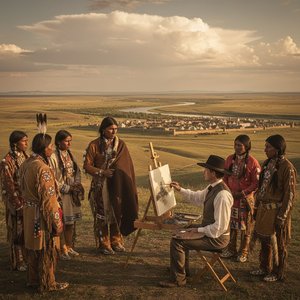
George Catlin: Witnessing & Representing Indigenous Life on the American Frontier
Explore the captivating art of George Catlin, renowned for his vivid portraits & landscapes documenting Native American life on the frontier. Discover a vanishing world through stunning paintings and historical context.

Georges Seurat: Cele Mai Remarcabile 25 de Opere – Artă, Decorațiuni și Inspirație
Descoperă cele mai frumoase 25 de picturi ale lui Georges Seurat! Explorează arta Pointillismului, culorile vibrante și stilul unic al acestui maestru impresionist. Reproduceri de calitate superioară pentru decor interior rafinat pe OriginalUniqueArt.com.