

 Previzualizare
 Trimite
 Distribuie
 Detalii despre lucrare

 Descarcă
 Produse similare
 Radiografie
 Diapozitive automate
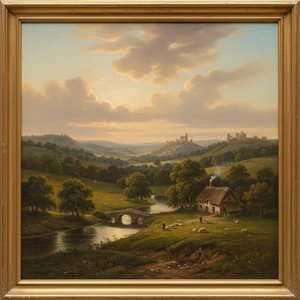
Landscape with a Ruined Tower
 Oil On Canvas
- WallArt
- Romantic Pastoral
 100.0 x 125.0 cm
 National Trust
 Vezi mai mult
Giclée / Imprimare artistică
Printuri giclée sau pe canvas de calitate muzeală, cu proces de producție rapid și opțiuni flexibile de finisare. ( Comandă pictură lucrată manual Cumpără imaginea)




P118B $10

P118H $10

P118W $10

P438Z $10

P508JH $12

P508YH $12

P805H $10

P805Z $10

P919BZ $10

P919G $10

P919XJ $10

P959ZH $10

P968JZ $12

W106C $8

W218G $10

W218JH $8

W218Y $10

W307PJ $10

W316G $10

W316PJ $8

W316Y $10

W398PJ $8

W4111J $10

W500HY $15

W500JH $15

W692G $12

W849H $8

W940BG $15

W953PJ $8




Alegeți dintre dimensiunile noastre prestabilite, care respectă proporțiile originale ale operei de artă.

Puteți introduce propriile dimensiuni pentru a se potrivi unui anumit cadru sau spațiu. Dacă dimensiunea selectată nu corespunde proporțiilor imaginii originale, vom decupa lucrarea de artă sau vom extinde imaginea cu margini oglindite sau cu o culoare uniformă. Un mockup digital va fi trimis pentru aprobarea dumneavoastră înainte de începerea producției.
Vă rugăm să rețineți că previzualizarea de pe ecran nu reflectă decuparea sau extinderea reală. Doar mockup-ul va arăta cu exactitate compoziția finală.
Deși dimensiunile personalizate sunt disponibile, vă recomandăm să selectați o dimensiune din lista predefinită pentru a păstra proporțiile originale.
Livrare în întreaga lume () în 2 săptămâni, în loc de cele 4/5 săptămâni standard. (21 August)

Livrare expres gratuită la nivel mondial

Pânză de in de înaltă calitate

Asigurare completă pentru transport

Garanție de rambursare a taxelor vamale

Garanția fidelității culorilor

Politica de retur în 60 de zile (doar pentru defecte)

Garanție de rambursare 100%

Ofertă pentru comenzi multiple
 Opțiunea cu sticlă este disponibilă doar pentru dimensiuni de sub 110 cm

Landscape with a Ruined Tower
Giclée / Imprimare artistică
Dimensiune reproducere
-


Preț total calculat
$ 80
Descriere obiect de colecție
George Barret the Elder’s “Landscape with a Ruined Tower”: A Vision of English Pastoral
“Landscape with a Ruined Tower,” painted circa 1762-1784 by George Barret the Elder, is more than just a depiction of a rural scene; it's a carefully constructed meditation on time, memory, and the fading grandeur of the English countryside. Barret, an Irish artist who established himself as a leading figure in London’s art world, masterfully captures a moment suspended between decay and enduring beauty, reflecting the philosophical currents of his era – particularly the influence of Edmund Burke's exploration of the sublime.
The painting immediately draws the eye to the imposing ruin itself: a weathered tower rising from a gently sloping hillside, partially obscured by a dense copse of trees. Its stones, rendered in muted ochres and browns, speak of centuries spent exposed to the elements, hinting at forgotten histories and lost power. The tower isn’t merely a structural element; it's a potent symbol – a visual representation of decline, yet simultaneously imbued with an undeniable sense of solemn dignity. This deliberate juxtaposition is central to Barret’s artistic vision.
A Painterly Echo of Burke’s Sublime
Barret’s approach to landscape painting was profoundly shaped by Edmund Burke's philosophical treatise, *A Philosophical Enquiry into the Origin of Our Ideas of the Sublime and Beautiful*. Burke argued that experiences of awe and terror – what he termed the “sublime” – could be found not just in dramatic events but also in the contemplation of vastness, decay, and solitude. Barret translates this philosophical concept onto canvas with remarkable skill.
Notice how the artist employs atmospheric perspective—the subtle blurring of distant elements to create a sense of depth and recession. The hazy blue sky, punctuated by wisps of cloud, contributes to the painting’s overall mood of melancholy and contemplation. The careful use of light and shadow further emphasizes the tower's weathered state, highlighting its vulnerability against the backdrop of the seemingly eternal landscape. This isn’t a vibrant celebration of nature; it’s an exploration of its quieter, more profound aspects.
Details of Technique and Composition
Barret was initially influenced by engravings of classical Italianate scenes, reworking them with his own distinctive style. The composition is carefully balanced, drawing the eye towards the tower while simultaneously establishing a sense of spaciousness. The placement of the trees, the gentle curve of the hillside, and the distant body of water all contribute to this harmonious arrangement.
The artist’s brushwork is remarkably controlled, particularly in rendering the textures of stone and foliage. He employs a delicate layering technique—thin glazes of paint applied over dry underlayers—to achieve a luminous quality that captures the subtle nuances of light and shadow. The details are meticulously observed, from the individual stones of the tower to the leaves rustling in the breeze. This attention to detail elevates the painting beyond mere representation, transforming it into a carefully considered work of art.
Symbolism and Emotional Resonance
Beyond its technical merits, “Landscape with a Ruined Tower” resonates deeply on an emotional level. The ruined tower evokes a sense of loss—the passing of time, the decline of empires, and the inevitable decay of all things. Yet, it also possesses a certain beauty in its weathered state, suggesting that even in ruin, there is still value to be found.
The painting invites us to contemplate our own mortality and the fleeting nature of existence. It’s a poignant reminder that beauty can be discovered not only in moments of triumph but also in the quiet contemplation of decay. It's a timeless image, speaking to universal themes of memory, loss, and the enduring power of the natural world – making it a compelling subject for collectors and interior designers seeking pieces with depth and emotional resonance.
Biografie artist
George Barret Sr.: Life & Legacy
George Barret Sr., born between 1728 and 1732 in Libertyville, Ireland – the son of a cloth merchant – stands as a pivotal figure in the history of British landscape painting. His artistic journey began humbly, apprenticed initially as a staymaker before discovering an innate talent for drawing that would propel him to international acclaim. This early aptitude secured him a place at Robert West’s Academy in Dublin around 1747, where he benefited from royal sponsorship and honed his skills under the tutelage of influential educators. Notably, his friendship with Edmund Burke – forged during Burke's formative years at Trinity College – proved enduring and profoundly impacted Barret’s artistic sensibilities.Early Artistic Development & Influences
- Barret’s initial canvases frequently depicted idealized Italianate landscapes reminiscent of artists like Claude Lorrain, demonstrating a masterful grasp of established stylistic conventions.
- However, his artistic vision was fundamentally shaped by Burke’s philosophical explorations, particularly *A Philosophical Enquiry into the Origin of Our Ideas of the Sublime and Beautiful*. Burke's contemplation on awe and beauty instilled in Barret a desire to capture the grandeur and emotional resonance of nature – a preoccupation that would permeate his oeuvre.
- He skillfully adapted engravings of classical Italian scenes, showcasing not only technical proficiency but also an acute awareness of artistic tradition.
Move to London and Rise to Prominence
- Seeking greater artistic opportunities, Barret relocated to London in 1762 – a decisive step that swiftly cemented his reputation as one of the era’s foremost landscape painters.
- His exhibitions at the Society of Artists of Great Britain garnered considerable attention and attracted substantial patronage from discerning collectors.
- Perhaps most importantly, Barret was among the founding members who bravely severed ties with the Society in 1768 to establish the Royal Academy – a monumental undertaking that irrevocably transformed British art practice and cemented his legacy as a champion of artistic innovation.
Artistic Style and Themes
- Barret’s stylistic evolution mirrored broader trends within Romanticism, transitioning from meticulously crafted Italianate landscapes to more expressive depictions of English and Irish scenery.
- He undertook extensive travels throughout Britain, Wales, Scotland, and Ireland – documenting breathtaking vistas and capturing the essence of diverse environments.
- Recurring motifs included tranquil lakeshores bathed in golden light, dramatic waterfalls like *The Powerscourt Waterfall*, and expansive panoramas conveying a sense of sublime grandeur.
Later Life & Patronage
- Despite achieving considerable success financially, Barret’s personal life was marked by challenges – he suffered from asthma, prompting him to relocate to Westbourne Green in 1772 for respite and improved health conditions.
- His enduring friendship with Edmund Burke continued until his death in 1784; Burke actively supported Barret both financially and professionally, recognizing his artistic merit and advocating for his advancement within the Royal Academy.
- A testament to his dedication and influence, Barret was appointed Master Painter of Chelsea Hospital in 1782 – a position he held until his passing, securing him a modest pension and ensuring that his contribution to British art would endure beyond his lifetime.
Legacy & Historical Significance
- Barret’s paintings stand as invaluable records of the Romantic era's fascination with the natural world – offering unparalleled insight into the aesthetic sensibilities of his time.
- His works are now housed in prestigious collections worldwide, including the National Gallery of Ireland and Yale Center for British Art, guaranteeing that George Barret Sr.’s artistic vision continues to inspire admiration and scholarly study.

George Barret Sr.
1732 - 1784 , Irlanda
Detalii rapide
- Artistic Movement Or Style: Romanticism
- Artists Or Movements Influenced By This Artist: Claude Lorrain
- Artists Who Influenced This Artist: Edmund Burke, Claude Lorrain
- Date Of Birth: 1732
- Full Name: George Barret Sr.
- Nationality: Irlandez
- Notable Artworks:
- The Powerscourt Waterfall
- A Prospect of Southwick Park
- Llyn Nantlle
- North Side of Danson
- Place Of Birth: Libertyville, Irlanda
Articole similare

Georges Braque: Cele Mai Iconice 25 De Opere – Artă Modernă pentru Decorul Tău
Descoperă cele mai importante 25 de opere ale lui Georges Braque, pionier al cubismului! Explorează istoria, tehnicile și semnificația fiecărei picturi. Reproduceri artă de calitate muzeală pentru decorul tău pe OriginalUniqueArt.com.
George Barret the Elder: Pioneering British Pastoral Painting & Landscape's Rise
Explore the life & art of George Barret Sr., a pioneer of British pastoral painting. Discover his influence on Romantic landscape art, patronage, and collecting tips from OriginalUniqueArt.

Georges Seurat: Cele Mai Remarcabile 25 de Opere – Artă, Decorațiuni și Inspirație
Descoperă cele mai frumoase 25 de picturi ale lui Georges Seurat! Explorează arta Pointillismului, culorile vibrante și stilul unic al acestui maestru impresionist. Reproduceri de calitate superioară pentru decor interior rafinat pe OriginalUniqueArt.com.

Idyllic Visions: Exploring the Pastoral Scene in Art History – From Arcadia to Modern Interpretations
Explore the captivating history of pastoral art from classical Arcadia to modern masterpieces. Discover key artists like Millet & Cole at OriginalUniqueArt. Find serene landscape paintings for your home.
Idyllic Visions: Exploring the Pastoral Tradition in Western Art – Themes, Techniques & Enduring Appeal
Explore the rich history of pastoral art from classical Arcadia to contemporary interpretations. Discover key artists, themes & collecting tips at OriginalUniqueArt.



