 Comută pe versiunea Print
 Vezi mai mult







































 Pentru opere de artă sau reproduceri care depășesc 105 cm (aproximativ 41 de inch) pe oricare dintre laturi, cadrul va fi livrat demontat, sub formă de kit. Această metodă asigură o livrare sigură și previne deteriorarea în timpul transportului.


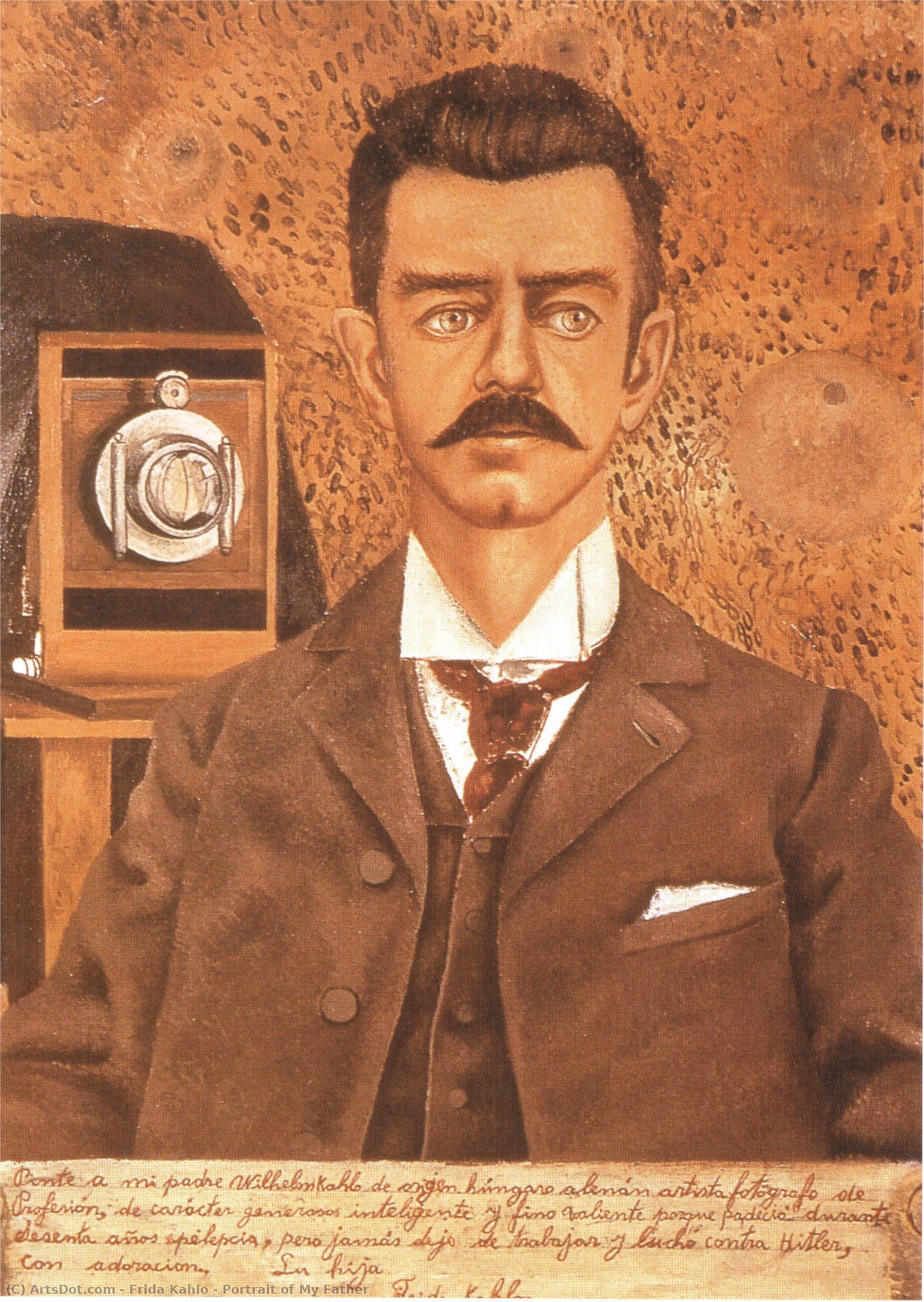
Portrait of My Father: A Reflection on Resilience and Memory
The painting “Portrait of My Father,” executed by Frida Kahlo in 1951, stands as a poignant testament to familial bonds and the enduring power of memory—a subject deeply intertwined with Kahlo’s own personal struggles. More than just a depiction of her father, Guillermo Kahlo, it's an exploration of vulnerability, strength, and the indelible mark left by illness on both psyche and artistic expression. This artwork resides prominently within the Frida Kahlo Museum in Mexico City, serving as a cornerstone of the museum’s collection and offering visitors a glimpse into Kahlo’s innermost thoughts about her relationship with her father.A Window Into Guillermo Kahlo's World
Guillermo Kahlo was no mere bystander; he was a German-Mexican photographer who dedicated his life to documenting Mexico’s architectural heritage, religious sites, bustling streets, and industrial landscapes at the dawn of the 20th century. His photographic endeavors weren’t merely professional pursuits but also imbued with a humanist spirit—a desire to capture the essence of Mexican culture and identity. As evidenced by his extensive archive, Kahlo's father possessed an inquisitive mind and a keen eye for detail, qualities that undoubtedly influenced Frida’s artistic sensibilities. Notably, he was instrumental in introducing Frida to photography, fostering her fascination with capturing images and developing prints—a skill she would later hone throughout her prolific career.Stylistic Considerations: Primitivism and Emotional Depth
Kahlo employed a technique rooted in primitivism – a stylistic movement that championed raw emotion and directness over academic conventions. The painting utilizes masonite as its substrate, chosen for its durability and ability to retain texture—a deliberate decision reflecting Kahlo’s commitment to portraying her father with unflinching honesty. The muted color palette—primarily browns and ochres—contributes to the artwork's solemn atmosphere, mirroring the seriousness of Guillermo’s gaze and emphasizing the contemplative mood of the composition. Careful shading techniques skillfully sculpt his face, highlighting prominent features like his mustache and beard, conveying a sense of dignified composure despite the underlying vulnerability suggested by his averted eyes.Symbolism Beyond Representation
The inclusion of an old-fashioned camera in the background is laden with symbolic significance. It serves as a visual reminder of Kahlo’s father's profession—a chronicler of Mexico’s history and culture—but also functions as a metaphor for observation, documentation, and capturing fleeting moments in time. Furthermore, the camera’s lens directs our gaze towards Guillermo’s face, mirroring Frida’s own artistic practice: focusing intently on conveying emotion and capturing essence rather than merely replicating appearances. Kahlo's inscription at the bottom of the canvas—"I painted my father Wilhelm Kahlo, of Hungarian-German origin, artist-photographer by profession, in character generous, intelligent and fine, valiant because he suffered for sixty years with epilepsy, but never gave up working and fought against Hitler"—underscores the painting’s profound emotional resonance. It speaks to Frida's unwavering admiration for her father’s resilience—his perseverance despite debilitating illness—and encapsulates the enduring legacy of a man who shaped Kahlo’s artistic vision and instilled in her a lifelong appreciation for observation and remembrance.Emotional Impact: A Portrait of Quiet Strength
“Portrait of My Father” transcends mere visual representation; it embodies a complex tapestry of emotions—affection, respect, melancholy, and perhaps even a hint of sorrow. The painting compels viewers to contemplate the profound connection between daughter and father, capturing not only Guillermo’s physical likeness but also his inner spirit—a quiet dignity born from enduring hardship. It stands as an enduring symbol of resilience, reminding us that beauty can emerge from pain and that memory holds the key to understanding our deepest selves.Întrebări și răspunsuri
Ce dimensiune de reproducere se recomandă pentru "Portretul Tatălui Meu" de Frida Kahlo?
Pentru "Portretul Tatălui Meu", se recomandă o dimensiune de imprimare de Format mediu. Sunt disponibile și alte dimensiuni, păstrând aceleași proporții.
Cum se reflectă emoția în culorile din "Portretul Tatălui Meu" de Frida Kahlo?
"Portretul Tatălui Meu" de Frida Kahlo îmbină o paletă Nuanțe închise cu un ton Melancolic.
Care sunt tehnica și dimensiunile originalului "Portretul Tatălui Meu" de Frida Kahlo?
Tehnica utilizată pentru "Portretul Tatălui Meu" de Frida Kahlo este Acrilic pe pânză întinsă, iar dimensiunile sale înregistrate sunt 61 x 47 cm.
Mai multe detalii despre această pictură
 Previzualizare
 Trimite prin felicitare
 Distribuie
 Detalii despre lucrare
 Ghid
Ghid

 Descarcă imaginea
 Produse similare
 Radiografie
 Galerie foto
 Întrebări și răspunsuri
 Statistici