

 Previzualizare
 Trimite
 Distribuie
 Detalii despre lucrare

 Descarcă
 Produse similare
 Radiografie
 Diapozitive automate
Moonlit Night
 Vezi mai mult
Reproducere pictată manual în ulei
Pictură în ulei pe pânză, realizată manual de artiștii noștri la dimensiunea și ramele dorite de dumneavoastră, pe comandă. ( Comandă printul Cumpără imaginea)




































Alegeți dintre dimensiunile noastre prestabilite, care respectă proporțiile originale ale operei de artă.

Puteți introduce propriile dimensiuni pentru a se potrivi unui anumit cadru sau spațiu. Dacă dimensiunea selectată nu corespunde proporțiilor imaginii originale, vom decupa opera de artă sau vom extinde pictura cu elemente suplimentare pictate manual. O simulare digitală vă va fi trimisă pentru aprobare înainte de începerea producției.
Vă rugăm să rețineți că previzualizarea de pe ecran nu reflectă decuparea sau extinderea reală. Doar macheta va arăta cu exactitate compoziția finală.
Deși sunt disponibile dimensiuni personalizate, vă recomandăm să selectați o dimensiune din lista predefinită pentru a păstra proporțiile originale.
După plasarea comenzii, echipa OriginalUniqueArt.com va contacta clientul prin e-mail pentru instrucțiuni și îi va furniza o previzualizare a machetei
Livrare în întreaga lume () în 3-4 săptămâni, în loc de cele 5 săptămâni standard. (17 August). Fără compromisuri în ceea ce privește calitatea.

Livrare expres gratuită la nivel mondial

Pânză de in de înaltă calitate

Asigurare completă pentru transport

Garanție de rambursare a taxelor vamale

Garanția fidelității culorilor

Politica de retur în 60 de zile (doar pentru defecte)

Garanție de rambursare 100%

Ofertă pentru comenzi multiple
 Opțiunea cu sticlă este disponibilă doar pentru dimensiuni de sub 110 cm

Moonlit Night
Tehnică de reproducere
Dimensiune reproducere
-


Preț total calculat
$ 300
Biografie artist
Katsushika Hokusai: A Master of the Floating World
Born Tokitarō in 1760, Katsushika Hokusai remains one of Japan’s most beloved and profoundly influential artists. More than just a woodblock printmaker, he was a restless innovator, a keen observer of his time, and a master who seamlessly blended traditional Japanese aesthetics with burgeoning European influences. His life spanned nearly nine decades, a period marked by immense artistic growth and experimentation, culminating in iconic works like *The Great Wave off Kanagawa* that continue to resonate globally. Hokusai’s legacy extends far beyond the art world; he embodies the spirit of continuous learning and creative exploration.
Hokusai's early life was steeped in the craft traditions of Edo (modern-day Tokyo). He began his artistic journey as a young boy, apprenticed to a mirror polisher, a seemingly humble beginning for an artist who would later command immense respect. This initial training instilled a meticulous attention to detail and a deep understanding of materials – skills that would prove invaluable in his later work. He then transitioned into the world of woodblock printing, initially as a designer for Katsukawa Shunshō, a leading figure in the *ukiyo-e* (pictures of the floating world) genre. This period saw him producing vibrant prints depicting beautiful women, actors on stage, and scenes from popular folklore – works that established his technical skill but also hinted at a desire to move beyond mere imitation.
The Rise of a Singular Vision
Around 1793, Hokusai abruptly left Shunshō’s studio, embarking on a period of relative independence. This was a pivotal moment in his career; he began to develop his own distinct style and subject matter. He moved away from the conventional courtesan portraits that dominated the *ukiyo-e* market, instead focusing on landscapes, birds, fish, and other natural subjects. During this time, he also wrote and illustrated numerous short stories and novels, demonstrating a remarkable versatility and a deep engagement with contemporary life. This period saw him experimenting with different techniques and styles, laying the groundwork for his later masterpieces.
The 1820s proved to be a particularly challenging decade for Hokusai. He experienced personal tragedies – the loss of his daughter and second wife – which profoundly impacted his artistic output. Despite these hardships, he continued to work tirelessly, producing an astonishing volume of sketches, paintings, and prints. It was during this time that he began to develop *Thirty-Six Views of Mount Fuji*, a series that would become synonymous with his name and solidify his place in art history. The project wasn’t simply a depiction of the mountain; it was a meditation on nature, impermanence, and the relationship between humanity and the vastness of the world.
The Great Wave and Beyond
*The Great Wave off Kanagawa*, arguably Hokusai's most famous work, emerged from this period. Created in 1830-32 as part of the *Thirty-Six Views* series, it captures a dramatic moment at sea – a towering wave threatening to engulf three fishing boats. The print’s dynamic composition, bold colors, and masterful use of line convey both the power and beauty of nature. However, Hokusai's artistic vision extended far beyond this single image. He continued to explore diverse subjects, from scenes of everyday life in Edo to detailed studies of plants and animals. His later works demonstrate a remarkable evolution in style, incorporating elements of Western art – particularly European landscape painting – while retaining his uniquely Japanese sensibility.
Hokusai’s influence on subsequent generations of artists is undeniable. Vincent van Gogh and Claude Monet were both deeply inspired by his work, recognizing in it a revolutionary approach to composition and color. His innovative use of perspective, dynamic lines, and expressive brushwork paved the way for modern art movements. He died in 1849 at the age of 88, leaving behind an unparalleled legacy of over 30,000 paintings, sketches, woodblock prints, and illustrations – a testament to a life dedicated to artistic exploration and a profound understanding of the world around him.
Legacy and Historical Significance
Katsushika Hokusai’s work transcends its historical context. *The Great Wave*, in particular, has become an enduring symbol of human resilience in the face of overwhelming forces – a visual representation of both beauty and danger. His commitment to lifelong learning and his willingness to experiment with new techniques set him apart as a true pioneer. Hokusai’s influence can be seen not only in Japanese art but also in Western painting, demonstrating the interconnectedness of artistic traditions across cultures. He remains an artist who continues to inspire awe and admiration for his extraordinary talent and unwavering dedication to his craft.
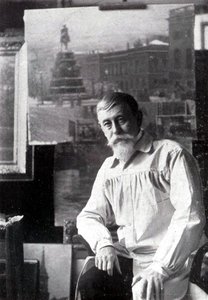
franz skarbina
1849 - 1910
Detalii rapide
- Artistic Movement Or Style: Ukiyo-e
- Artists Or Movements Influenced By This Artist:
- Van Gogh
- Monet
- Artists Who Influenced This Artist:
- Leibl
- Courbet
- Date Of Birth: 31 Oct 1760
- Date Of Death: 10 May 1849
- Full Name: Hokusai
- Nationality: Japanese
- Notable Artworks:
- Great Wave
- Fine Wind
- Mt. Fuji views
- Place Of Birth: Edo, Japan

