Meniu
CONSULTAȚIE GRATUITĂ DE ARTĂ
PrevizualizarePrevizualizare Previzualizare ARPrevizualizare AR Comandă versiunea tipărită Comandă versiunea tipărităComută la imagine Comută la imagine TrimiteTrimite
Detalii despre lucrareDetalii despre lucrare Adaugă la favorite Adaugă la favorite DescarcăDescarcă Produse similareProduse similare RadiografieRadiografie Diapozitive automateDiapozitive automate

Salome

Franz Ritter von Stuck's "Salome" (1906) depicts a captivating dance of desire and tragedy, blending Symbolism with biblical drama. Explore the haunting beauty & dark narrative of this iconic masterpiece.

Franz Ritter von Stuck (1863-1928) a fost un pictor și sculptor german emblematic al mișcării simboliste, cunoscut pentru opere mitologice intense, sculpturi memorabile și rolul său crucial în Secessiona München. Stilul său unic combină precizia clasică cu imagini onirice și explorează teme precum dorința și misterul.

Reproducere pictată manual în ulei

Pictură în ulei pe pânză, realizată manual de artiștii noștri la dimensiunea și ramele dorite de dumneavoastră, pe comandă. (Comandă versiunea tipărită Comandă versiunea tipărităComută la imagine Comută la imagine)

P118B $10
P118H $10
P118W $10
P438Z $10
P508JH $12
P508YH $12
P805H $10
P805Z $10
P919BZ $10
P919G $10
P919XJ $10
P959ZH $10
P968JZ $12
W106C $8
W218G $10
W218JH $8
W218Y $10
W307PJ $10
W316G $10
W316PJ $8
W316Y $10
W398PJ $8
W4111J $10
W500HY $15
W500JH $15
W692G $12
W849H $8
W940BG $15
W953PJ $8

Standard
custom
CM
INCH

Alegeți dintre dimensiunile noastre prestabilite, care respectă proporțiile originale ale operei de artă.

lățime
înălțime

Puteți introduce propriile dimensiuni pentru a se potrivi unui anumit cadru sau spațiu. Dacă dimensiunea selectată nu corespunde proporțiilor imaginii originale, vom decupa opera de artă sau vom extinde pictura cu elemente suplimentare pictate manual. O simulare digitală vă va fi trimisă pentru aprobare înainte de începerea producției.
Vă rugăm să rețineți că previzualizarea de pe ecran nu reflectă decuparea sau extinderea reală. Doar macheta va arăta cu exactitate compoziția finală.
Deși sunt disponibile dimensiuni personalizate, vă recomandăm să selectați o dimensiune din lista predefinită pentru a păstra proporțiile originale.

Exemple de elemente ce pot fi personalizate: Înlocuiți fața cu fotografia clientului; Adăugați un animal de companie (de exemplu, înlocuiți pisica cu un câine); Includeți un mesaj ascuns în fundal; Schimbați peisajul sau elementele din fundal.
După plasarea comenzii, echipa OriginalUniqueArt.com va contacta clientul prin e-mail pentru instrucțiuni și îi va furniza o previzualizare a machetei

Livrare în întreaga lume () în 3-4 săptămâni, în loc de cele 5 săptămâni standard. (10 August). Fără compromisuri în ceea ce privește calitatea.

why_choose_icon
Livrare expres gratuită la nivel mondial
why_choose_icon
Pânză de in de înaltă calitate
why_choose_icon
Asigurare completă pentru transport
why_choose_icon
Garanție de rambursare a taxelor vamale
why_choose_icon
Garanția fidelității culorilor
why_choose_icon
Politica de retur în 60 de zile (doar pentru defecte)
why_choose_icon
Garanție de rambursare 100%
why_choose_icon
Ofertă pentru comenzi multiple

Preț total

$ 300

reproduction

Salome

Tehnică de reproducere

Dimensiune reproducere

-

Preț total calculat

$ 300

Informații rapide

  • Title: Salome
  • Movement: Symbolism
  • Influences: Arnold Böcklin
  • Dimensions: 92 x 114 cm
  • Notable elements: Dancer, severed head
  • Artistic style: Mythological, Dramatic
  • Year: 1906

Test de cultură artistică

Fiecare întrebare are un singur răspuns corect.

Întrebare 1:
What biblical event is depicted in Franz Ritter von Stuck’s ‘Salome’?
Întrebare 2:
Which artistic movement is most closely associated with Franz Ritter von Stuck’s style?
Întrebare 3:
What is the primary symbolic element present in the painting’s composition?
Întrebare 4:
In what year was Franz Ritter von Stuck’s ‘Salome’ painted?
Întrebare 5:
What is the significance of the platter presented by the servant in the painting?

Descriere operă de artă

The Enigmatic Dance: Unveiling Franz Ritter von Stuck’s “Salome”

Franz Ritter von Stuck's 1906 painting, "Salome," is not merely a depiction of a biblical episode; it’s a profoundly unsettling and intensely symbolic exploration of desire, power, and the dark undercurrents of human nature. Emerging from the fertile ground of German Symbolism, Stuck masterfully blends classical precision with the dreamlike logic of the subconscious, creating an image that continues to captivate and disturb over a century later. The painting’s immediate impact lies in its dramatic composition – a carefully orchestrated tableau of figures poised on the precipice of violence and obsession. The scene unfolds within a shadowy, almost claustrophobic space, dominated by a towering, ornate architecture suggesting both opulence and impending doom. This isn't a straightforward narrative; it’s an atmosphere saturated with tension, inviting viewers to contemplate the motivations and fates of those involved.

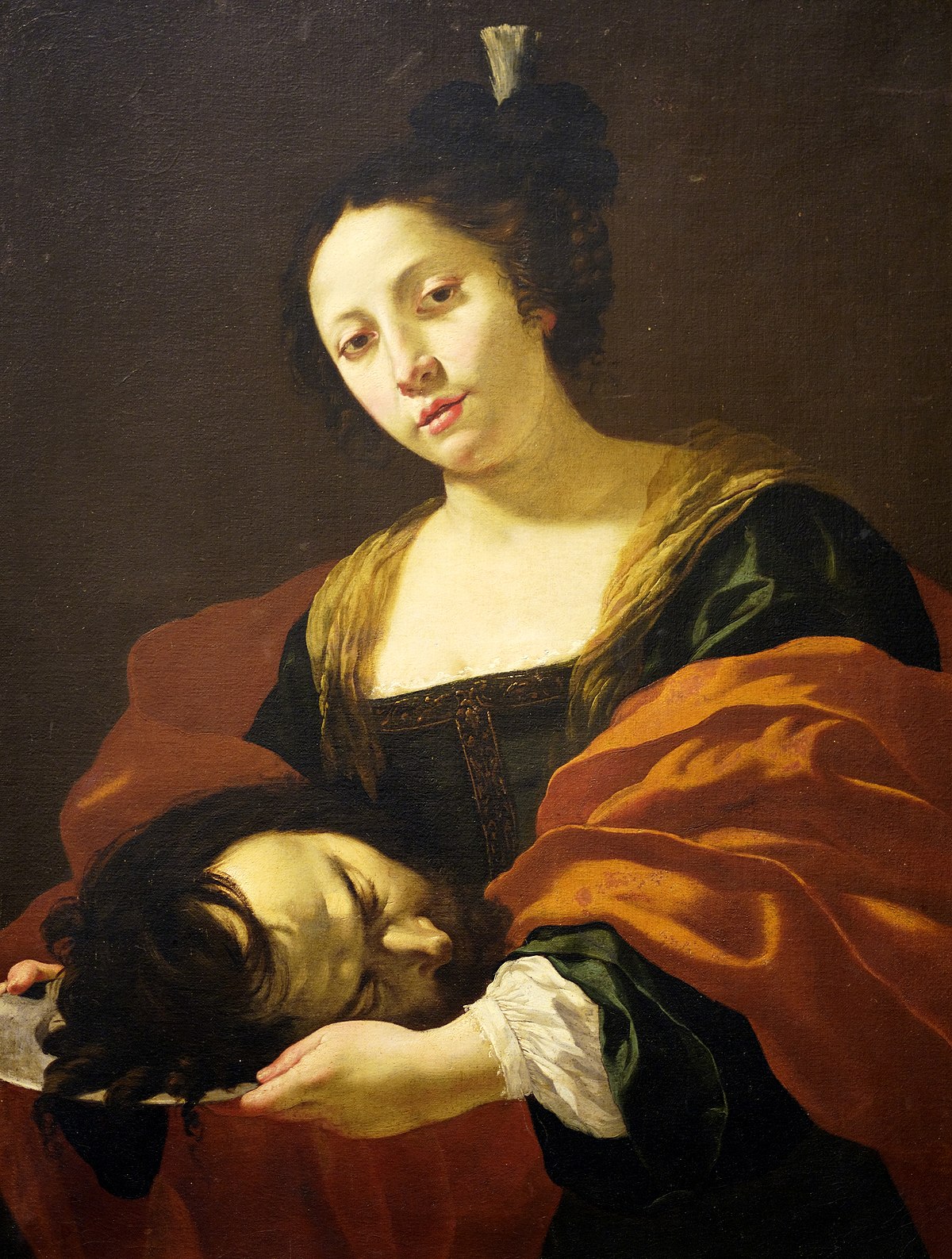
Salome by Franz Ritter von Stuck

A Symphony of Contrasts: Style, Technique, and Materiality

Stuck’s artistic style is immediately recognizable as a potent blend of Symbolism and Art Nouveau influences. The painting showcases his signature use of rich, jewel-toned colors – deep reds, emerald greens, and shimmering golds – applied with meticulous detail to create an opulent yet unsettling effect. His brushwork is deliberately expressive, employing visible strokes that contribute to the overall sense of drama and movement. Notice particularly the way he renders the textures: the velvet drapery, the polished surfaces of the architecture, and even the glistening skin of Salome herself – all are rendered with a tactile quality that draws the viewer into the scene. The painting was executed in oil on canvas, a medium that allowed Stuck to achieve both luminous color saturation and remarkable textural detail. The use of chiaroscuro—the dramatic contrast between light and shadow—further intensifies the emotional impact, highlighting key figures and obscuring others in an atmosphere of mystery and foreboding.

The Narrative Unfolds: Biblical Context and Symbolism

At its core, “Salome” depicts a pivotal moment from the New Testament – the fulfillment of Herodias’s vengeful plot against John the Baptist. However, Stuck doesn't offer a simple retelling of the story; instead, he delves into the psychological complexities of the characters and imbues the scene with layers of symbolic meaning. Salome herself is not portrayed as a seductive temptress but rather as a figure caught in a web of manipulation and driven by a primal desire for power. The presence of the dark servant, clutching John’s severed head on a platter, introduces an element of grotesque horror – a stark reminder of the brutal consequences of unchecked ambition. The architecture—a blend of Romanesque and Byzantine styles—suggests both grandeur and decay, mirroring the moral corruption at the heart of the narrative. The star-studded night sky serves as a backdrop to this drama, hinting at a realm beyond earthly concerns and perhaps suggesting a connection between life and death.

A “Prince of Art”: Stuck’s Legacy and Artistic Significance

Franz Ritter von Stuck was more than just an artist; he was a cultural phenomenon. Nicknamed the "Prince of Art" during his lifetime, he bridged the gap between academic tradition and the burgeoning currents of modernism. His work explored themes of sin, beauty, and the subconscious with a boldness and emotional intensity that resonated deeply with audiences at the turn of the 20th century. Villa Stuck, his own architectural masterpiece in Munich, stands as a testament to his artistic vision—a lavishly decorated space filled with sculptures, paintings, and intricate details reflecting his fascination with mythology, symbolism, and the darker aspects of human experience. “Salome” is arguably one of his most enduring works, demonstrating his mastery of dramatic composition, evocative color palettes, and profound psychological insight. It remains a powerful and unsettling image that continues to provoke discussion and inspire interpretation.


Biografie artist

A Life Steeped in Myth and Symbol

Franz Ritter von Stuck, a name that echoes through the halls of German art history, was more than just an artist; he was a cultural phenomenon, a “Prince of Art” as he was affectionately known during his lifetime. Born in 1863 in the tranquil village of Tettenweis, nestled amidst the rolling hills of Bavaria, Stuck’s journey began far from the bustling studios of Munich, destined instead for a life intertwined with the ancient myths and symbolic landscapes that would ultimately define his artistic vision. Initially slated to follow in his father's footsteps as a forester – a path of quiet rural existence – young Franz quickly revealed an undeniable passion for drawing and caricature, a nascent talent that defied the expectations of his family and set him on a radically different course. This early aptitude led him inexorably to Munich, first to the School of Applied Arts in 1878 and then to the prestigious Academy of Fine Arts from 1882-1884, where he became utterly captivated by the hauntingly beautiful mythological scenes crafted by Arnold Böcklin – a formative influence that would profoundly shape his artistic sensibilities. Stuck’s story isn't simply one of an artist’s development; it’s a testament to the power of defying convention and forging one’s own path, ultimately establishing him as a pivotal figure in bridging the gap between 19th-century academic tradition and the burgeoning currents of modernism.

The Rise of a Symbolist Master

Stuck's ascent to prominence was remarkably swift and dramatic. His breakthrough arrived in 1889 with *The Guardian of Paradise*, an arresting painting exhibited at the Munich Glass Palace, instantly captivating critics and securing him a gold medal – a recognition that catapulted him into the heart of the art world’s spotlight. This wasn't merely a display of technical skill; it was a bold declaration of a new artistic voice—one infused with classical precision yet imbued with the enigmatic allure of Symbolism. He quickly became a central figure in challenging established norms, playing a crucial role in co-founding the Munich Secession in 1892 alongside like-minded artists determined to break free from the stifling constraints of conservative academic circles and champion the innovative spirit of modern art. This act of artistic rebellion coincided with his exploration into sculpture, debuting with *Athlete* (1892), a dynamic bronze figure that demonstrated an impressive versatility and foreshadowed his future explorations in three-dimensional form. However, it was *The Sin* (1893) – a painting depicting a scene of intense drama and psychological complexity – that truly cemented his reputation as a master of Symbolist painting, captivating audiences with its dramatic intensity and profound exploration of the human psyche. This period marked the full flowering of Stuck’s unique style—a potent blend of sensuality, classical form, and symbolic resonance, a signature that would distinguish him for decades to come.

Themes and Influences: A World of Desire and Myth

The artistic universe of Franz von Stuck is profoundly shaped by recurring motifs that reveal his deep engagement with timeless themes. Mythology served as an inexhaustible source of inspiration, drawing from the rich narratives of Greek, Roman, and biblical stories – tales he reimagined through a distinctly personal lens, imbuing them with a potent blend of sensuality, drama, and psychological depth. These weren’t mere retellings; they were explorations of the human condition filtered through the prism of ancient myths, offering profound insights into our desires, fears, and moral dilemmas. Equally prominent was his fascination with *la femme fatale* – the alluring yet dangerous woman—powerfully embodied in his numerous depictions of Salome, a figure representing desire, danger, and moral ambiguity. These paintings weren’t simply about physical beauty; they delved into the complex psychological landscapes of female power, its potential for both irresistible allure and destructive consequences. Underlying all this was a deep reverence for classical art, evident in his meticulous technique, anatomical accuracy, and masterful compositional rigor—a testament to his rigorous training and unwavering dedication to artistic excellence. Beyond Böcklin’s influence, Stuck acknowledged the contributions of Pre-Raphaelites and Gustave Moreau, but he wasn't merely an imitator; he synthesized these diverse influences into something uniquely his own, forging a distinctive style that profoundly impacted subsequent generations of artists.

Major Achievements and Recognition

Throughout his career, Franz von Stuck achieved remarkable recognition for his artistic talent and unwavering commitment to innovation. In 1895, he took on another crucial role – that of teacher at the Munich Academy, where he became a highly respected instructor, not only imparting technical skills but also encouraging his students to explore their individual artistic visions. Among those who benefited from his guidance were luminaries such as Paul Klee, Hans Purrmann, and Josef Albers, demonstrating the breadth of his influence and the lasting legacy of his teaching. In 1897, he married American widow Mary Lindpainter and began designing his own residence and studio, the Villa Stuck in Munich – a stunning architectural masterpiece that reflected his artistic vision from every detail, including layout, interior decorations, and furniture design. The Villa Stuck earned him yet another gold medal at the 1900 Paris World Exposition, solidifying his reputation as a multifaceted artist with exceptional talent. His dedication to art was further recognized in 1905 when he was ennobled, becoming “Ritter von Stuck” – a testament to his growing prestige and contribution to German culture. He continued to receive accolades throughout Europe during the remainder of his life, cementing his position as one of the leading artists of his time.

Legacy and Enduring Significance

Franz Ritter von Stuck’s contributions to art history are undeniable. He played a pivotal role in shaping the Symbolist movement in Germany, bridging the gap between academic tradition and modern artistic experimentation. His work continues to captivate audiences with its dramatic intensity, mythological richness, and psychological depth. He remains a vital figure for understanding the transition from 19th-century historicism to the innovative spirit of the 20th century, an artist whose influence can still be felt in contemporary art today. His legacy is not only reflected in his paintings and sculptures but also in the countless artists he inspired—a testament to his enduring vision and profound impact on the world of art.
Franz Ritter von Stuck

Franz Ritter von Stuck

1863 - 1928 , Germania

Detalii rapide

  • Artistic Movement Or Style: Simbolism, Art Nouveau
  • Artists Or Movements Influenced By This Artist:
    • Klee
    • Secession
  • Artists Who Influenced This Artist:
    • Böcklin
    • Pre-Raphaelites
  • Date Of Birth: 23 Feb 1863
  • Date Of Death: 30 Aug 1928
  • Full Name: Franz Ritter von Stuck
  • Nationality: German
  • Notable Artworks:
    • The Guardian
    • Salome
    • Sin
  • Place Of Birth: Tettenweis, Germania