

 Vezi în context
 Trimite
 Distribuie
 Detalii
 Ghidul

 Descarcă
 Produse similare
 Radiografie
 Diaporama
 Statistici
Crucifixion
 Oil On Canvas
- WallArt
- Symbolism
 1913
1913- 19th Century
 190.0 x 165.0 cm
 Museum der bildenden Künste
 Citește mai mult
Reproducere pictată manual în ulei
Pictură în ulei pe pânză, realizată manual de artiștii noștri la dimensiunea și ramele dorite de dumneavoastră, pe comandă. ( Comută pe versiunea Print Treci la imagine digitală)




P118B $10

P118H $10

P118W $10

P438Z $10

P508JH $12

P508YH $12

P805H $10

P805Z $10

P919BZ $10

P919G $10

P919XJ $10

P959ZH $10

P968JZ $12

W106C $8

W218G $10

W218JH $8

W218Y $10

W307PJ $10

W316G $10

W316PJ $8

W316Y $10

W398PJ $8

W4111J $10

W500HY $15

W500JH $15

W692G $12

W849H $8

W940BG $15

W953PJ $8




Alegeți dintre dimensiunile noastre prestabilite, care respectă proporțiile originale ale operei de artă.

Puteți introduce propriile dimensiuni pentru a se potrivi unui anumit cadru sau spațiu. Dacă dimensiunea selectată nu corespunde proporțiilor imaginii originale, vom decupa opera de artă sau vom extinde pictura cu elemente suplimentare pictate manual. O simulare digitală vă va fi trimisă pentru aprobare înainte de începerea producției.
Vă rugăm să rețineți că previzualizarea de pe ecran nu reflectă decuparea sau extinderea reală. Doar macheta va arăta cu exactitate compoziția finală.
Deși sunt disponibile dimensiuni personalizate, vă recomandăm să selectați o dimensiune din lista predefinită pentru a păstra proporțiile originale.
După plasarea comenzii, echipa OriginalUniqueArt.com va contacta clientul prin e-mail pentru instrucțiuni și îi va furniza o previzualizare a machetei
Livrare în întreaga lume () în 3-4 săptămâni, în loc de cele 5 săptămâni standard. (25 Septembrie). Fără compromisuri în ceea ce privește calitatea.

Livrare expres gratuită la nivel mondial

Pânză de in premium

Asigurare completă pentru transport

Garanție de rambursare a taxelor vamale

Garanția fidelității culorilor

Politica de retur în 100 de zile (doar pentru defecte)

Garanție de rambursare 100%

Reducere pentru comenzi multiple
 Opțiunea cu sticlă este disponibilă doar pentru dimensiuni de sub 110 cm

Crucifixion
Tip de reproducere
Dimensiune reproducere
-


Preț total
$ 300
Franz Ritter von Stuck’s Crucifixion: A Symphony of Myth and Emotion
Franz Ritter von Stuck (1863 – 1928), a titan of German Symbolism, didn't merely depict religious iconography; he wrestled with its profound psychological implications. His monumental painting “Crucifixion,” completed in 1913, stands as a testament to his artistic vision and an enduring emblem of the era’s preoccupation with spiritual yearning amidst encroaching modernity. Stuck’s oeuvre was marked by a fascination for ancient mythology—particularly Greek myths—and he sought to convey not just visual spectacle but also visceral emotion through meticulously crafted technique. This artwork isn't simply a representation of Christ’s suffering; it’s an exploration of the human condition itself, rendered with breathtaking detail and imbued with symbolic resonance.The Mythological Roots: Echoes of Olympus
Stuck’s artistic journey began under the influence of Arnold Böcklin’s haunting landscapes—particularly “Island of Dreams”—which instilled in him a deep appreciation for sublime beauty intertwined with melancholy. He channeled this aesthetic sensibility into his depiction of the crucifixion, drawing inspiration from classical narratives concerning Prometheus and Zeus. The composition deliberately evokes images of Olympus, mirroring the grandeur and drama of Greek mythology. Stuck’s meticulous attention to detail—the textures of drapery, the musculature of Christ’s body, the expressions on the faces of onlookers—reflects a desire to capture not just physical reality but also the psychological depth of the scene. The artist skillfully uses chiaroscuro – dramatic contrasts between light and dark – to heighten emotional impact and emphasize the central figure's vulnerability against the backdrop of divine judgment.Technique and Material: A Masterful Blend
“Crucifixion” is executed in tempera on canvas, a medium favored by Stuck for its luminosity and ability to achieve remarkable tonal gradations. The artist employed layering techniques—applying thin glazes over underlayers—to build up rich color palettes and create an illusion of depth that transcends the limitations of conventional painting. Stuck’s masterful handling of pigment demonstrates his profound understanding of artistic principles, mirroring the stylistic innovations of Art Nouveau. Furthermore, he meticulously crafted a frame for the artwork, incorporating gilded carving and decorative elements that complemented the painting's aesthetic qualities—a deliberate choice reflecting the Gesamtkunstwerk tradition prevalent during his time.Symbolism: Beyond Suffering – The Triumph of Spirit
The painting’s symbolism extends far beyond its depiction of Christ’s agony. Stuck deliberately incorporates visual motifs associated with classical mythology to convey a broader spiritual message. The inclusion of a clock—a recurring element in Stuck's work—represents the passage of time and underscores the inevitability of mortality, prompting contemplation on the eternal significance of faith. Similarly, the book symbolizes knowledge and divine revelation, suggesting that true understanding transcends earthly concerns. Most powerfully, however, is the depiction of Christ’s crucifixion itself: it embodies not merely physical pain but also spiritual sacrifice—a cornerstone of Christian theology. Stuck's aim was to elicit an emotional response from the viewer, prompting reflection on themes of redemption and transcendence.Legacy and Emotional Impact
“Crucifixion” remains a captivating artwork due to its masterful blend of artistic technique and symbolic depth. It exemplifies the Symbolist movement’s preoccupation with psychological exploration and its rejection of academic conventions—a bold assertion of artistic freedom in an era marked by social upheaval. Stuck's painting continues to resonate with audiences today, offering a timeless meditation on faith, suffering, and the enduring quest for spiritual meaning. Its evocative imagery and masterful execution solidify its place as one of the most significant achievements of German Symbolism and a poignant reminder of the power of art to communicate profound emotional truths.Biografie artist
A Life Steeped in Myth and Symbol
Franz Ritter von Stuck, a name that echoes through the halls of German art history, was more than just an artist; he was a cultural phenomenon, a “Prince of Art” as he was affectionately known during his lifetime. Born in 1863 in the tranquil village of Tettenweis, nestled amidst the rolling hills of Bavaria, Stuck’s journey began far from the bustling studios of Munich, destined instead for a life intertwined with the ancient myths and symbolic landscapes that would ultimately define his artistic vision. Initially slated to follow in his father's footsteps as a forester – a path of quiet rural existence – young Franz quickly revealed an undeniable passion for drawing and caricature, a nascent talent that defied the expectations of his family and set him on a radically different course. This early aptitude led him inexorably to Munich, first to the School of Applied Arts in 1878 and then to the prestigious Academy of Fine Arts from 1882-1884, where he became utterly captivated by the hauntingly beautiful mythological scenes crafted by Arnold Böcklin – a formative influence that would profoundly shape his artistic sensibilities. Stuck’s story isn't simply one of an artist’s development; it’s a testament to the power of defying convention and forging one’s own path, ultimately establishing him as a pivotal figure in bridging the gap between 19th-century academic tradition and the burgeoning currents of modernism.The Rise of a Symbolist Master
Stuck's ascent to prominence was remarkably swift and dramatic. His breakthrough arrived in 1889 with *The Guardian of Paradise*, an arresting painting exhibited at the Munich Glass Palace, instantly captivating critics and securing him a gold medal – a recognition that catapulted him into the heart of the art world’s spotlight. This wasn't merely a display of technical skill; it was a bold declaration of a new artistic voice—one infused with classical precision yet imbued with the enigmatic allure of Symbolism. He quickly became a central figure in challenging established norms, playing a crucial role in co-founding the Munich Secession in 1892 alongside like-minded artists determined to break free from the stifling constraints of conservative academic circles and champion the innovative spirit of modern art. This act of artistic rebellion coincided with his exploration into sculpture, debuting with *Athlete* (1892), a dynamic bronze figure that demonstrated an impressive versatility and foreshadowed his future explorations in three-dimensional form. However, it was *The Sin* (1893) – a painting depicting a scene of intense drama and psychological complexity – that truly cemented his reputation as a master of Symbolist painting, captivating audiences with its dramatic intensity and profound exploration of the human psyche. This period marked the full flowering of Stuck’s unique style—a potent blend of sensuality, classical form, and symbolic resonance, a signature that would distinguish him for decades to come.Themes and Influences: A World of Desire and Myth
The artistic universe of Franz von Stuck is profoundly shaped by recurring motifs that reveal his deep engagement with timeless themes. Mythology served as an inexhaustible source of inspiration, drawing from the rich narratives of Greek, Roman, and biblical stories – tales he reimagined through a distinctly personal lens, imbuing them with a potent blend of sensuality, drama, and psychological depth. These weren’t mere retellings; they were explorations of the human condition filtered through the prism of ancient myths, offering profound insights into our desires, fears, and moral dilemmas. Equally prominent was his fascination with *la femme fatale* – the alluring yet dangerous woman—powerfully embodied in his numerous depictions of Salome, a figure representing desire, danger, and moral ambiguity. These paintings weren’t simply about physical beauty; they delved into the complex psychological landscapes of female power, its potential for both irresistible allure and destructive consequences. Underlying all this was a deep reverence for classical art, evident in his meticulous technique, anatomical accuracy, and masterful compositional rigor—a testament to his rigorous training and unwavering dedication to artistic excellence. Beyond Böcklin’s influence, Stuck acknowledged the contributions of Pre-Raphaelites and Gustave Moreau, but he wasn't merely an imitator; he synthesized these diverse influences into something uniquely his own, forging a distinctive style that profoundly impacted subsequent generations of artists.Major Achievements and Recognition
Throughout his career, Franz von Stuck achieved remarkable recognition for his artistic talent and unwavering commitment to innovation. In 1895, he took on another crucial role – that of teacher at the Munich Academy, where he became a highly respected instructor, not only imparting technical skills but also encouraging his students to explore their individual artistic visions. Among those who benefited from his guidance were luminaries such as Paul Klee, Hans Purrmann, and Josef Albers, demonstrating the breadth of his influence and the lasting legacy of his teaching. In 1897, he married American widow Mary Lindpainter and began designing his own residence and studio, the Villa Stuck in Munich – a stunning architectural masterpiece that reflected his artistic vision from every detail, including layout, interior decorations, and furniture design. The Villa Stuck earned him yet another gold medal at the 1900 Paris World Exposition, solidifying his reputation as a multifaceted artist with exceptional talent. His dedication to art was further recognized in 1905 when he was ennobled, becoming “Ritter von Stuck” – a testament to his growing prestige and contribution to German culture. He continued to receive accolades throughout Europe during the remainder of his life, cementing his position as one of the leading artists of his time.Legacy and Enduring Significance
Franz Ritter von Stuck’s contributions to art history are undeniable. He played a pivotal role in shaping the Symbolist movement in Germany, bridging the gap between academic tradition and modern artistic experimentation. His work continues to captivate audiences with its dramatic intensity, mythological richness, and psychological depth. He remains a vital figure for understanding the transition from 19th-century historicism to the innovative spirit of the 20th century, an artist whose influence can still be felt in contemporary art today. His legacy is not only reflected in his paintings and sculptures but also in the countless artists he inspired—a testament to his enduring vision and profound impact on the world of art.
Franz Ritter von Stuck
1863 - 1928 , Germania
Informații rapide
- Artistic Movement Or Style: Simbolism, Art Nouveau
- Artists Or Movements Influenced By This Artist:
- Klee
- Secession
- Artists Who Influenced This Artist:
- Böcklin
- Pre-Raphaelites
- Date Of Birth: 23 Feb 1863
- Date Of Death: 30 Aug 1928
- Full Name: Franz Ritter von Stuck
- Nationality: German
- Notable Artworks:
- The Guardian
- Salome
- Sin
- Place Of Birth: Tettenweis, Germania
Articole conexe

Expresionismul German: 10 Capodopere Iconice pentru Decoruri de Artă
Descoperă cele mai importante 10 capodopere ale Expresionismului German! Explorează poveștile din spatele picturilor Kandinsky, Munch și Kirchner. Reproduceri de artă premium pentru un decor unic pe OriginalUniqueArt.com
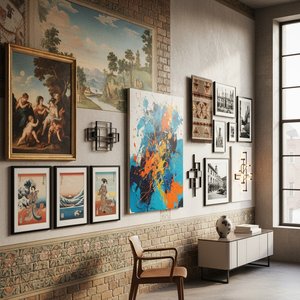
Transforming Spaces: A Comprehensive Exploration of Wall Decor Through Art History & Contemporary Practice
Explore the art of transforming spaces with our comprehensive guide to wall decor. From historical movements to contemporary trends, discover how to curate impactful interiors and commission bespoke artwork for a truly personalized aesthetic.
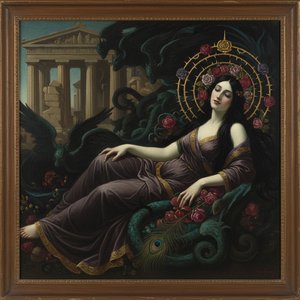
Franz von Stuck: Symbolism, Decadence & the Pursuit of Ideal Beauty
Explore the captivating world of Franz von Stuck, a leading Symbolist painter. Discover his mythological masterpieces, decadent themes, & investment potential. Expert analysis for discerning collectors.
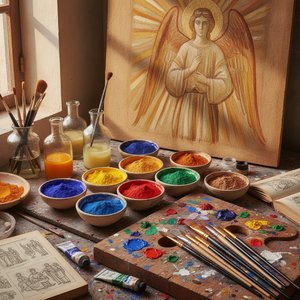
Tempera Art Guide: The Bold, Fast-Drying Secret to High-Impact Color
Unlock the secret to high-impact color with our expert guide to tempera art. Discover how this fast-drying, luminous medium delivers unmatched vibrancy and depth for bold, modern interiors. Master the alchemy of pigments and elevate your collection with professional insights.

Reîntoarcerea Frescei: De Ce Muralurile Devină Noua Declarație de Lux
Descoperă reîntoarcerea frescelor și muralurilor de lux! Ghid complet cu istorie, tehnici, design interior și sfaturi de întreținere. Reproduceri de calitate pe .