- Acasă

- Imprimare pe pânză
- franz anton bustelli
- Harlequin
 Comandă reproducere pictată Cumpără imaginea
 Trimite
 Distribuie
 Detalii despre lucrare
 Adaugă la favorite

 Descarcă
 Similare
 Radiografie
 Diaporama
Harlequin


 Vezi mai mult
Giclée / Imprimare artistică
Print giclée sau pe canvas de calitate muzeală, cu producție rapidă și opțiuni flexibile de finisare.




































Alegeți dintre dimensiunile noastre prestabilite, care respectă proporțiile originale ale operei de artă.

Puteți introduce propriile dimensiuni pentru a se potrivi unui anumit cadru sau spațiu. Dacă dimensiunea selectată nu corespunde proporțiilor imaginii originale, vom decupa lucrarea de artă sau vom extinde imaginea cu margini oglindite sau cu o culoare uniformă. Un mockup digital va fi trimis pentru aprobarea dumneavoastră înainte de începerea producției.
Vă rugăm să rețineți că previzualizarea de pe ecran nu reflectă decuparea sau extinderea reală. Doar mockup-ul va arăta cu exactitate compoziția finală.
Deși dimensiunile personalizate sunt disponibile, vă recomandăm să selectați o dimensiune din lista predefinită pentru a păstra proporțiile originale.
Livrare în întreaga lume () în 2 săptămâni, în loc de cele 4/5 săptămâni standard. (21 Iulie)

Livrare expres gratuită la nivel mondial

Pânză de in de înaltă calitate

Asigurare completă pentru transport

Garanție de rambursare a taxelor vamale

Garanția fidelității culorilor

Politica de retur de 60 de zile (doar pentru defecte)

Garanție 100% de rambursare

Reducere la comenzi multiple
 Opțiunea cu sticlă este disponibilă doar pentru dimensiuni de sub 110 cm

Harlequin
Giclée / Imprimare artistică
Dimensiune reproducere
-


Preț total calculat
-
Descriere obiect de colecție
The Spirit of Rococo Performance
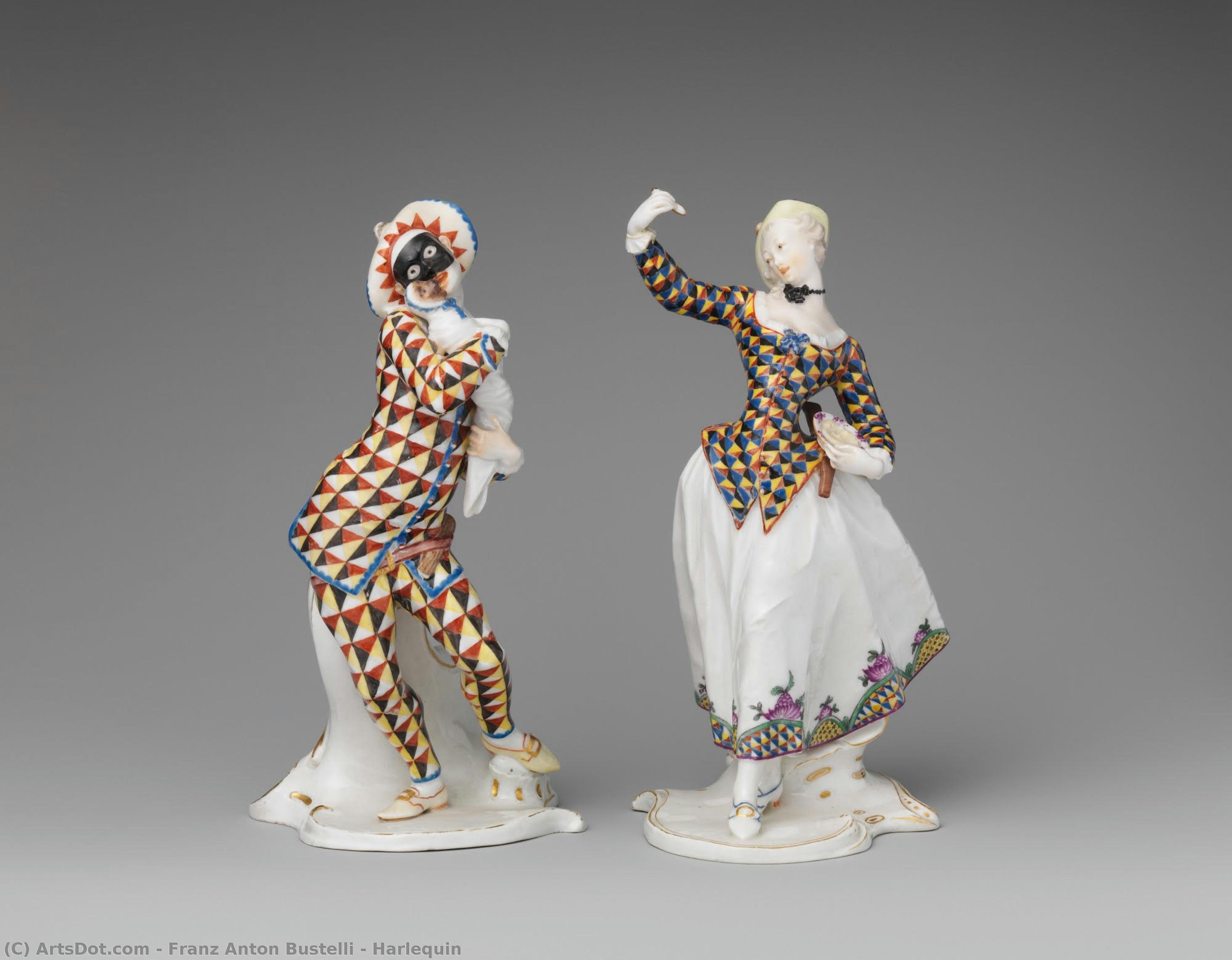
To gaze upon "Harlequin" by Franz Anton Bustelli is to step directly into the glittering, ephemeral world of the eighteenth-century salon. This porcelain masterpiece captures not merely two figures, but a moment suspended in time—a breath caught between steps on a grand stage. The composition itself sings with the energy of performance; the man, embodying Harlequin, seems poised mid-pirouette, his form radiating mischievous vitality, while the ballerina balances an air of graceful melancholy. Bustelli, the maestro of Rococo porcelain, understood that true art lies in capturing movement. Here, the vibrant clash of reds, yellows, and blues against the creamy white expanse of the porcelain does more than decorate; it narrates a story of gaiety, flirtation, and the dazzling spectacle of courtly life.
Mastery in Porcelain: Technique and Detail
The technical brilliance displayed here is nothing short of breathtaking. The medium itself—porcelain painting—demands an almost impossible level of delicacy from its creator. One can trace the meticulous handwork, imagining the fine brushes loaded with enamel paints that brought these costumes to life. Observe the contrast between Harlequin’s costume, a geometric explosion of diamonds and squares suggesting the playful chaos of commedia dell’arte, and the flowing, organic lines adorning the ballerina's skirt. The artist has achieved a textural illusion; though the surface is glossy and smooth, the folds in the fabric, the delicate lace on the sleeves, and the weight suggested by the drapery all imply tangible depth. It is a testament to Bustelli’s unparalleled skill that such vibrant narrative detail could be rendered so permanently upon fired ceramic.
Symbolism of Play and Artistry
The subject matter anchors us firmly in the realm of theatrical tradition. Harlequin, forever the trickster figure, symbolizes unbridled joy and wit—the spirit that refuses to be contained by rigid social structures. Paired with the ballerina, who represents disciplined beauty and ethereal grace, they create a perfect dialectic: the wild energy meeting controlled elegance. This pairing speaks volumes about the Rococo sensibility itself—a period obsessed with pleasure, artifice, and the exquisite balance between structured society and personal abandon. Owning this piece is to invite that very dialogue into your own space; it suggests an appreciation for life lived vibrantly, where performance, whether on stage or in conversation, is paramount.
A Touch of Eighteenth-Century Romance
For the collector or designer seeking a focal point imbued with history and romance, "Harlequin" offers unparalleled depth. It transcends mere decoration; it functions as an heirloom narrative. The soft, diffused lighting captured by Bustelli ensures that while the colors are bold, the overall emotional impact remains one of delicate nostalgia. Imagine this piece gracing a mantelpiece or displayed in a curated cabinet—it does not shout for attention, but rather invites closer inspection, rewarding the viewer with layers of historical context and artistic admiration. It is an enduring echo of Rococo splendor, perfectly preserved for modern contemplation.
Biografie artist
Franz Anton Bustelli: The Maestro of Rococo Porcelain
Franz Anton Bustelli (12 April 1723 – 18 April 1763) stands as a singular figure in the annals of eighteenth-century art, revered primarily for his unparalleled mastery of porcelain modeling during the Rococo period. While biographical details remain scarce—a testament to the ephemeral nature of artistic lives—his legacy persists through the exquisite figurines produced under his stewardship at Nymphenburg Porcelain Manufactory and beyond, cementing his place as arguably the greatest sculptor of porcelain in Europe.
Born in Locarno, Switzerland, Bustelli’s origins are shrouded in relative obscurity. However, evidence suggests he possessed a German upbringing, possibly fostered by familial connections to Bavaria—a region that would become inextricably linked with his artistic career. His formative training likely centered on wood carving, reflecting the prevalent artisanal traditions of his time and providing him with foundational skills for sculpting delicate materials like porcelain.
Bustelli’s journey into the world of ceramics began in 1754 when he joined the Neudeck Porcelain Manufactory in Munich. Recognizing his exceptional talent, Sigmund Graf von Haimhausen swiftly elevated him to Modellmeister—head modeller—a position that afforded him considerable creative autonomy and propelled him to the forefront of porcelain artistry.
The Nymphenburg Legacy
The relocation of the manufactory to Nymphenburg Palace in 1761 proved pivotal for Bustelli’s artistic output. Situated amidst the opulent surroundings of Maximilian III Joseph's court, Nymphenburg became a crucible for innovation and aesthetic refinement. Bustelli’s contribution to this burgeoning porcelain tradition was transformative; he spearheaded the creation of approximately 150 new models—a staggering achievement considering the prevailing techniques of the era.
His initial designs embraced classical motifs – gods and putti – mirroring the stylistic currents circulating throughout Europe at the time. However, Bustelli swiftly moved beyond mere imitation, delving into more nuanced explorations of human emotion and narrative. The “Street Vendors” series exemplifies this shift, capturing the dynamism and vibrancy of urban life with remarkable precision. Furthermore, his foray into Orientalism—particularly his depictions of Chinese figures—demonstrates a keen awareness of contemporary artistic trends and reflects the fascination with Eastern cultures prevalent in the Rococo era.
The “Street Vendors” series exemplifies this shift, capturing the dynamism and vibrancy of urban life with remarkable precision. Furthermore, his foray into Orientalism—particularly his depictions of Chinese figures—demonstrates a keen awareness of contemporary artistic trends and reflects the fascination with Eastern cultures prevalent in the Rococo era.
A Masterpiece of Narrative Sculpture
Perhaps Bustelli's most celebrated achievement resides in his masterful interpretation of the Commedia dell’arte—the Italian theatrical tradition renowned for its improvisational performances and stylized characters. The eight pairs of figurines portraying figures from this genre – “The Lovers” – represent a pinnacle of Rococo artistry, characterized by subtle gestures and expressive facial expressions that convey complex emotions.
These sculptures are not merely representations; they embody the spirit of the Commedia dell’arte—a celebration of wit, humor, and theatrical illusion. Bustelli's ability to distill the essence of this performance tradition into porcelain is a testament to his artistic genius and underscores the enduring power of art to capture human experience.
Influence and Enduring Significance
Franz Anton Bustelli’s influence extended far beyond Nymphenburg, shaping the aesthetic sensibilities of subsequent generations of porcelain sculptors. His meticulous attention to detail, coupled with his masterful command of Rococo style—characterized by asymmetry, delicate ornamentation, and a luminous palette—established a benchmark for excellence that continues to inspire artists today.
His work serves as an invaluable window into the cultural landscape of eighteenth-century Bavaria and Europe, reflecting the prevailing tastes for elegance, sophistication, and imaginative storytelling. Bustelli’s legacy endures not only in the surviving porcelain figurines but also in the enduring admiration he commands as one of the most accomplished sculptors of his time—a true luminary of Rococo art.

franz anton bustelli
1723 - 1763 , Elveția
Detalii rapide
- Artistic Movement Or Style: Rococo
- Artists Or Movements Influenced By This Artist: ['Meissen Porcelain Manufactory']
- Artists Who Influenced This Artist: ['Johann Joachim Kändler']
- Date Of Birth: April 12, 1723
- Date Of Death: April 18, 1763
- Full Name: Franz Anton Bustelli
- Nationality: Swiss-German
- Notable Artworks:
- King Vulture
- Plaque: The Geese of Brother Phillippe
- Wine Jug
- Place Of Birth: Locarno, Switzerland
Articole conexe

The Dramatic Flourish: Exploring the Baroque Movement's Enduring Legacy in Art History
Explore the dramatic world of Baroque art! Discover iconic artists like Caravaggio & Rubens, defining techniques, and its lasting impact on art history. Expert insights for collectors & enthusiasts at OriginalUniqueArt.
The Rococo Style: Aristocratic Leisure & the Pursuit of Delight in 18th-Century Art
Explore the opulent world of Rococo art! Discover Watteau, Boucher & Nattier's masterpieces. Expert insights for collectors seeking museum-quality reproductions and custom portraits at OriginalUniqueArt.

The Rococo Aesthetic: Opulence, Rebellion & the Pursuit of Pleasure in 18th-Century Art
Explore the opulent world of Rococo art! Discover its origins, key artists like Watteau & Boucher, and lasting influence on design. Expert insights for collectors & enthusiasts.

The Enduring Allure of Marble in Art History: From Classical Sculpture to Modern Abstraction
Explore the captivating history of marble sculpture from ancient Greece to modern art. Discover renowned artists like Canova & Michelangelo, carving techniques, and investment insights at OriginalUniqueArt.

The Visceral Stage: Exploring Dramatic Narratives & Emotional Intensity in Baroque Art
Explore the dramatic world of Baroque art! Discover iconic masters like Caravaggio & Rembrandt, their techniques, and the movement's lasting impact. Expert insights for collectors & enthusiasts at OriginalUniqueArt.

