
 Previzualizare
 Trimite prin felicitare
 Distribuie
 Detalii despre lucrare
 Ghid
Ghid

 Descarcă imaginea
 Produse similare
 Radiografie
 Galerie foto
 Q&A
Q&A Statistici
Pomona

- 134.0 x 115.0 cm


 Vezi mai mult
Obțineți un fișier gata de imprimare care depășește cu mult calitatea previzualizării web. Fiecare imagine digitală pe care o vindem provine dintr-un master de înaltă rezoluție din baza noastră de date — având, de regulă, o lățime între 5.000 și 15.000 de pixeli — astfel încât să puteți printa în format mare, să decupați strâns sau să reproduceți detalii fine cu încredere.
Niciun fișier nu părăsește studioul nostru fără să fie tratat. Un expert digital verifică nuanțele de culoare în raport cu pictura originală și le corectează acolo unde este necesar, apoi îmbunătățește claritatea și detaliile folosind instrumente profesionale de retușare — rămânând întotdeauna fidel gestului pictural și stilului artistului. Rezultatul este o imagine care seamănă cu tabloul propriu-zis, nu cu o scanare filtrată.
Aprobați înainte de finalizare: expertul nostru vă va trimite imaginea prin e-mail în termen de 72 de ore pentru revizuire. Nu sunteți mulțumit? Solicitați îmbunătățiri sau corecturi, ori cereți o restituire a plății dacă calitatea nu este pe măsura așteptărilor.
Aceasta este calitatea pe care se bazează editorii, studiourile de design, galeriile și tipăriturile.
Imagine Digitală
Descărcați un fișier la rezoluție înaltă pentru afișare personală, imprimare și proiecte creative. ( Comută pe versiunea Print Comandă pictură realizată manual)
Inclus în fiecare comandă de imagini digitale
Livrare digitală de expertiză, garantată
Când alegeți OriginalUniqueArt.com, nu primiți doar o simplă imagine – primiți o operă de artă digitală îmbunătățită profesional, creată cu precizie și susținută de o garanție de satisfacție. Iată tot ceea ce primești odată cu comanda ta, în mod automat:

Livrare rapidă prin e-mail
Fișierul imaginii digitale la rezoluție înaltă vă va fi trimis prin e-mail în termen de 72 de ore de la finalizarea comenzii – gata pentru utilizare imediată.

Fișier digital optimizat prin IA
Opera ta de artă este optimizată profesional prin intermediul unor instrumente AI avansate și al editării manuale, asigurând un nivel maxim de detalii, claritate și acuratețe a culorilor.

Retransmitere gratuită pe viață
Ai șters sau ai pierdut din greșeală fișierul? Nu îți face griji – ți-l vom retrimite oricând, gratuit.

Fără taxe de import – Întotdeauna
Bucură-te instant de noua ta operă de artă, fără taxe vamale, taxe de import sau costuri de livrare – descărcările digitale sunt întotdeauna fără taxe.

Garanția acurateții culorilor
Asigurăm o reflectare cât mai fidelă a culorilor originale în imaginea ta digitală, prin utilizarea unor instrumente profesionale și a proceselor de gestionare a culorii.

Garanție de satisfacție de 100 de zile
Dacă nu sunteți mulțumit de imaginea digitală achiziționată, o vom revizui sau vă vom returna 100% în termen de 100 de zile – fără nicio întrebare.

Garanție de returnare 100% a banilor
Nu ești mulțumit? Primești rambursarea integrală în termen de 100 de zile de la primirea fișierului digital – fără nicio întrebare.

Reduceri pentru comenzi în volum
Cumpără 3 imagini, economisește 10% - Cumpără 5, economisește 15% - Cumpără 10+, economisește 20%. Ideal pentru proiecte creative, galerii și agenții.
A Symphony of Abundance: The Allure of Frans Floris’s Pomona
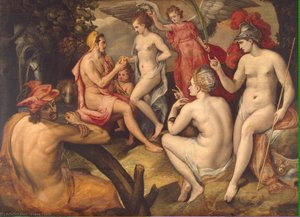
In the grand tapestry of the Northern Renaissance, few works capture the visceral tension between beauty and the primal world as masterfully as Frans Floris’s Pomona. Painted in 1565, this breathtaking oil masterpiece invites the viewer into a lush, mythological realm where the sweetness of harvest meets the shadows of the grotesque. At its heart lies Pomona, the Roman goddess of fruit trees and abundance, rendered with a luminous grace that commands immediate attention. She sits amidst a cornucopia of nature’s finest offerings—vibrant fruits and earthy vegetables—yet she is not alone in this fertile landscape. Beside her rests a bearded, grotesque figure, a stark contrast to her refined elegance, creating a visual dialogue that explores the duality of existence: the civilized versus the wild, the delicate versus the rugged.
The technical brilliance of Floris is on full display through his command of chiaroscuro. The artist employs dramatic lighting to sculpt the figures from the darkness, using brilliant highlights to catch the smooth curve of a peach or the soft glow of Pomona’s skin, while deep, velvety shadows swallow the recesses of the background foliage. This interplay of light and shadow does more than create volume; it breathes life into the textures of the scene. One can almost feel the rough, tactile weave of the wicker basket, the damp coolness of the earth, and the heavy, succulent weight of the ripening produce. Through the meticulous layering of thin oil glazes, Floris achieves a translucent quality that allows light to penetrate the paint layers, lending the entire composition an inner radiance characteristic of the finest Flemish traditions.
Beyond its surface beauty, Pomona serves as a profound meditation on symbolism and the human condition. The abundance of the harvest acts as a powerful metaphor for prosperity, fertility, and the bountiful gifts of the earth. However, the presence of the distorted, primal figure introduces an element of moral complexity or perhaps temptation. This juxtaposition suggests that even within the height of beauty and plenty, there exists a darker, more elemental force. For the discerning collector or interior designer, this painting offers much more than mere decoration; it provides a sophisticated focal point that stimulates intellectual inquiry. Its rich, warm palette of ochre, crimson, and gold makes it an exquisite addition to a curated space, offering a sense of historical depth and timeless elegance that can anchor a room with its dramatic presence and narrative richness.
Întrebări și răspunsuri
Ce dimensiune și orientare sunt recomandate pentru o printare a lucrării "Pomona" de Frans Floris?
Pentru o printare a lucrării "Pomona" de Frans Floris, recomandăm dimensiunea de Large în orientare Landscape.
Poate fi reprodusă în mod legal opera "Pomona" de Frans Floris, aflată la Hallwyl Museum?
"Pomona" de Frans Floris, păstrat la Hallwyl Museum, este în domeniul public – drepturile de autor au expirat. Acest statut determină dacă pot fi realizate reproduceri ale imaginii.
Ce stare de spirit transmite "Pomona" de Frans Floris în cadrul mișcării Baroque?
Emoția Dramatic din "Pomona" însoțește stilul său Baroque.
Biografie artist
The Flemish Master of Romanism: The Life and Legacy of Frans Floris
In the vibrant, intellectual landscape of the 16th-century Low Countries, few figures loomed as large or as influential as Frans Floris. Known to history as Frans Floris the Elder, this Flemish Renaissance pioneer acted as a vital bridge between the Northern traditions of his homeland and the monumental grandeur of the Italian High Renaissance. Born in Antwerp around 1519 into a lineage of skilled craftsmen, Floris carried the weight of a family tradition rooted in stonemasonry and artistry. This heritage of precision and structural understanding would later manifest in his ability to compose massive, complex scenes that commanded the attention of both royalty and the burgeoning merchant class of Antwerp.
The trajectory of Floris’s career was irrevocably altered by his immersion in Romanism, a stylistic movement that saw Northern artists traveling to Italy to absorb the lessons of masters like Michelangelo and Raphael. Under the guidance of mentors such as Lambert Lombard, Floris developed an acute sensitivity to anatomical accuracy and the dramatic use of light and shadow. His work became a profound dialogue between Flemish meticulousness and Italian muscularity. This synthesis allowed him to move beyond mere representation, creating works that embodied the humanist ideals of his era—where classical mythology and biblical narratives were reimagable through a lens of epic scale and emotional depth.
A Tapestry of Myth and Allegory
The breadth of Floris’s oeuvre is nothing short of extraordinary, spanning monumental history paintings, intimate portraits, and intricate designs for tapestries. His mastery lay in his ability to breathe life into the ancient myths, transforming static legends into dynamic, breathing dramas. In works such as The Judgment of Paris, one can witness the opulent textures and complex compositions that defined his mature style, utilizing classical mythology to explore themes of beauty, desire, and fate. Similarly, his Pomona serves as a stunning testament to his ability to depict mythological abundance, blending the grotesque with the sublime in a way that foreshadowed the dramatic energy of the Baroque era.
Beyond the grand scale of his mythological epics, Floris possessed a remarkable gift for capturing the human essence in portraiture and allegorical studies. His paintings often functioned as intellectual puzzles, rich with symbolic detail intended for a sophisticated audience:
- The Allegory of Music: A captivating scene where a lady with a lute is set against the backdrop of Roman soldiers, offering a profound glimpse into the era's use of musical symbolism.
- Head of a Woman: A masterclass in light and shadow, where pearl-adorned curls and lifelike skin tones demonstrate his command over the subtle nuances of portraiture.
- The Awakening of the Arts: A work that showcases his ability to utilize rich textures and dynamic movement to convey the very spirit of creative rebirth.
Historical Significance and Enduring Influence
Frans Floris was more than just a painter; he was an architect of a new Northern aesthetic. By integrating the anatomical rigor of the Italian Renaissance with the narrative richness of Flemish tradition, he helped establish Antwerp as a premier center for European art. His influence extended far beyond the canvas, as his designs for tapestries and prints disseminated his Romanist ideals across the continent, shaping the visual language of generations of Northern artists.
Though his life was cut short in 1570, the impact of his work remained a cornerstone of the Northern Renaissance. He successfully navigated the transition from the late Gothic sensibilities to the sophisticated humanism of the 16th century, leaving behind a legacy of monumental history paintings that continue to captivate viewers with their dramatic compositions and profound intellectual depth. To study the works of Frans Floris is to witness the very moment when the North truly embraced the light of the Renaissance.
Frans Floris
1519 - 1570
Detalii rapide
- Artistic Movement Or Style: Romanism
- Artists Or Movements Influenced By This Artist: ['Lucas de Heere']
- Artists Who Influenced This Artist: ['Lambert Lombard']
- Date Of Birth: 1519
- Date Of Death: 1570
- Full Name: Frans Floris
- Nationality: Flemish
- Notable Artworks:
- The Awakening of the Arts
- Banquet of the Gods
- Head of a Woman
- Place Of Birth: Antwerp