

 Vezi în context
 Trimite
 Distribuie
 Detalii
 Ghidul

 Descarcă
 Produse similare
 Radiografie
 Diaporama
 Statistici
A Landscape Study
 Oil On Canvas
- WallArt
- Post-Impressionism
 1907
1907- Modern
 25.0 x 27.0 cm
 Leeds Art Gallery
 Citește mai mult
Giclée / Imprimare artistică
Printuri giclée sau pe canvas de calitate muzeală, cu proces de producție rapid și opțiuni flexibile de finisare. ( Comandă pictură realizată manual Treci la imagine digitală)




P118B lei10

P118H lei10

P118W lei10

P438Z lei10

P508JH lei12

P508YH lei12

P805H lei10

P805Z lei10

P919BZ lei10

P919G lei10

P919XJ lei10

P959ZH lei10

P968JZ lei12

W106C lei8

W218G lei10

W218JH lei8

W218Y lei10

W307PJ lei10

W316G lei10

W316PJ lei8

W316Y lei10

W398PJ lei8

W4111J lei10

W500HY lei15

W500JH lei15

W692G lei12

W849H lei8

W940BG lei15

W953PJ lei8




Alegeți dintre dimensiunile noastre prestabilite, care respectă proporțiile originale ale operei de artă.

Type the width and the height you need, to fit your frame or your wall. A print can only be cut, never made bigger than the picture, so a size with a different shape loses a part of the image. We send you a digital mockup to approve before we print anything. The picture shown on this page does not show the real cut — only the mockup does.
Livrare în întreaga lume () în 2 săptămâni, în loc de cele 4/5 săptămâni standard. (14 Octombrie)

Livrare expres gratuită la nivel mondial

Pânză de in premium

Asigurare completă pentru transport

Garanție de rambursare a taxelor vamale

Garanția fidelității culorilor

Politica de retur în 100 de zile (doar pentru defecte)

Garanție de rambursare 100%

Reducere pentru comenzi multiple
 Opțiunea cu sticlă este disponibilă doar pentru dimensiuni de sub 110 cm

A Landscape Study
Giclée / Imprimare artistică
Dimensiune reproducere
-


Preț total
lei 365
A Nocturnal Symphony of Light and Shadow
In the quiet depths of Frank Brangwyn’s 1907 masterpiece, A Landscape Study, the viewer is invited into a world where the boundaries between reality and dream dissolve. This evocative oil on canvas captures a nocturnal woodland vista, a scene that transcends mere representation to touch upon the sublime. As night descends upon the forest, Brangym does not merely paint trees; he orchestrates a dramatic interplay of light and darkness. Towering silhouettes of ancient wood rise against a deep indigo sky, which is itself alive with subtle streaks of violet and pale gold. The composition is masterfully arranged to draw the eye upward, following the luminous patches of light that cling to high branches, creating a sense of vertical grandeur that evokes both the mystery of the unknown and the spiritual awe found in the heart of nature.
The emotional resonance of this piece lies in its ability to evoke profound solitude and wonder. There is a theatrical quality to the lighting, as if a sudden, celestial glow has momentarily pierced the canopy, illuminating the textures of the bark and the delicate edges of the leaves. For the collector or interior designer, this painting offers more than just a visual focal point; it provides an atmospheric anchor for a space. It possesses the rare ability to instill a sense of tranquility and contemplation, making it an ideal centerpiece for rooms designed for reflection, such as a private study, a library, or a sophisticated lounge where the mood is one of quiet elegance.
Impressionistic Mastery and Tactile Beauty
Technically, A Landscape Study serves as a brilliant intersection between Impressionism and Post-Impressionism. Brangwyn eschews the rigid constraints of meticulous detail, choosing instead to capture the fleeting, ephemeral essence of a moment. His brushwork is bold and expressive, utilizing the technique of impasto to create a surface that is as much a sculptural experience as it is a visual one. The thick, textured application of paint allows light to physically catch on the ridges of the canvas, lending a palpable energy to the illuminated sections of the forest. This tactile richness ensures that the painting remains dynamic, shifting subtly as the viewer moves around it.
The artist’s command over color and tone is nothing short of masterful. By layering deep, receding shadows at the base of the composition against vibrant, luminous highlights above, Brangwyn achieves a profound sense of atmospheric perspective. The transition from the heavy, dark hues of the forest floor to the ethereal, glowing sky creates an illusion of immense depth within a relatively small-scale work. This sophisticated use of tonal painting ensures that the piece feels expansive and immersive. For those seeking a high-quality reproduction, this emphasis on texture and light makes it a breathtaking addition to any curated collection, offering a timeless window into the soul of the natural world.
Întrebări și răspunsuri
Cu ce sentiment este asociată opera „A Landscape Study”?
"A Landscape Study" este asociată cu un sentiment Tranquil. Tonul emoțional descrie impresia pe care o transmite lucrarea.
În ce an a fost creată "A Landscape Study" de Frank Brangwyn?
„A Landscape Study” datează din 1907. Această dată plasează lucrarea în cadrul carierei lui Frank Brangwyn și în contextul epocii sale.
Ce armonie de culori prezintă "A Landscape Study" de Frank Brangwyn?
Armonia cromatică a operei "A Landscape Study" este descrisă ca fiind Balanced Harmony.
Biografie artist
A Life Forged in Light and Labor: The World of Frank Brangwyn
Frank William Brangwyn, a name synonymous with vibrant color, dramatic landscapes, and the opulent grandeur of the British Empire, was born on May 13th, 1867, in Bruges, Belgium. His early life, steeped in artistic tradition thanks to his father, William Curtis Brangwyn – a renowned church architect and furniture maker – laid the foundation for a career that would span over six decades and leave an indelible mark on both British and European art. The family’s return to England in 1875 proved pivotal, thrusting young Frank into the heart of London's burgeoning artistic scene, a world far removed from the quiet workshops of his Belgian upbringing. While formal education was somewhat fragmented – he frequently skipped classes at Westminster City School to immerse himself in the treasures of the South Kensington Museum – this self-directed learning fostered an independent spirit and a profound appreciation for craftsmanship that would define his unique approach to art. His apprenticeship with Arthur Heygate Mackmurdo, a master craftsman known for his intricate decorative work, and later with William Morris, the champion of the Arts and Crafts movement, provided invaluable insights into glazing, embroidery, and wallpaper design – skills he skillfully integrated into his broader artistic practice.From Maritime Scenes to Orientalist Visions
Brangwyn’s early artistic focus was firmly rooted in the maritime world, a subject deeply resonant with both personal fascination and the prevailing tastes of the late 19th century. He meticulously captured the drama and toil of life at sea – the churning waves, the weathered faces of sailors, the imposing silhouettes of ships against the horizon – demonstrating a remarkable eye for detail and an ability to evoke atmospheric effects that were truly captivating. However, it was his travels throughout Europe and beyond—to Istanbul (Constantinople), Spain, Egypt, Turkey, and Morocco—that fundamentally transformed his artistic vision. These journeys weren’t mere vacations; they were profound experiences that ignited a passion for the exotic, the vibrant, and the utterly unfamiliar. The influence of Orientalism is powerfully evident in paintings like “The Golden Horn, Constantinople,” where rich hues, intricate patterns, and a sense of otherworldly light transport the viewer to a distant land. This shift wasn’t simply a stylistic choice; it represented a deliberate rejection of conventional artistic boundaries and an embrace of a more expressive palette—a bold move that signaled Brangwyn's desire to push beyond established norms. He became a remarkably versatile artist, refusing to be confined by any single medium or technique. Painting remained central to his practice, but he also excelled in drawing, engraving, illustration, stained glass design, furniture design, ceramics, and even architectural projects—a testament to his boundless creativity and adaptability.A Prolific Output and Monumental Commissions
The sheer volume of Brangwyn’s output is astonishing – estimated at over 12,000 works encompassing paintings, drawings, etchings, wood engravings, lithographs, architectural designs, and more. This relentless productivity was fueled by a tireless work ethic and an insatiable curiosity for the world around him. He became renowned for his large-scale mural commissions, characterized by their vibrant colors, intricate detail, and often monumental scale. A particularly significant moment came in 1895 when Siegfried Bing, a prominent art dealer, commissioned him to decorate the exterior of Galerie l'Art Nouveau in Paris – an opportunity that opened doors to a wider world of decorative arts collaborations. His illustrations for a six-volume reprint of Edward William Lane’s translation of “One Thousand and One Nights” in 1896 further showcased his talent for narrative detail and exotic imagery, solidifying his reputation as a master storyteller through visual means. Collaborations with Japanese artist Urushibara Mokuchu on woodblock prints demonstrate his willingness to experiment with different techniques and cultural influences—a hallmark of his artistic evolution. However, perhaps the most ambitious – and ultimately controversial – project was his commission for a series of murals depicting scenes from the British Empire for the House of Lords in 1924. Though initially embraced by Parliament, the panels were eventually rejected, deemed unsuitable for their intended location due to their bold colors and unconventional subject matter. These magnificent works found a new home in Swansea’s Guildhall, becoming the centerpiece of the Brangwyn Hall—a lasting testament to his enduring legacy.The Influence of Style and Recognition
Brangwyn's artistic style evolved significantly throughout his career, reflecting his diverse experiences and influences. His early work, characterized by somber tones and a focus on maritime themes, bears the unmistakable imprint of the Newlyn School – a group of Cornish artists known for their atmospheric landscapes and use of light. However, as he traveled to the East, his palette brightened dramatically, incorporating vibrant colors and exotic motifs inspired by Ottoman architecture, Islamic art, and the landscapes of Morocco and Egypt. This shift wasn’t merely aesthetic; it represented a conscious effort to break free from traditional artistic conventions and embrace a more expressive and dynamic style. Despite facing initial criticism from some British critics who struggled to categorize his diverse range of work, Brangwyn gained considerable recognition on the continent, particularly in France and Italy, where his murals and decorative designs were widely admired for their grandeur and technical skill. He received numerous honors throughout his career, including knighthood in 1941, a testament to his significant contributions to British art and culture.Legacy and Historical Significance
Frank Brangwyn’s artistic journey was deeply intertwined with the aesthetic currents of his time. His early exposure to William Morris and the Arts and Crafts movement instilled in him a reverence for craftsmanship and design integration, while his travels to the East ignited a passion for Orientalist themes that resonated with the broader European fascination with exotic cultures. Though sometimes overlooked by British critics who struggled to categorize his diverse style, Brangwyn’s influence on British decorative arts is undeniable. His murals, in particular, left an indelible mark on public spaces across Britain, transforming them into vibrant showcases of color and imagination. Brangwyn's prolific output and versatility established him as a significant figure in late 19th and early 20th-century art, demonstrating a remarkable ability to adapt and innovate throughout his long and distinguished career. He was not merely an artist; he was a designer, a craftsman, and a visionary who sought to enrich the world around him with beauty and artistry—a legacy that continues to inspire artists and designers alike today.
Frank Brangwyn
1867 - 1956 , Belgia
Informații rapide
- Artistic Movement Or Style: Arts & Crafts, Orientalism
- Artists Or Movements Influenced By This Artist: ['British decorative arts']
- Artists Who Influenced This Artist: ['William Morris']
- Date Of Birth: 1867
- Date Of Death: 1956
- Full Name: Sir Frank William Brangwyn
- Nationality: Britanic
- Notable Artworks:
- Funeral At Sea
- The Golden Horn
- Arab Musicians
- Place Of Birth: Bruges, Belgia
Articole conexe

Paul Cézanne: Cele Mai Reprezentative 25 De Capodopere – Artă, Istorie și Decorațiuni Interioare
Descoperă cele mai frumoase 25 de capodopere Paul Cézanne! Explorează istoria, tehnicile și semnificația picturilor impresioniste iconice. Reproduceri artă de calitate muzeală & inspirație decor interioară pe OriginalUniqueArt.com.

Beyond Impressionism: Exploring the Emotional Depth and Vibrant Textures of Post-Impressionist Landscapes
Discover the profound emotional depth of Post-Impressionist landscapes. Explore how masters like Van Gogh revolutionized art through vibrant color, textured impasto, and symbolic expression in this expert guide to the movement that redefined modern art history.

Top 10 Capodopere Impresioniste: Peisaje care au Definit Arta Modernă | OriginalUniqueArt.ro
Descoperă top 10 capodopere impresioniste care au revoluționat arta! Monet, Manet, Renoir și alți maeștri ai peisajului. Reproduceri de tablouri de calitate muzeală pentru un decor inspirat. Explorează colecția completă pe OriginalUniqueArt.com!

Top 10 Capodopere Impresioniste: Peisaje care au Schimbat Arta | OriginalUniqueArt.ro
Descoperă top 10 capodopere impresioniste care au revoluționat arta! Monet, Manet, Renoir și alți maeștri ai peisajului. Reproduceri de tablouri canvas de calitate muzeală pentru un decor inspirat. Explorează colecția completă pe OriginalUniqueArt.com!
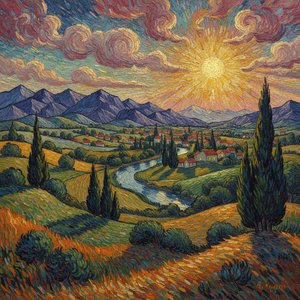
Beyond Impressionism: The Emotional Depth and Vibrant Evolution of Post-Impressionist Landscapes
Explore the profound evolution of Post-Impressionist landscapes. From Van Gogh's emotional brushwork to Cézanne's structural mastery, discover how these visionaries redefined art history through color and form in this expert guide for fine art enthusiasts.