Comută pe versiunea Print
 Vezi mai mult







































 Pentru opere de artă sau reproduceri care depășesc 105 cm (aproximativ 41 de inch) pe oricare dintre laturi, cadrul va fi livrat demontat, sub formă de kit. Această metodă asigură o livrare sigură și previne deteriorarea în timpul transportului.


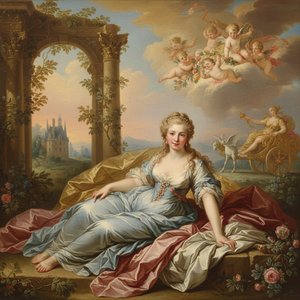
A Glimpse into Renaissance Elegance: François Clouet's Portrait of a Lady
This captivating oil on canvas painting, attributed to François Clouet and dated circa 1510, offers an intimate portrait of a woman embodying the refined sensibilities of the French Renaissance. The subject, poised with a subtle downward gaze, exudes an air of quiet dignity and grace. Her attire—a gown adorned with a delicate ruffled collar and a lustrous pearl necklace—speaks to her status and taste within the courtly circles of the time. Clouet’s masterful rendering captures not only the physical likeness but also hints at the woman's inner character, inviting viewers into a moment frozen in time.Style and Technique: The Precision of Renaissance Miniaturism
François Clouet was renowned for his exceptional skill as a miniaturist and painter, inheriting this talent from his father, Jean Clouet, also a prominent court artist. This portrait exemplifies the hallmarks of his style: meticulous detail, precise rendering of textures (particularly in the fabrics and pearls), and a restrained color palette that emphasizes elegance over dramatic flair. The painting showcases Clouet’s mastery of oil on canvas, utilizing subtle gradations of light and shadow to create depth and form. His approach reflects the broader Renaissance interest in realism and accurate representation, while retaining a distinctly courtly aesthetic.- Miniaturist Precision: The level of detail is remarkable, demonstrating Clouet's training and expertise.
- Restrained Palette: The muted colors contribute to the portrait’s overall sense of refinement and dignity.
- Textural Rendering: Notice how meticulously Clouet captures the sheen of the pearls, the crispness of the ruffles, and the drape of the gown.
Historical Context: The French Court in the Early 16th Century
Created during the reign of Louis XII and later Francis I, this portrait provides a valuable window into the world of the French court. The early 16th century was a period of significant cultural flourishing in France, marked by the influence of Italian Renaissance art and humanist ideals. Portraiture became increasingly important as a means of documenting the nobility and asserting their status. Clouet’s position as a court painter afforded him unparalleled access to the royal family and their circle, allowing him to create these intimate and revealing depictions. The portrait's style reflects the evolving tastes of the French aristocracy, moving away from earlier Gothic conventions towards a more naturalistic and refined aesthetic.Emotional Impact and Symbolism
Beyond its technical brilliance, this portrait evokes a sense of quiet contemplation and understated elegance. The woman’s downward gaze suggests introspection or perhaps a moment of private reflection. The pearl necklace, a symbol of purity and wealth, further underscores her status. While the identity of the sitter remains uncertain, the painting resonates with a timeless quality, capturing the essence of Renaissance beauty and grace. It offers viewers an opportunity to connect with a past era and appreciate the artistry of one of France’s most celebrated portraitists. The overall effect is both captivating and serene, making it a compelling addition to any art collection or interior space.Întrebări și răspunsuri
Din ce țară provine lucrarea de Renaissance „French, approx. )”?
Lucrarea de Renaissance „French, approx. )” a fost creată de un artist născut în Franța.
Care este formatul pentru "French, approx. )"?
"French, approx. )" de Francois Clouet este o compoziție de tip Portrait. Proporțiile merită verificate înainte de a alege dimensiunea printului.
Există lucrări similare cu "French, approx. )"?
Pagina Lucrări similare pentru "French, approx. )" de Francois Clouet prezintă opere de artă similare.
 Previzualizare
 Trimite prin felicitare
 Distribuie
 Detalii despre lucrare
 Ghid
Ghid

 Descarcă imaginea
 Produse similare
 Radiografie
 Galerie foto
 Q&A
Q&A Statistici