Vezi în context
 Trimite
 Distribuie
 Detalii
 Ghidul

 Descarcă
 Produse similare
 Radiografie
 Diaporama
 Statistici
They Pare
 Etching
- WallArt
- Romanticism
 1799
1799- Modern
 21.0 x 15.0 cm
 Citește mai mult
Reproducere pictată manual în ulei
Pictură în ulei pe pânză, realizată manual de artiștii noștri la dimensiunea și ramele dorite de dumneavoastră, pe comandă. ( Comută pe versiunea Print Treci la imagine digitală)




P118B $10

P118H $10

P118W $10

P438Z $10

P508JH $12

P508YH $12

P805H $10

P805Z $10

P919BZ $10

P919G $10

P919XJ $10

P959ZH $10

P968JZ $12

W106C $8

W218G $10

W218JH $8

W218Y $10

W307PJ $10

W316G $10

W316PJ $8

W316Y $10

W398PJ $8

W4111J $10

W500HY $15

W500JH $15

W692G $12

W849H $8

W940BG $15

W953PJ $8




Alegeți dintre dimensiunile noastre prestabilite, care respectă proporțiile originale ale operei de artă.

Puteți introduce propriile dimensiuni pentru a se potrivi unui anumit cadru sau spațiu. Dacă dimensiunea selectată nu corespunde proporțiilor imaginii originale, vom decupa opera de artă sau vom extinde pictura cu elemente suplimentare pictate manual. O simulare digitală vă va fi trimisă pentru aprobare înainte de începerea producției.
Vă rugăm să rețineți că previzualizarea de pe ecran nu reflectă decuparea sau extinderea reală. Doar macheta va arăta cu exactitate compoziția finală.
Deși sunt disponibile dimensiuni personalizate, vă recomandăm să selectați o dimensiune din lista predefinită pentru a păstra proporțiile originale.
După plasarea comenzii, echipa OriginalUniqueArt.com va contacta clientul prin e-mail pentru instrucțiuni și îi va furniza o previzualizare a machetei
Livrare în întreaga lume () în 3-4 săptămâni, în loc de cele 5 săptămâni standard. (25 Septembrie). Fără compromisuri în ceea ce privește calitatea.

Livrare expres gratuită la nivel mondial

Pânză de in premium

Asigurare completă pentru transport

Garanție de rambursare a taxelor vamale

Garanția fidelității culorilor

Politica de retur în 100 de zile (doar pentru defecte)

Garanție de rambursare 100%

Reducere pentru comenzi multiple
 Opțiunea cu sticlă este disponibilă doar pentru dimensiuni de sub 110 cm

They Pare
Tip de reproducere
Dimensiune reproducere
-


Preț total
$ 300
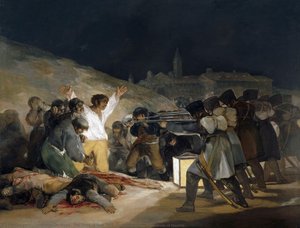
A Study in Vulnerability: Francisco Goya’s “They Pare”
Francisco José de Goya y Lucientes, a name synonymous with the tumultuous spirit of late 18th and early 19th century Spain, possessed an unparalleled ability to distill human experience into arresting visual form. “They Pare,” created in 1799, is not merely a portrait; it’s a poignant study in vulnerability, a glimpse into the anxieties simmering beneath the surface of Spanish society during a period of profound change. This etching and aquatint, rendered on laid paper, offers a remarkably intimate portrayal of a male figure caught in a moment of apparent discomfort – a subtle yet potent expression of unease that resonates powerfully even today.
The composition itself is deceptively simple. A solitary man, his features obscured by shadow and a slight turn of the head, dominates the vertical format. He’s positioned within a vaguely architectural space, reminiscent of a shadowed corridor or perhaps a private chamber, lending an air of intimacy and introspection to the scene. Lines are undeniably the work's primary language; they aren’t used to define form in a rigid manner but rather to suggest movement, texture, and emotional state. Hatching and cross-hatching create a rich tapestry of tones, conveying volume and depth without resorting to dramatic contrasts. The energetic lines, particularly those delineating the figure’s clothing and posture, contribute to a sense of immediacy – as if we've stumbled upon this private moment uninvited.
The Shadowed World of Romanticism
“They Pare” firmly situates itself within the burgeoning movement of Romanticism. Emerging in reaction to the Enlightenment’s emphasis on reason and order, Romanticism embraced emotion, subjectivity, and the darker aspects of human experience. Goya, a key figure in this artistic shift, moved beyond the idealized depictions of Neoclassicism, delving into themes of madness, mortality, social injustice, and the grotesque. This work reflects that trajectory; it’s not a celebration of beauty or heroism but rather an exploration of the anxieties and uncertainties inherent in the human condition.
The etching's creation coincided with a period of significant political and social upheaval in Spain. The reign of King Charles IV was marked by instability, fueled by Napoleon’s ambitions and internal dissent. Goya, who had served as court painter to the Spanish monarchy, witnessed firsthand the growing sense of unease and disillusionment. “They Pare” can be interpreted as a reflection of this broader societal mood – a subtle indictment of social conventions and the pressures they exert on individuals.
Symbolism and the Unspoken
The figure’s posture is particularly compelling, suggesting discomfort or perhaps even shame. His averted gaze and slightly hunched shoulders convey a sense of withdrawal, as if he's attempting to shield himself from an unseen force. The details of his clothing – the draped fabric, the subtle folds – contribute to this feeling of vulnerability. While the subject’s identity remains deliberately ambiguous, the overall impression is one of someone grappling with internal struggles.
Interestingly, the title itself—"They Pare"—is enigmatic. It's a Spanish word meaning "they dismiss," “they ignore,” or even “they scorn.” This ambiguity adds another layer of complexity to the work, suggesting that the figure is being treated with indifference or perhaps actively rebuffed. The etching invites us to speculate about the circumstances surrounding this encounter and the source of the subject’s distress.
Technique and Legacy
Goya's mastery of etching is evident in every line. He skillfully manipulated the textures and tonal values of the medium, creating a remarkably nuanced image. The process involved meticulously drawing lines on a copper plate with a needle, then using acid to etch those lines into the metal surface. Finally, the plate was dampened and paper was pressed onto it, transferring the etched design. This technique allowed Goya to achieve an astonishing level of detail and expressiveness.
“They Pare” stands as a testament to Goya’s artistic genius and his profound understanding of human psychology. It's a work that continues to captivate viewers with its quiet intensity, offering a timeless meditation on vulnerability, isolation, and the complexities of the human experience. Reproductions of this powerful etching provide a valuable window into the mind of one of history’s most influential artists, inviting us to contemplate the shadows within ourselves and the world around us.
Biografie artist
The Spanish Soul: A Life Forged in Shadow and Light
Francisco José de Goya y Lucientes, a name that echoes through the corridors of art history, embodies a profound paradox – he was both a product of his time, deeply rooted in the traditions of Old Masters, and a visionary who anticipated the anxieties and expressive freedom of modern art. Born in 1746 in the unassuming village of Fuendetodos, Spain, Goya’s journey from a provincial artist to court painter, and ultimately, to a chronicler of human suffering and societal decay, is a testament to his extraordinary talent and the turbulent era he navigated. His early training began at fourteen under José Luzán y Martinez, laying the groundwork for his artistic skills before he moved to Madrid and honed his craft with Anton Raphael Mengs, then the dominant force in the Spanish court. This initial period instilled within him a mastery of form and composition, evident in his early commissions – designs for tapestries that depicted lively scenes of everyday life, reflecting a Rococo sensibility tempered by a distinctly Spanish realism. His marriage to Josefa Bayeu, sister of another painter within the royal circle, further solidified his position within the artistic establishment. These early works, while charming and skillfully executed, offered little indication of the profound emotional depth and unsettling darkness that would characterize much of his later oeuvre.Ascension and Transformation: From Courtly Grace to Inner Turmoil
Goya’s rise through the ranks of the Spanish court was steady. He secured a position as a painter to the Royal Chamber in 1786, receiving a constant stream of portrait commissions from the aristocracy and royalty. These portraits are remarkable not merely for their technical brilliance – Goya possessed an uncanny ability to capture likeness with unflinching honesty – but also for their psychological insight. He didn’t simply paint what his sitters *looked* like; he revealed something of their character, their vulnerabilities, and even their hidden anxieties. The Countess of Chinchón, for example, is not merely a beautiful woman adorned in elegant attire, but a figure radiating intelligence and perhaps a touch of melancholy. However, beneath the veneer of courtly success, a transformation was brewing within Goya. A pivotal event occurred in 1793: a severe illness left him profoundly deaf, an affliction that irrevocably altered his perception of the world and, consequently, his art. This isolation plunged him into a period of intense introspection and solitude, severing his connection to the social life he once enjoyed and forcing him inward towards a darker, more subjective reality. The shift in his artistic style was dramatic – bright colors gave way to somber tones, and cheerful scenes were replaced by brooding compositions charged with emotional intensity. He began to explore themes of madness, violence, and the irrational, foreshadowing the anxieties that would grip Europe in the coming decades.The Dark Visions: Caprichos, Disasters, and Black Paintings
This period of artistic ferment culminated in some of Goya’s most iconic works. Los Caprichos, a series of eighty etchings published in 1799, served as a scathing satire of Spanish society – its follies, superstitions, and moral corruption laid bare with unflinching wit and biting irony. The images are grotesque yet captivating, populated by witches, monsters, and caricatures of the aristocracy, all rendered with a masterful command of etching techniques. Yet, it was The Disasters of War, created between 1810 and 1820, that truly cemented Goya’s reputation as a fearless chronicler of human suffering. These harrowing etchings depict the brutality of the Peninsular War – the atrocities committed by both sides, the starvation, the despair, and the utter devastation wrought upon the Spanish people. They are not heroic depictions of battle; they are unflinching portrayals of its horrors, devoid of any romanticism or glorification. Perhaps most unsettling of all are The Black Paintings, a series of fourteen murals Goya painted directly onto the walls of his house, “Quinta del Sordo” (the Deaf Man’s Villa), between 1819 and 1823. These works – including the terrifying Saturn Devouring His Son and the haunting Asmodea – are a descent into the darkest recesses of the human psyche, expressing themes of despair, madness, and existential dread with unparalleled intensity. They represent a radical departure from traditional artistic conventions, anticipating the expressive power of abstract art.Techniques and Influences
Goya’s artistic development was shaped by a confluence of influences. Initially trained in the traditions of Old Masters, he gradually embraced innovation, experimenting with various mediums and techniques throughout his career. His mastery of etching allowed him to create intricate details and expressive lines, while aquatint enabled him to achieve a range of tones and textures, enhancing the emotional impact of his prints. He was particularly adept at capturing human emotion through loose and expressive brushwork, especially in his later paintings. His early works demonstrate a strong influence from the Rococo style, characterized by delicate colors and graceful figures, but as he matured, he increasingly incorporated elements of Romanticism – dramatic lighting, intense emotions, and a focus on individual experience. The work of Francisco Bayeu, his brother-in-law, also played a significant role in shaping Goya’s artistic development, while the Italian masters, particularly Caravaggio, undoubtedly influenced his use of chiaroscuro (the contrast between light and dark).- Etching: Goya's skill with etching allowed him to create incredibly detailed and expressive lines.
- Aquatint: This technique enabled him to achieve a wide range of tones and textures, adding depth and emotion to his prints.
- Brushwork: His loose and expressive brushstrokes, particularly in his later paintings, conveyed a sense of immediacy and emotional intensity.
A Legacy of Innovation and Influence
In 1824, disillusioned by the political turmoil in Spain, Goya sought exile in Bordeaux, France, where he continued to work until his death in 1828. His final years were marked by a renewed focus on printmaking, culminating in the La Tauromaquia series, which explored the spectacle and brutality of bullfighting. Francisco Goya’s legacy is immense and far-reaching. He stands as a pivotal figure in art history, bridging the gap between the Old Masters and modern art. His influence can be seen in the works of countless artists who followed – from Édouard Manet and Pablo Picasso to Francis Bacon – all drawn to his expressive brushwork, psychological depth, and willingness to confront uncomfortable truths. He challenged artistic conventions, embraced innovation, and dared to explore the darker aspects of human experience, leaving behind a body of work that continues to resonate with audiences today. Goya wasn’t merely painting pictures; he was holding up a mirror to society, forcing us to confront our own flaws and vulnerabilities, and reminding us of the enduring power – and fragility – of the human spirit.
Francisco Goya
1746 - 1828 , Spania
Informații rapide
- Artistic Movement Or Style: Romanticism
- Artists Or Movements Influenced By This Artist:
- Manet
- Picasso
- Artists Who Influenced This Artist:
- Mengs
- Luzán
- Date Of Birth: 30 martie 1746
- Date Of Death: 16 aprilie 1828
- Full Name: Francisco José de Goya y Lucientes
- Nationality: Spaniol
- Notable Artworks:
- Disastere de război
- Los Caprichos
- Place Of Birth: Fuendetodos, Spania
Articole conexe

Goya: Cele Mai Iconice Capodopere – Artă Spaniolă pentru Decor Rafinat | OriginalUniqueArt.ro
Descoperă cele mai frumoase 25 de picturi ale lui Francisco Goya! Explorează capodoperele romantice, portretele impresionante și gravurile puternice. Reproduceri artă spaniolă de calitate muzeală pentru un decor rafinat. Explorează colecția completă online pe OriginalUniqueArt.com

Etching: A Historical Survey of Technique, Aesthetic Qualities & Enduring Artistic Significance
Explore the rich history of etching, from its origins to Rembrandt's masterful innovations. Discover the technique, aesthetic qualities & enduring legacy of this captivating art form. Expert insights for collectors and enthusiasts.
Francisco Goya: Darkness & Enlightenment – A Comprehensive Exploration of the Artist's Life, Works, and Enduring Legacy
Explore the life & works of Francisco Goya, Spain's Romantic master. Discover his evolution from court painter to a visionary chronicler of war and social injustice. A comprehensive guide for art enthusiasts.
Top 10 Gravuri Legendare: Capodopere Artistice Care Au Schimbat Istoria Artei
Descoperă top 10 gravuri legendare care au revoluționat arta! Explorează poveștile lui Rembrandt, Goya și alți maeștri. Reproduceri de artă de calitate muzeală pentru un decor inspirat. Vezi colecția completă pe OriginalUniqueArt.com

The Intricate World of Etching: A Historical Survey of Technique, Aesthetic Evolution, and Enduring Artistic Impact
Explore the rich history of etching, from its origins to modern practice. Discover techniques, key artists like Rembrandt, and insights for collectors. A comprehensive guide by OriginalUniqueArt.