Text size

() ·

A painting made for you, by hand

Satul de vrăjitoare

Reproducere pictată manual în ulei

Pictură în ulei pe pânză, pictată manual de artiștii noștri la dimensiunea și ramele dorite de dumneavoastră, pe comandă. ( Comută pe versiunea Print Comută pe Imagine Digitală)

Descriere obiect de colecție

Descoperiți atmosfera sumbră și misterioasă a "Satului de vrăjitoare" de Goya! O capodoperă gotică, plină de simbolism și emoție. Reproducere fidelă pe pânză, pentru un decor unic.

Biografie artist

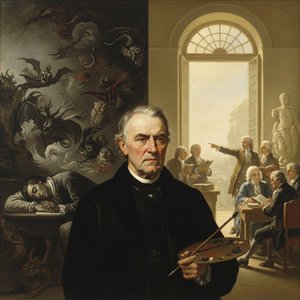
Francisco Goya (1746-1828): Maestru spaniol al romantismului, cunoscut pentru portrete, satirea sumbra și seria "Disastrele războiului". O figură centrală în istoria artei.

from ·

Chapter 1

How large should it be?

Slide to change the size; the picture on the left shows the frame at its real width. The proportions of the original are kept.

Standard
personalizat
CM
INCH

Alegeți dintre dimensiunile noastre prestabilite, care respectă proporțiile originale ale operei de artă.

lățime
înălțime

Introduceți lățimea și înălțimea necesare pentru a se potrivi ramei sau peretelui dumneavoastră. Această lucrare este pictată manual, așa că, pentru o dimensiune cu o formă diferită, artistul poate picta puțin mai mult în jurul imaginii sau poate tăia puțin din margini — dumneavoastră decideți. Vă vom trimite o simulare digitală pentru aprobare înainte de a începe pictarea. Imaginea afișată pe această pagină nu reprezintă rezultatul real — doar simularea este reprezentativă.

Chapter 2

How should it arrive?

Choose the edges of the stretched canvas

Choose your frame

Corner sample of the WhiteWrap canvas edge finish, stretched on lemn masiv bars
White lei1
Corner sample of the BlurSideWrap canvas edge finish, stretched on lemn masiv bars
Blurside lei1
Corner sample of the ExtendedWrap canvas edge finish, stretched on lemn masiv bars
Extended lei1
Corner sample of the P118B picture frame: polistiren turnat, 5 cm wide and 3 cm thick
P118B lei10
Corner sample of the P118H picture frame: polistiren turnat, 5 cm wide and 3 cm thick
P118H lei10
Corner sample of the P118W picture frame: polistiren turnat, 5 cm wide and 3 cm thick
P118W lei10
Corner sample of the P438Z picture frame: polistiren turnat, 5.5 cm wide and 3.5 cm thick
P438Z lei10
Corner sample of the P508JH picture frame: polistiren turnat, 7 cm wide and 3.5 cm thick
P508JH lei12
Corner sample of the P508YH picture frame: polistiren turnat, 7 cm wide and 3.5 cm thick
P508YH lei12
Corner sample of the P805H picture frame: polistiren turnat, 5 cm wide and 3.5 cm thick
P805H lei10
Corner sample of the P805Z picture frame: polistiren turnat, 5 cm wide and 3.5 cm thick
P805Z lei10
Corner sample of the P919BZ picture frame: polistiren turnat, 7 cm wide and 3.5 cm thick
P919BZ lei10
Corner sample of the P919G picture frame: polistiren turnat, 7 cm wide and 3.5 cm thick
P919G lei10
Corner sample of the P919XJ picture frame: polistiren turnat, 7 cm wide and 3.5 cm thick
P919XJ lei10
Corner sample of the P959ZH picture frame: polistiren turnat, 5 cm wide and 3 cm thick
P959ZH lei10
Corner sample of the P968JZ picture frame: polistiren turnat, 6 cm wide and 4 cm thick
P968JZ lei12
Corner sample of the W106C picture frame: lemn masiv, 5 cm wide and 3 cm thick
W106C lei8
Corner sample of the W218G picture frame: lemn masiv, 5 cm wide and 3 cm thick
W218G lei10
Corner sample of the W218JH picture frame: lemn masiv, 5 cm wide and 3 cm thick
W218JH lei8
Corner sample of the W218Y picture frame: lemn masiv, 5 cm wide and 3 cm thick
W218Y lei10
Corner sample of the W307PJ picture frame: lemn masiv, 6 cm wide and 3 cm thick
W307PJ lei10
Corner sample of the W316G picture frame: lemn masiv, 6 cm wide and 3 cm thick
W316G lei10
Corner sample of the W316PJ picture frame: lemn masiv, 6 cm wide and 3 cm thick
W316PJ lei8
Corner sample of the W316Y picture frame: lemn masiv, 6 cm wide and 3 cm thick
W316Y lei10
Corner sample of the W398PJ picture frame: lemn masiv, 5 cm wide and 3 cm thick
W398PJ lei8
Corner sample of the W4111J picture frame: lemn masiv, 6.5 cm wide and 3.5 cm thick
W4111J lei10
Corner sample of the W500HY picture frame: lemn masiv, 7 cm wide and 5 cm thick
W500HY lei15
Corner sample of the W500JH picture frame: lemn masiv, 7 cm wide and 5 cm thick
W500JH lei15
Corner sample of the W692G picture frame: lemn masiv, 8 cm wide and 4 cm thick
W692G lei12
Corner sample of the W849H picture frame: lemn masiv, 5 cm wide and 3 cm thick
W849H lei8
Corner sample of the W940BG picture frame: lemn masiv, 7.5 cm wide and 4.5 cm thick
W940BG lei15
Corner sample of the W953PJ picture frame: lemn masiv, 6 cm wide and 3.5 cm thick
W953PJ lei8
Corner sample of the H24-GOLD picture frame: lemn sculptat cu gesso, 10 cm wide and 6 cm thick
H24-GOLD lei30
Corner sample of the H24-SILVER picture frame: lemn sculptat cu gesso, 10 cm wide and 6 cm thick
H24-SILVER lei30
Corner sample of the H36-GOLD picture frame: lemn sculptat cu gesso, 15 cm wide and 6.5 cm thick
H36-GOLD lei45
Corner sample of the H36-SILVER picture frame: lemn sculptat cu gesso, 15 cm wide and 6.5 cm thick
H36-SILVER lei45

Moulding: . Overall size with the frame: .

Chapter 3

Who paints it, and should anything change?

Examples of what can be changed: Replace face with customer photo; Add pet (e.g., replace cat with dog); Include hidden message in background; Change background landscape or elements.
After order, OriginalUniqueArt.com team will email client for instructions and provide a mockup preview

Livrare în întreaga lume () în 3-4 săptămâni, în loc de cele 5 săptămâni standard. (1 Noiembrie). Fără compromisuri în ceea ce privește calitatea.

Chapter 4

The finishing touches

A nameplate, as in a museum?

Detalii plăcuță din bronz gravat

This elegant plaque features the artist's name and the title of the artwork, finely engraved for a timeless presentation.

It is made from bronze with a refined, elegant finish. The text is precisely laser-engraved for a sharp and permanent result. Measuring 9x2 cm, the plaque is compact yet easy to read. It's built to be durable and scratch-resistant, offering a professional, museum-quality look. Mounting is simple thanks to the included adhesive backing.

Detalii plăcuță din acril transparent

The plaque includes essential engraved details such as the artist's name, the title of the artwork, the date it was created, the type of media used-like oil on canvas or watercolor-a brief description of the piece, and a QR code that links to the complete artwork information.

It is crafted from clear acrylic, offering a sleek, modern appearance. The text is UV-engraved in black to ensure strong visual contrast. With a size of 10x15 cm, it ensures optimal readability. It comes equipped with two metal hooks for secure wall mounting. The plaque is designed to be weather-resistant, making it suitable for various environments, and it includes interactive features that work seamlessly with smartphone scanning.

Detalii placă din acril negru

This elegant plaque includes engraved information such as the artist's name, the title of the artwork, the date it was created, the type of media used (like oil on canvas or watercolor), a short description of the artwork, and a QR code for quick access to more information.

The plaque itself is made from refined black acrylic with a premium finish. The text is laser-engraved in white for high contrast and readability. Its size is 10x15 cm, designed to be easy to read. It comes with two metal hooks for professional mounting. The design is sleek and fits any interior style. It is also weather-resistant and durable, with built-in digital integration for mobile compatibility.

A protective varnish?

When do you need it?

Chapter 5

Your painting, as you ordered it

Satul de vrăjitoare

Tehnică de reproducere

Dimensiune reproducere

-

Selecție de artiști de elită

Mai multe detalii, rafinament și timp suplimentar de execuție

-

Ramă pentru reproducere artistică

-

-

Pentru opere de artă sau reproduceri care depășesc 105 cm (aproximativ 41 de inch) pe oricare dintre laturi, cadrul va fi livrat demontat, sub formă de kit. Această metodă asigură o livrare sigură și previne deteriorarea în timpul transportului.

Este necesară asamblarea profesională – acest produs nu este de tip DIY (de făcut singur).
Kitul trebuie asamblat, iar pânza întinsă, de către un legător de cadre experimentat, utilizând adeziv pentru lemn (neinclus în colet), o cheie pentru întinderea pânzei și cleme pentru a menține barele la unghi drept în timp ce adezivul se usucă. Asamblarea incorectă sau tensiunea neuniformă a pânzei pot deteriora permanent opera de artă și nu sunt acoperite de garanția noastră.

  • Toate barele din lemn masiv sunt incluse, tăiate cu precizie la dimensiunea necesară.

  • Asamblat cu șuruburile incluse, plus adeziv pentru lemn pentru îmbinările de colț, care nu este furnizat și trebuie achiziționat de către tâmplarul dumneavoastră.

  • Sunt necesare unelte profesionale care nu sunt incluse: o șipte de întindere a pânzei (tensionator) și cleme pentru a menține barele la unghi drept în timp ce adezivul se usucă.

Important:
Îmbinările de colț necesită adeziv pentru lemn, barele trebuie fixate cu clești de strângere până când adezivul este complet uscat, iar întinderea pânzei pe cadrul asamblat necesită un clește pentru întins pânza. Niciunul dintre aceste elemente nu este inclus în kit. Vă rugăm să consultați un încadrator profesionist cu experiență înainte de a comanda această dimensiune.

Etichetă de prezentare

-

-

Lac de protecție

Lac lucios (intensifică nuanțele și oferă protecție împotriva luminii și a umidității)

-

Personalizează opera mea de artă

Exemple de elemente ce pot fi personalizate: Înlocuirea feței cu fotografia clientului; Adăugarea unui animal de companie (de exemplu, înlocuirea unei pisici cu un câine); Includerea unui mesaj ascuns în fundal; Modificarea peisajului sau a elementelor din fundal.

-

Livrare rapidă

Livrare la nivel mondial () în 3-4 săptămâni, în loc de cele 5 săptămâni standard. (1 Noiembrie). Fără compromisuri când vine vorba de calitate.

-

Livrare rapidă

Livrare la nivel mondial () în 5 săptămâni. (8 Noiembrie).

Inclus

Preț total calculat

lei 2372

Preț total lei 2372

Opțiunea cu sticlă este disponibilă doar pentru dimensiuni de sub 110 cm

Included with every order

  • Livrare expres gratuită la nivel mondial
  • Pânză de in de înaltă calitate
  • Asigurare completă pentru transport
  • Garanție de rambursare a taxelor vamale
  • Garanția fidelității culorilor
  • Politica de retur în 100 de zile (doar pentru defecte de fabricație)
  • Garanție de rambursare 100%
  • Ofertă pentru comenzi multiple

O Adunărare Întunecată: O Viziune Misterioasă și Înspăimântătoare

Francisco de Goya’s “Witches’ Sabbath” este o capodoperă tulburătoare, care aruncă privitorii într-o lume a intrigilor supranaturale și a frumuseții sinistre. Această operă captivantă, creată în 1821, prezintă o scenă haotică plină de figuri implicate într-un ce pare a fi o adunare ritualică. Figura centrală, îmbrăcată în robe negre, atrage imediat atenția, sugerând teme de putere, mister și ocultism. Această pictură nu este doar un tablou; ea este o fereastră către o minte complexă, marcată de turbulențe interioare și o observație acută a condiției umane.

Un Exemplar Quintesențial al Romanticismului Întunecat

“Witches’ Sabbath” reprezintă un exemplu esențial de romanticism întunecat – un curent artistic care îmbrățișa misterul, macabra și emoțiile puternice. Compoziția densă a lucrării, liniile fluide și utilizarea dramatică a luminii și umbrelor creează o senzație de profunzime și tensiune. Pinselările expresive ale lui Goya și aplicarea texturată a culorilor adaugă la sentimentul general de neliniște și intrigă. Este important să reținem că această lucrare a fost creată într-un context social și politic extrem de volatil, reflectând deziluzia artistului față de valorile Inquiziției Spaniole și credințele superstioase răspândite în societate.

Simbolism și Impact Emoțional: O Lectură Multivalentă

Subiectul “Witches’ Sabbath” este bogat în simboluri, invitând privitorii să speculeze asupra semnificațiilor sale și a contextului său. Figura centrală îmbrăcată în robe negre sugerează un lider sau un participant la o activitate misterioasă – fie o vrăjitoare, un vrăjitor, sau o figură cu puteri supranaturale. Varietatea expresiilor și a posturilor figurilor adaugă straturi de complexitate emoțională scenei, comunicând o gamă largă de sentimente, inclusiv frică, curiozitate și venerație. Observați cu atenție detaliile: privirile fixe, gesturile enigmatice, chiar și expresiile subtile de teamă sau satisfacție – toate contribuie la atmosfera opresivă a scenei. Chiar și copilul în genunchi, simbol al inocenței, pare să fie prins într-un vârtej de ritualuri sinistre.

Tehnica Artistică și Context Istoric: O Privire În Profunzime

“Witches’ Sabbath” este parte a seriei “Pinte Pinturas Negras” (Picturile Negre), lucrări pe care Goya le-a pictat direct pe pereții casei sale, Quinta del Sordo. Aceste opere nu au fost destinate expunerii publice, ci erau o expresie profundă și personală a tulburărilor interioare ale artistului. Tehnica lui Goya – aplicarea grosieră a culorilor (impasto), pânze texturate și utilizarea dramatică a contrastelor luminoase – este remarcabilă. Observați modul în care umbrele se adâncesc, creând o senzație de claustrofobie și intensificând atmosfera întunecată. Lucrarea reflectă, de asemenea, influențele romantismului, cu accentul pus pe emoții puternice și pe explorarea aspectelor obscure ale psihicului uman. Este un testament al talentului lui Goya și al capacității sale de a surprinde stările sufletești profunde.

Întrebări și răspunsuri

Cât de cunoscută este opera „Satul de vrăjitoare” în cadrul mișcării Dark Romanticism?

„Satul de vrăjitoare” este înregistrat ca fiind Iconice printre lucrările de tip Dark Romanticism din catalog.

Care este culoarea dominantă în "Satul de vrăjitoare"?

Culoarea dominantă a operei "Satul de vrăjitoare" de Francisco Goya este Negru (#1f150d).

Este disponibil un link de descărcare pentru "Satul de vrăjitoare"?

Imaginea pentru "Satul de vrăjitoare" de Francisco Goya poate fi descărcată de pe pagina dedicată lucrării, Descărcare: descărcare imagine digitală de înaltă rezoluție.

More about this painting

Previzualizare Previzualizare AR Comută pe versiunea Print Comută pe Imagine Digitală Trimite prin felicitare
Detalii despre lucrare Ghid Adaugă la favorite Descarcă imaginea Produse similare Radiografie Galerie foto Q&A Statistici

In numbers

  • 1821the year it was painted
  • 29frames to choose from
  • standard sizes, in its own proportions
  • 5weeks to paint and deliver it
Francisco Goya

Francisco Goya

1746 - 1828, Spania

Quick facts about Francisco Goya

  • Artistic Movement Or Style: Romanticism
  • Artists Or Movements Influenced By This Artist:
    • Manet
    • Picasso
  • Artists Who Influenced This Artist:
    • Mengs
    • Luzán
  • Date Of Birth: 30 martie 1746
  • Date Of Death: 16 aprilie 1828
  • Full Name: Francisco José de Goya y Lucientes
  • Nationality: Spaniol
  • Notable Artworks:
    • Disastere de război
    • Los Caprichos
  • Place Of Birth: Fuendetodos, Spania

Biografie artist

The Spanish Soul: A Life Forged in Shadow and Light

Francisco José de Goya y Lucientes, a name that echoes through the corridors of art history, embodies a profound paradox – he was both a product of his time, deeply rooted in the traditions of Old Masters, and a visionary who anticipated the anxieties and expressive freedom of modern art. Born in 1746 in the unassuming village of Fuendetodos, Spain, Goya’s journey from a provincial artist to court painter, and ultimately, to a chronicler of human suffering and societal decay, is a testament to his extraordinary talent and the turbulent era he navigated. His early training began at fourteen under José Luzán y Martinez, laying the groundwork for his artistic skills before he moved to Madrid and honed his craft with Anton Raphael Mengs, then the dominant force in the Spanish court. This initial period instilled within him a mastery of form and composition, evident in his early commissions – designs for tapestries that depicted lively scenes of everyday life, reflecting a Rococo sensibility tempered by a distinctly Spanish realism. His marriage to Josefa Bayeu, sister of another painter within the royal circle, further solidified his position within the artistic establishment. These early works, while charming and skillfully executed, offered little indication of the profound emotional depth and unsettling darkness that would characterize much of his later oeuvre.

Ascension and Transformation: From Courtly Grace to Inner Turmoil

Goya’s rise through the ranks of the Spanish court was steady. He secured a position as a painter to the Royal Chamber in 1786, receiving a constant stream of portrait commissions from the aristocracy and royalty. These portraits are remarkable not merely for their technical brilliance – Goya possessed an uncanny ability to capture likeness with unflinching honesty – but also for their psychological insight. He didn’t simply paint what his sitters *looked* like; he revealed something of their character, their vulnerabilities, and even their hidden anxieties. The Countess of Chinchón, for example, is not merely a beautiful woman adorned in elegant attire, but a figure radiating intelligence and perhaps a touch of melancholy. However, beneath the veneer of courtly success, a transformation was brewing within Goya. A pivotal event occurred in 1793: a severe illness left him profoundly deaf, an affliction that irrevocably altered his perception of the world and, consequently, his art. This isolation plunged him into a period of intense introspection and solitude, severing his connection to the social life he once enjoyed and forcing him inward towards a darker, more subjective reality. The shift in his artistic style was dramatic – bright colors gave way to somber tones, and cheerful scenes were replaced by brooding compositions charged with emotional intensity. He began to explore themes of madness, violence, and the irrational, foreshadowing the anxieties that would grip Europe in the coming decades.

The Dark Visions: Caprichos, Disasters, and Black Paintings

This period of artistic ferment culminated in some of Goya’s most iconic works. Los Caprichos, a series of eighty etchings published in 1799, served as a scathing satire of Spanish society – its follies, superstitions, and moral corruption laid bare with unflinching wit and biting irony. The images are grotesque yet captivating, populated by witches, monsters, and caricatures of the aristocracy, all rendered with a masterful command of etching techniques. Yet, it was The Disasters of War, created between 1810 and 1820, that truly cemented Goya’s reputation as a fearless chronicler of human suffering. These harrowing etchings depict the brutality of the Peninsular War – the atrocities committed by both sides, the starvation, the despair, and the utter devastation wrought upon the Spanish people. They are not heroic depictions of battle; they are unflinching portrayals of its horrors, devoid of any romanticism or glorification. Perhaps most unsettling of all are The Black Paintings, a series of fourteen murals Goya painted directly onto the walls of his house, “Quinta del Sordo” (the Deaf Man’s Villa), between 1819 and 1823. These works – including the terrifying Saturn Devouring His Son and the haunting Asmodea – are a descent into the darkest recesses of the human psyche, expressing themes of despair, madness, and existential dread with unparalleled intensity. They represent a radical departure from traditional artistic conventions, anticipating the expressive power of abstract art.

Techniques and Influences

Goya’s artistic development was shaped by a confluence of influences. Initially trained in the traditions of Old Masters, he gradually embraced innovation, experimenting with various mediums and techniques throughout his career. His mastery of etching allowed him to create intricate details and expressive lines, while aquatint enabled him to achieve a range of tones and textures, enhancing the emotional impact of his prints. He was particularly adept at capturing human emotion through loose and expressive brushwork, especially in his later paintings. His early works demonstrate a strong influence from the Rococo style, characterized by delicate colors and graceful figures, but as he matured, he increasingly incorporated elements of Romanticism – dramatic lighting, intense emotions, and a focus on individual experience. The work of Francisco Bayeu, his brother-in-law, also played a significant role in shaping Goya’s artistic development, while the Italian masters, particularly Caravaggio, undoubtedly influenced his use of chiaroscuro (the contrast between light and dark).
  • Etching:
  • Goya's skill with etching allowed him to create incredibly detailed and expressive lines.
  • Aquatint:
  • This technique enabled him to achieve a wide range of tones and textures, adding depth and emotion to his prints.
  • Brushwork:
  • His loose and expressive brushstrokes, particularly in his later paintings, conveyed a sense of immediacy and emotional intensity.

A Legacy of Innovation and Influence

In 1824, disillusioned by the political turmoil in Spain, Goya sought exile in Bordeaux, France, where he continued to work until his death in 1828. His final years were marked by a renewed focus on printmaking, culminating in the La Tauromaquia series, which explored the spectacle and brutality of bullfighting. Francisco Goya’s legacy is immense and far-reaching. He stands as a pivotal figure in art history, bridging the gap between the Old Masters and modern art. His influence can be seen in the works of countless artists who followed – from Édouard Manet and Pablo Picasso to Francis Bacon – all drawn to his expressive brushwork, psychological depth, and willingness to confront uncomfortable truths. He challenged artistic conventions, embraced innovation, and dared to explore the darker aspects of human experience, leaving behind a body of work that continues to resonate with audiences today. Goya wasn’t merely painting pictures; he was holding up a mirror to society, forcing us to confront our own flaws and vulnerabilities, and reminding us of the enduring power – and fragility – of the human spirit.

Informații rapide

  • Dimensions: 230 x 265 cm
  • Artistic style: Dark Romanticism
  • Location: Museul Lázaro Galdiano, Madrid
  • Subject or theme: Vrăjitorie, ocultism
  • Movement: Romanticism
  • Medium: Ulei pe pânză

Test de cunoștințe despre artă

Fiecare întrebare are un singur răspuns corect.

Întrebare 1:
În ce perioadă a fost creată pictura "Sabbatul Vrăjitoarelor" de Goya?
Întrebare 2:
Care dintre următoarele caracteristici definește cel mai bine stilul artistic al lui Goya în această pictură?
Întrebare 3:
Ce simbolism este cel mai probabil asociat cu figura centrală îmbrăcată în robe negre?
Întrebare 4:
În ce context istoric a fost creată pictura "Sabbatul Vrăjitoarelor"?
Întrebare 5:
Cum se reflectă utilizarea dramatică a luminii și umbrelor în pictură?