() ·

O pictură creată pentru tine, lucrată manual

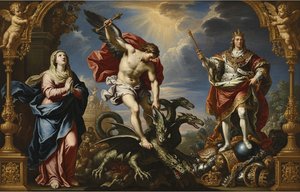
Saint Lucy

Reproducere pictată manual în ulei

Pictură în ulei pe pânză, pictată manual de artiștii noștri la dimensiunea și ramele dorite de dumneavoastră, pe comandă. ( Comută pe versiunea Print Comută pe Imagine Digitală)

Descriere obiect de colecție

Zurbarán’s Saint Lucy exemplifies the Baroque preoccupation with idealized beauty and spiritual contemplation. The masterful use of light—particularly the dramatic illumination highlighting the woman's face—creates a sense of solemn grandeur and draws viewers into the scene’s contemplative atmosphere.

Biografie artist

Francisco de Zurbarán (1598-1664): Maestru spaniol al Barocului, renumit pentru picturile sale religioase dramatice cu clarobscur și atmosfera spirituală profundă. Descoperi operele sale!

de la ·

Capitolul 1

Ce dimensiune ar trebui să aibă?

Glisați pentru a schimba dimensiunea; imaginea din stânga prezintă cadrul la lățimea sa reală. Proporțiile originale sunt păstrate.

Standard
personalizat
CM
INCH

Alegeți dintre dimensiunile noastre prestabilite, care respectă proporțiile originale ale operei de artă.

lățime
înălțime

Introduceți lățimea și înălțimea necesare pentru a se potrivi ramei sau peretelui dumneavoastră. Această lucrare este pictată manual, așa că, pentru o dimensiune cu o formă diferită, artistul poate picta puțin mai mult în jurul imaginii sau poate tăia puțin din margini — dumneavoastră decideți. Vă vom trimite o simulare digitală pentru aprobare înainte de a începe pictarea. Imaginea afișată pe această pagină nu reprezintă rezultatul real — doar simularea este reprezentativă.

Capitolul 2

Cum ar trebui să ajungă?

Alege marginile tabloului pe pânză întinsă

Alege cadrul tău

Corner sample of the WhiteWrap canvas edge finish, stretched on lemn masiv bars
Alb lei1
Corner sample of the BlurSideWrap canvas edge finish, stretched on lemn masiv bars
Margini difuze lei1
Corner sample of the ExtendedWrap canvas edge finish, stretched on lemn masiv bars
Extins lei1
Corner sample of the P118B picture frame: polistiren turnat, 5 cm wide and 3 cm thick
P118B lei10
Corner sample of the P118H picture frame: polistiren turnat, 5 cm wide and 3 cm thick
P118H lei10
Corner sample of the P118W picture frame: polistiren turnat, 5 cm wide and 3 cm thick
P118W lei10
Corner sample of the P438Z picture frame: polistiren turnat, 5.5 cm wide and 3.5 cm thick
P438Z lei10
Corner sample of the P508JH picture frame: polistiren turnat, 7 cm wide and 3.5 cm thick
P508JH lei12
Corner sample of the P508YH picture frame: polistiren turnat, 7 cm wide and 3.5 cm thick
P508YH lei12
Corner sample of the P805H picture frame: polistiren turnat, 5 cm wide and 3.5 cm thick
P805H lei10
Corner sample of the P805Z picture frame: polistiren turnat, 5 cm wide and 3.5 cm thick
P805Z lei10
Corner sample of the P919BZ picture frame: polistiren turnat, 7 cm wide and 3.5 cm thick
P919BZ lei10
Corner sample of the P919G picture frame: polistiren turnat, 7 cm wide and 3.5 cm thick
P919G lei10
Corner sample of the P919XJ picture frame: polistiren turnat, 7 cm wide and 3.5 cm thick
P919XJ lei10
Corner sample of the P959ZH picture frame: polistiren turnat, 5 cm wide and 3 cm thick
P959ZH lei10
Corner sample of the P968JZ picture frame: polistiren turnat, 6 cm wide and 4 cm thick
P968JZ lei12
Corner sample of the W106C picture frame: lemn masiv, 5 cm wide and 3 cm thick
W106C lei8
Corner sample of the W218G picture frame: lemn masiv, 5 cm wide and 3 cm thick
W218G lei10
Corner sample of the W218JH picture frame: lemn masiv, 5 cm wide and 3 cm thick
W218JH lei8
Corner sample of the W218Y picture frame: lemn masiv, 5 cm wide and 3 cm thick
W218Y lei10
Corner sample of the W307PJ picture frame: lemn masiv, 6 cm wide and 3 cm thick
W307PJ lei10
Corner sample of the W316G picture frame: lemn masiv, 6 cm wide and 3 cm thick
W316G lei10
Corner sample of the W316PJ picture frame: lemn masiv, 6 cm wide and 3 cm thick
W316PJ lei8
Corner sample of the W316Y picture frame: lemn masiv, 6 cm wide and 3 cm thick
W316Y lei10
Corner sample of the W398PJ picture frame: lemn masiv, 5 cm wide and 3 cm thick
W398PJ lei8
Corner sample of the W4111J picture frame: lemn masiv, 6.5 cm wide and 3.5 cm thick
W4111J lei10
Corner sample of the W500HY picture frame: lemn masiv, 7 cm wide and 5 cm thick
W500HY lei15
Corner sample of the W500JH picture frame: lemn masiv, 7 cm wide and 5 cm thick
W500JH lei15
Corner sample of the W692G picture frame: lemn masiv, 8 cm wide and 4 cm thick
W692G lei12
Corner sample of the W849H picture frame: lemn masiv, 5 cm wide and 3 cm thick
W849H lei8
Corner sample of the W940BG picture frame: lemn masiv, 7.5 cm wide and 4.5 cm thick
W940BG lei15
Corner sample of the W953PJ picture frame: lemn masiv, 6 cm wide and 3.5 cm thick
W953PJ lei8
Corner sample of the H24-GOLD picture frame: lemn sculptat cu gesso, 10 cm wide and 6 cm thick
H24-GOLD lei30
Corner sample of the H24-SILVER picture frame: lemn sculptat cu gesso, 10 cm wide and 6 cm thick
H24-SILVER lei30
Corner sample of the H36-GOLD picture frame: lemn sculptat cu gesso, 15 cm wide and 6.5 cm thick
H36-GOLD lei45
Corner sample of the H36-SILVER picture frame: lemn sculptat cu gesso, 15 cm wide and 6.5 cm thick
H36-SILVER lei45

Ramă: . Dimensiuni cu ramă: .

Capitolul 3

Cine îl pictează și ar trebui să se schimbe ceva?

Exemple de elemente care pot fi modificate: Înlocuirea feței cu fotografia clientului; Adăugarea unui animal de companie (de ex., înlocuirea unei pisici cu un câine); Includerea unui mesaj ascuns în fundal; Modificarea peisajului sau a elementelor din fundal.
După plasarea comenzii, echipa OriginalUniqueArt.com va contacta clientul prin e-mail pentru instrucțiuni și va furniza o previzualizare (mockup)

Livrare în întreaga lume () în 3-4 săptămâni, în loc de cele 5 săptămâni standard. (9 Noiembrie). Fără compromisuri în ceea ce privește calitatea.

Capitolul 4

Ultimele retușuri

O plăcuță de identificare, ca la muzeu?

Detalii plăcuță din bronz gravat

This elegant plaque features the artist's name and the title of the artwork, finely engraved for a timeless presentation.

It is made from bronze with a refined, elegant finish. The text is precisely laser-engraved for a sharp and permanent result. Measuring 9x2 cm, the plaque is compact yet easy to read. It's built to be durable and scratch-resistant, offering a professional, museum-quality look. Mounting is simple thanks to the included adhesive backing.

Detalii plăcuță din acril transparent

The plaque includes essential engraved details such as the artist's name, the title of the artwork, the date it was created, the type of media used-like oil on canvas or watercolor-a brief description of the piece, and a QR code that links to the complete artwork information.

It is crafted from clear acrylic, offering a sleek, modern appearance. The text is UV-engraved in black to ensure strong visual contrast. With a size of 10x15 cm, it ensures optimal readability. It comes equipped with two metal hooks for secure wall mounting. The plaque is designed to be weather-resistant, making it suitable for various environments, and it includes interactive features that work seamlessly with smartphone scanning.

Detalii placă din acril negru

This elegant plaque includes engraved information such as the artist's name, the title of the artwork, the date it was created, the type of media used (like oil on canvas or watercolor), a short description of the artwork, and a QR code for quick access to more information.

The plaque itself is made from refined black acrylic with a premium finish. The text is laser-engraved in white for high contrast and readability. Its size is 10x15 cm, designed to be easy to read. It comes with two metal hooks for professional mounting. The design is sleek and fits any interior style. It is also weather-resistant and durable, with built-in digital integration for mobile compatibility.

Un lac protector?

Când aveți nevoie de el?

Capitolul 5

Tabloul tău, exact așa cum l-ai comandat

Saint Lucy

Tehnică de reproducere

Dimensiune reproducere

-

Selecție de artiști de elită

Mai multe detalii, rafinament și timp suplimentar de execuție

-

Ramă pentru reproducere artistică

-

-

Pentru opere de artă sau reproduceri care depășesc 105 cm (aproximativ 41 de inch) pe oricare dintre laturi, cadrul va fi livrat demontat, sub formă de kit. Această metodă asigură o livrare sigură și previne deteriorarea în timpul transportului.

Este necesară asamblarea profesională – acest produs nu este de tip DIY (de făcut singur).
Kitul trebuie asamblat, iar pânza întinsă, de către un legător de cadre experimentat, utilizând adeziv pentru lemn (neinclus în colet), o cheie pentru întinderea pânzei și cleme pentru a menține barele la unghi drept în timp ce adezivul se usucă. Asamblarea incorectă sau tensiunea neuniformă a pânzei pot deteriora permanent opera de artă și nu sunt acoperite de garanția noastră.

  • Toate barele din lemn masiv sunt incluse, tăiate cu precizie la dimensiunea necesară.

  • Asamblat cu șuruburile incluse, plus adeziv pentru lemn pentru îmbinările de colț, care nu este furnizat și trebuie achiziționat de către tâmplarul dumneavoastră.

  • Sunt necesare unelte profesionale care nu sunt incluse: o șipte de întindere a pânzei (tensionator) și cleme pentru a menține barele la unghi drept în timp ce adezivul se usucă.

Important:
Îmbinările de colț necesită adeziv pentru lemn, barele trebuie fixate cu clești de strângere până când adezivul este complet uscat, iar întinderea pânzei pe cadrul asamblat necesită un clește pentru întins pânza. Niciunul dintre aceste elemente nu este inclus în kit. Vă rugăm să consultați un încadrator profesionist cu experiență înainte de a comanda această dimensiune.

Etichetă de prezentare

-

-

Lac de protecție

Lac lucios (intensifică nuanțele și oferă protecție împotriva luminii și a umidității)

-

Personalizează opera mea de artă

Exemple de elemente ce pot fi personalizate: Înlocuirea feței cu fotografia clientului; Adăugarea unui animal de companie (de exemplu, înlocuirea unei pisici cu un câine); Includerea unui mesaj ascuns în fundal; Modificarea peisajului sau a elementelor din fundal.

-

Livrare rapidă

Livrare la nivel mondial () în 3-4 săptămâni, în loc de cele 5 săptămâni standard. (9 Noiembrie). Fără compromisuri când vine vorba de calitate.

-

Livrare rapidă

Livrare la nivel mondial () în 5 săptămâni. (16 Noiembrie).

Inclus

Preț total calculat

lei 1431

Preț total lei 1431

Opțiunea cu sticlă este disponibilă doar pentru dimensiuni de sub 110 cm

Inclus în fiecare comandă

  • Livrare expres gratuită la nivel mondial
  • Pânză de in de înaltă calitate
  • Asigurare completă pentru transport
  • Garanție de rambursare a taxelor vamale
  • Garanția fidelității culorilor
  • Politica de retur în 100 de zile (doar pentru defecte de fabricație)
  • Garanție de rambursare 100%
  • Ofertă pentru comenzi multiple

A Portrait of Faith Illuminated: Exploring Francisco de Zurbarán’s Saint Lucy

Francisco de Zurbarán's “Saint Lucy,” completed around 1625/1630, stands as a testament to the Baroque mastery achieved in Seville during its golden age. More than just a depiction of a saint—Lucille—the painting transcends mere representation, delving into profound themes of piety, sacrifice, and spiritual contemplation. It’s a work that continues to captivate viewers centuries later due to Zurbarán's unparalleled ability to convey emotion through meticulous observation and masterful technique.

  • Subject Matter: The portrait focuses on Saint Lucy, a Roman martyr venerated for her unwavering devotion to Christianity. She is portrayed from the hips upwards, emphasizing her dignity and serenity—a deliberate choice reflecting the Baroque ideal of idealized beauty within religious context.
  • Style & Technique: Zurbarán’s signature style embodies the austere grandeur characteristic of Spanish Baroque art. He employs tenebrismo – dramatic chiaroscuro – skillfully manipulating light and shadow to sculpt the figure, creating an illusionistic depth that draws the eye inward. The stark contrast between illuminated flesh tones and enveloping darkness amplifies the saint's solemn presence and underscores her spiritual purity.
  • Historical Context: Seville in the early 17th century was a vibrant center of artistic innovation, fueled by royal patronage and influenced by Italian Mannerism. Zurbarán’s work aligns perfectly with this period’s preoccupation with religious iconography and its desire to evoke profound emotional responses from the viewer. The painting reflects the broader cultural climate of Spain during the Counter-Reformation, where art served as a powerful tool for reaffirming Catholic faith.

Symbolism: Light, Sacrifice, and Divine Grace

The pervasive use of light is paramount to understanding “Saint Lucy.” It isn’t merely illumination; it's divine grace—a radiant glow emanating from above the saint’s head, symbolizing God’s benevolent presence. This haloed luminescence highlights her face, casting a soft shadow over the rest of her body and emphasizing her spiritual radiance. The inclusion of the pewter plate bearing two human eyes serves as a poignant reminder of Lucy’s martyrdom – she willingly endured torture to protect her faith and refused to renounce Christianity.

  • The Plate with Eyes: Representing Lucy's unwavering gaze upon God, the plate symbolizes her steadfast devotion and willingness to endure suffering for righteousness.
  • Palm Frond & Flowers: The palm frond signifies victory over death and resurrection—a visual allusion to Christ’s triumph over mortality—while the flowers adorning Lucy’s crown symbolize purity and divine grace.

A Masterpiece of Composition and Detail

Zurbarán's compositional choices contribute significantly to the painting’s impact. The vertical orientation draws the viewer’s eye upwards, mirroring Lucy’s gaze toward heaven. The careful positioning of her body—angled slightly to our right but facing towards us—creates a dynamic interplay between stillness and contemplation. Furthermore, Zurbarán’s meticulous attention to detail—from the texture of her dress to the subtle nuances of facial expression—elevates “Saint Lucy” beyond mere representation, transforming it into an emotionally resonant experience.

  • Clothing Detail: The scarlet bodice and white sleeves exemplify Baroque fashion while simultaneously conveying a sense of nobility and spiritual refinement.
  • Jewelry & Accessories: The gold brooch and pearl necklace symbolize wealth and piety—elements carefully integrated into the saint’s attire to reinforce her status as a holy figure.

“Saint Lucy” remains an enduring symbol of faith, resilience, and spiritual beauty. Its masterful technique, evocative symbolism, and profound emotional impact solidify Zurbarán's place among the greatest artists of his era—a timeless masterpiece that continues to inspire admiration and contemplation.

Întrebări și răspunsuri

Cine a creat "Saint Lucy" și în ce an?

„Saint Lucy” a fost creat de Francisco de Zurbarán în 1630.

În ce etapă a carierei lui Francisco de Zurbarán se încadrează "Saint Lucy", având în vedere data sa de execuție?

Având în vedere data de 1630, „Saint Lucy” aparține perioadei Mature a lui Francisco de Zurbarán.

Ce culoare domină compoziția lucrării "Saint Lucy" de Francisco de Zurbarán?

Phthalo Green (#1f1a14) este culoarea dominantă a operei "Saint Lucy" de Francisco de Zurbarán.

Mai multe detalii despre această pictură

Previzualizare Previzualizare AR Comută pe versiunea Print Comută pe Imagine Digitală Trimite prin felicitare
Detalii despre lucrare Ghid Adaugă la favorite Descarcă imaginea Produse similare Radiografie Galerie foto Întrebări și răspunsuri Statistici

În cifre

  • 1630anul în care a fost pictată
  • 29rame din care puteți alege
  • dimensiuni standard, în propriile proporții
  • 5săptămâni pentru pictare și livrare
Francisco de Zurbarán

Francisco de Zurbarán

1598 - 1664, Spania

Informații rapide despre Francisco de Zurbarán

  • Artistic Movement Or Style: Baroc, Tenebrism
  • Artists Or Movements Influenced By This Artist: ['Zurbaranistas']
  • Artists Who Influenced This Artist: ['Juan Sánchez Cotán']
  • Date Of Birth: 1598
  • Date Of Death: 1664
  • Full Name: Francisco de Zurbarán
  • Nationality: Spaniol
  • Notable Artworks:
    • Immaculada Concepción
    • Agnus Dei
    • St Francis Stigmata
  • Place Of Birth: Fuente de Cantos, Spania

Biografie artist

Early Life and Formation in Extremadura

Francisco de Zurbarán, born in Fuente de Cantos, Extremadura, Spain, in 1598, emerged from a region steeped in religious fervor and rural austerity—qualities that would profoundly shape his artistic vision. Though details of his earliest training remain somewhat elusive, we know he initially apprenticed with the local painter Alejandro de la Mina before moving to Seville to study under Alonso de Najera. It was within Najera’s workshop that Zurbarán began to absorb the burgeoning Baroque style, a dramatic departure from the more restrained artistic traditions of previous generations. Even in these formative years, a remarkable talent for capturing realistic detail and imbuing his subjects with emotional weight became apparent, hinting at the distinctive path he would forge as an artist. The stark landscapes and devout atmosphere of Extremadura instilled within him a sensibility that favored simplicity, solemnity, and a deep engagement with spiritual themes—characteristics that would define his mature work. His early exposure to the traditions of Spanish painting, particularly the influence of the austere realism prevalent in the region, laid the groundwork for his later artistic style.

The Seville Period: Establishing a Singular Style

By 1614, Zurbarán had established himself in Seville, a vibrant cultural hub and the gateway to Spain’s vast American colonies. He quickly rose to prominence, establishing a successful workshop and attracting numerous commissions, primarily for religious paintings intended for churches, monasteries, and private devotional use. This period witnessed the full flowering of his signature style—a compelling blend of stark realism and intense spirituality. His early works already showcased a masterful command of *tenebrism*, a technique borrowed from Caravaggio that employed dramatic contrasts between light and shadow to create a sense of drama and emphasize the emotional intensity of his subjects. He wasn’t merely replicating what he saw; he was striving to reveal an inner truth, a profound spiritual presence within each figure. His paintings weren't simply representations of saints or biblical scenes; they were invitations to contemplation, designed to evoke a visceral response in the viewer. The influence of earlier Spanish masters like Juan Sánchez Cotán, known for his austere still lifes and precise realism, is also evident in Zurbarán’s early work, as well as the sculptural traditions prevalent in Seville at the time.

Master of Tenebrism and Religious Devotion

Zurbarán's artistic prowess lay in his ability to transform religious narratives into powerfully moving visual experiences. He became renowned for his depictions of monks, nuns, martyrs, and saints—figures often portrayed in moments of profound contemplation or suffering. His *Immaculate Conception* (c. 1635), housed in the Museo de Bellas Artes in Bilbao, exemplifies this mastery; the Virgin Mary is depicted with a serene dignity, bathed in ethereal light against a dark background, conveying both purity and divine grace. Similarly, his *Agnus Dei* (c. 1640), now part of the Metropolitan Museum of Art collection, presents a poignant image of Christ as the sacrificial lamb, radiating an aura of solemnity and sacrifice. The *Sudarium of St Veronica*, with its haunting depiction of the veil bearing the imprint of Christ’s face, showcases his exceptional control over tenebrism and emotional depth. He didn't shy away from portraying the physical realities of faith—the austerity of monastic life, the pain of martyrdom—but always infused these scenes with a sense of reverence and spiritual significance. His *St Francis Receiving the Stigmata* demonstrates his ability to depict profound spiritual experiences with remarkable sensitivity and realism. The series of paintings depicting Carthusian monks further exemplifies his skill in portraying austere religious life, capturing their quiet devotion and inner peace.

Royal Patronage and Lasting Legacy

Around 1630, Zurbarán achieved a significant milestone in his career when he became a court painter to Philip IV. This appointment brought him increased recognition and access to royal commissions, further solidifying his reputation as one of Spain’s leading artists. Despite this success, his popularity waned somewhat in later years with the rise of different artistic tastes. The economic hardships facing Spain during the mid-17th century also impacted his ability to secure large-scale projects. Nevertheless, Zurbarán continued to work diligently, adapting his style and exploring new themes. His influence on Spanish Baroque art is undeniable; his dramatic use of chiaroscuro and his focus on religious themes inspired generations of artists. A circle of followers, known as the “Zurbaranistas,” emerged, continuing to push the boundaries of tenebrism and explore the expressive possibilities of light and shadow. Though he passed away in 1664, Francisco de Zurbarán left behind a rich artistic legacy that continues to be celebrated today, securing his place as one of Spain’s most important Baroque painters—a master of religious art whose works continue to resonate with viewers centuries later.
  • Notable Works: Immaculate Conception (c. 1635), Agnus Dei (c. 1640), Sudarium of St Veronica, St Francis Receiving the Stigmata, Paintings of Carthusian Monks.
  • Historical Significance: Zurbarán’s influence on Spanish Baroque is undeniable; his use of chiaroscuro and his focus on religious themes inspired generations of artists.

Informații rapide

  • Title: Saint Lucy
  • Medium: Oil on panel
  • Dimensions: 134 x 106 cm
  • Year: 1630
  • Artistic style: Realistic portraiture
  • Movement: Baroque

Test de cunoștințe despre artă

Fiecare întrebare are un singur răspuns corect.

Întrebare 1:
What is the primary subject of Francisco de Zurbarán’s Saint Lucy?
Întrebare 2:
The painting utilizes dramatic lighting to emphasize which aspect?
Întrebare 3:
What is notable about Zurbarán’s stylistic approach?
Întrebare 4:
According to the image description, what adds depth and interest to the scene?
Întrebare 5:
What symbolic significance is attributed to the plate held by Saint Lucy?