Cubism · 1924
Three Characters (Fernand Léger, 1924)
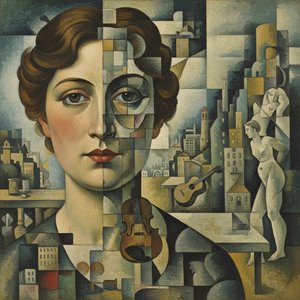
Fernand Léger (1881–1955) a realizat Three Characters. Data sa este din 1924. Face parte din mișcarea Cubism. Este realizată în Acrylic On Canvas.
- 1924
- Acrylic On Canvas

 Previzualizare

 Tablou în ulei pictat manual
 Trimite prin felicitare
 Distribuie
 Ghid


 Descarcă imaginea
 Produse similare
 Radiografie
 Galerie foto
 Întrebări și răspunsuri

 Statistici
Three Characters: esențialul
- Titlu
- Three Characters
- Artist
- Fernand Léger (1881–1955)
- Artist născut în
- Argentan, Franța
- Date
- 1924
- Medium
- Acrylic On Canvas
- Mișcare
- Cubism
- Perioadă
- Modern
- Subiect
- geometric figures, modern composition, cubist style art, human interaction, bold color palette, everyday objects
Ce reprezintă Three Characters?
A Symphony of Form and Feeling: Exploring Fernand Léger’s “Three Characters”
Fernand Léger's 1924 painting, *“Three Characters,”* is a pivotal work exemplifying his distinctive contribution to Cubism – a style he uniquely evolved into what became known as ‘Tubism.’ More than just an exercise in geometric abstraction, this piece offers a compelling glimpse into the artist’s vision of modern life and human connection amidst industrialization.Deconstructing the Composition: Style & Technique
Léger masterfully employs simplified, cylindrical forms to depict three figures positioned closely together. This isn't about realistic representation; it’s a deliberate fragmentation and reassembly of reality through a Cubist lens. The painting eschews traditional perspective, presenting multiple viewpoints simultaneously within a flattened picture plane. The technique is characterized by smooth brushstrokes and carefully blended colors, creating a polished surface despite the angularity of the forms. This creates a sense of solidity and monumentality, grounding the abstracted figures.A Palette of Modernity: Color & Symbolism
While rooted in Cubism’s analytical approach, *“Three Characters”* distinguishes itself through its vibrant color palette. Léger moves beyond the muted tones often associated with early Cubism, embracing bold hues that inject energy and warmth into the composition. The inclusion of symbolic objects – a baseball bat and a book – adds layers of meaning. These aren’t merely decorative elements; they represent facets of everyday life, leisure, and intellectual pursuit, hinting at Léger's interest in portraying the modern individual within their environment. The figures themselves are not portraits but archetypes, representing universal aspects of human experience.Historical Context: Cubism & Beyond
Created in the aftermath of World War I, *“Three Characters”* reflects a broader cultural shift towards embracing modernity and industrialization. Léger, alongside Picasso and Braque, was at the forefront of the Cubist revolution, challenging traditional artistic conventions. However, he diverged from his peers by incorporating elements of machine aesthetics and popular culture into his work. His style evolved toward “Crystal Cubism,” emphasizing large, overlapping geometric planes and a strong focus on surface activity. This painting stands as a testament to that evolution, bridging the gap between abstract experimentation and representational form.Emotional Resonance & Lasting Influence
*“Three Characters”* evokes a sense of quiet contemplation and interconnectedness. Despite their abstracted forms, the figures possess a palpable presence, suggesting a shared experience or unspoken dialogue. The painting’s enduring appeal lies in its ability to resonate with viewers on an emotional level, prompting reflection on themes of identity, community, and the human condition. Léger's work profoundly influenced subsequent art movements, including Futurism, Abstract Art, and Surrealism, solidifying his legacy as a visionary artist who redefined the possibilities of painting in the 20th century.Collecting & Interior Design Considerations
- Style Compatibility: This artwork complements modern, minimalist, or Art Deco interiors. Its geometric forms and bold colors create a striking focal point.
- Color Palette Integration: The painting’s color scheme can be echoed in accent furniture, textiles, or wall colors to create a cohesive design aesthetic.
- Placement Suggestions: Ideal for living rooms, dining areas, or home offices. Consider pairing it with contemporary sculptures or abstract artwork.
- Investment Potential: As a seminal work by a highly influential artist, a high-quality reproduction of *“Three Characters”* represents not only an aesthetic addition but also a potential investment in art history.
Three Characters în înaltă rezoluție

Domeniu public: artistul a decedat în 1955.
Mai multe dimensiuni, cadruri și citări →Fernand Léger, Three Characters (1924). Domeniu public
Un expert digital verifică culorile în raport cu pictura originală și retușează fișierul, respectând fidelitatea brushwork-ului artistului.
Cumpără imaginea la rezoluție înaltăÎntrebări despre Three Characters
Cât de armonios interacționează culorile din "Three Characters"?
Armonia cromatică a operei "Three Characters" este descrisă ca fiind Softly Mixed Palette.
Ce emoție transmite "Three Characters" de Fernand Léger?
"Three Characters" de Fernand Léger transmite un ton emoțional Somber.
La ce etapă din cariera lui Fernand Léger corespunde data de 1924 a operei „Three Characters”?
"Three Characters", creat în 1924, aparține perioadei Mature Period din cariera lui Fernand Léger."
Care este locul ocupat de "Three Characters" în istoria artei?
Din punct de vedere istoric, „Three Characters” este o operă Cubism din cadrul erei mai largi Modern.
Unde pot vedea o previzualizare a unei reproduceri a operei "Three Characters" de Fernand Léger?
Pagina de Previzualizare în spațiu pentru „Three Characters” vă permite să vizualizați opera de artă înainte de a comanda.
Ce dimensiune se recomandă pentru "Three Characters" într-un Living Room?
Combinația recomandată pentru "Three Characters" de Fernand Léger: o printare de dimensiunea Large, ideală pentru o Living Room.
Cine este autorul operei "Three Characters" și din ce curent artistic face parte?
Opera „Three Characters” este creată de Fernand Léger și aparține mișcării Cubism.
Care este motivul statutului drepturilor de autor pentru "Three Characters"?
"Three Characters" de Fernand Léger este în domeniul public – drepturile de autor au expirat. Durata protecției drepturilor de autor se calculează de la data decesului artistului, survenit în anul 1955.
În ce încăpere din casă s-ar potrivi o reproducere a operei "Three Characters"?
O reproducere a „Three Characters” se potrivește de minune într-un Living Room.
Despre artistul Fernand Léger

1881–1955, Franța
Fernand Léger
Viața lui Fernand Léger Povestea lui Fernand Léger începe în satul Argentan, situat în regiunea Orne, din Normandia Inferioară. El a venit pe această lume pe 4 februarie 1881, fiind singurul fiu al familiei. Anii săi de început au fost modelați de liniștea câmpului francez și de prezența mamei sale, Marie-Adèle Daunou. Tatăl său, un om care își câștiga viața din comerțul cu vite, a decedat când Fernand era încă un copil mic, lăsându-l pe cel mic să fie crescut de mamă într-un cămin marcat de pietate și de o anumită natură modestă.
Despre Fernand Léger Lucrări remarcabile ale lui Fernand Léger
Alte lucrări ale lui Fernand Léger
 Orașul1919
 The Mechanic1920
 Cele Trei femei1921
 Nude în pădure1910

Eseuri despre Three Characters
 Fernand Léger: Cele Mai Iconice 25 de Opere – Artă Modernă pentru Decorul TăuDescoperă cele mai importante 25 de opere ale lui Fernand Léger – pionier al cubismului și tubismului! Explorează istoria, tehnicile și sem…
 Deconstructing Reality: Cubism's Revolutionary Impact on 20th-Century ArtExplore the revolutionary world of Cubism with OriginalUniqueArt. Discover Picasso & Braque's groundbreaking techniques, its philosophical …
 Top 10 Opere de Artă cu Atmosferă Industrială: Inspirație pentru Decorul CaseiDescoperă top 10 opere de artă care surprind atmosfera industrială! Explorează picturi iconice de Van Gogh, Monet și Hopper, simbolizând re…