

 Vezi în context
 Trimite
 Distribuie
 Detalii

 Descarcă
 Produse similare
 Radiografie
 Diaporama
 Statistici
Cupid with a Tambourine
 Etching
- WallArt
- Symbolist Illustration
 19th Century
 14.0 x 10.0 cm
 Hammer Museum
 Citește mai mult
Giclée / Imprimare artistică
Printuri giclée sau pe canvas de calitate muzeală, cu proces de producție rapid și opțiuni flexibile de finisare. ( Comandă pictură realizată manual Treci la imagine digitală)




P118B $10

P118H $10

P118W $10

P438Z $10

P508JH $12

P508YH $12

P805H $10

P805Z $10

P919BZ $10

P919G $10

P919XJ $10

P959ZH $10

P968JZ $12

W106C $8

W218G $10

W218JH $8

W218Y $10

W307PJ $10

W316G $10

W316PJ $8

W316Y $10

W398PJ $8

W4111J $10

W500HY $15

W500JH $15

W692G $12

W849H $8

W940BG $15

W953PJ $8




Alegeți dintre dimensiunile noastre prestabilite, care respectă proporțiile originale ale operei de artă.

Puteți introduce propriile dimensiuni pentru a se potrivi unui anumit cadru sau spațiu. Dacă dimensiunea selectată nu corespunde proporțiilor imaginii originale, vom decupa lucrarea de artă sau vom extinde imaginea cu margini oglindite sau cu o culoare uniformă. Un mockup digital va fi trimis pentru aprobarea dumneavoastră înainte de începerea producției.
Vă rugăm să rețineți că previzualizarea de pe ecran nu reflectă decuparea sau extinderea reală. Doar mockup-ul va arăta cu exactitate compoziția finală.
Deși dimensiunile personalizate sunt disponibile, vă recomandăm să selectați o dimensiune din lista predefinită pentru a păstra proporțiile originale.
Livrare în întreaga lume () în 2 săptămâni, în loc de cele 4/5 săptămâni standard. (18 Septembrie)

Livrare expres gratuită la nivel mondial

Pânză de in premium

Asigurare completă pentru transport

Garanție de rambursare a taxelor vamale

Garanția fidelității culorilor

Politica de retur în 100 de zile (doar pentru defecte)

Garanție de rambursare 100%

Reducere pentru comenzi multiple
 Opțiunea cu sticlă este disponibilă doar pentru dimensiuni de sub 110 cm

Cupid with a Tambourine
Giclée / Imprimare artistică
Dimensiune reproducere
-


Preț total
$ 80
Felicien Rops’s “Cupid with a Tambourine”: A Study in Melancholic Beauty
Felicien Rops's "Cupid with a Tambourine," an etching from 1875, is not merely a depiction of the Roman god of love; it’s a carefully constructed tableau of wistful contemplation and subtle unease. Rops, a pivotal figure bridging Realism, Symbolism, and the nascent world of illustrated storytelling, masterfully employs line and tone to evoke an atmosphere far deeper than simple romantic imagery. The work, now housed within the UCLA Grunwald Center for the Graphic Arts at the Hammer Museum, offers a glimpse into Rops’s uniquely shadowed vision – one that frequently explored themes of beauty intertwined with melancholy and a fascination with the darker corners of human experience.
A Technical Masterpiece: Line, Tone, and Etching
The etching itself is a testament to Rops's technical skill. The foundation lies in the meticulous process of etching – a technique involving scratching lines into a metal plate (typically copper) before applying ink and then transferring the image onto paper through pressure. Rops’s control over this medium is remarkable, evidenced by the incredibly fine, delicate lines that delineate Cupid’s features, his wings, and even the scattered leaves beneath him. The use of hatching and cross-hatching creates a rich tapestry of tones, lending depth and volume to the composition without resorting to broad, flat areas of color. Notice how the varying density of these lines subtly suggests texture – the rough surface of the ground, the smooth curve of the tambourine, and the delicate folds in Cupid’s clothing.
Symbolism and Emotional Resonance: A Quiet Lament
Beyond its technical brilliance, “Cupid with a Tambourine” is laden with symbolic meaning. The figure of Cupid himself is presented not as an exuberant embodiment of passion, but rather in a posture of quiet introspection. He’s seated cross-legged, holding the tambourine close – an instrument often associated with celebration and joy – yet his gaze is averted, suggesting a detachment from the very emotions he represents. The setting, a simple ground plane strewn with leaves, reinforces this sense of solitude. The choice of a muted color palette—primarily shades of gray, white, and black—contributes to the overall mood of melancholy. It’s as if Rops is inviting us to contemplate not the fleeting pleasures of love, but its deeper, more complex implications – perhaps even hinting at the bittersweet nature of longing and unfulfilled desire.
Contextualizing a Symbolist Vision
To fully appreciate “Cupid with a Tambourine,” it’s crucial to understand Rops's place within the broader context of 19th-century art. He was deeply influenced by Symbolism, an artistic movement that sought to express subjective emotions and ideas rather than objective reality. Rops shared this interest in exploring the darker side of human experience, often depicting scenes of beauty intertwined with decay, death, and psychological distress. His work frequently drew inspiration from mythology, folklore, and literature – particularly works by Edgar Allan Poe and Charles Baudelaire. The etching’s quiet intensity and evocative atmosphere align perfectly with the aesthetic sensibilities of the Symbolist movement, offering a poignant meditation on love, loss, and the human condition.
A Timeless Image for Collectors and Designers
“Cupid with a Tambourine” remains a powerfully resonant image today. Its exquisite craftsmanship, evocative symbolism, and haunting beauty make it an ideal choice for collectors seeking works of art that transcend mere decoration. The piece’s understated elegance also lends itself beautifully to interior design – its muted tones and contemplative mood providing a sophisticated counterpoint to brighter spaces. Reproductions, such as those offered by OriginalUniqueArt.com, allow us to experience the full impact of Rops's vision without the limitations of the original medium, ensuring that this timeless image continues to captivate audiences for generations to come.
Biografie artist
A Shadowy Visionary: The Life and Art of Félicien Rops
Félicien Victor Joseph Rops, born in 1833 in the Belgian town of Namur, emerged as a pivotal figure bridging the gap between Realism, Symbolism, and the burgeoning world of modern graphic storytelling. His life, steeped in both bourgeois comfort – his father was a prosperous textile manufacturer – and a restless artistic spirit, unfolded against a backdrop of rapid social and intellectual change. Early training at local academies provided a foundation, but it was his move to Brussels at twenty that truly ignited his creative trajectory. Though briefly enrolled at the University of Brussels, Rops found himself drawn inexorably towards the Académie de Saint-Luc, where he honed his skills not just in painting and drawing, but also in the art of satire through lithography. His early work quickly gained recognition in student magazines like *Le Crocodile* and *L'Uylenspiegel*, establishing him as a gifted caricaturist with a keen eye for societal foibles. These formative years weren’t merely about developing technical proficiency; they were about finding his voice, a voice that would soon become synonymous with challenging conventions and exploring the darker recesses of the human psyche.Early Years and Artistic Foundations
Rops's childhood was marked by privilege and intellectual stimulation—his father’s textile business ensured financial stability while fostering an appreciation for craftsmanship and design. From a young age, he demonstrated exceptional talent in drawing and painting, nurtured by private tutors who recognized his innate artistic inclination. Recognizing the importance of formal education, he attended Notre Dame de la Paix de Namur and the Athénée Royal de Namur, immersing himself in humanist studies alongside artistic pursuits. This dual focus shaped his worldview and instilled a lifelong fascination with both beauty and truth—a preoccupation that would permeate his entire oeuvre. His enrollment at the Université Libre de Bruxelles solidified these connections, placing him within a vibrant intellectual milieu where he engaged in spirited debates about art, politics, and philosophy. It was here that he began to develop influential artistic networks, forging friendships with fellow students who shared his passion for innovation and experimentation.Parisian Encounters and Artistic Transformation
The year 1862 proved transformative when Rops relocated to Paris—a city brimming with artistic fervor and intellectual ferment—seeking inspiration and encountering kindred spirits. Immediately drawn to the ateliers of Henri-Alfred Jacquemart and Félix Bracquemond, he embraced intaglio techniques – etching and aquatint – mastering these methods with meticulous dedication. These encounters profoundly influenced his artistic style, shaping his approach to printmaking and fostering a fascination with tonal gradations and textural nuances. Crucially, it was his meeting with Charles Baudelaire in 1864 that cemented Rops’s artistic identity. Baudelaire's poetic exploration of beauty intertwined with decay—his insistence on confronting the grotesque and unsettling—resonated deeply with Rops’s own burgeoning aesthetic sensibilities. This encounter spurred him to delve into darker themes, investigating psychological complexities and challenging societal norms—a trajectory that would define his subsequent artistic endeavors. The resulting collaboration between Baudelaire and Rops culminated in the iconic illustration for *Les Fleurs du Mal*, establishing a partnership that epitomized the spirit of Symbolism and foreshadowed Rops’s enduring legacy as an artist who dared to confront uncomfortable truths.The Symbolist Aesthetic and Pioneering Printmaking Techniques
Rops's artistic style is instantly recognizable for its meticulous detail, dramatic chiaroscuro—the masterful manipulation of light and shadow—and a haunting atmosphere that pervades his work. Rejecting the conventions of Realism, he embraced the tenets of Symbolism, prioritizing mood and emotion over literal representation. He skillfully employed soft-ground etching, a technique rarely utilized by his contemporaries, combining it with mezzotint or aquatint to achieve unparalleled tonal richness and textural complexity. This dedication to innovative printmaking techniques—a hallmark of Rops’s artistic vision—established him as one of the foremost masters of the medium. His prints are characterized by an unsettling blend of eroticism and occult imagery, reflecting his fascination with the darker aspects of human psychology and exploring themes of transgression and desire. Works like “Pornokratès” (1878), a psychologically astute depiction of female power and vulnerability, exemplify Rops’s ability to convey profound emotional states through visual language—a feat that continues to captivate audiences today.Legacy and Influence Beyond His Time
Despite initial obscurity and facing criticism for his provocative subject matter—particularly his erotic prints—Rops was revered by fellow artists as a visionary innovator who championed artistic freedom and challenged societal prejudices. He joined the Société Libre des Beaux-Arts in Brussels (1868–1876), fostering intellectual discourse and collaborating with influential figures of his time. His membership in Les XX ("the twenty"), formed in 1884, solidified his position as a leader of avant-garde artistic circles—a testament to his unwavering commitment to pushing creative boundaries. Rops’s influence extended far beyond the realm of printmaking; he inspired subsequent generations of artists—including Edvard Munch and Max Klinger—who adopted his stylistic innovations and explored similar thematic concerns. His enduring legacy resides not merely in his celebrated artworks but also in his courageous willingness to confront taboo subjects, prompting viewers to contemplate uncomfortable truths about human nature and societal morality. Félicien Rops remains a pivotal figure in the history of Symbolism and a pioneer of both graphic art and comics—a testament to his artistic genius and enduring fascination with the complexities of the human condition.
Felicien Rops
1833 - 1898 , Belgia
Informații rapide
- Artistic Movement Or Style: Simbolismo, Decadenza
- Artists Or Movements Influenced By This Artist:
- Edvard Munch
- Max Klinger
- Artists Who Influenced This Artist:
- Félix Bracquemond
- Jules Jacquemart
- Date Of Birth: 7 luglio 1833
- Date Of Death: 23 agosto 1898
- Full Name: Félicien Victor Joseph Rops
- Nationality: Belga
- Notable Artworks:
- Pornokratès
- Satan Sowing Seeds
- Place Of Birth: Namur, Belgio
Articole conexe

The Intricate World of Etching: A Historical Survey of Technique, Aesthetic Evolution, and Enduring Artistic Impact
Explore the rich history of etching, from its origins to modern practice. Discover techniques, key artists like Rembrandt, and insights for collectors. A comprehensive guide by OriginalUniqueArt.
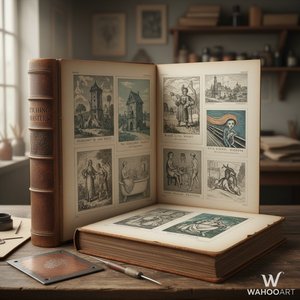
Top 10 Gravuri Legendare: Capodopere Artistice Care Au Schimbat Istoria Artei
Descoperă top 10 gravuri legendare care au revoluționat arta! Explorează poveștile lui Rembrandt, Goya și alți maeștri. Reproduceri de artă de calitate muzeală pentru un decor inspirat. Vezi colecția completă pe OriginalUniqueArt.com

Etching: A Historical Survey of Technique, Aesthetic Qualities & Enduring Artistic Significance
Explore the rich history of etching, from its origins to Rembrandt's masterful innovations. Discover the technique, aesthetic qualities & enduring legacy of this captivating art form. Expert insights for collectors and enthusiasts.
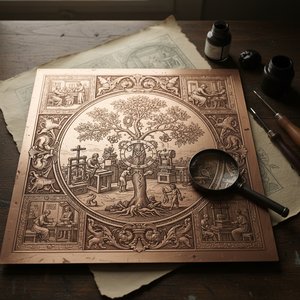
The Art of Etching: Mastering Lines, Texture, and Depth in the Intaglio Tradition
Explore the intricate world of etching and intaglio printmaking. Discover how masters use acid and metal to create profound textures and lines, from Romanticism to modern era, through an expert lens of art history and technical mastery.
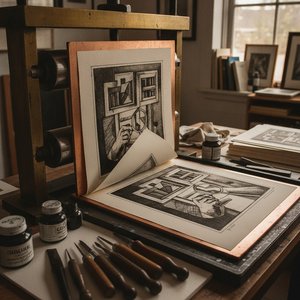
Etching Unlocked: The Sharp, High-Impact Art of Line and Shadow for the Modern Collector
Master the high-impact world of etching. Explore the transformative power of line and shadow through the intaglio tradition, from its armor-making origins to modern collecting strategies for the sophisticated art enthusiast.