

 Vezi în context
 Trimite
 Distribuie
 Detalii

 Descarcă
 Produse similare
 Radiografie
 Diaporama
 Statistici
Naranjas


 Citește mai mult
Giclée / Imprimare artistică
Printuri giclée sau pe canvas de calitate muzeală, cu proces de producție rapid și opțiuni flexibile de finisare. ( Comandă pictură realizată manual Treci la imagine digitală)




P118B $10

P118H $10

P118W $10

P438Z $10

P508JH $12

P508YH $12

P805H $10

P805Z $10

P919BZ $10

P919G $10

P919XJ $10

P959ZH $10

P968JZ $12

W106C $8

W218G $10

W218JH $8

W218Y $10

W307PJ $10

W316G $10

W316PJ $8

W316Y $10

W398PJ $8

W4111J $10

W500HY $15

W500JH $15

W692G $12

W849H $8

W940BG $15

W953PJ $8




Alegeți dintre dimensiunile noastre prestabilite, care respectă proporțiile originale ale operei de artă.

Puteți introduce propriile dimensiuni pentru a se potrivi unui anumit cadru sau spațiu. Dacă dimensiunea selectată nu corespunde proporțiilor imaginii originale, vom decupa lucrarea de artă sau vom extinde imaginea cu margini oglindite sau cu o culoare uniformă. Un mockup digital va fi trimis pentru aprobarea dumneavoastră înainte de începerea producției.
Vă rugăm să rețineți că previzualizarea de pe ecran nu reflectă decuparea sau extinderea reală. Doar mockup-ul va arăta cu exactitate compoziția finală.
Deși dimensiunile personalizate sunt disponibile, vă recomandăm să selectați o dimensiune din lista predefinită pentru a păstra proporțiile originale.
Livrare în întreaga lume () în 2 săptămâni, în loc de cele 4/5 săptămâni standard. (15 Septembrie)

Livrare expres gratuită la nivel mondial

Pânză de in premium

Asigurare completă pentru transport

Garanție de rambursare a taxelor vamale

Garanția fidelității culorilor

Politica de retur în 100 de zile (doar pentru defecte)

Garanție de rambursare 100%

Reducere pentru comenzi multiple
 Opțiunea cu sticlă este disponibilă doar pentru dimensiuni de sub 110 cm

Naranjas
Giclée / Imprimare artistică
Dimensiune reproducere
-


Preț total
$ 80
A Sensory Symphony of Light and Fruit
In the quiet, sun-drenched moments captured within Naranjas, we encounter a masterclass in the art of the still life. Painted in 1916 by the accomplished Eugenia Belín Sarmiento, this work transcends a simple depiction of fruit to become an evocative meditation on texture, light, and the bounty of nature. The composition centers around a rustic basket brimming with oranges, their vibrant citrus hues acting as beacons of warmth against the more muted, atmospheric tones of the background. Some fruits nestle deeply within the woven embrace of the basket, while others have escaped, resting casually upon the surface below, creating a sense of spontaneous, unstudied beauty. A subtle presence of a bowl in the lower periphery adds a layer of domestic intimacy, inviting the viewer into a private, serene corner of a well-loved home.
The technique employed by Sarmiento reflects a sophisticated command over the Impressionistic sensibilities that defined much of her era. Rather than relying on harsh, clinical outlines, she utilizes soft, feathered brushstrokes to define the rounded forms of the oranges and the delicate veins of the accompanying leaves. This approach allows light to dance across the skins of the fruit, creating specular highlights that suggest a moist, fresh ripeness. The interplay between shadow and luminosity is particularly striking; the deep recesses within the basket provide a rhythmic contrast to the bright, sun-kissed surfaces of the scattered oranges, lending the painting a profound sense of three-dimensional volume and tactile reality.
Historical Resonance and Artistic Legacy
To understand Naranjas is to understand the hand of an artist deeply connected to the cultural fabric of Argentina. Eugenia Belín Sarmiento, though born in Puerto Rico, carried the weight of a significant historical lineage, being the granddaughter of the transformative President Domingo Faustino Sarmiento. While much of her legacy is anchored in the dignified, psychological depth of her portraiture, her still lifes like N려는as reveal a different facet of her genius: an ability to find the monumental within the mundane. This piece serves as a testament to her versatility, proving that her eye for detail and her mastery of light were just as potent when capturing the ephemeral beauty of nature as they were when documenting the faces of historical icons.
For the discerning collector or interior designer, this painting offers more than mere decoration; it provides an emotional anchor. The warmth of the citrus palette makes it an ideal centerpiece for spaces designed for comfort and rejuvenation, such as a sunlit dining room or a sophisticated breakfast nook. As a high-quality reproduction, Naranjas brings with it the prestige of early 20th-century Latin American Impressionism, offering a timeless elegance that complements both classical and contemporary interiors. It is a piece that invites lingering gazes, sparking conversations about the simple joys of life and the enduring power of light to transform the ordinary into the extraordinary.
Biografie artist
A Legacy Etched in Portraiture: The Life and Art of Eugenia Belín Sarmiento
Eugenia Belín Sarmiento, born in 1860 amidst the vibrant cultural currents of San Juan, Puerto Rico – though deeply rooted in Argentina’s artistic landscape – stands as a compelling figure in 19th-century Latin American art. Her life was inextricably linked to one of Argentina's most pivotal historical figures: her grandfather, Domingo Faustino Sarmiento, president from 1868 to 1874 and a champion of education and progress. This familial connection profoundly shaped not only her personal trajectory but also the thematic core of much of her artistic output. While she explored still lifes and miniatures, it is through her portraits – particularly those of Sarmiento himself – that Belín Sarmiento’s unique talent truly shines, offering intimate glimpses into character and a nuanced reflection of an era. Her work isn't merely representation; it’s an interpretation, imbued with both affection and insightful observation.Artistic Development and the Embrace of Impressionism
Belín Sarmiento’s artistic journey unfolded against a backdrop of evolving European styles, most notably the burgeoning Impressionist movement. Her canvases demonstrate a clear embrace of its tenets: visible brushstrokes that capture the fleeting effects of light, an emphasis on atmosphere, and a desire to convey subjective experience. However, she didn't simply adopt these techniques wholesale. She skillfully blended them with a meticulous attention to detail, particularly in rendering facial features – a hallmark of her portraiture. This fusion created a distinctive aesthetic, one that moved beyond mere likeness to explore the psychological depth of her subjects. Her training included studies under José Agujari in Buenos Aires and periods of study abroad in Belgium, where she honed her skills with established masters. The influence of French painting is subtly present, yet Belín Sarmiento forged her own path, imbuing her work with a distinctly Argentine sensibility. She sought to capture not just the outward appearance but also the inner life of her subjects, reflecting a growing interest in psychology and human emotion prevalent during this period.Portraits as Historical Documents: Capturing a Generation
While proficient across various genres, Eugenia Belín Sarmiento’s enduring legacy rests on her portraits. Her most celebrated works are undoubtedly those depicting Domingo Faustino Sarmiento. These aren't idealized representations intended for political propaganda; rather, they offer insightful interpretations of his personality and intellectual presence. Each portrait seems to delve beneath the surface, revealing a man grappling with complex ideas and burdened by the weight of leadership. She captured not just his physical likeness but also the intensity of his gaze, the subtle lines etched on his face that spoke volumes about his experiences and convictions. Beyond her grandfather, she extended her talent to portray other members of her family – Capitan Domingo Fidel Sarmiento, Paula Albarracín de Sarmiento, Adelaida Mandar de Belin, and Julio Belin – each portrait a testament to her ability to capture individual character. These familial portraits, alongside those of other prominent figures like Dalmacio Vélez Sarsfield, Francisco Muniz, and José María Estrada, serve as invaluable visual records of the Argentine elite during a period of significant social and political transformation. Her meticulous attention to detail – from the texture of clothing to the subtle nuances of expression – elevated her portraits beyond simple likenesses, transforming them into powerful historical documents.Recognition and Lasting Significance
Belín Sarmiento’s talent garnered recognition beyond Argentina's borders. A pivotal moment in her career came with her participation in the first Exposición Anual de Pintura, Dibujo y Escultura (Annual Exhibition of Painting, Drawing, and Sculpture) for artists of South America held in 1893. This exhibition was a landmark event, showcasing Latin American art on an international stage and establishing Belín Sarmiento as a rising star within the region’s artistic community. Her work continues to be studied not only for its aesthetic qualities but also for its historical context. She provides valuable insights into the social and political climate of 19th-century Argentina, offering a visual counterpoint to written accounts of the era. Her paintings are more than just beautiful objects; they are windows into a bygone world, meticulously rendered by an artist deeply connected to the figures she portrayed.A Continuing Dialogue with the Past
Eugenia Belín Sarmiento’s influence extends beyond the immediate impact of her artwork. Her dedication to portraiture, combined with her unique stylistic blend, paved the way for future generations of Argentine artists. While specific influences on her work remain somewhat elusive – though Impressionism is clearly evident – it's reasonable to assume she engaged with the broader European art movements of her time and the tradition of historical painting. Today, her paintings are held in both public and private collections, continuing to spark dialogue about Argentina’s cultural heritage. The Sarmiento Historical Museum, dedicated to the life and legacy of her grandfather, also preserves examples of her work, ensuring that her artistic contribution remains accessible to future generations. Her story is a reminder that art can be both a personal expression and a powerful tool for preserving history, offering a lasting tribute to a remarkable woman and a pivotal era in Argentine history.
Eugenia Belín Sarmiento
1860 - 1952 , Argentina
Informații rapide
- Artistic Movement Or Style: Impressionism
- Artists Or Movements Influenced By This Artist: ['French painting']
- Artists Who Influenced This Artist: ['José Agujari']
- Date Of Birth: 1860
- Date Of Death: 1952
- Full Name: Eugenia Belín Sarmiento
- Nationality: Argentina
- Notable Artworks:
- Rosas blancas
- Domingo Sarmiento
- Dibujo
- Place Of Birth: San Juan, Argentina
Articole conexe

The Bountiful Still Life: Symbolism & Artistic Representation of Fruit Across Art History
Explore the rich history of still life painting & the symbolism of fruit across art movements. Discover masterpieces from Caravaggio to Cézanne with OriginalUniqueArt – expert guidance & museum-quality reproductions.

Silent Narratives: Exploring the Enduring Appeal of Still Life Painting Across Centuries
Explore the rich history of still life painting with OriginalUniqueArt. Discover Dutch Masters, decode vanitas symbolism & learn about collecting timeless art. Expert insights and museum-quality reproductions.

Paul Cézanne: Cele Mai Reprezentative 25 De Capodopere – Artă, Istorie și Decorațiuni Interioare
Descoperă cele mai frumoase 25 de capodopere Paul Cézanne! Explorează istoria, tehnicile și semnificația picturilor impresioniste iconice. Reproduceri artă de calitate muzeală & inspirație decor interioară pe OriginalUniqueArt.com.
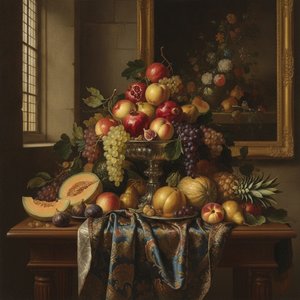
Nature's Bounty: The Art History of Fruit Arrangement Masterpieces and the Baroque Still Life Tradition
Explore the profound beauty of fruit arrangement masterpieces. From Dutch Golden Age opulence to Baroque chiaroscuro, discover the art history, symbolism, and timeless elegance of classical still life paintings for the discerning collector.
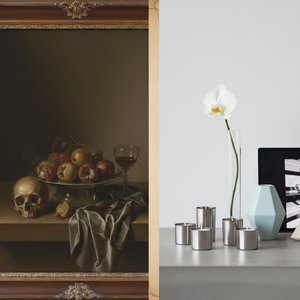
The Enduring Appeal of Still Life: A Historical & Contemporary Exploration
Explore the rich history & symbolism of still life painting with OriginalUniqueArt. Discover masterpieces from the Dutch Golden Age, learn about vanitas art, and find expert guidance for collecting timeless artworks.


